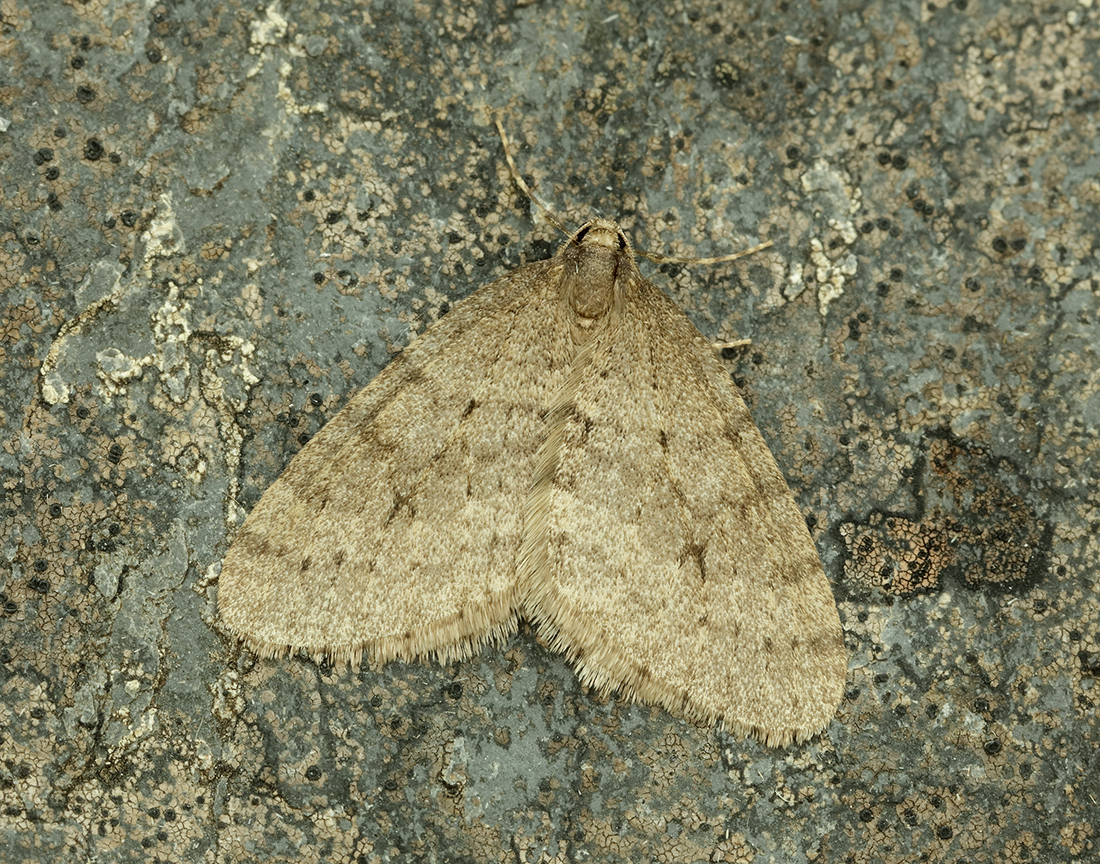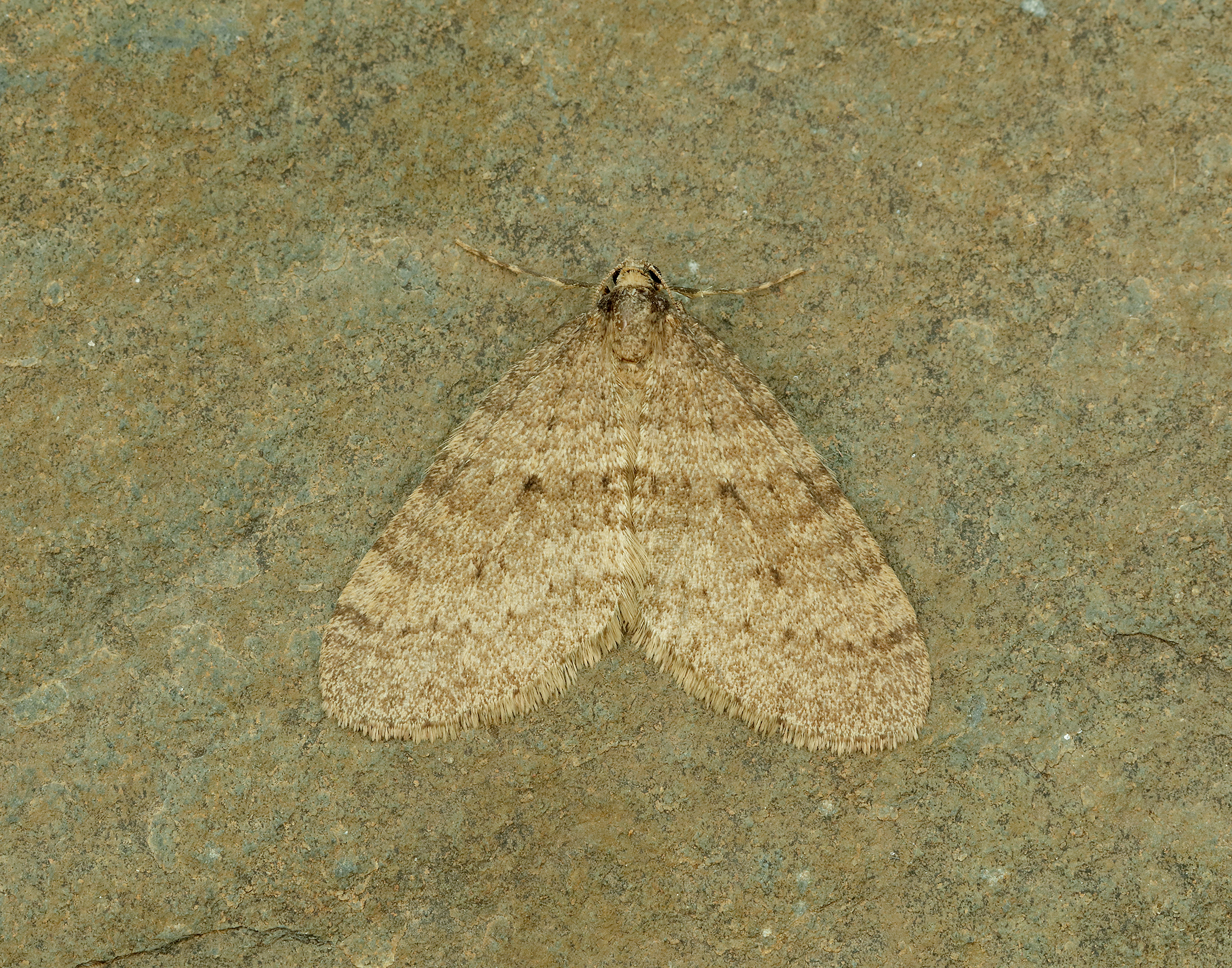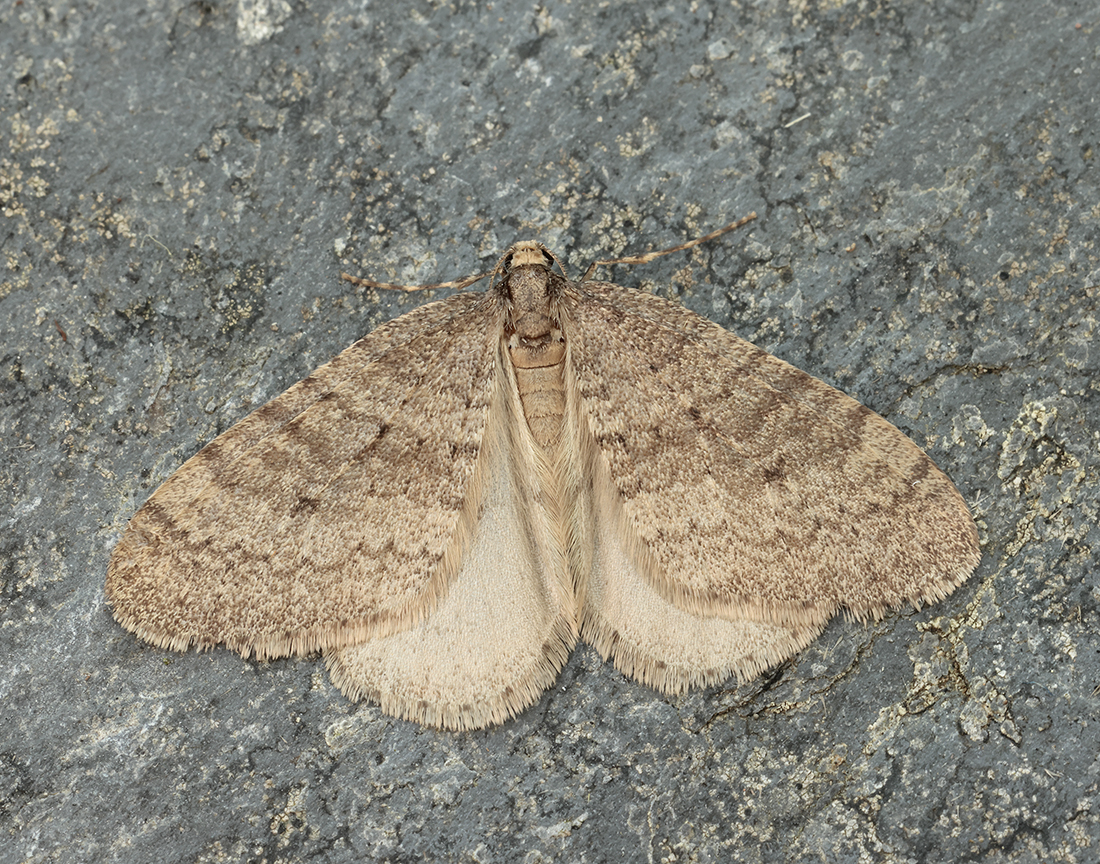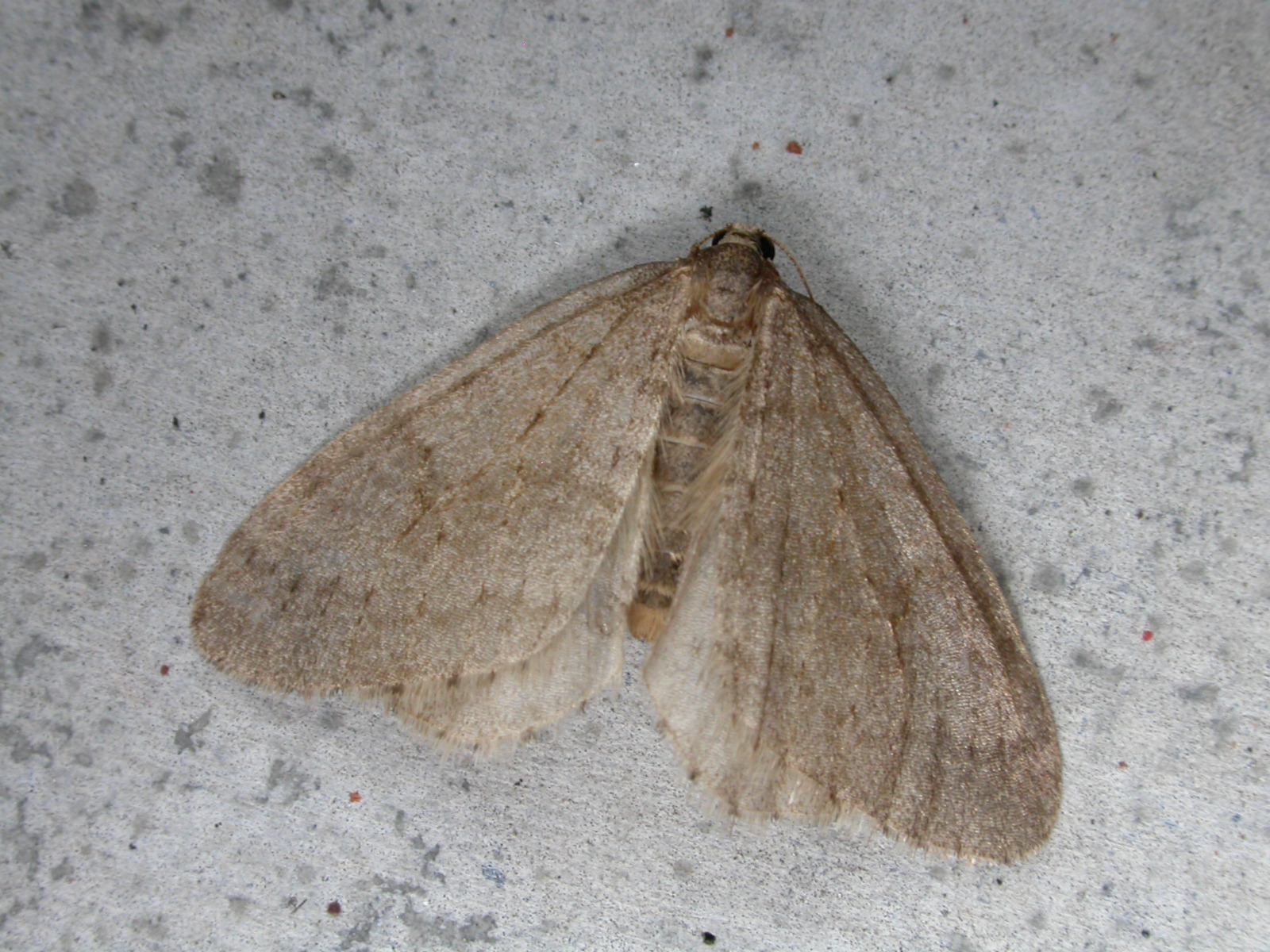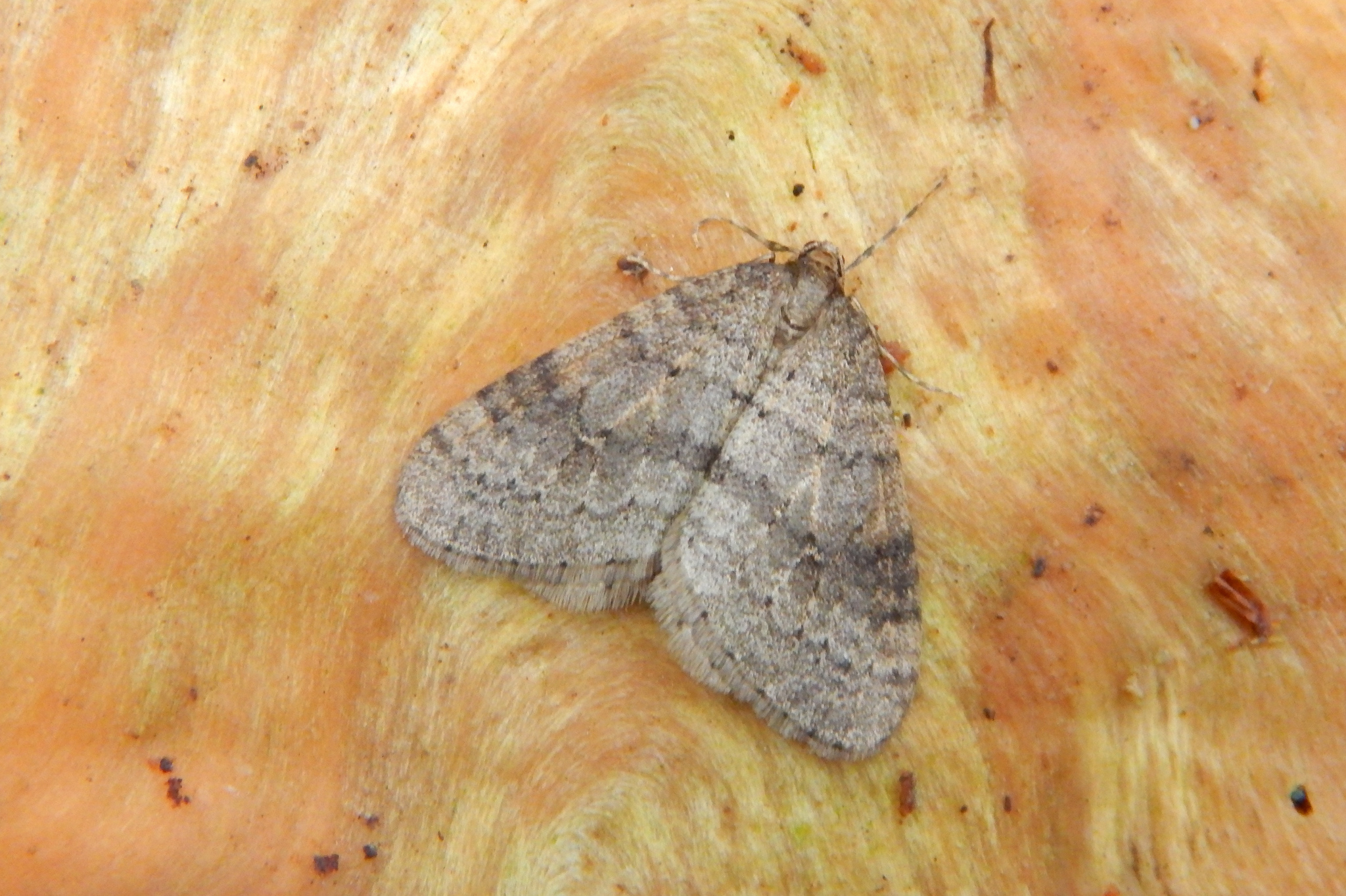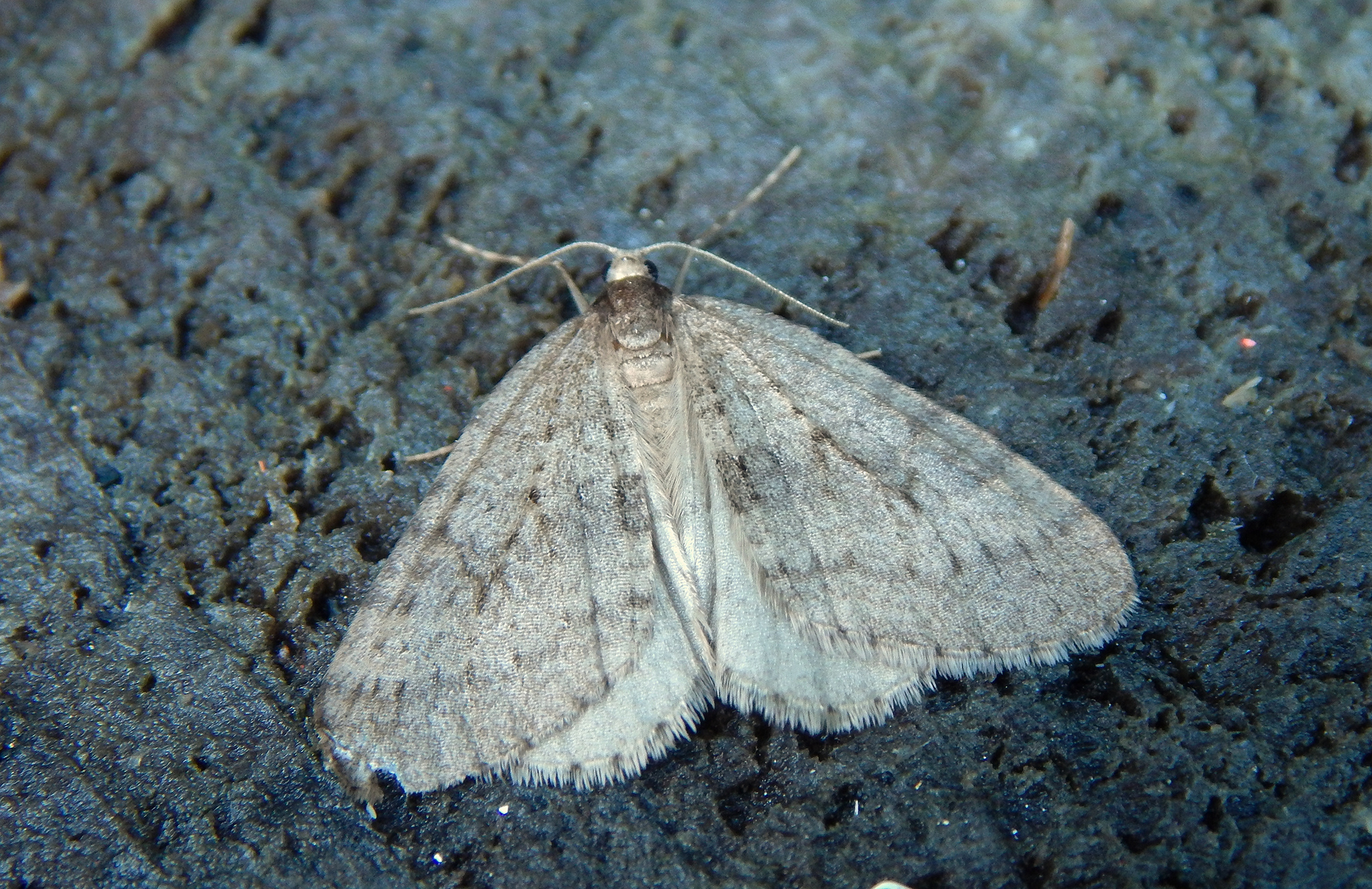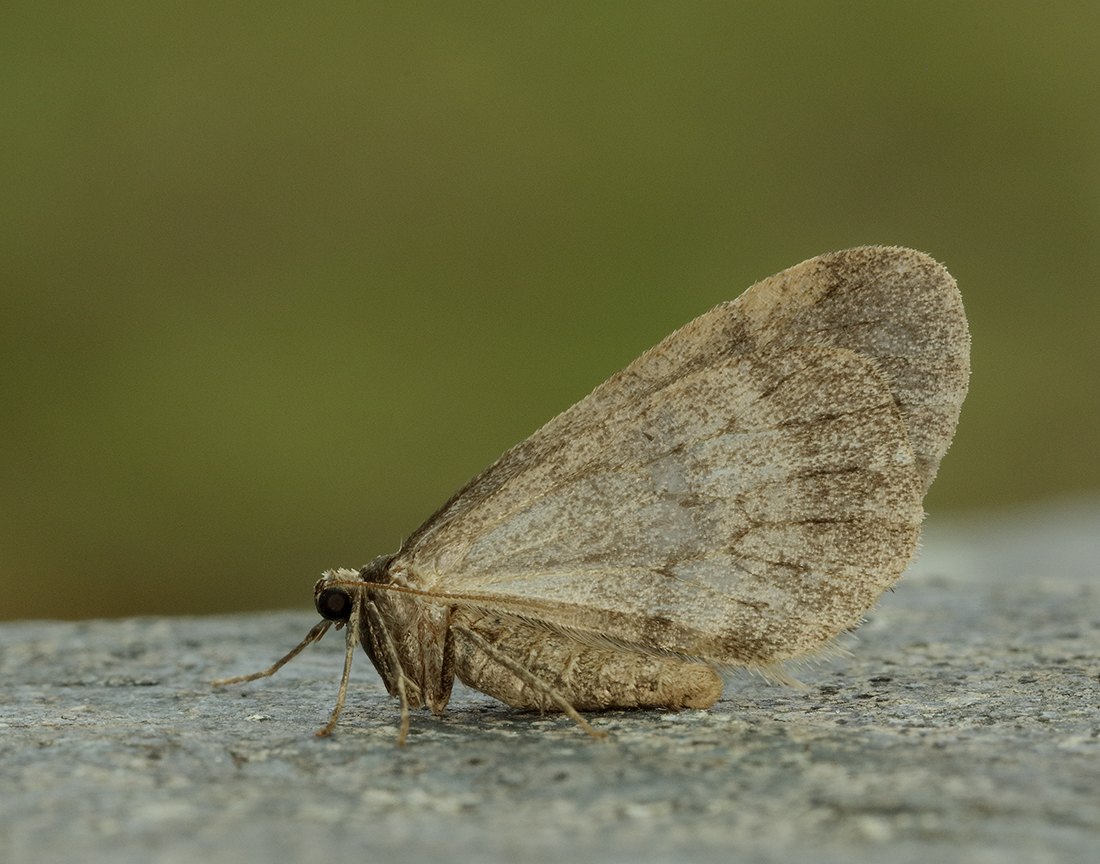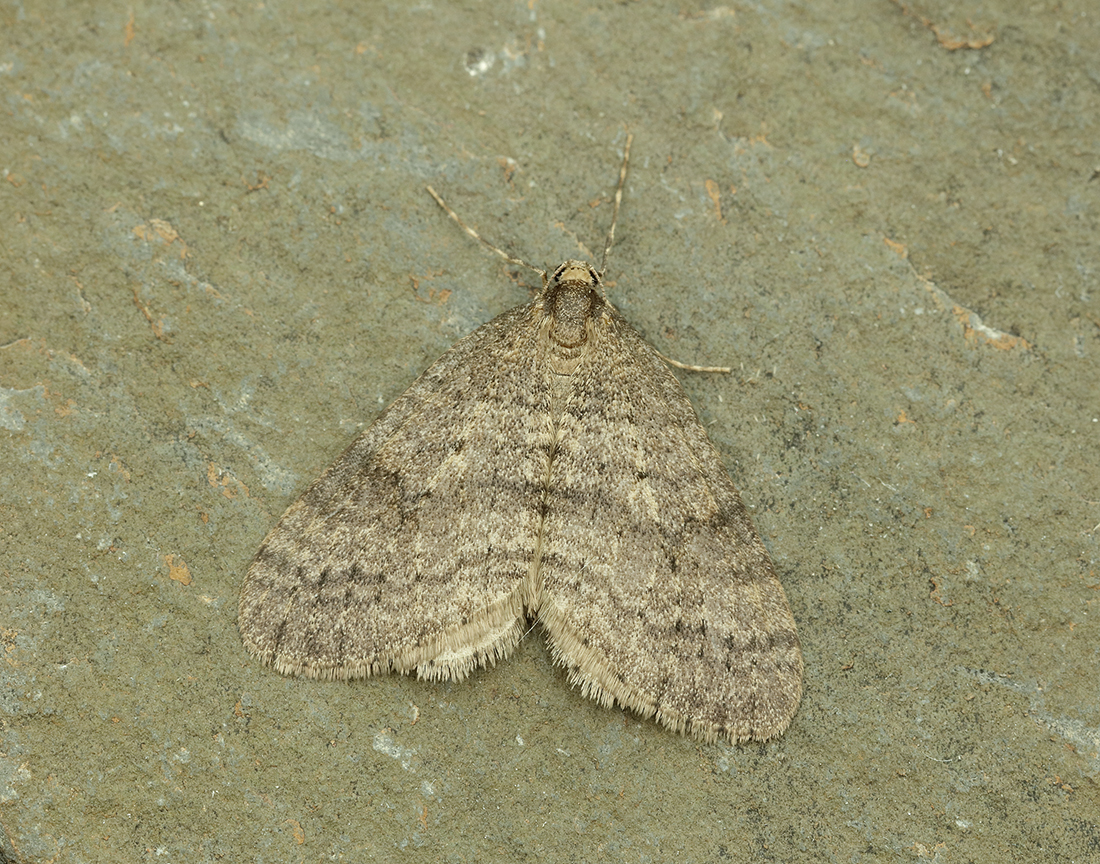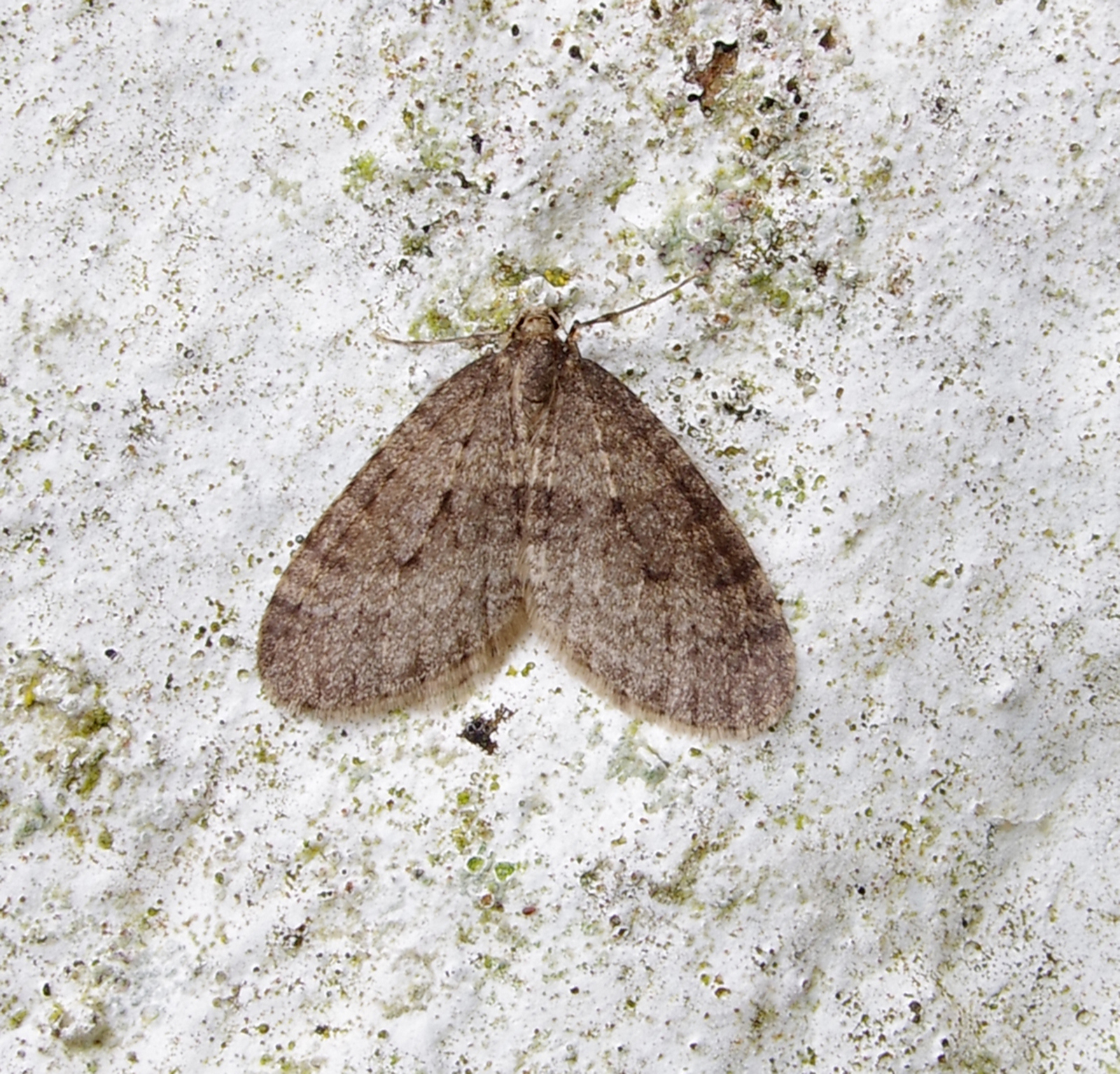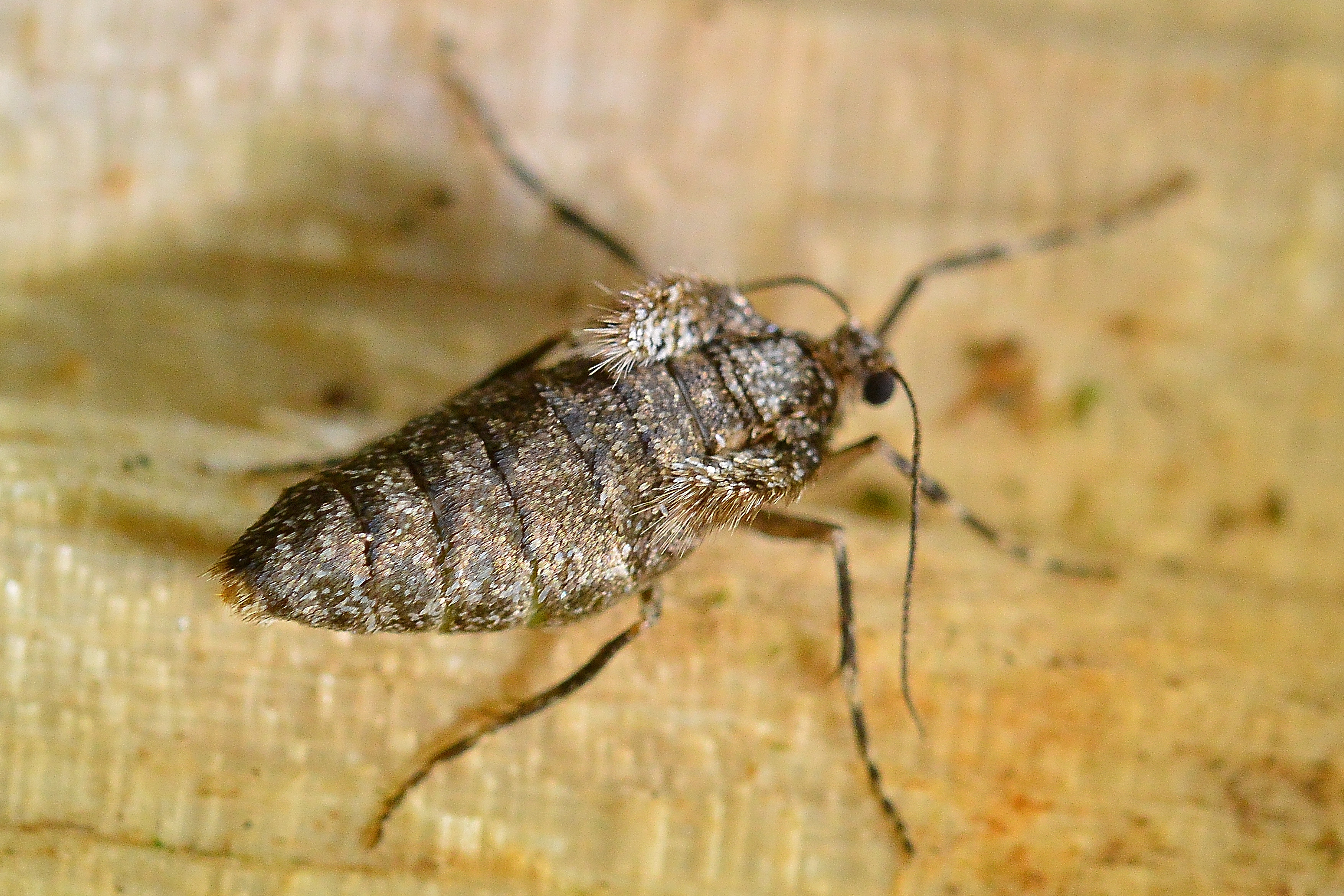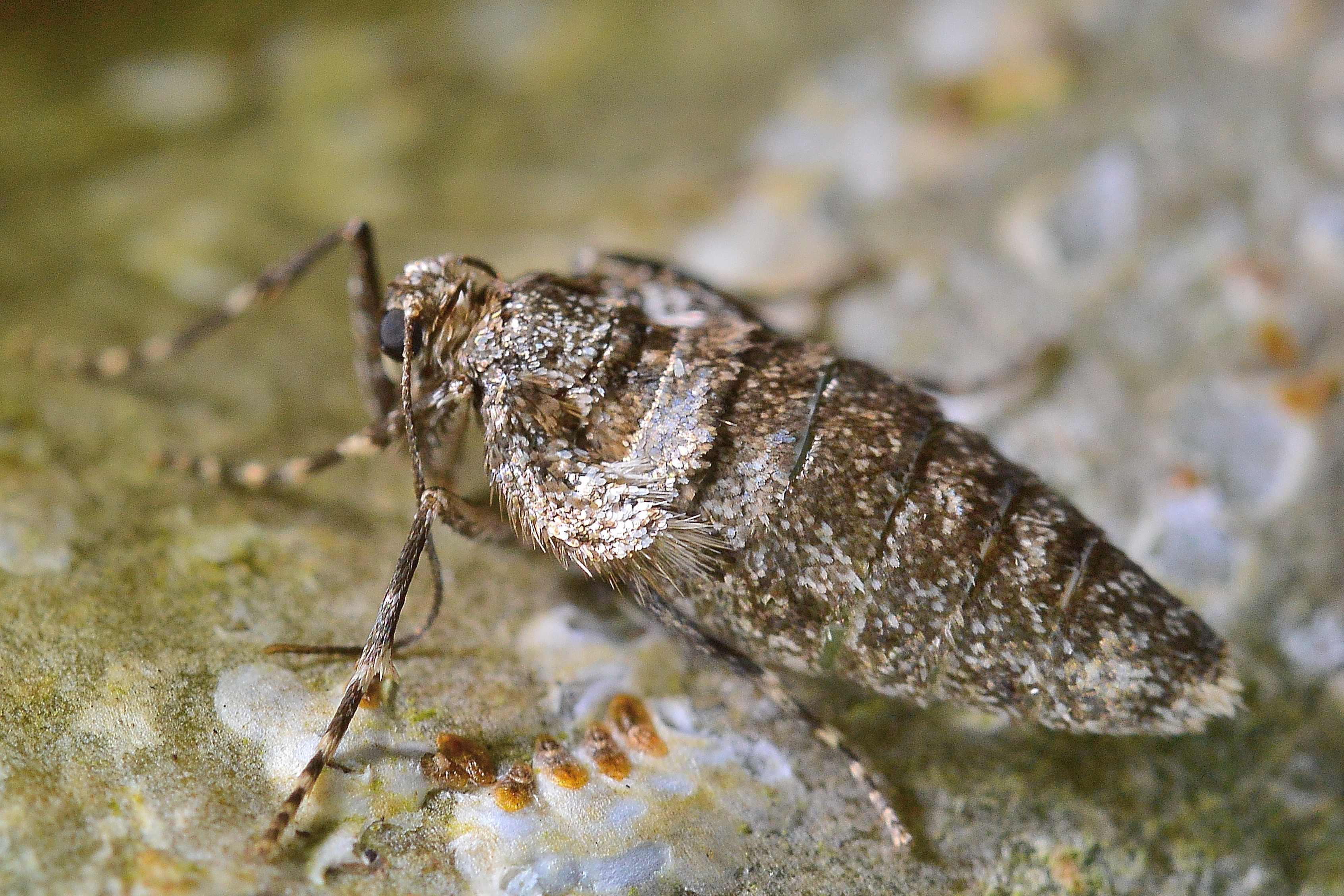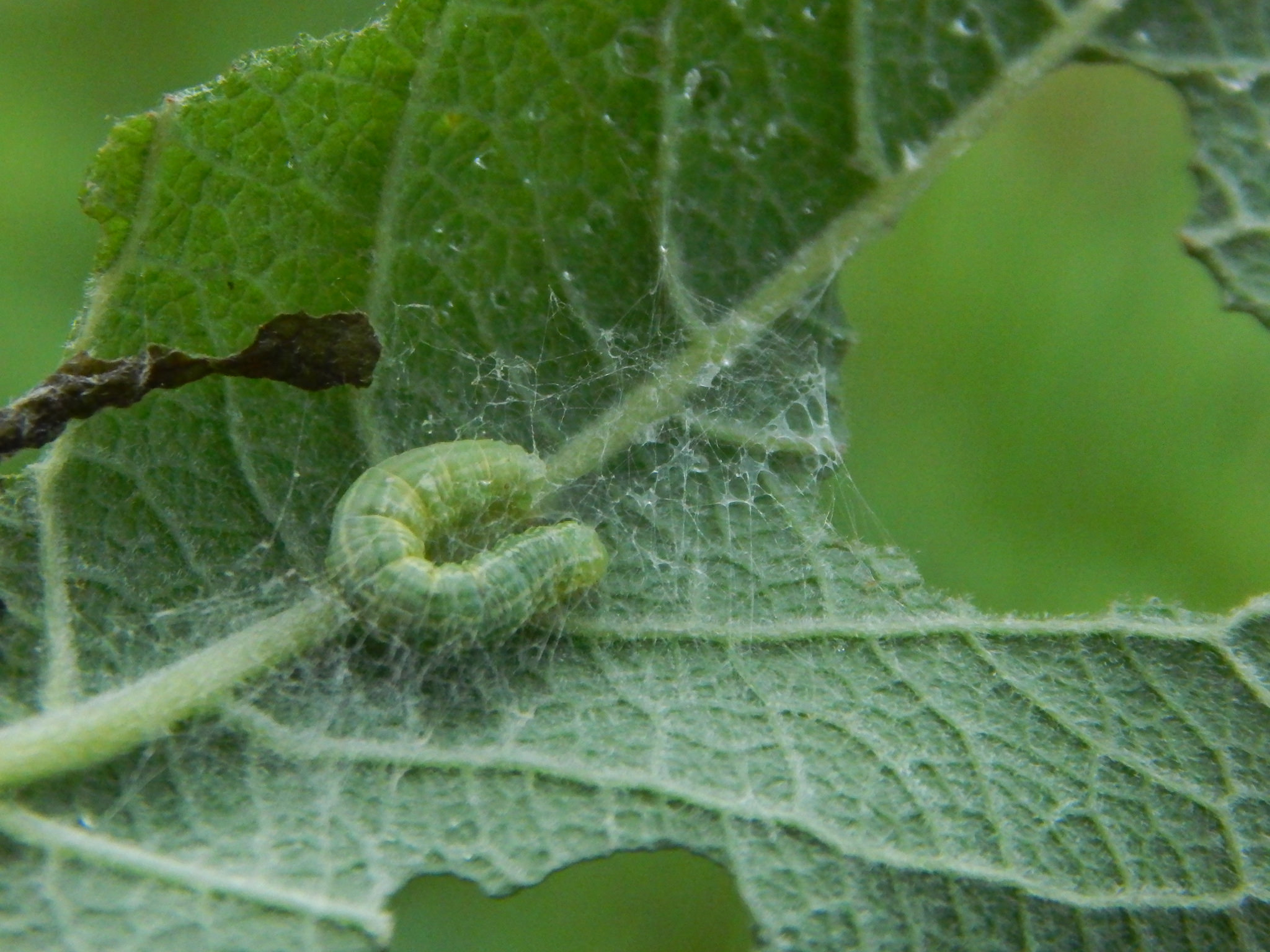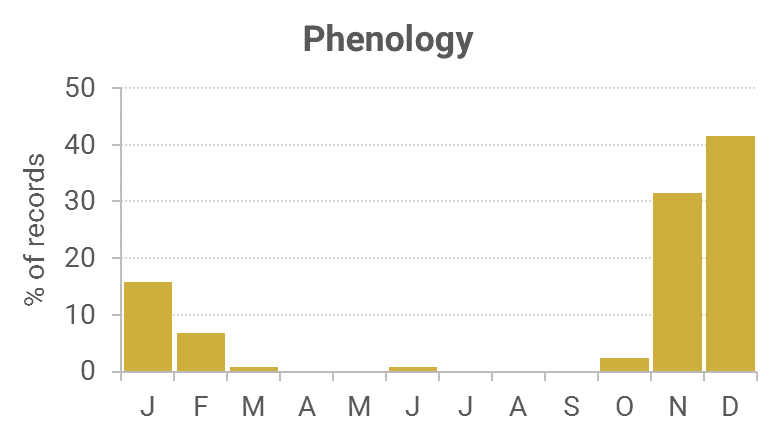

Red List: Least Concern (LC). GB Status: Common
See also Moth of the Week (23/11/2019)
Identification
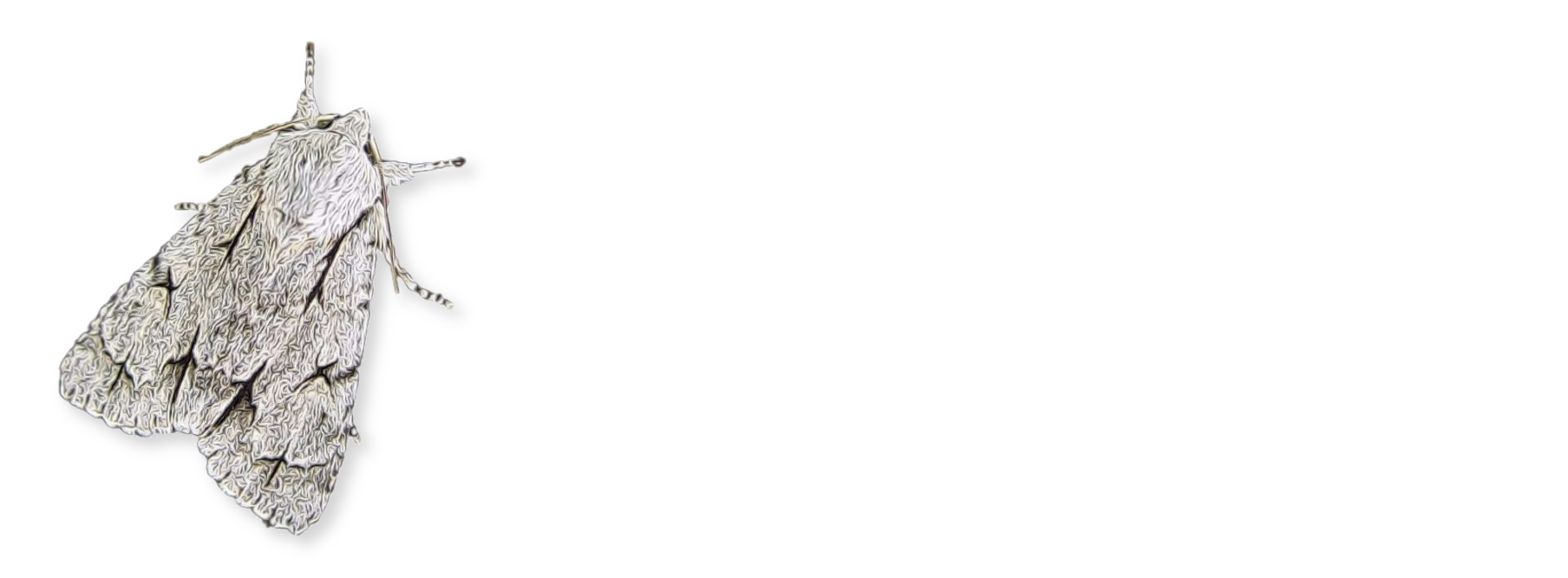
Usually distinctive. Care required, potential confusion with Northern Winter Moth. If uncertain, record as Winter Moth agg.
Female has vestigial wings and is flightless.
Recording method
Both sexes can be found by searching suitable trees with a torch at night. Males attracted to light.
Life cycle
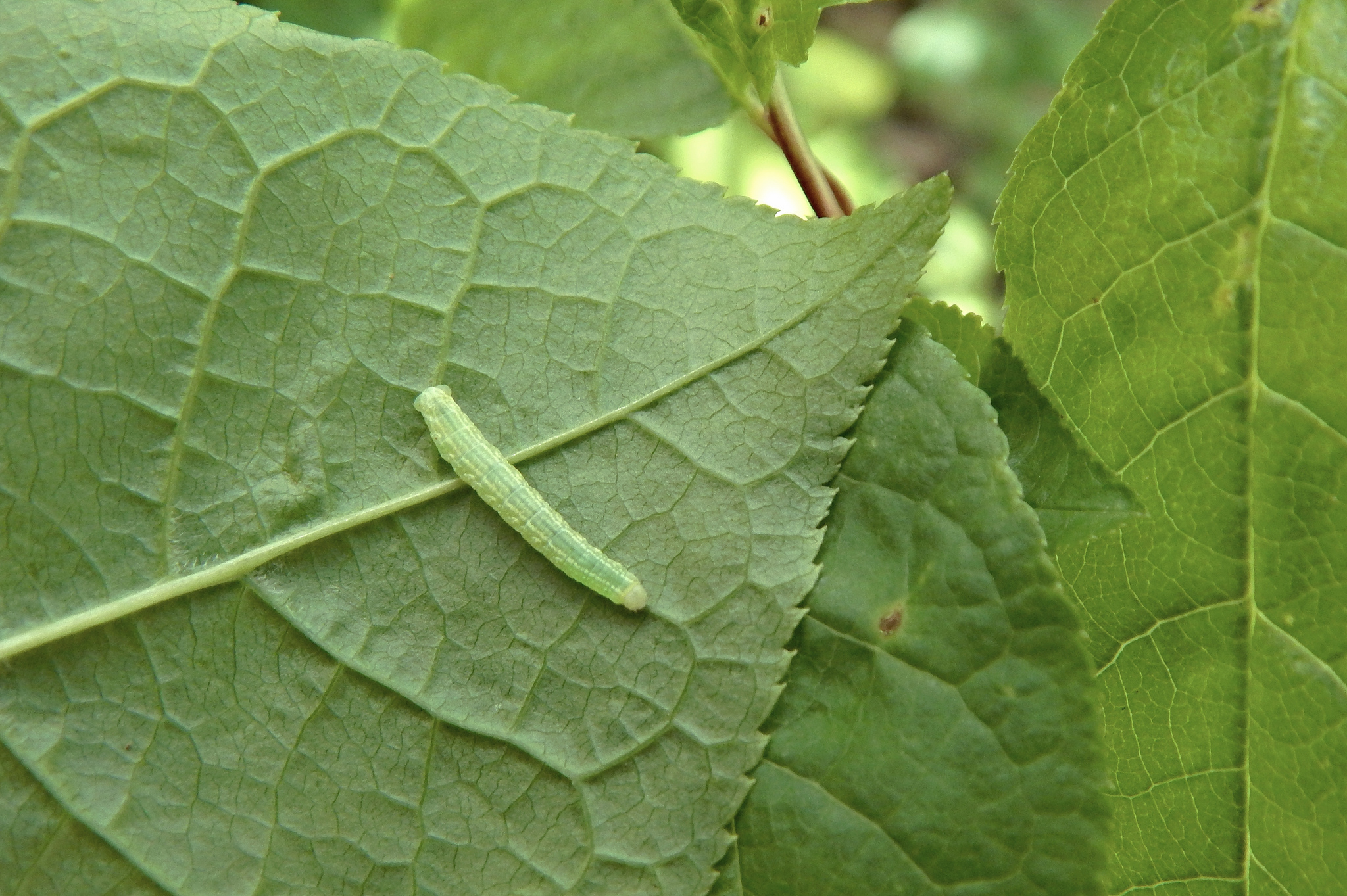
One generation. Overwinters as an egg. Larvae April to early June, then fall to the ground to pupate in a cocoon near the surface.
Larval foodplants
Most broadleaved trees or shrubs including oaks, birches, willows, hawthorns, Blackthorn, Hazel and Apple.
Habitat
Any habitat with trees and shrubs, except at high altitude.
History
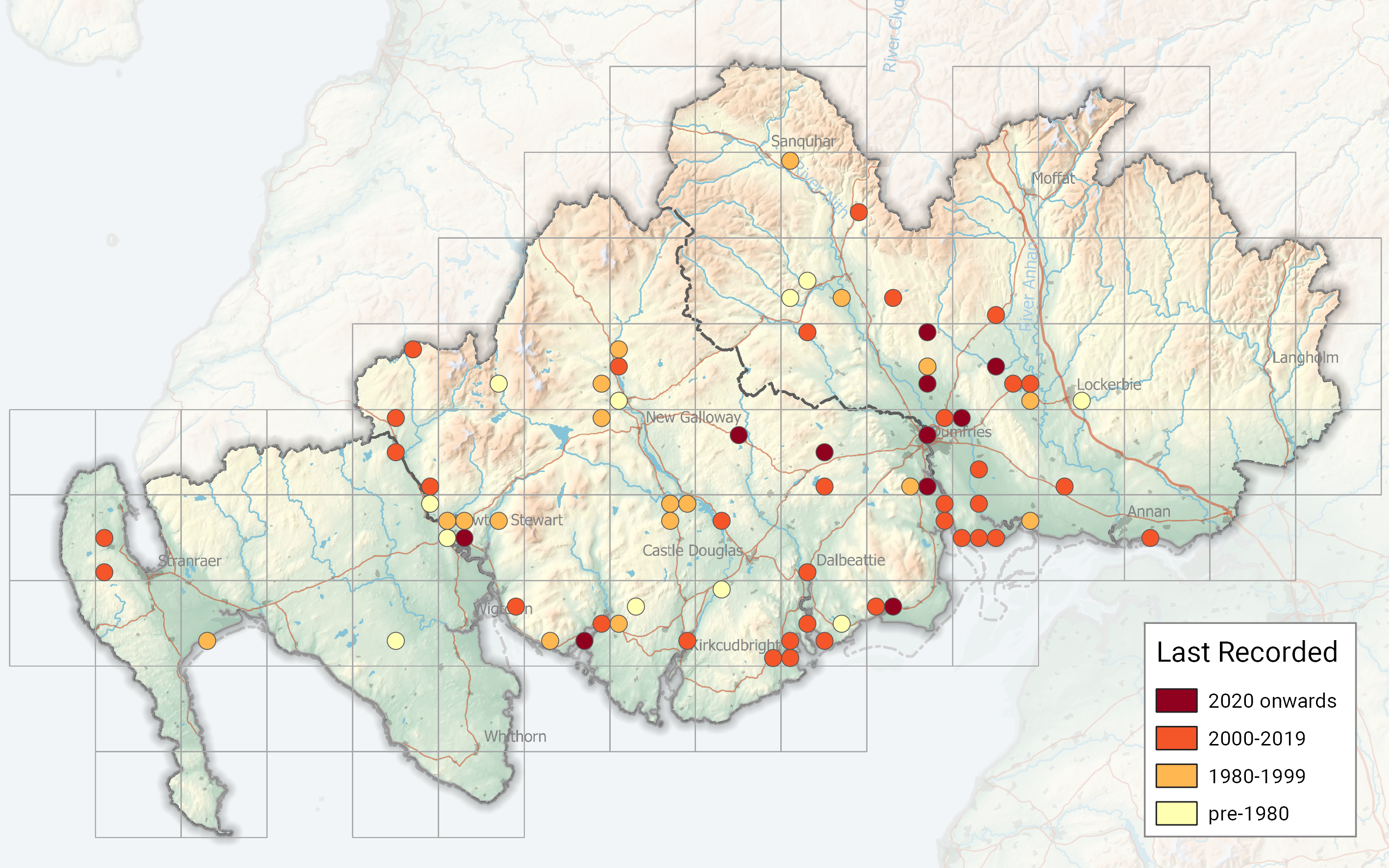
First recorded for Dumfries and Galloway in 1862 for VC72 near Dumfries by Lennon who stated it was ‘very common around the Dumfries area’, in 1898 for VC74 at Corsemalzie by Gordon who found it to be ‘abundant at light and also on tree trunks and twigs after dark in Wigtownshire’, and in 1942 for VC73 near Gatehouse of Fleet by Russell.