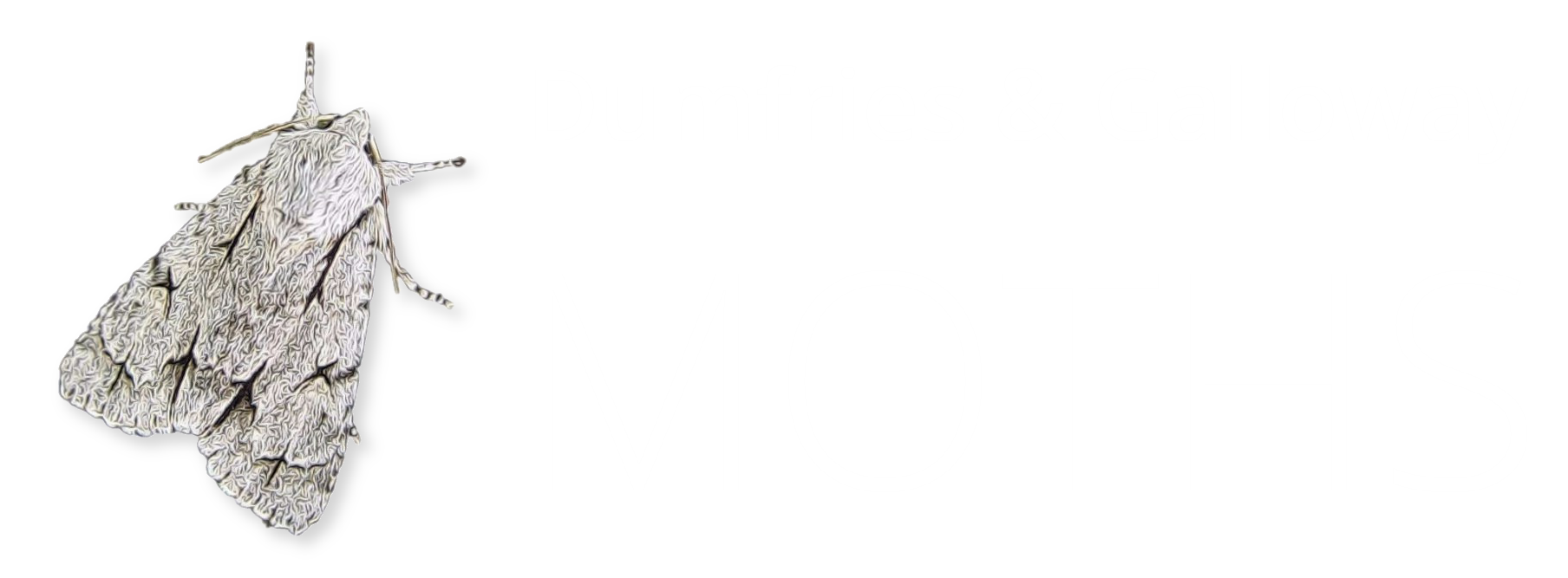


Red List: Least Concern (LC). GB Status: Common.
Identification
Usually distinctive.
Recording Method
Can be found by day, occasionally in large numbers. Attracted to light.
Life cycle
One generation. Overwinters as a pupa. Larvae August to October. Pupates in a cocoon in plant debris.
Larval foodplants
Lichens and green algae on broadleaved and coniferous trees.
Habitat
Broadleaved woodland and conifer plantations.
History
Writing in June 1856, T.B. Grierson found it ‘unusually common at present’ at Thornhill (The Entomologists’ Weekly Intelligencer (1856) 1: 108).
Lennon (1863) had found it not common, but had found it on Tinwald Downs (VC72).
The next record came from Plantain Loch in Dalbeattie Forest when four were found on 13th June 1992. In 1996, during 4th to 17th July, it was found on Screel Hill, Loch Mackie, Southwick Burn Wood and Longbridgemuir SSSI.
From then on until 2010 it had been found annually at a wide variety of sites across the region, including swarms on the Raider’s Road on 19th June 2002 when they were fluttering everywhere. During 2003 nesting Pied Flycatcher’s fed there young almost exclusively on Red-necked Footman imagos at Penpont (VC72).
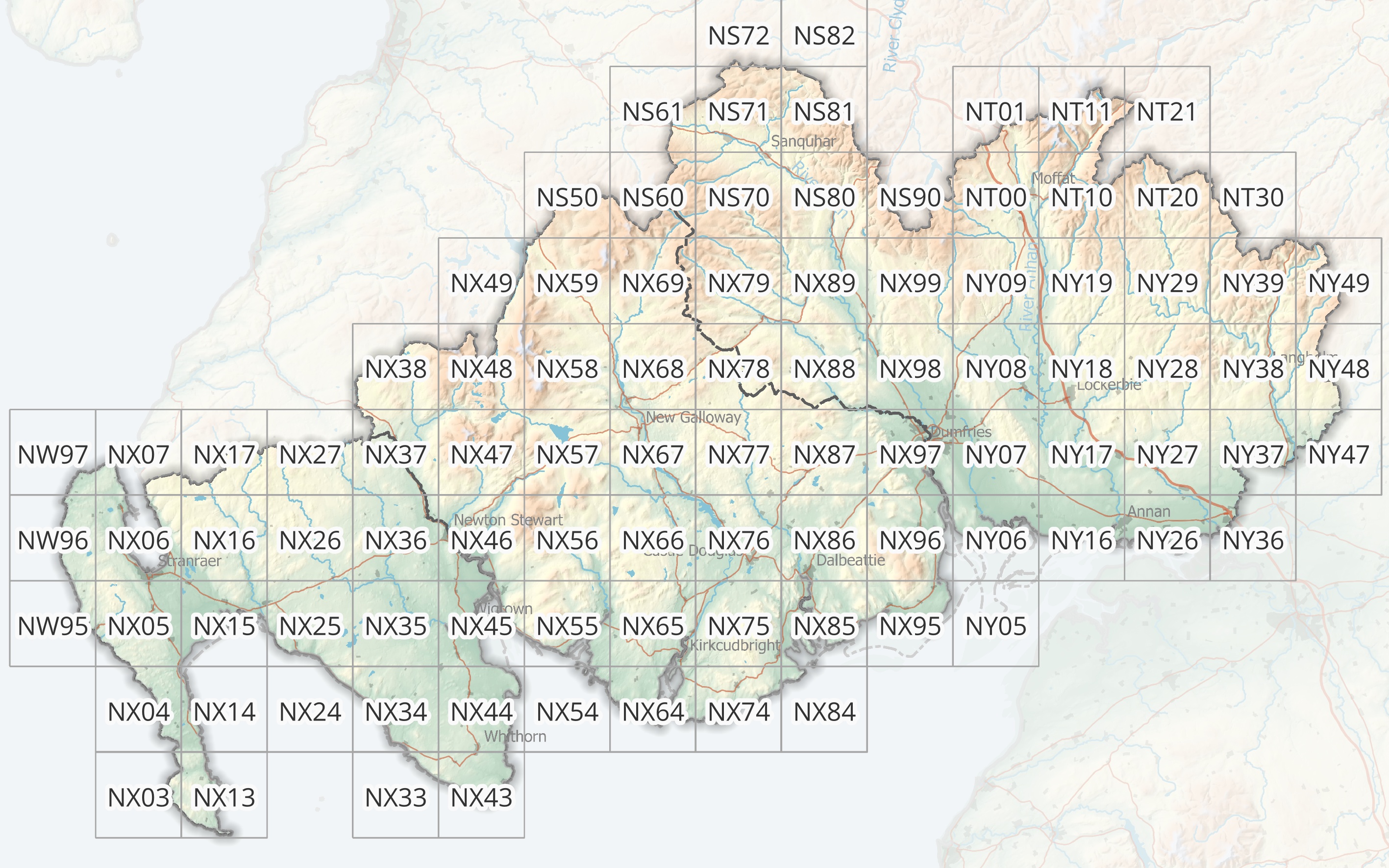
By late 2003 they had been recorded from twenty-one 10km squares such was the northward spread. Large range expansion in the region, and elsewhere in Scotland, from around 2000 onwards.


