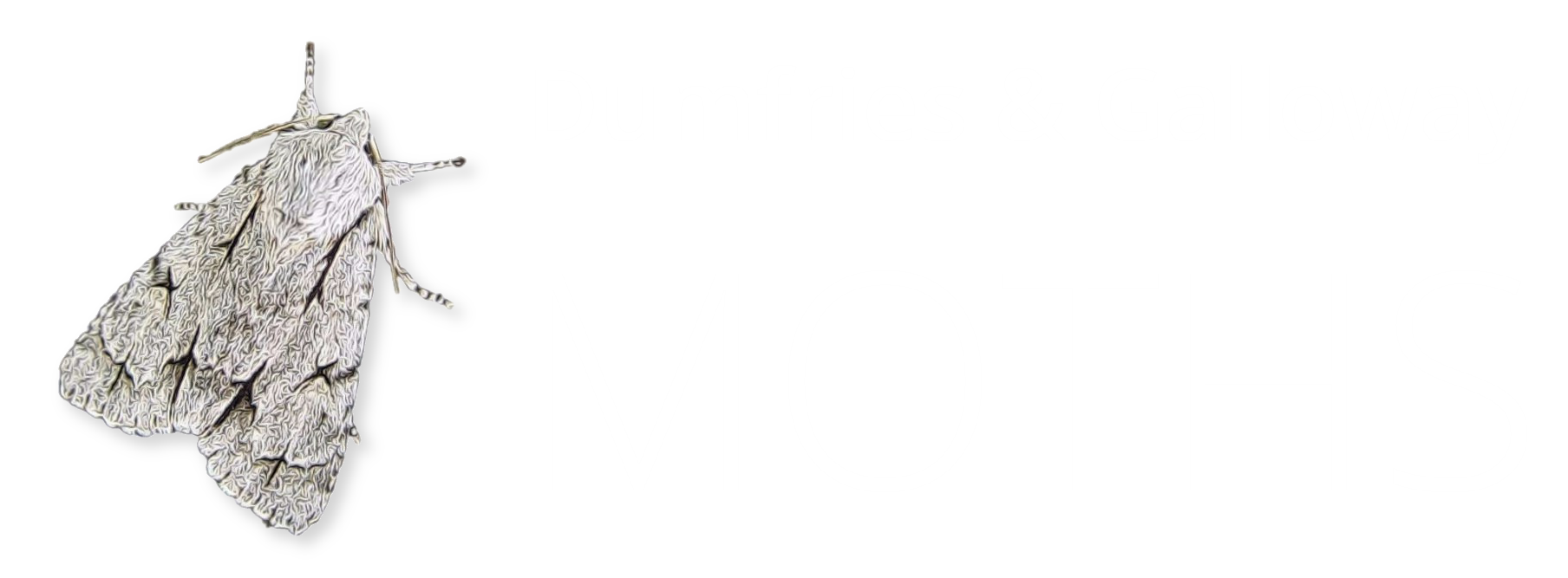


Red List: Least Concern (LC). GB Status: Common.
Identification
Usually distinctive. Care required, potential confusion with Pale Pinion.
Recording Method.
Attracted to light, also comes to sugar and flowers.
Life cycle
One generation. Overwinters as an adult. Larvae May to July. Pupates underground.
Larval foodplants
Ash.
Habitat
Some gardens, marshy sites and open broadleaved woodland.
History
Lennon (1863) had stated that it was not common, but that it had occurred near Dalscone (VC72). Lennon also found the Pale Pinion at the same site but stated it to be rare!
MOGBI make no mention of any records for our Region.
However, the first confirmed Scottish modern record was caught at Glencaple on 2nd May 2009 and confirmed by Roy Leverton.


