
Red List: Vulnerable (VU). GB Status: Common.
Identification
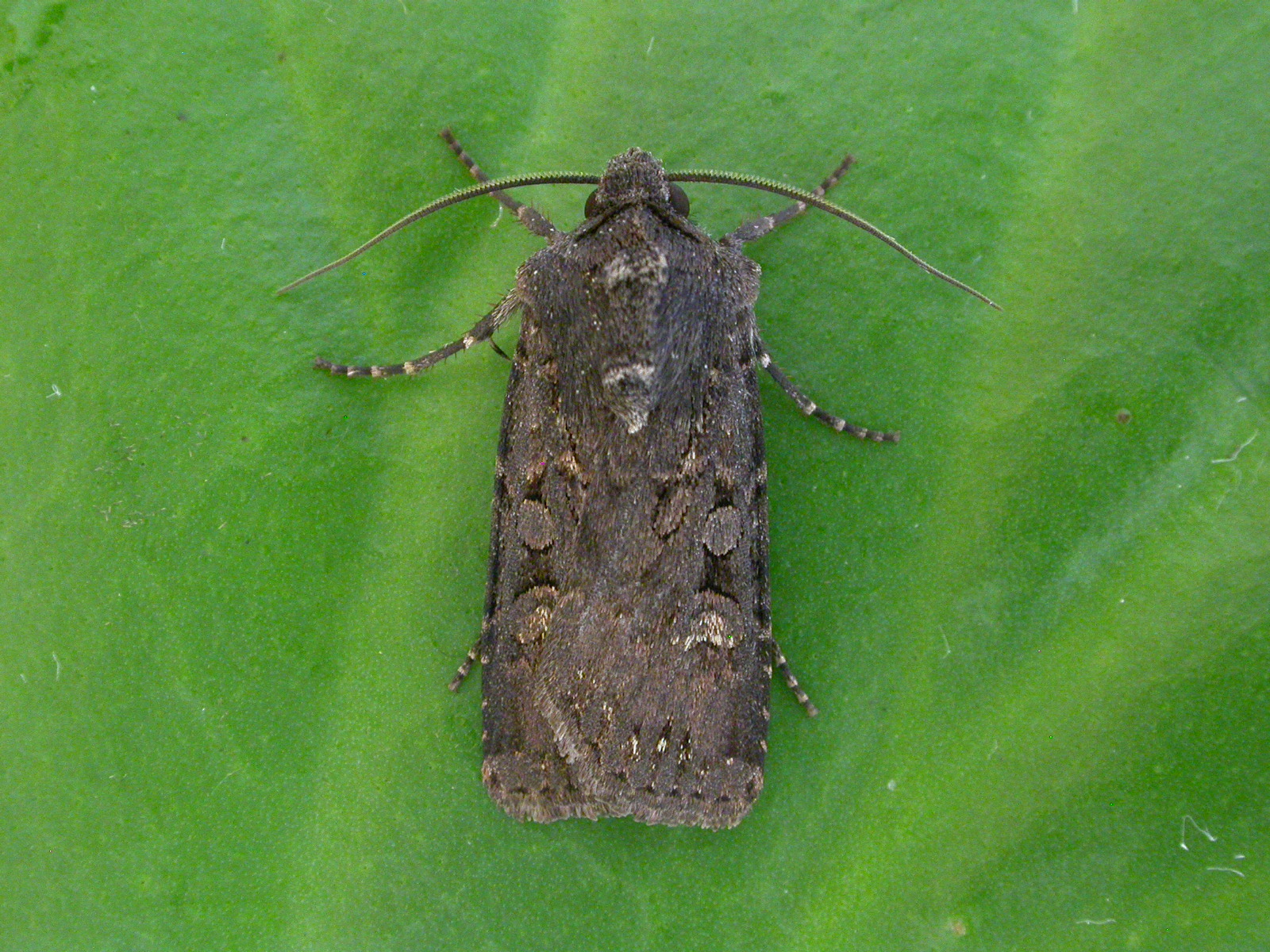
Usually distinctive.
Recording Method.
Attracted to light, also comes to sugar and flowers.
Life cycle
One generation. Overwinters as an egg. Larvae March to June. Pupates in a cocoon underground.
Larval foodplants
Clovers, docks, plantains and other herbaceous plants.
Habitat
A wide variety of habitats including gardens, rough open ground and marshes.
History
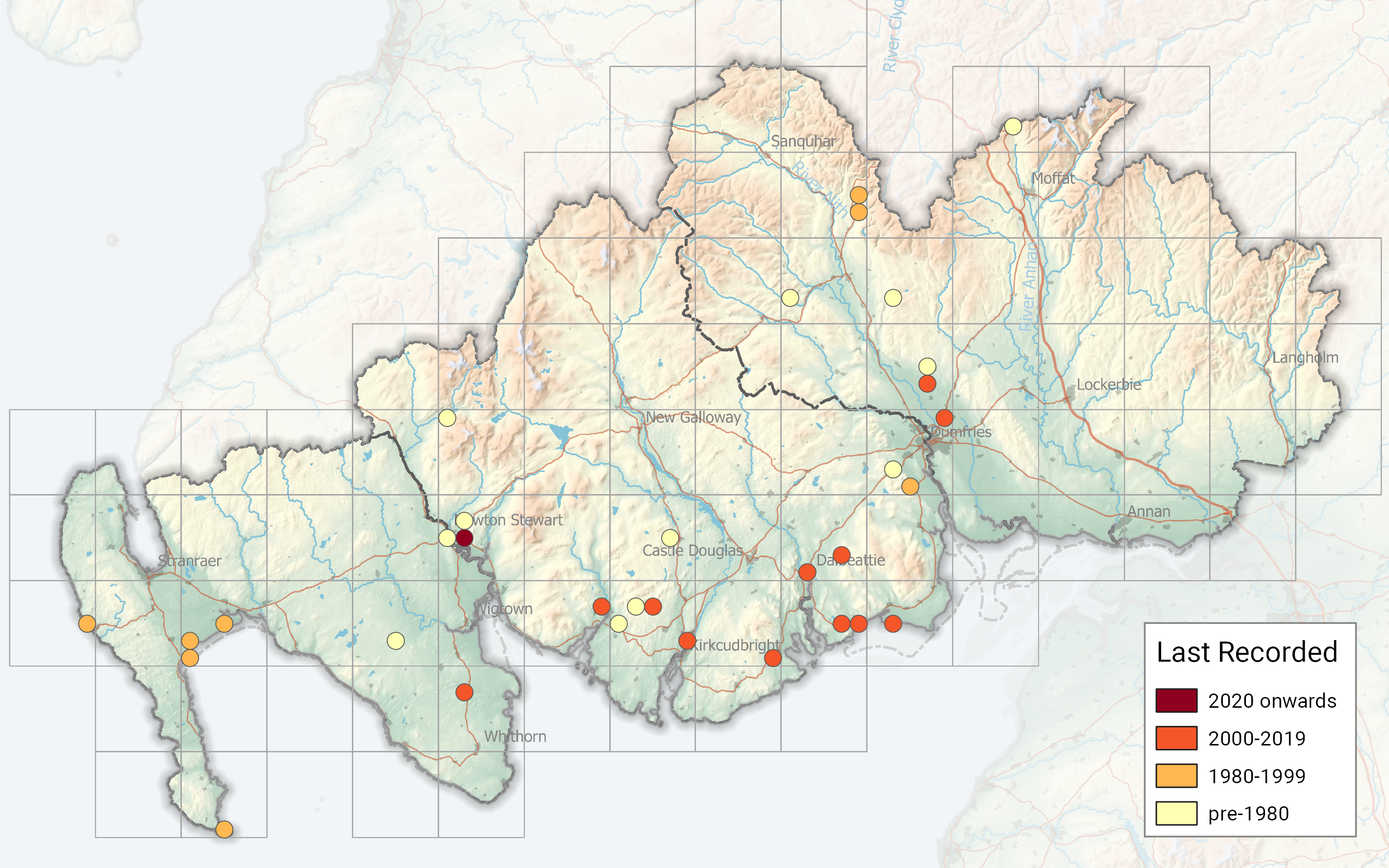
Lennon (1863) stated that it was not common, but that it had occurred at Dalskairth (VC73). Gordon (1913) had caught one in his garden at Corsemalzie on 11th August 1896, and another at Whitedyke Low Moor, close by, on 30th September 1897. Sir Arthur Duncan (1909-84) during his lifetime had found it at Closeburn, Tynron and Castlehill, Dumfries (all VC72).
It was 1971 before it appeared again, this time at Caldon (VC73). The only Rothamsted records were a single at Gatehouse of Fleet in 1974, and three records from Newton Stewart in 1977, and a single from Mabie Forest in 1985.
During August 1987 Bernard Skinner had found it at Sandhead (VC74). The from 1992 to 2001 it appeared nearly annually at Kirkton. A small number of other widespread sites recorded it during the same period.