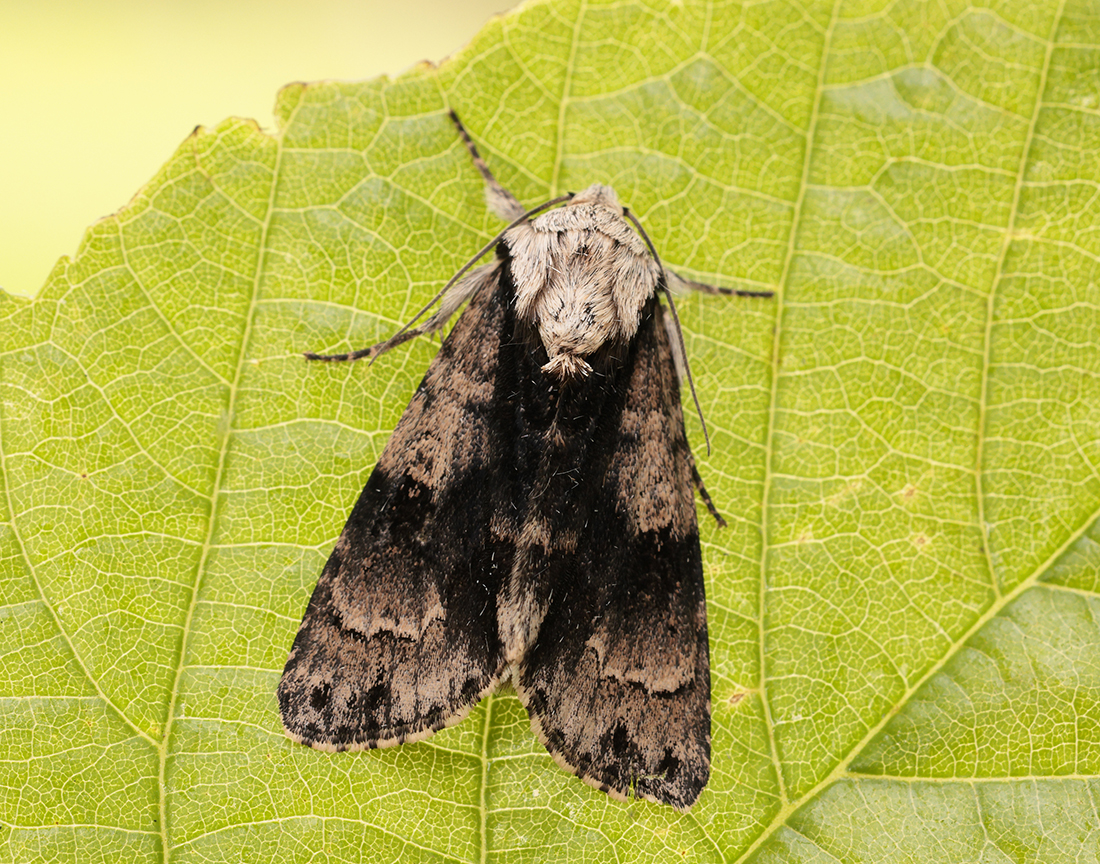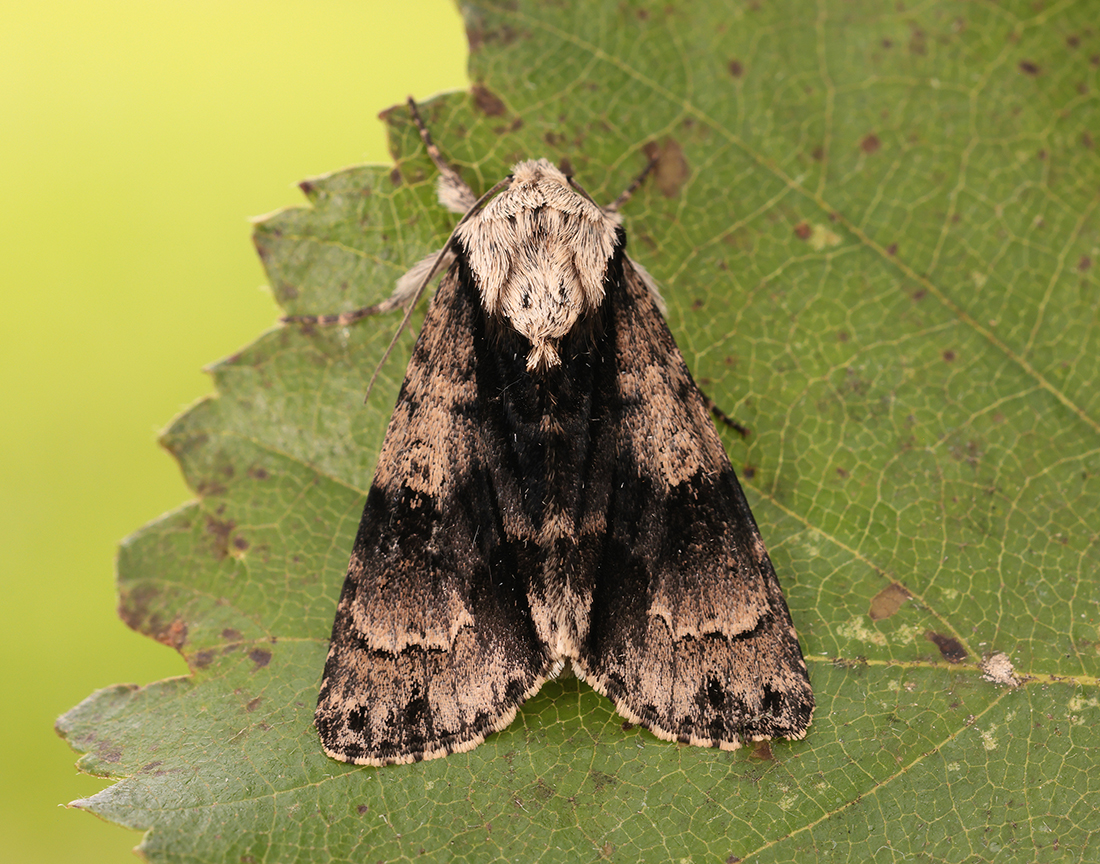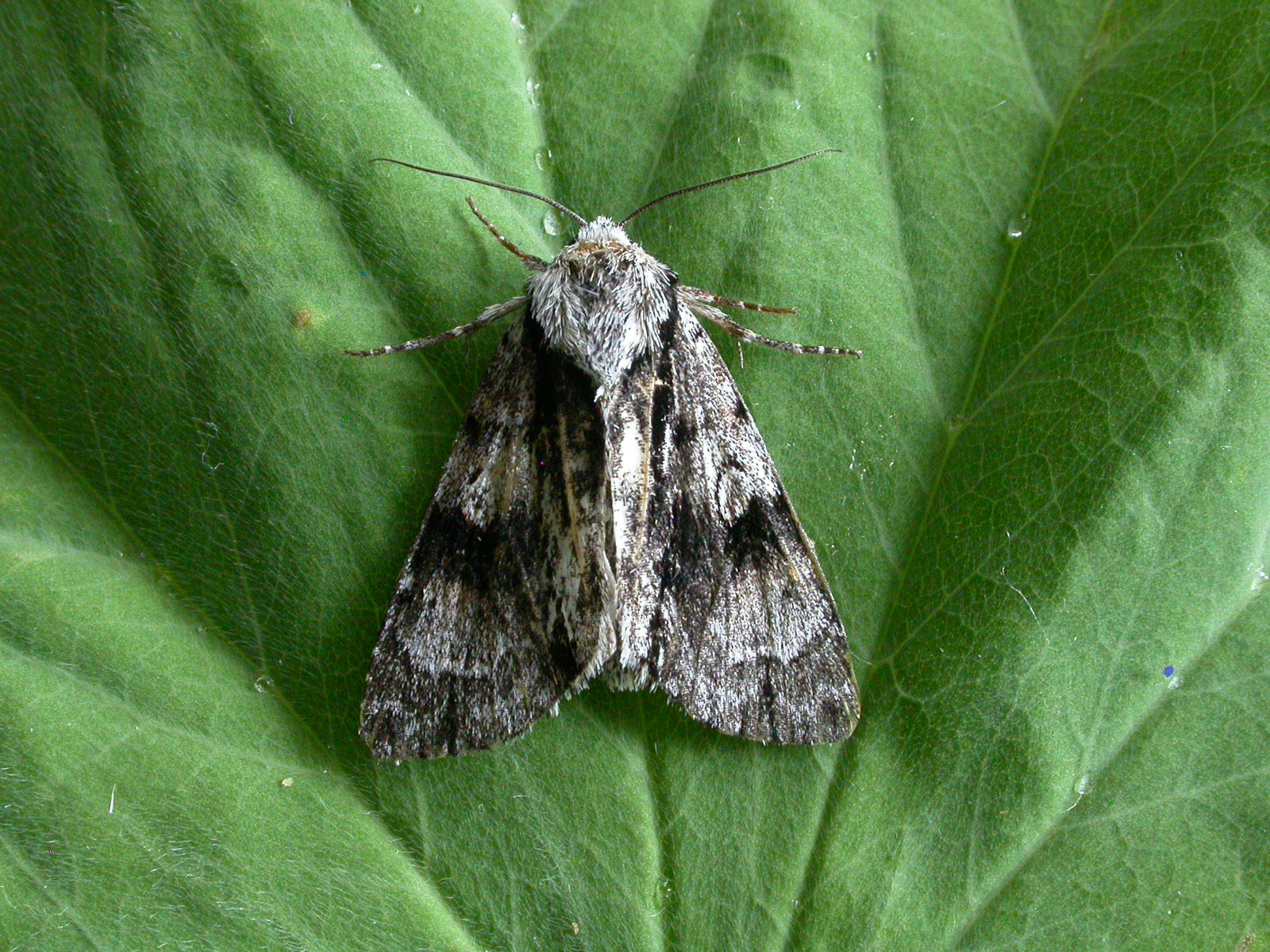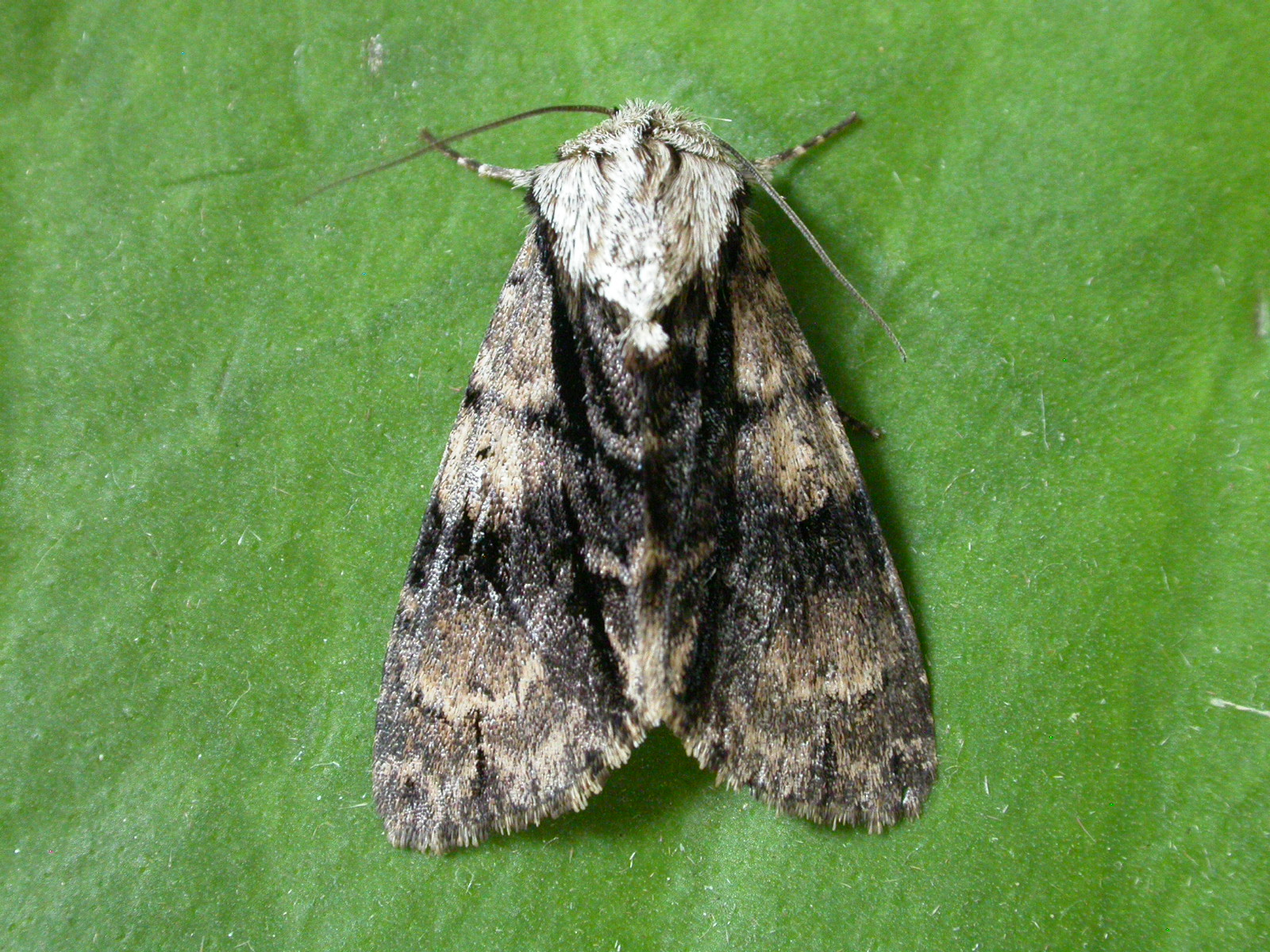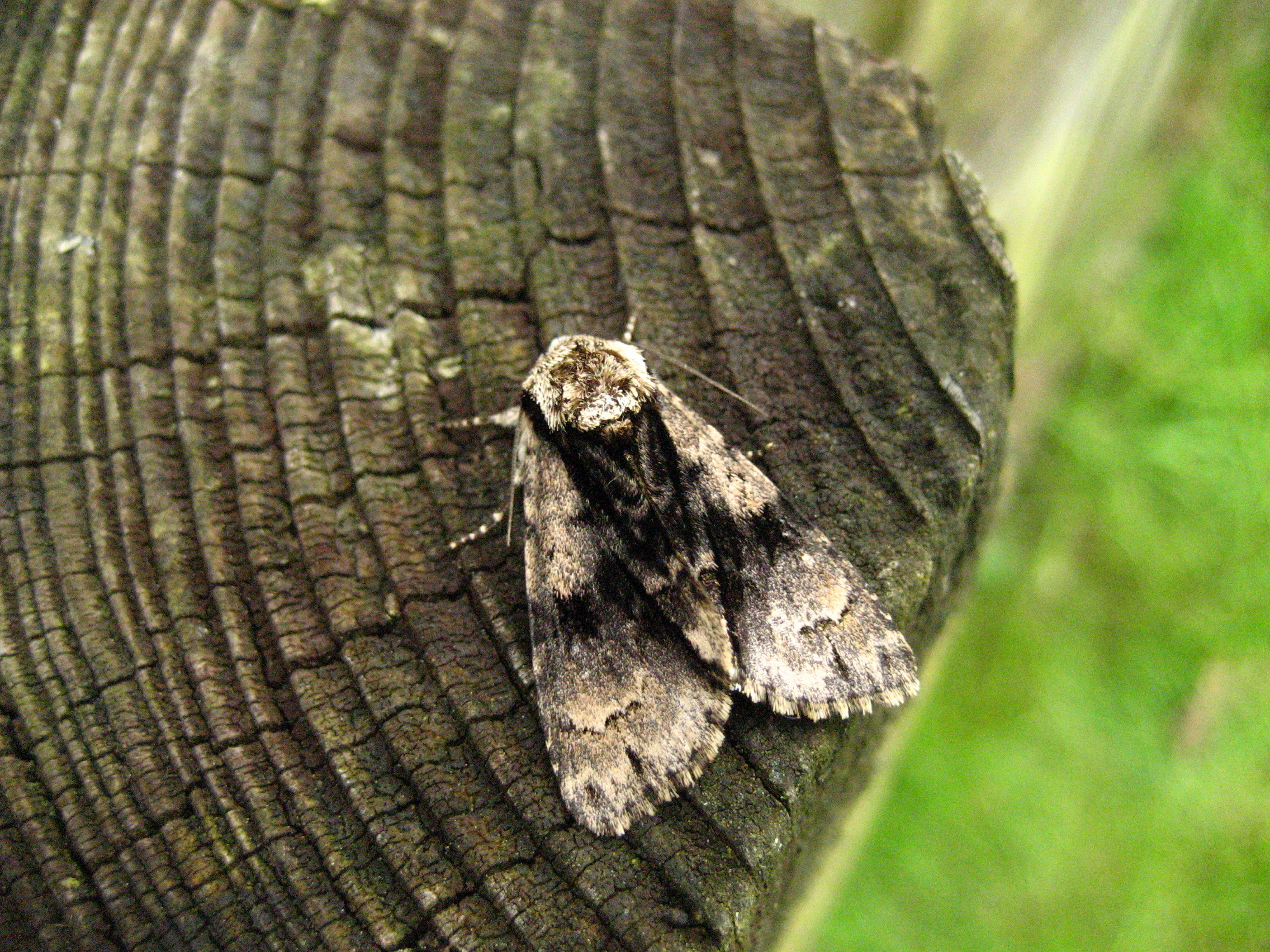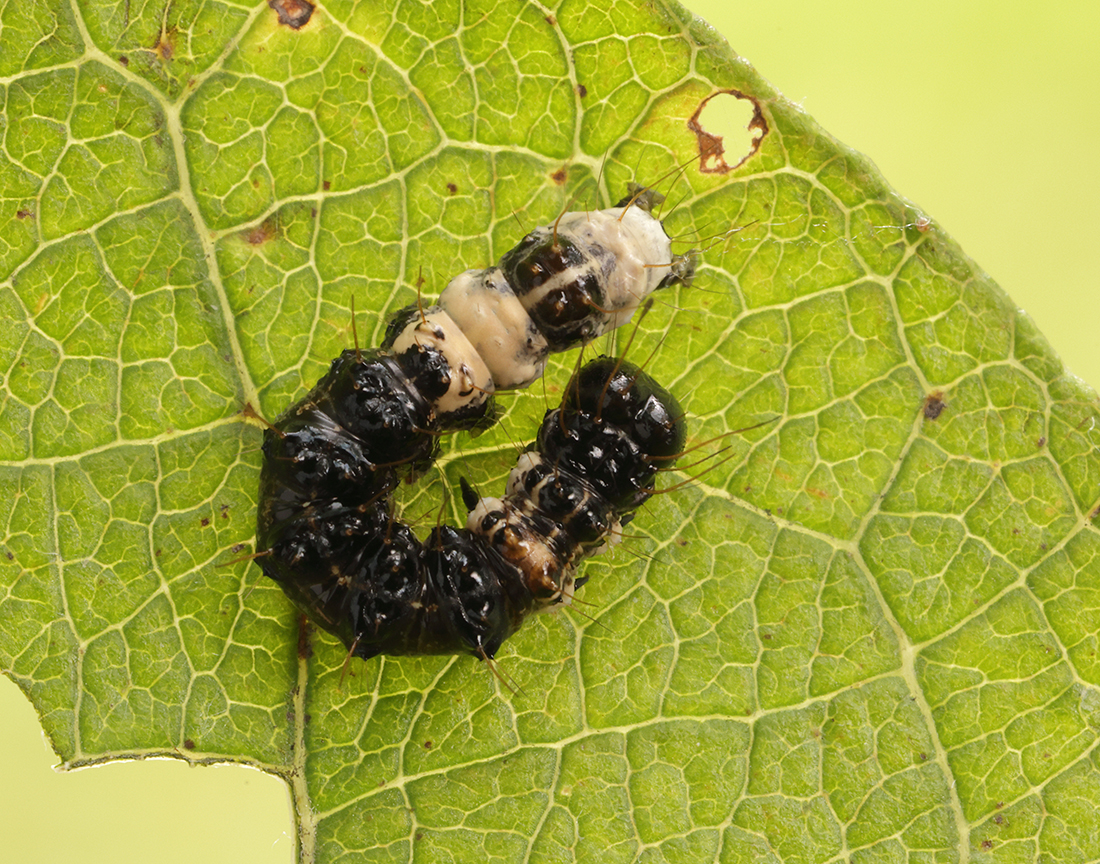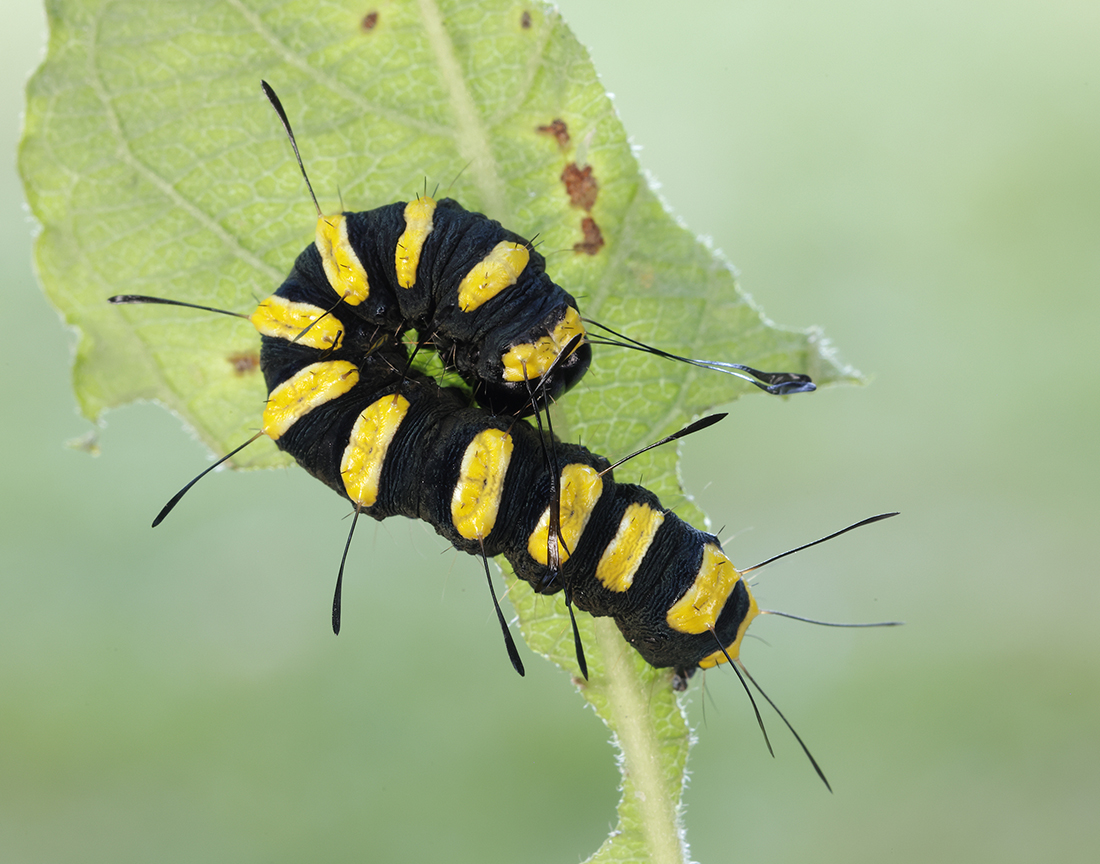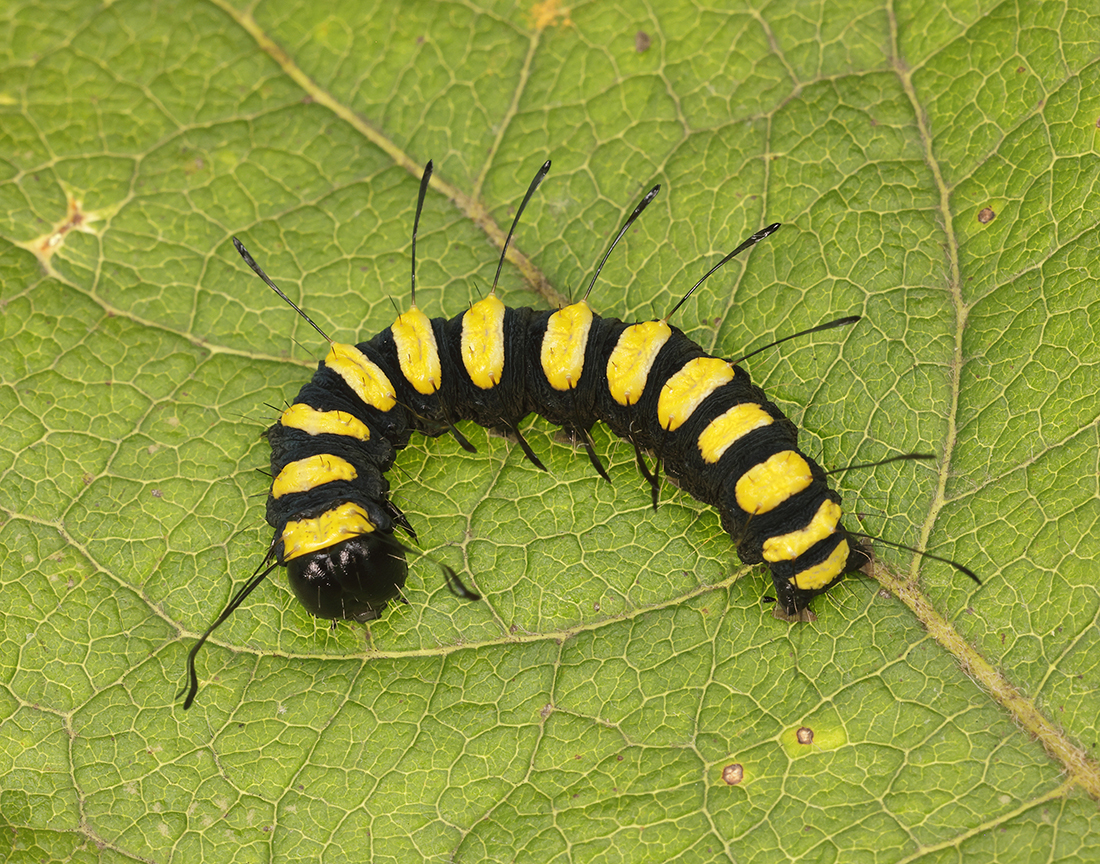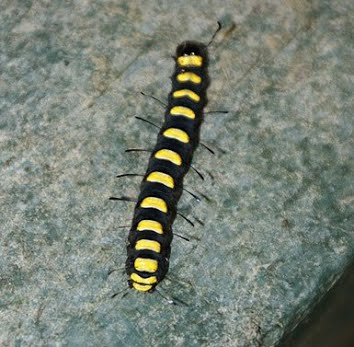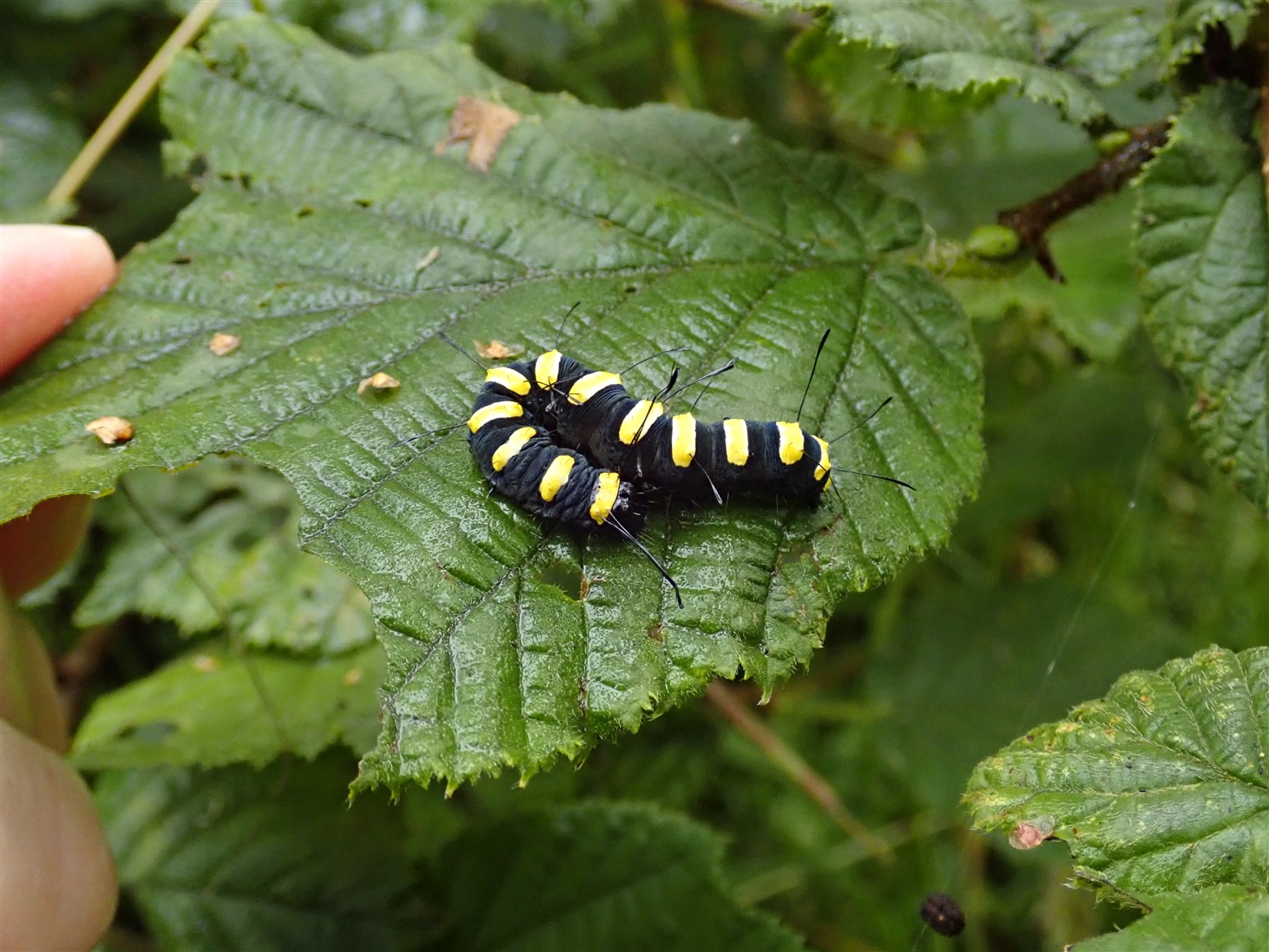

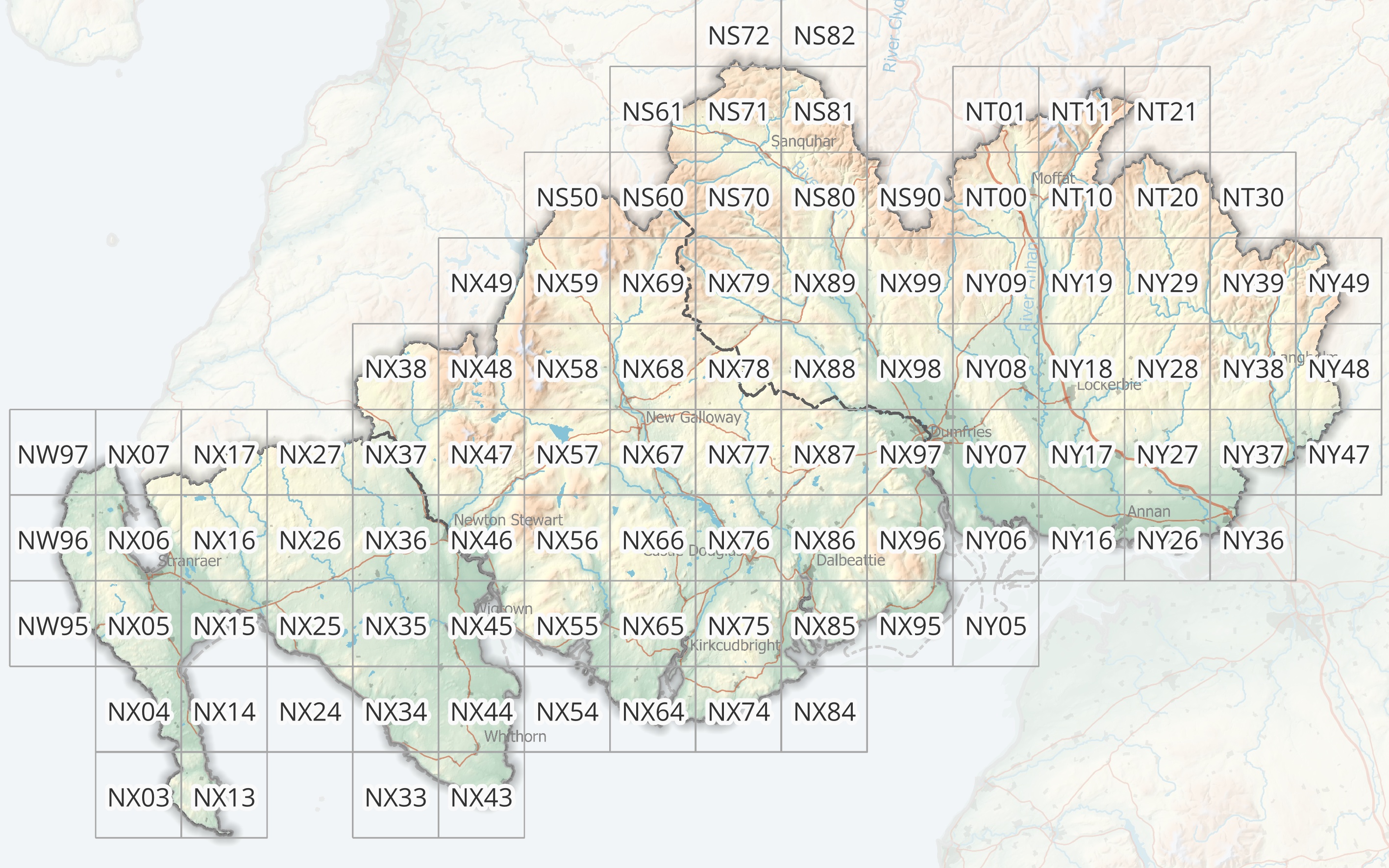
Red List: Least Concern (LC). GB Status: Common.
Identification
Usually distinctive.
Recording Method.
Attracted to light.
Life cycle
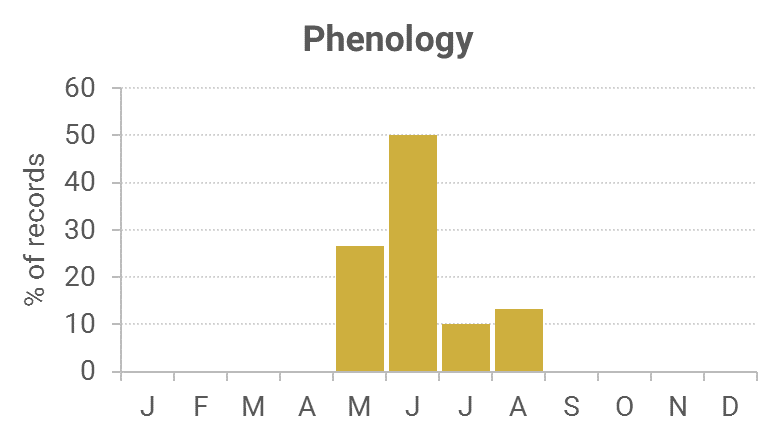
One generation. Overwinters as a pupa in rotten wood. Larvae June to August.
Larval foodplants
A range of broadleaved trees including birches, willows, oaks and elms, as well as Alder.
Habitat
Braodleaved, often damp, woodland and scrub.
History
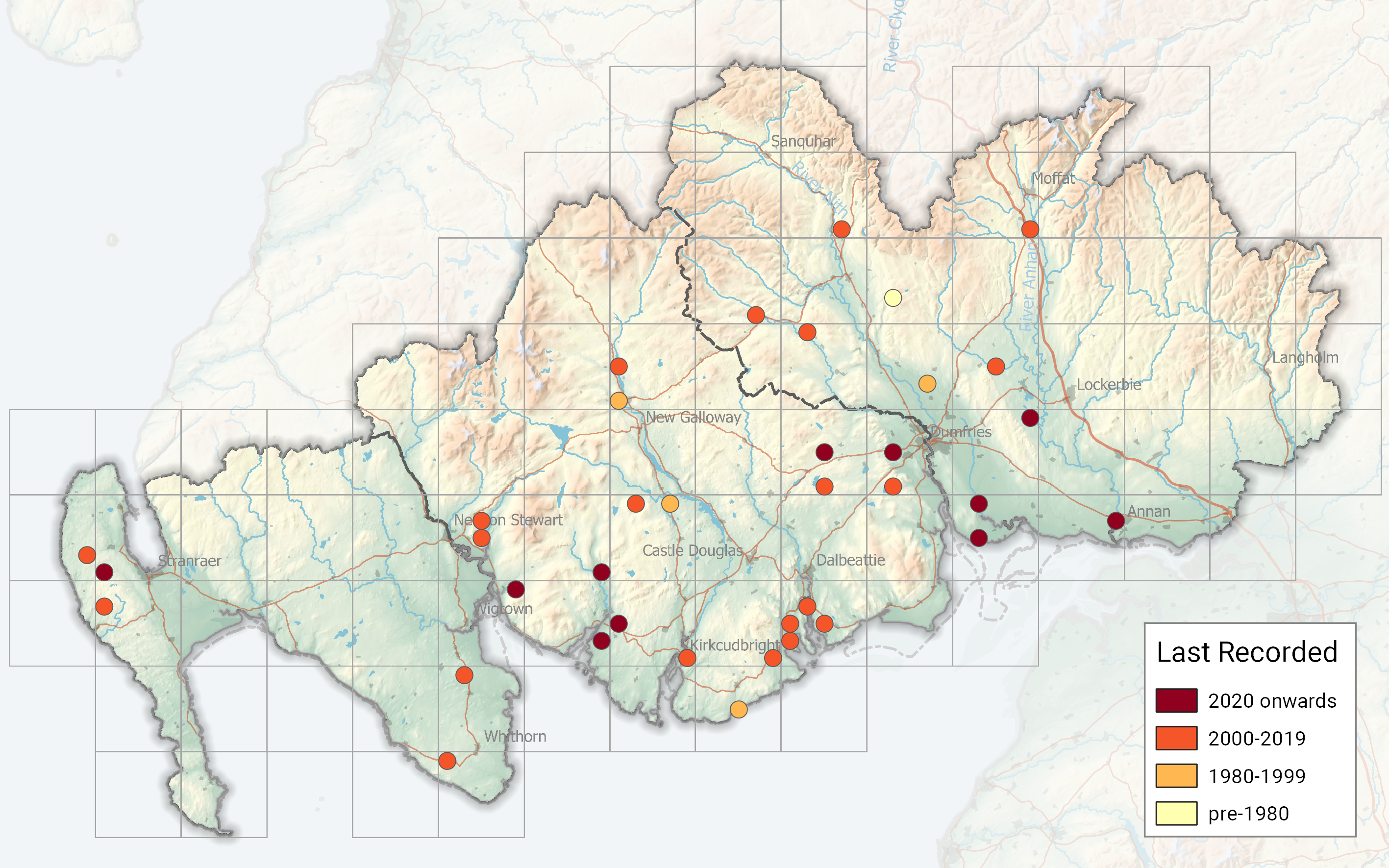
The first instance (BRC data) is not really fully authenticated but records that Sir Arthur Duncan (1909-84) during his lifetime had found it at Closeburn (VC72). The second, same source, was of a larva found at Springfield, Gretna, late August, 1979. Through regular trapping with MV on the Hensol Estate (VC73) during 1982-84, five more were recorded during May and June.
After 12 years wait, with renewed interest, it was trapped at Kirkton during 1996, 1997 and 1998. During the Scottish Entomologists’ gathering between 21st to 23rd June 1996, another was found at St John’s Town of Dalry (VC73), with a second for 1998 found at Abbey Burn Foot through survey work on the MOD land. The next came from Kippford in mid-June, 2006. Larvae were again found in 2009 during August in Mabie Forest, followed by another larva on 31st July 2010, at Palnackie (VC73).