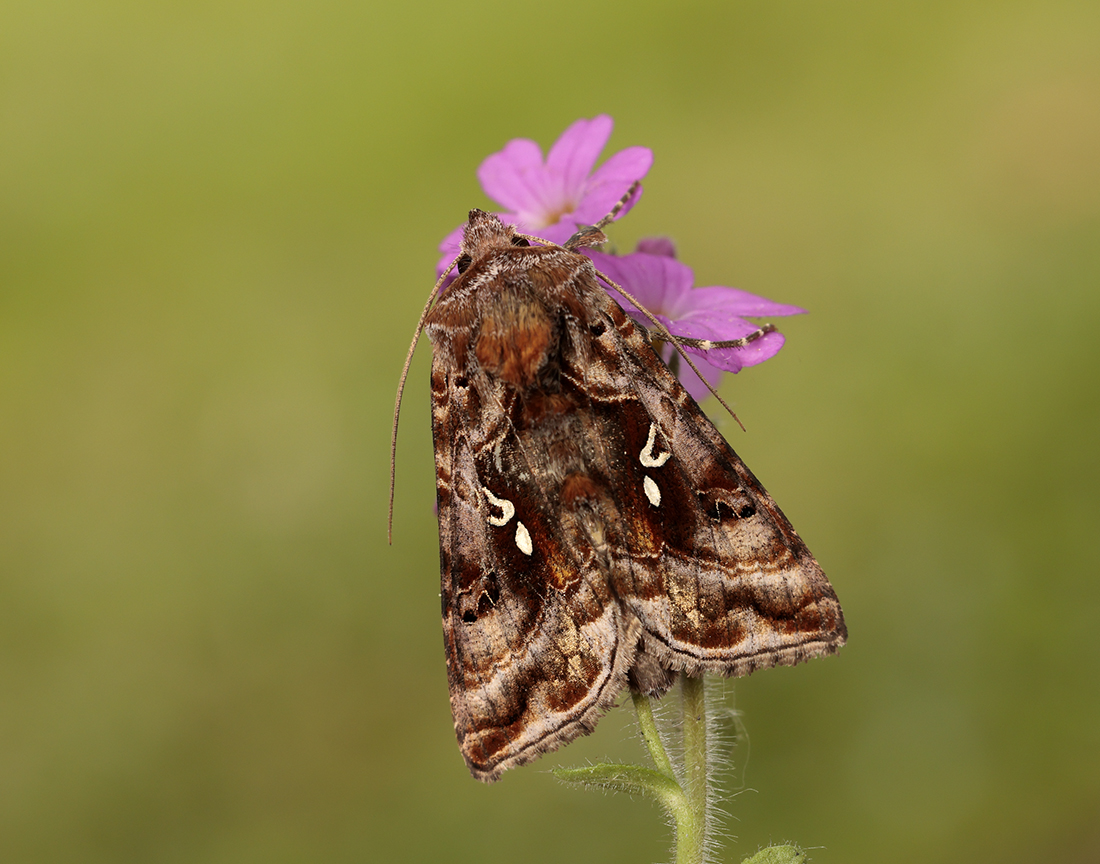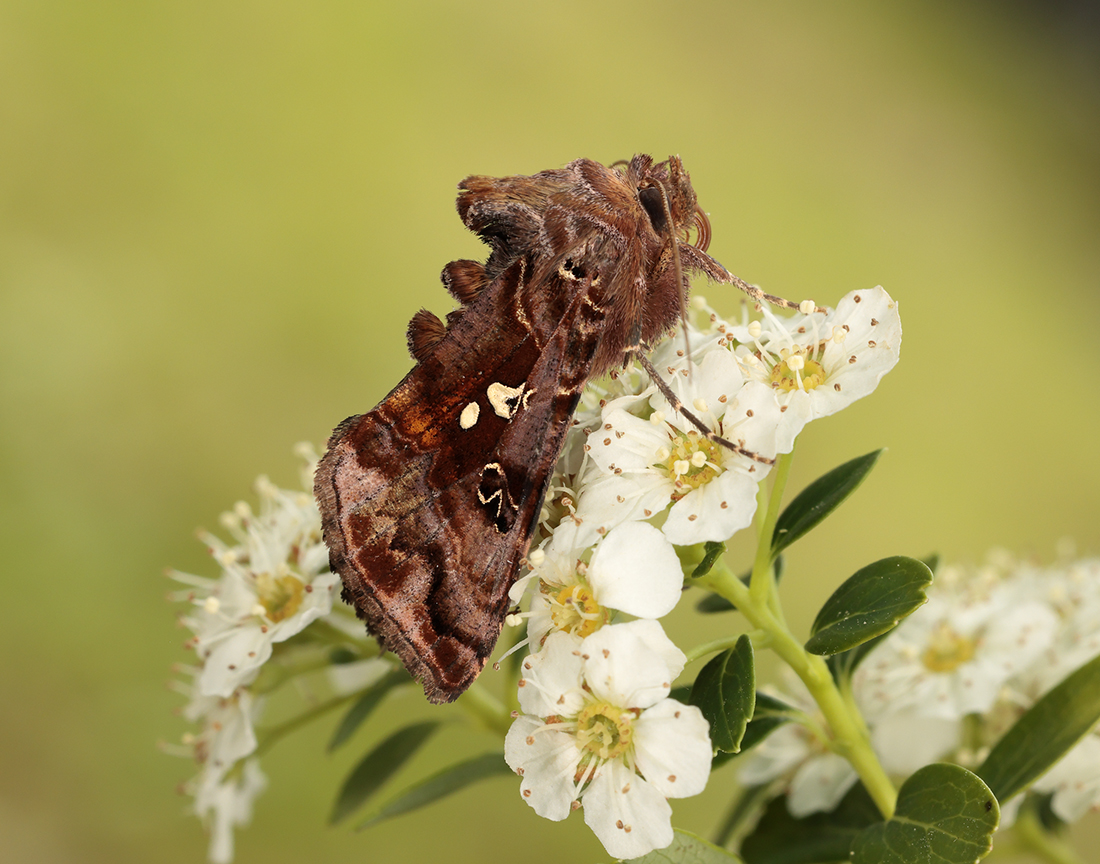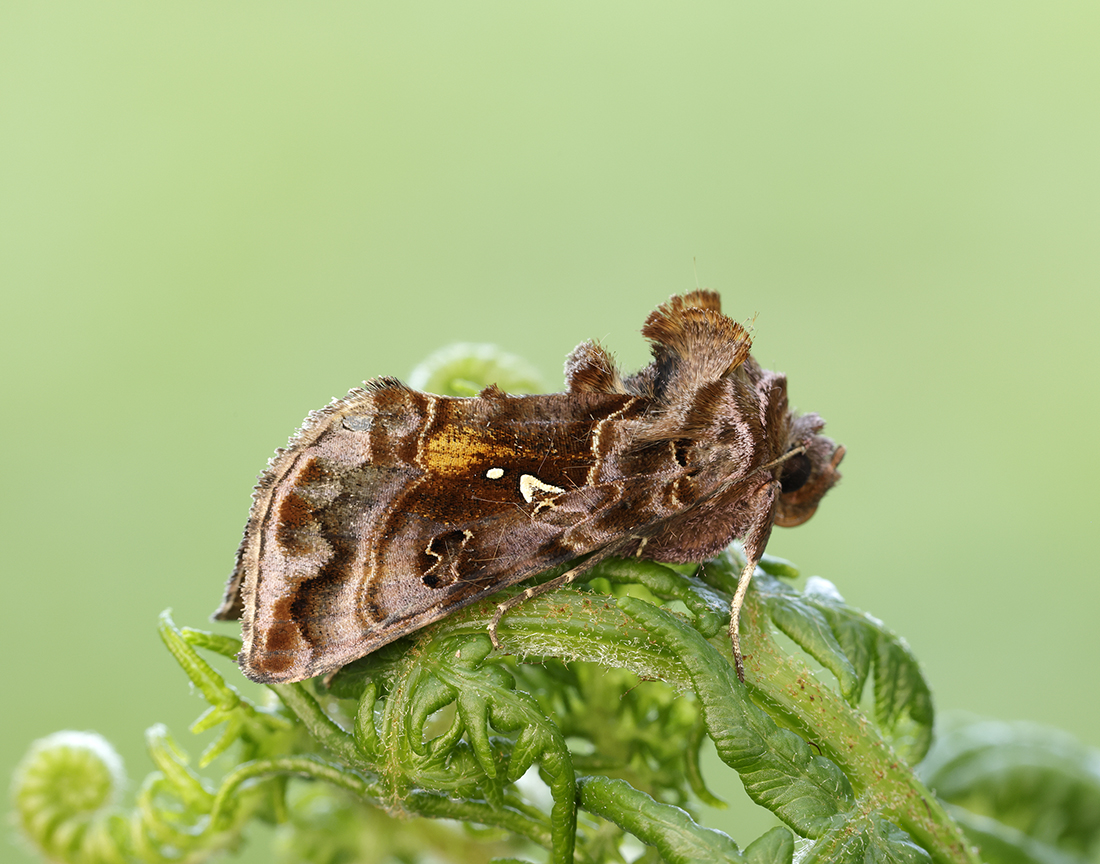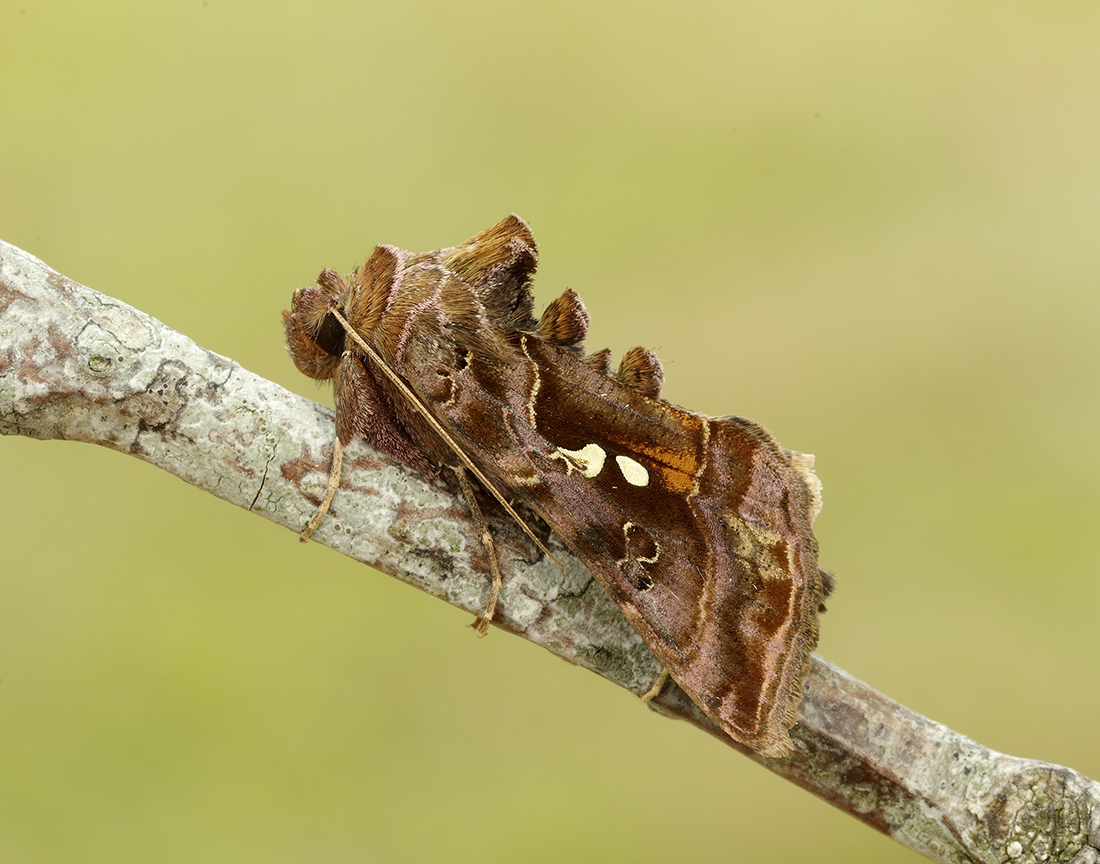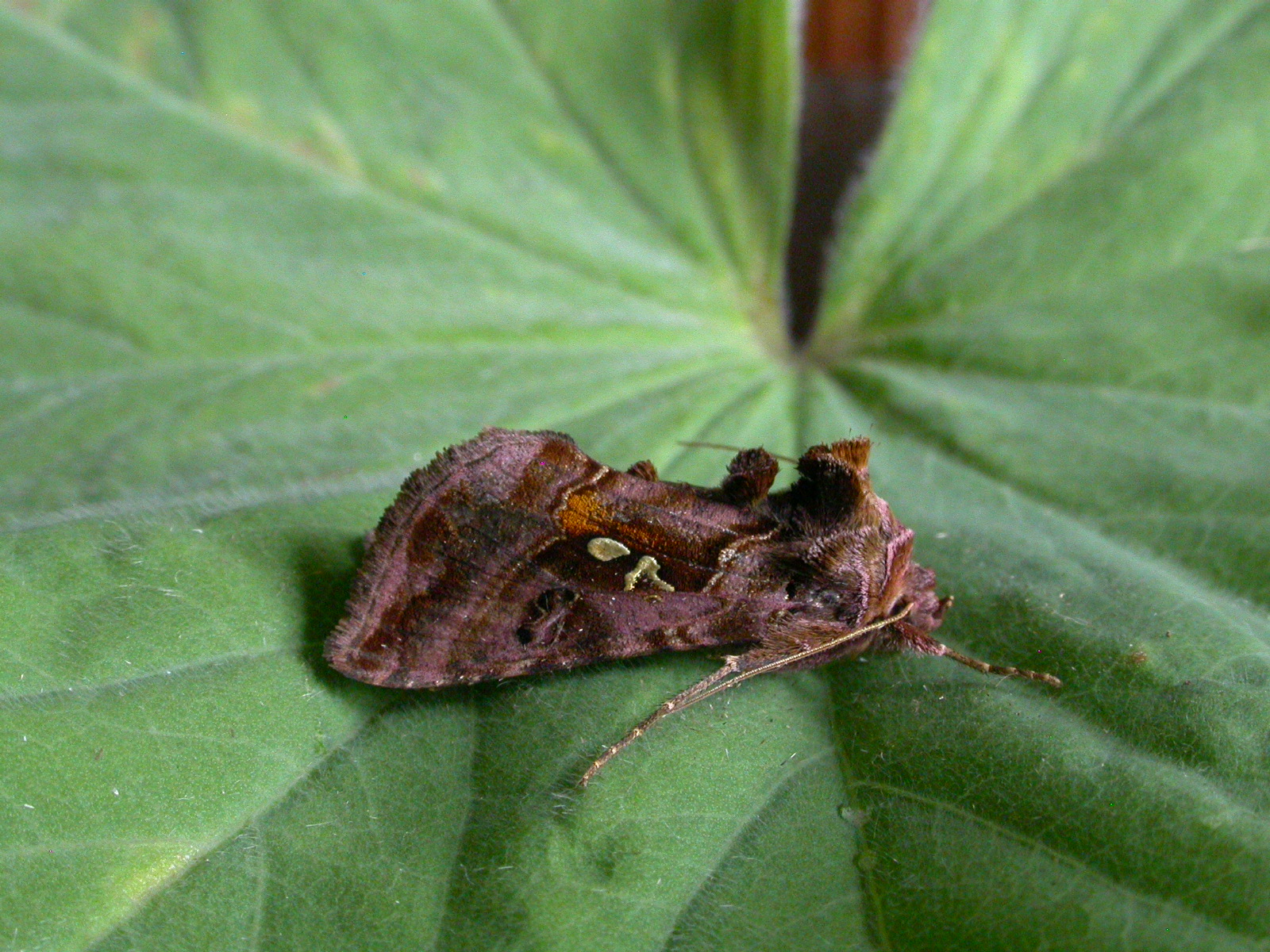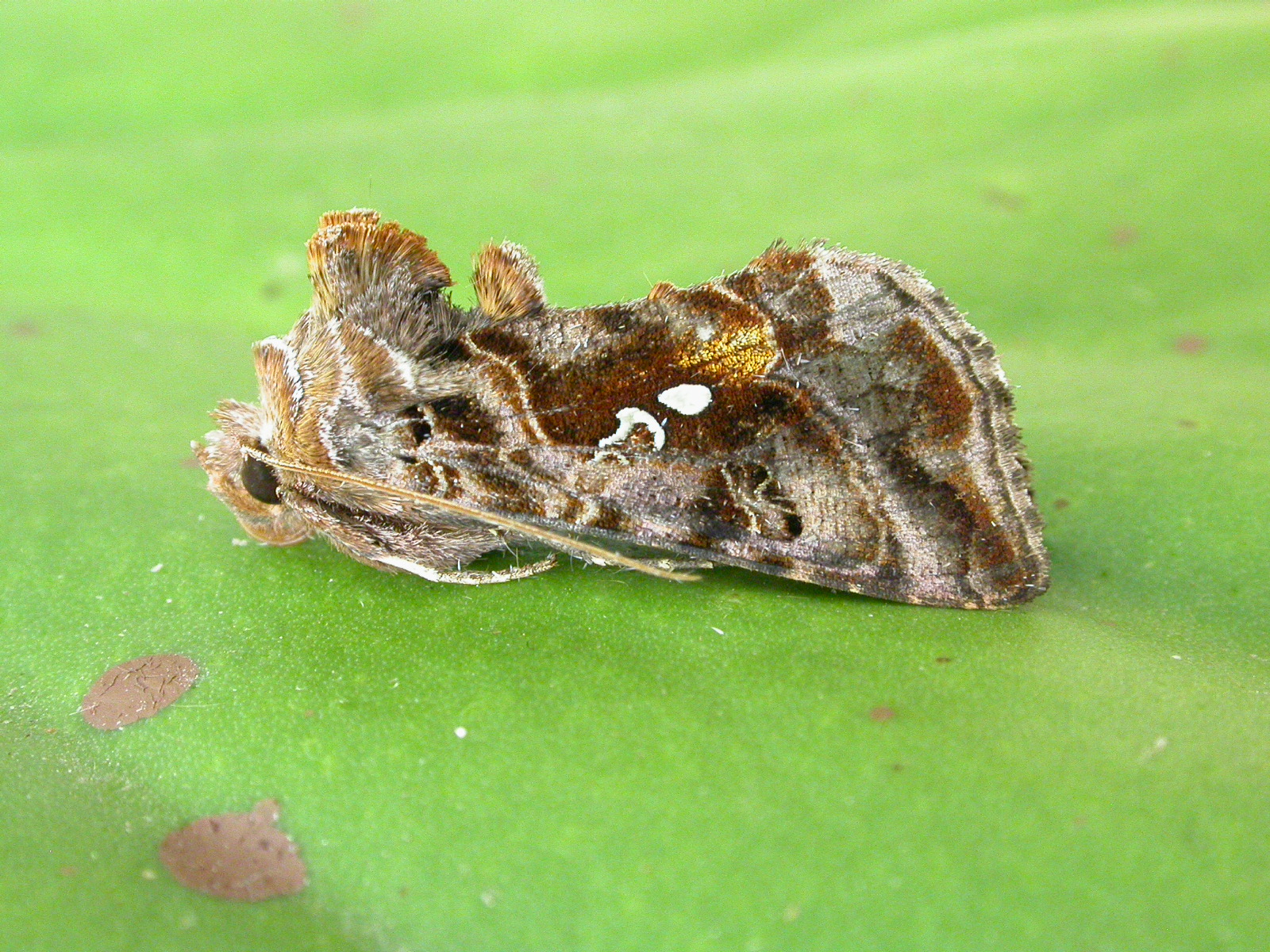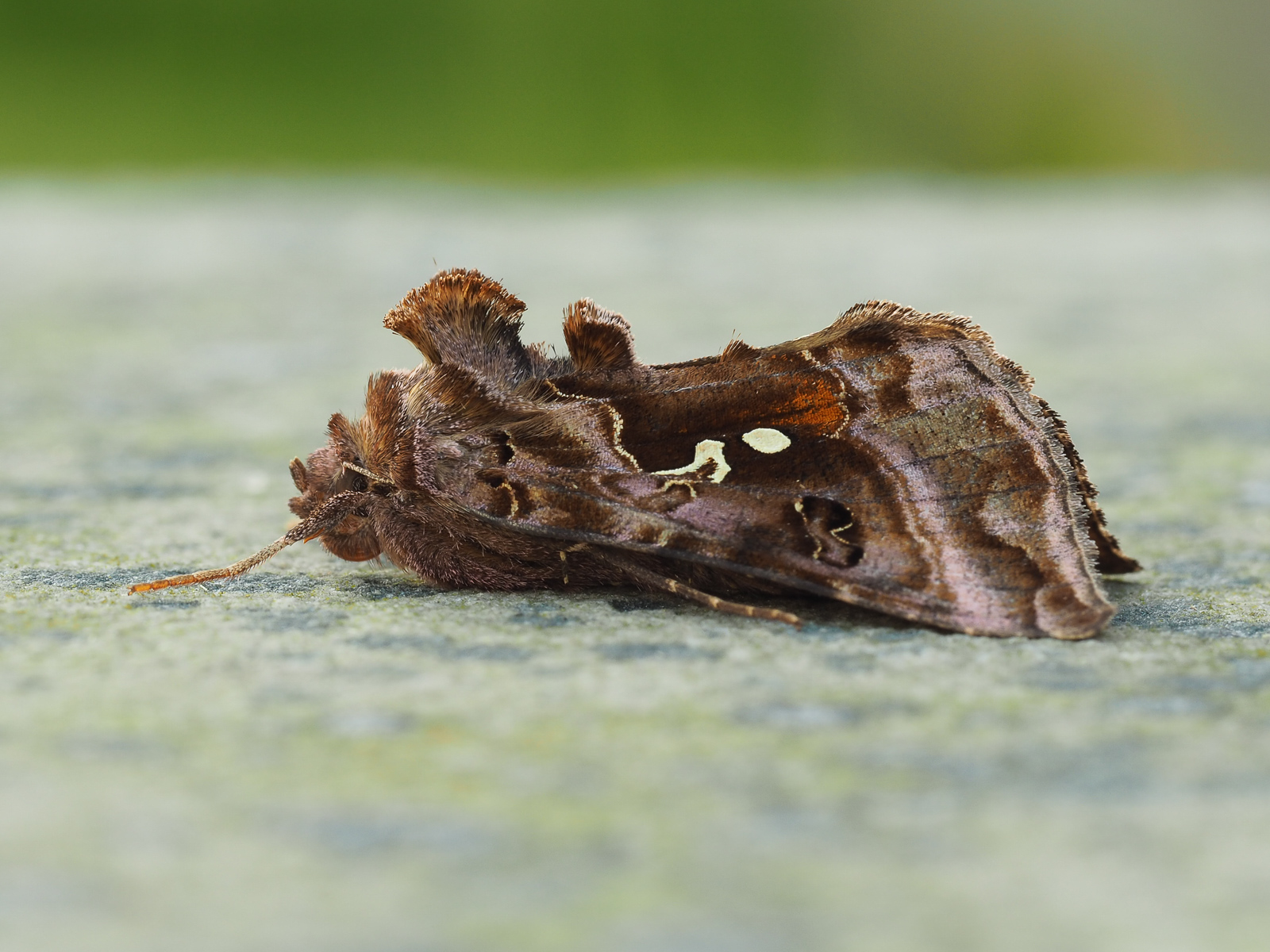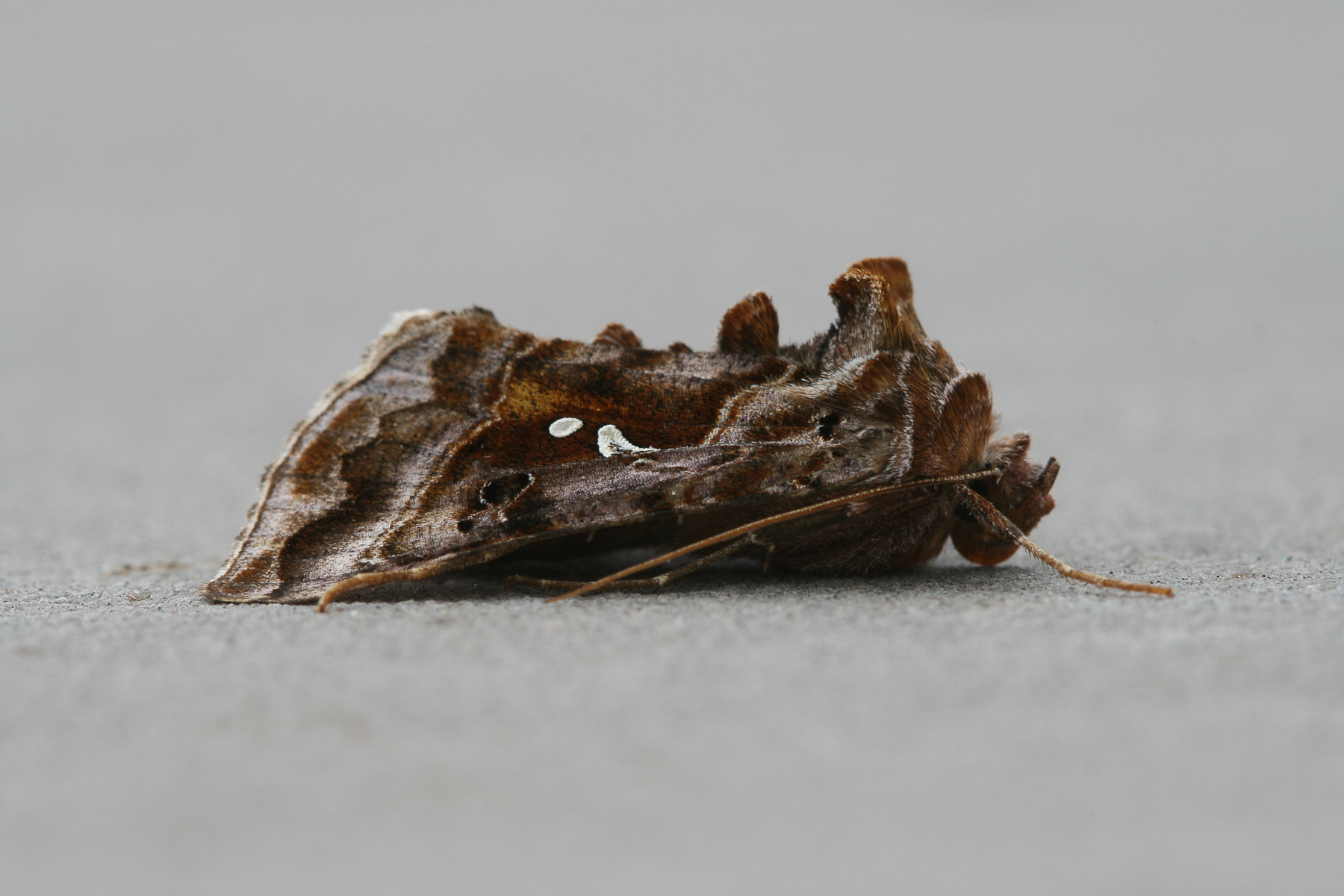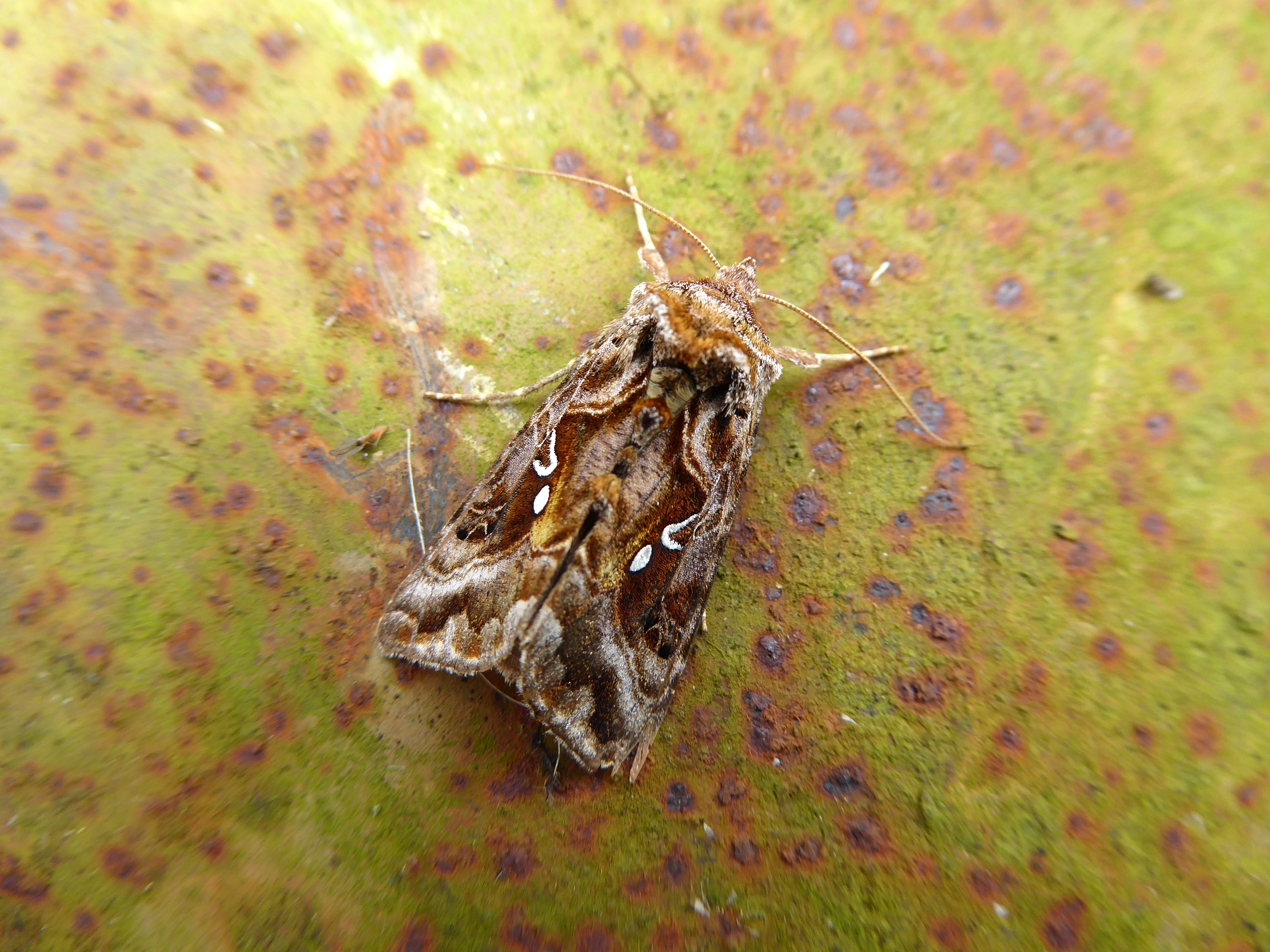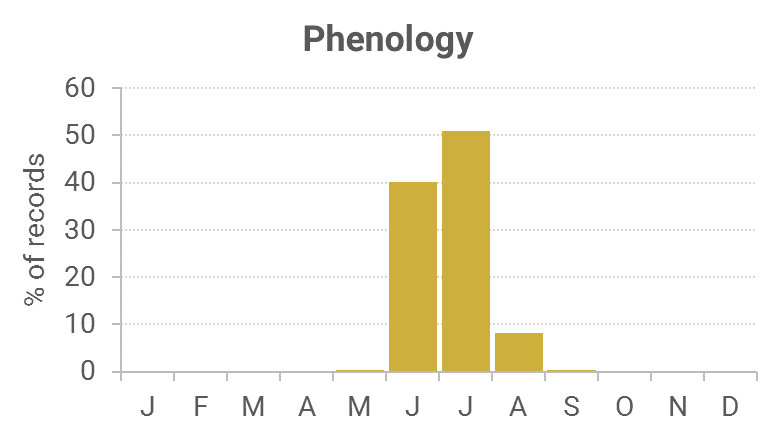

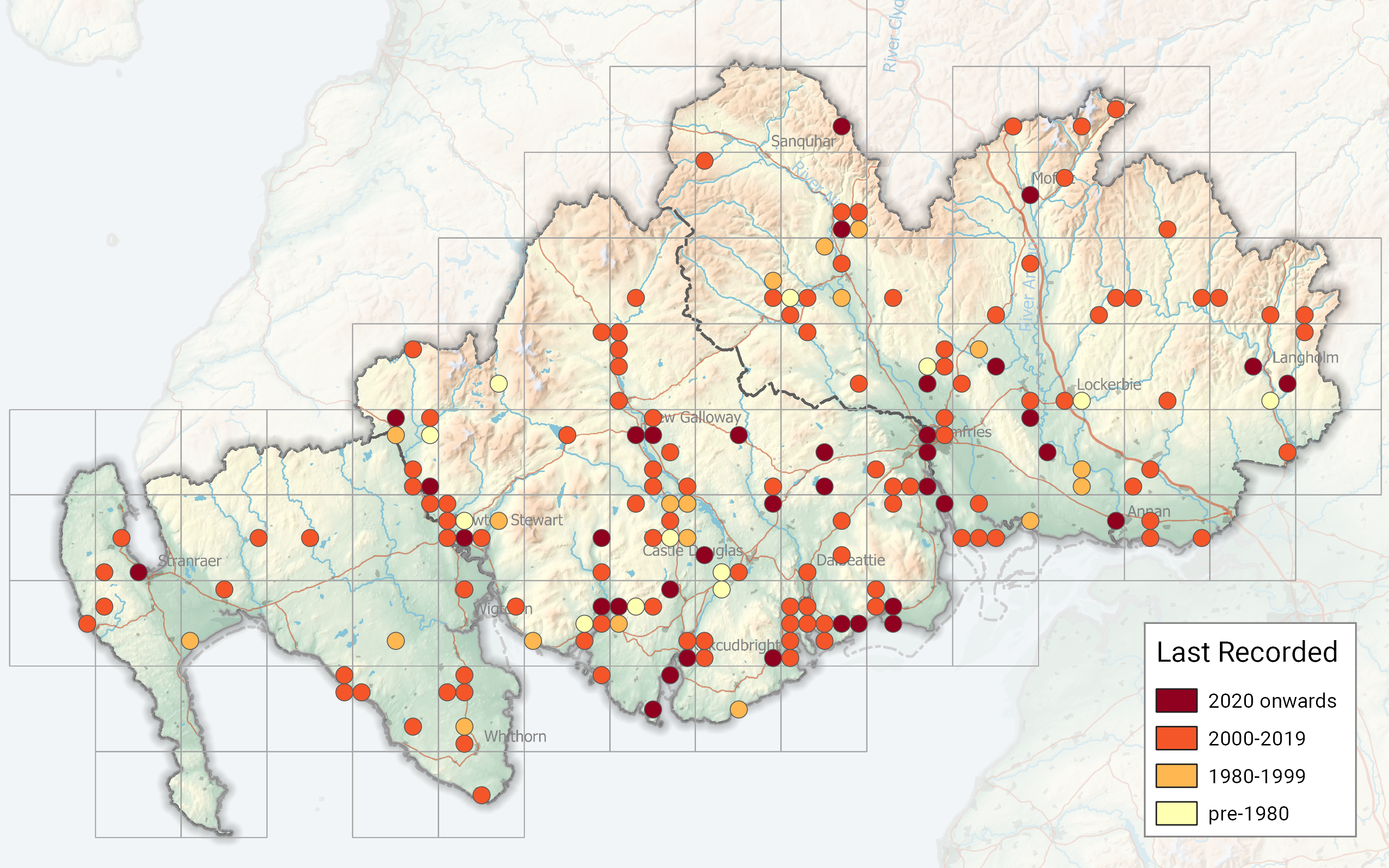
Red List: Least Concern (LC). GB Status: Common.
Identification
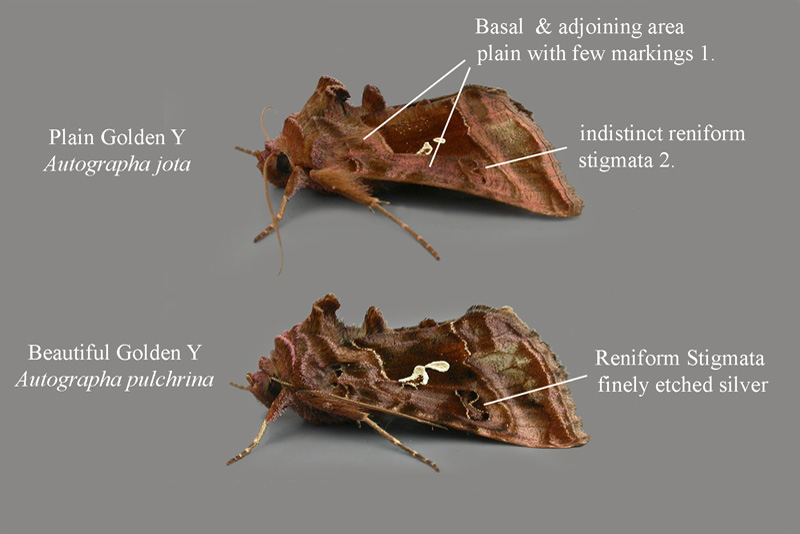
Usually distinctive. Care required, potential confusion with Plain Golden Y. More information here.
Recording Method.
Feeds on flowers from dusk. Attracted to light.
Life cycle
One generation. Overwinters as a small larva. Larvae August to May. Pupates in a cocoon in a folded leaf of the foodplant.
Larval foodplants
Many herbaceous plants including Common Nettle, Common Ragwort, Wood Avens, Honeysuckle.
Habitat
A wide range of upland and lowland habitats including woodland, hedgerows, gardens and moorland.
History
W. D. Robinson-Douglas (1874) had found it at Orchardton (VC73) during the season. Gordon (1913) stated it to be very common in Wigtownshire, and generally distributed on flowers in gardens and on honeysuckle. Earliest date was 11th June 1911.
Sir Arthur Duncan (1909-84) during his lifetime had found it at Closeburn, Tynron and Castlehill, Dumfries (all VC72). Archibald Russell (1944) listed it as occurring near Gatehouse of Fleet (VC73) during the years 1942-43.
Two further records came during the 1960s (VC73). Then, during 1974-93 it was well recorded from the seven Rothamsted stations, with Gatehouse of Fleet and Waterside Mains producing the most.
From 1993 to 2010, Kirkton and Durisdeer (VC72), Cally Woods and Mersehead RSPB Reserve produced many records through personal trapping.