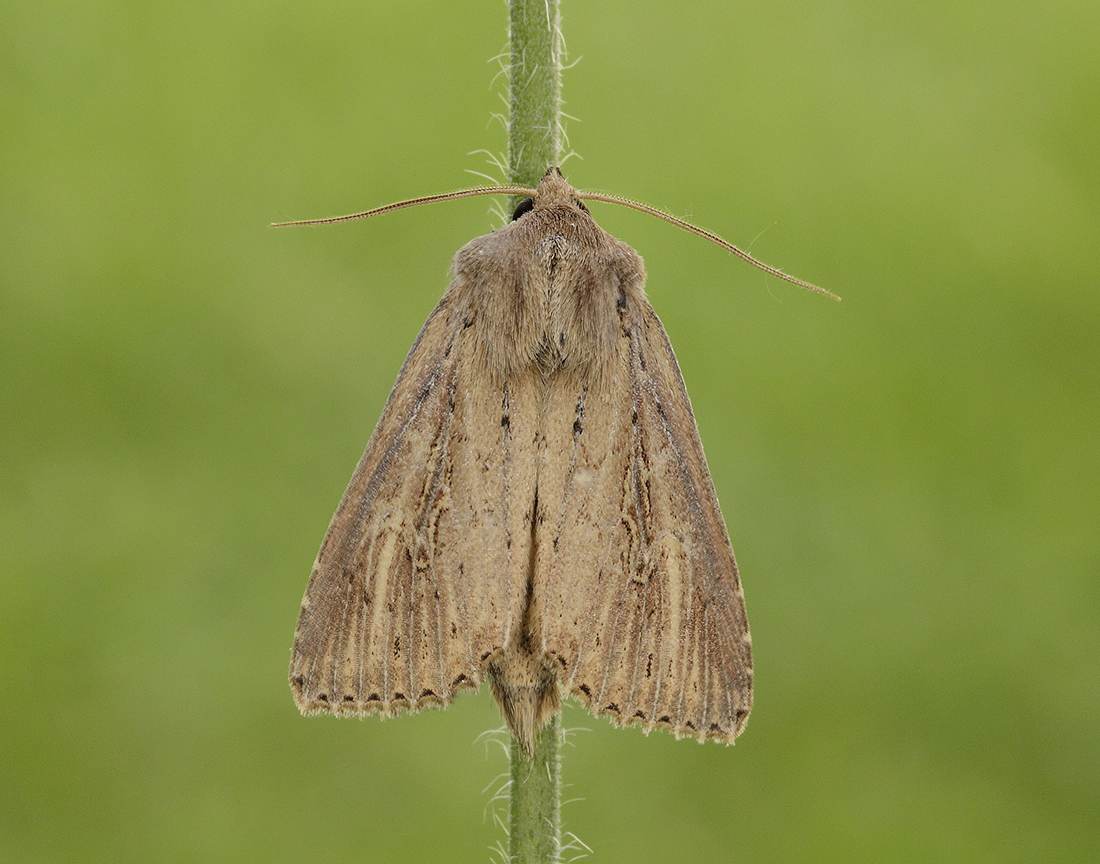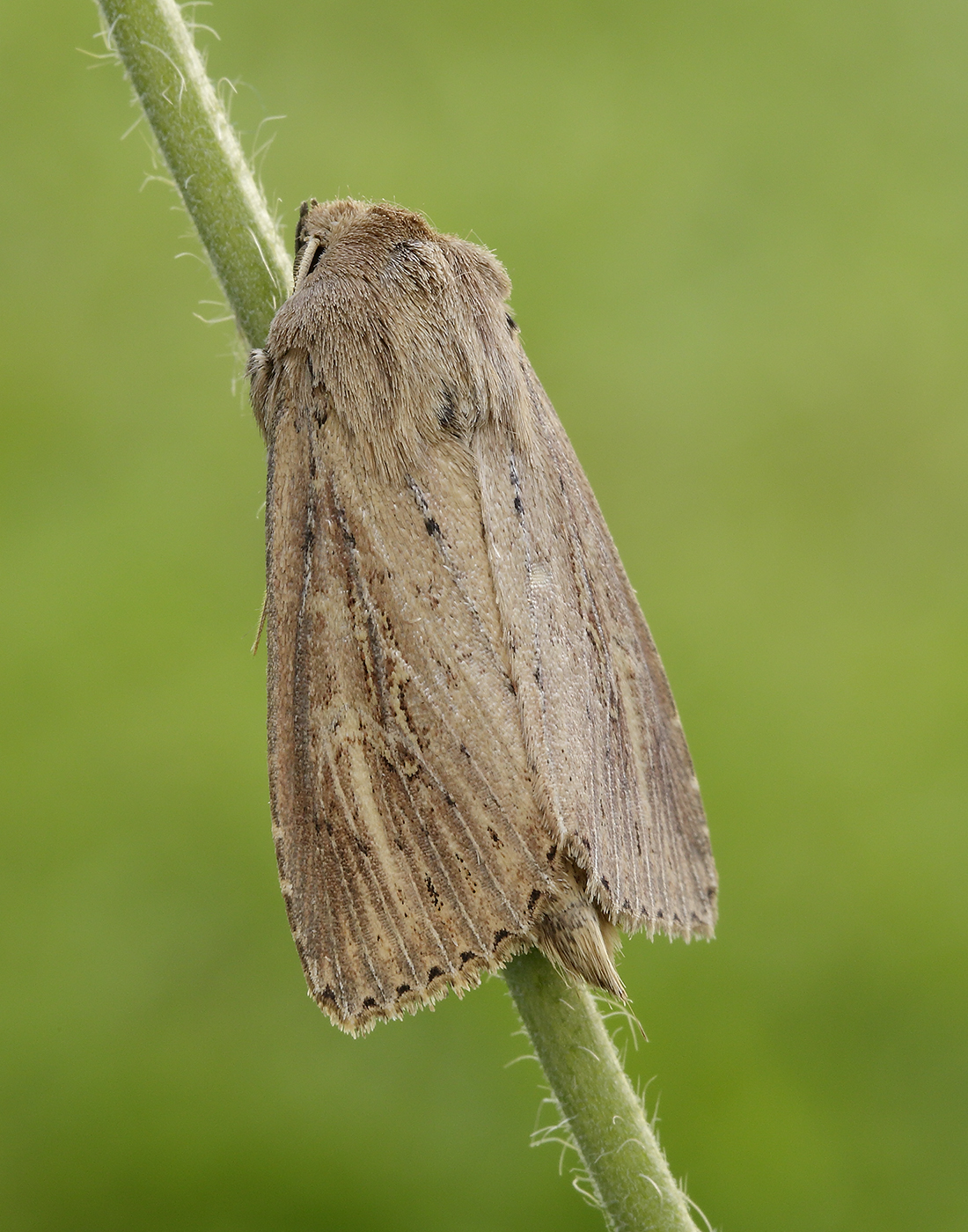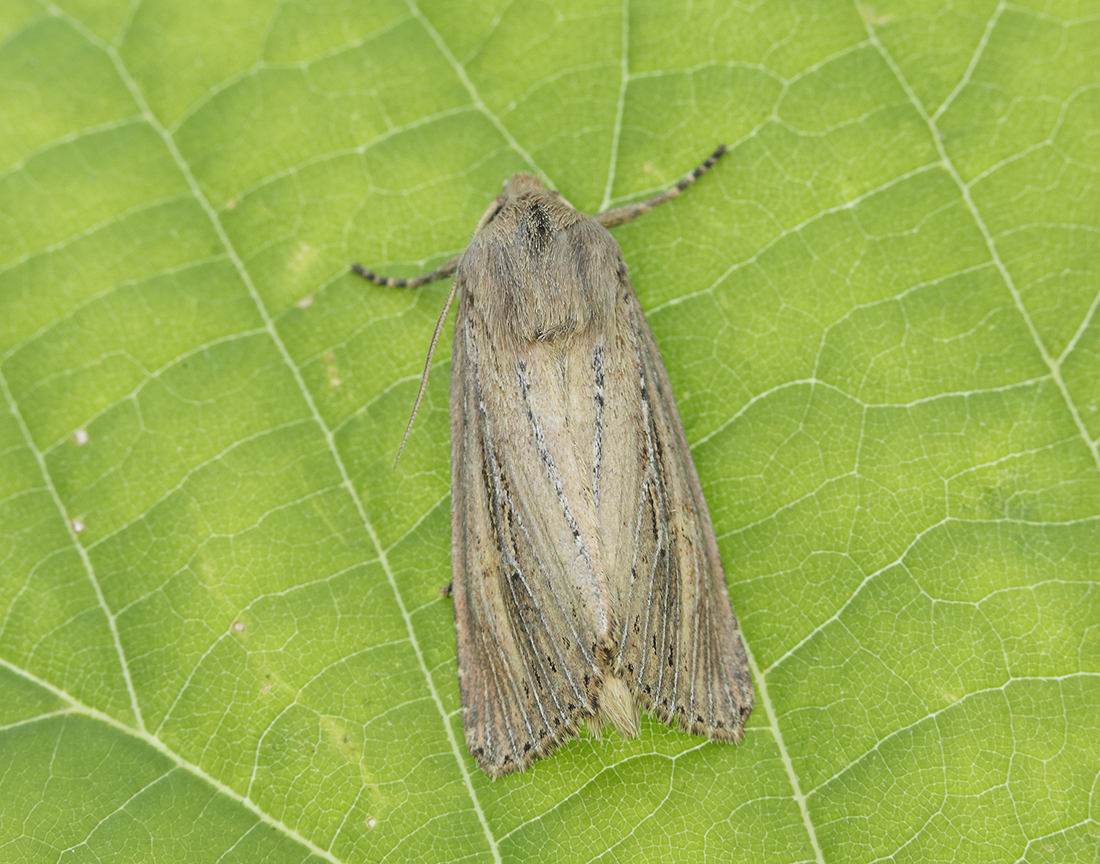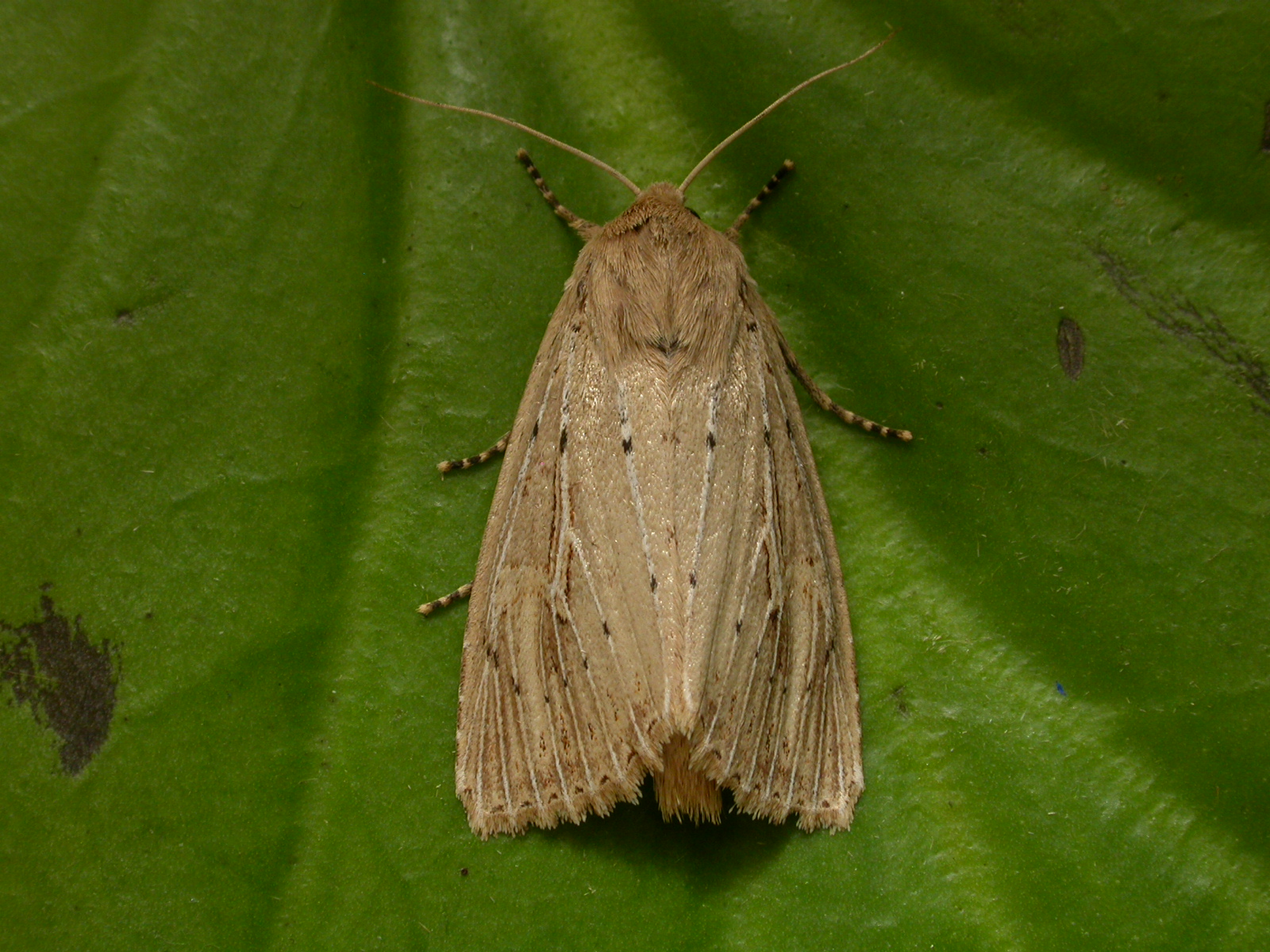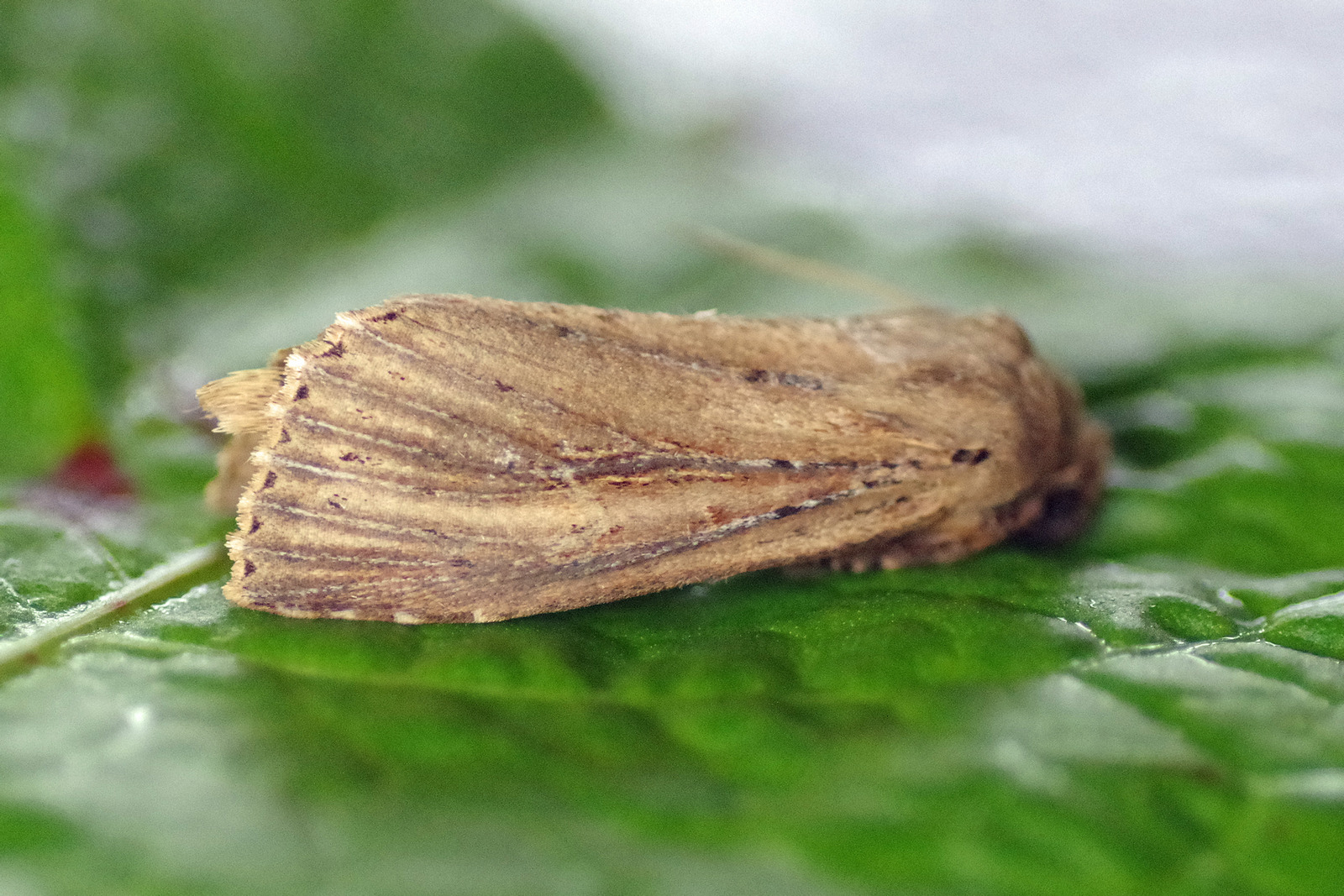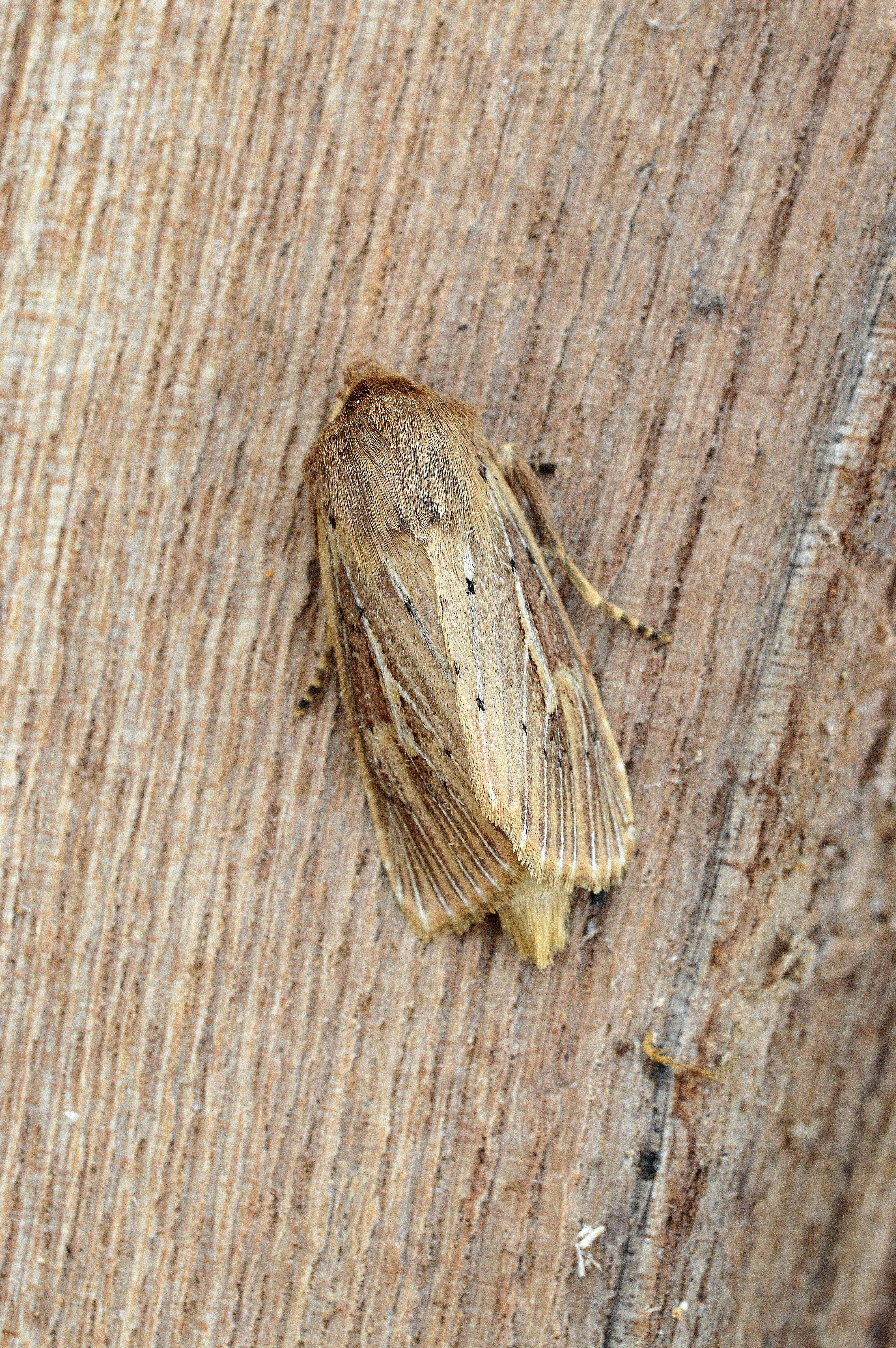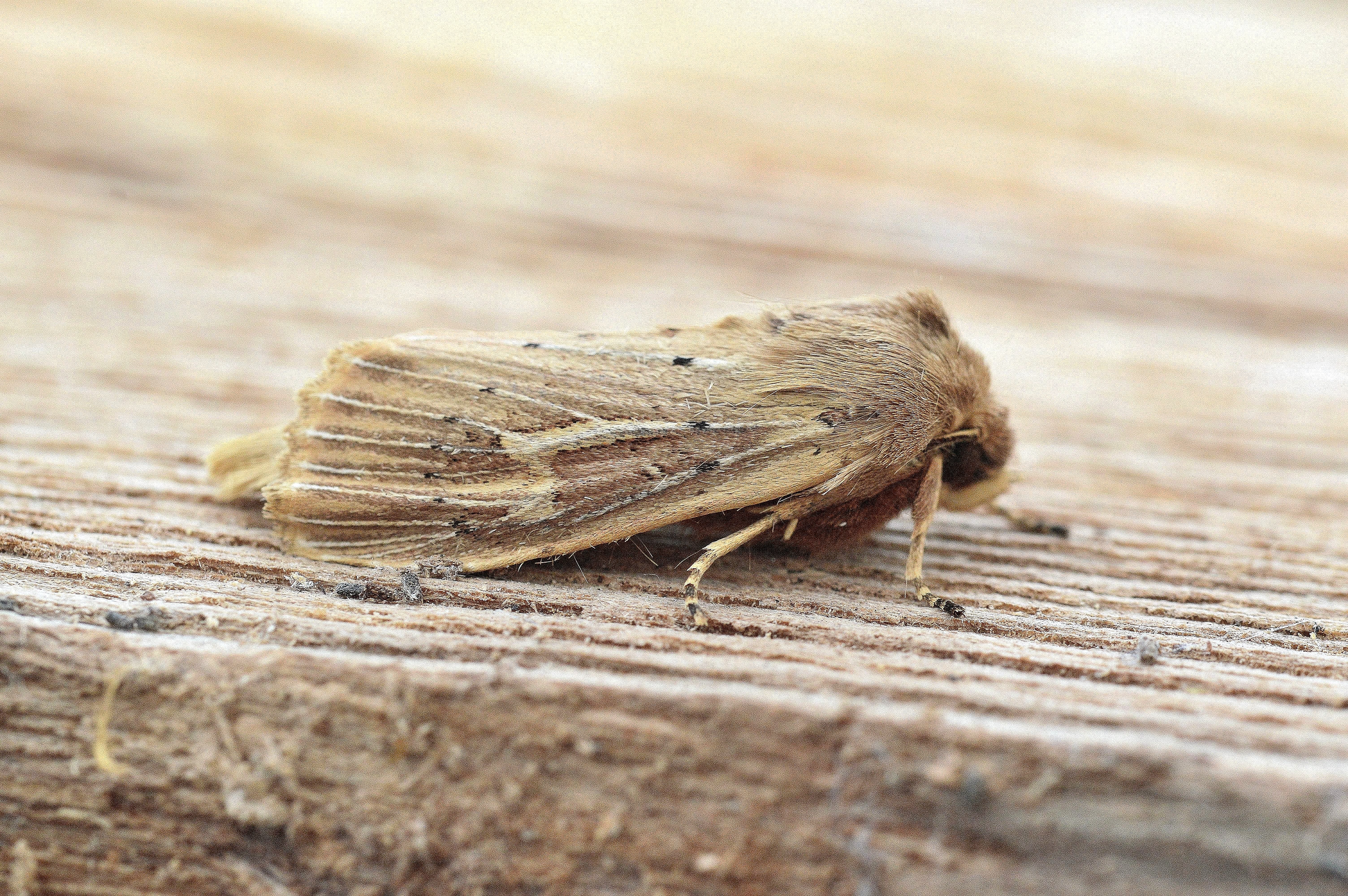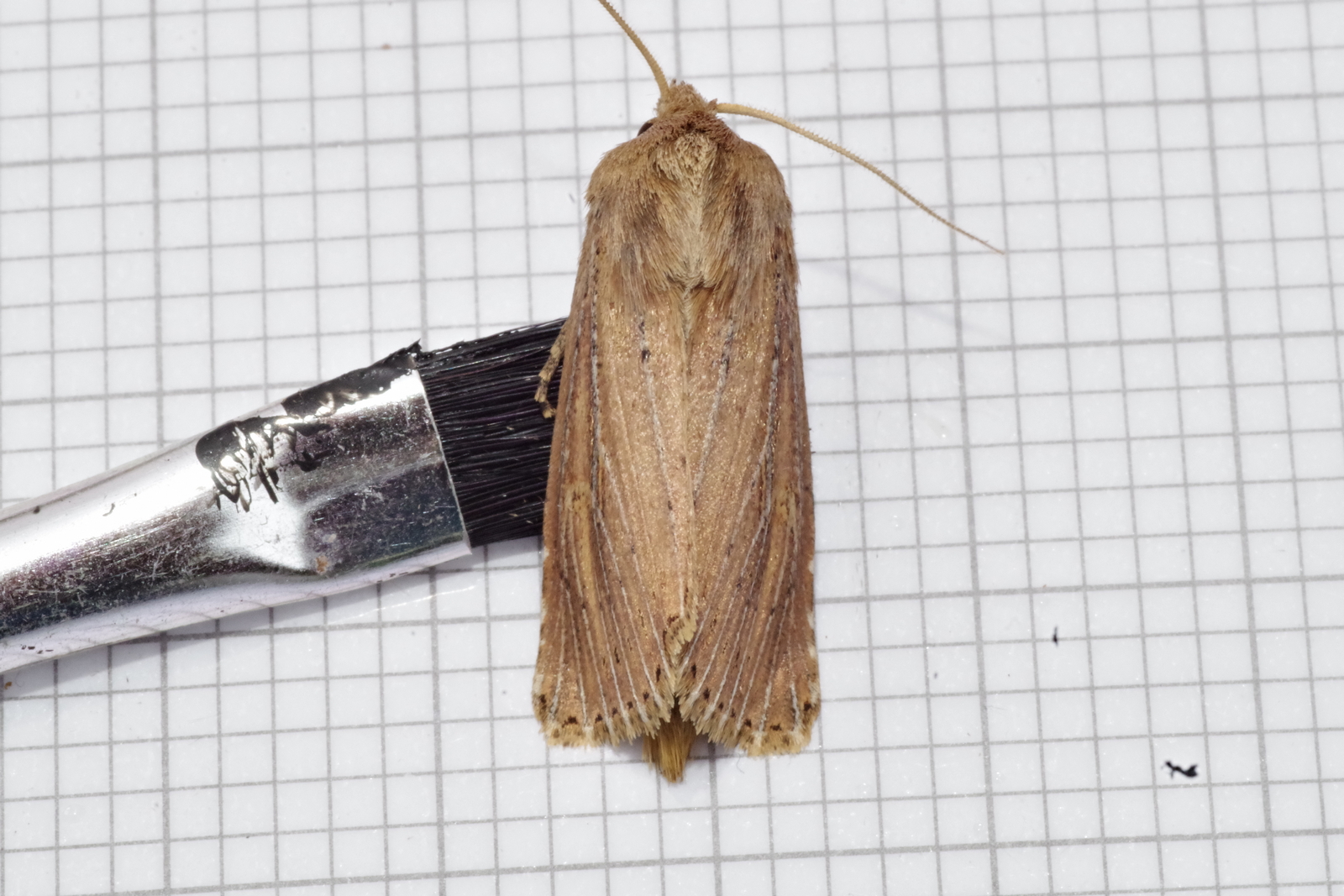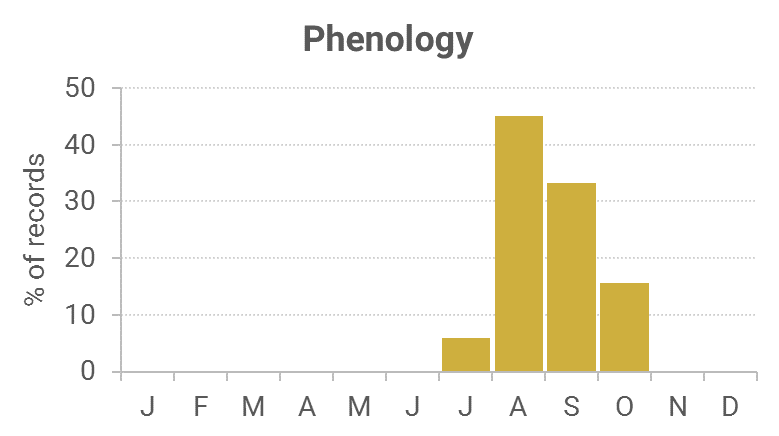

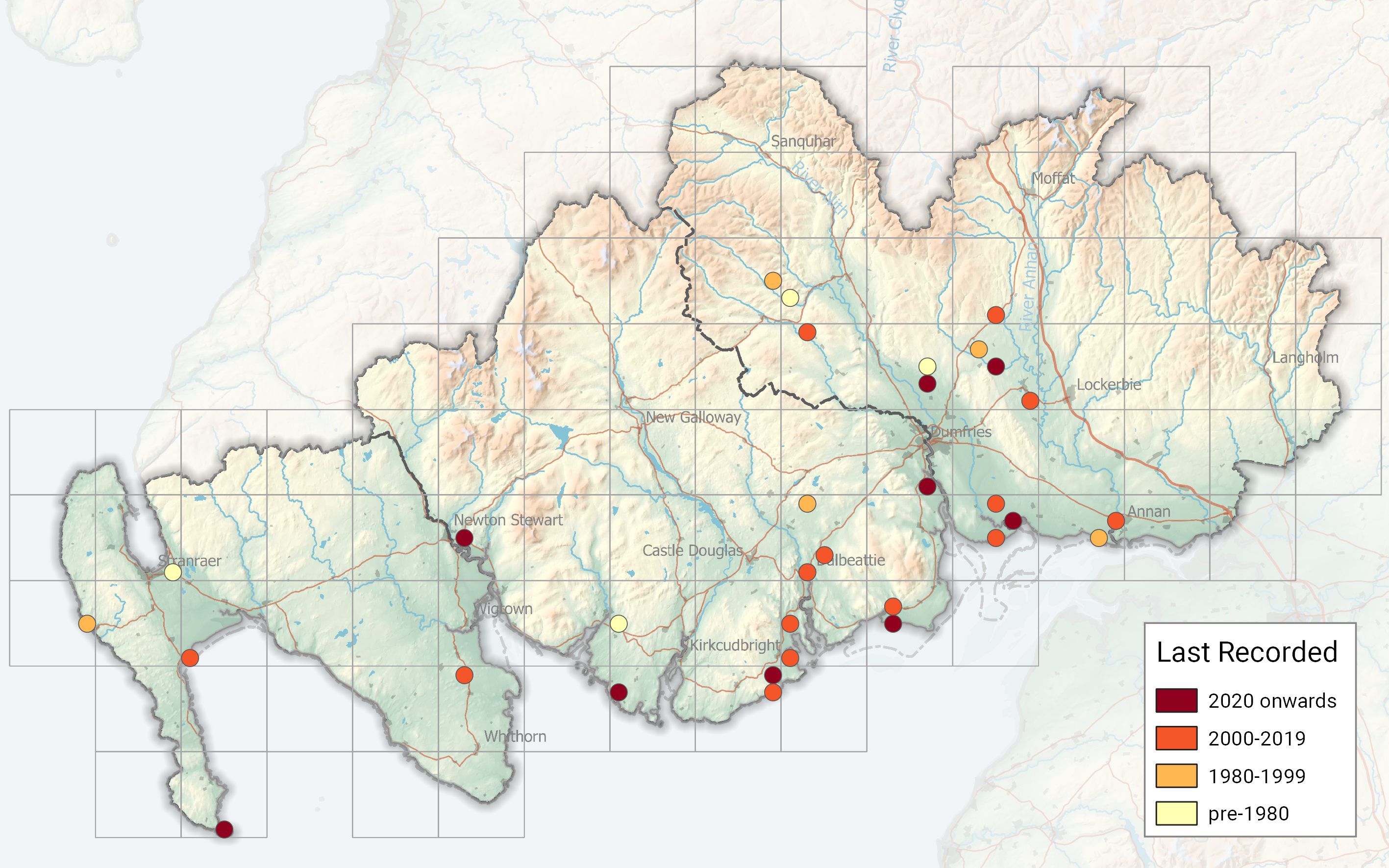
Red List: Least Concern (LC). GB Status: Common.
Identification
Usually distinctive. Care required, potential confusion with Large Wainscot.
Recording Method.
Attracted to light.
Life cycle
One generation. Overwinters as an egg. Larvae April to early August, feeding inside the stems of the foodplant. Pupates in the stem of the foodplant.
Bulrush Wainscot is highly dispersive and can be found far from breeding areas.
Larval foodplants
Bulrush.
Habitat
Margins of lochs, ponds and ditches, fens and marshes.
History
The first record for the region came in 1951 when one was caught at Tynron (VC72) on 28th August (Duncan & Cunningham 1952). From 1974-79 it was caught annually at the Gatehouse-of-Fleet Rothamsted station, these being the first records for Kirkcudbrightshire (VC73). The first for Wigtownshire (VC74) was at Aird in 1975.
In July 1982 at the Scottish Entomologists’ gathering at Barony College (VC72) it was trapped again, but it was 1990 before another was found, in Wigtownshire, when it was found at Portpatrick in August. Further records followed from 1995-2006 from Glendow, Powfoot, Kirkton and Caerlaverock WWT (all VC72) and Meikle Kirkland, Auchencairn, Edingham and Abbey Burn Foot (VC73).