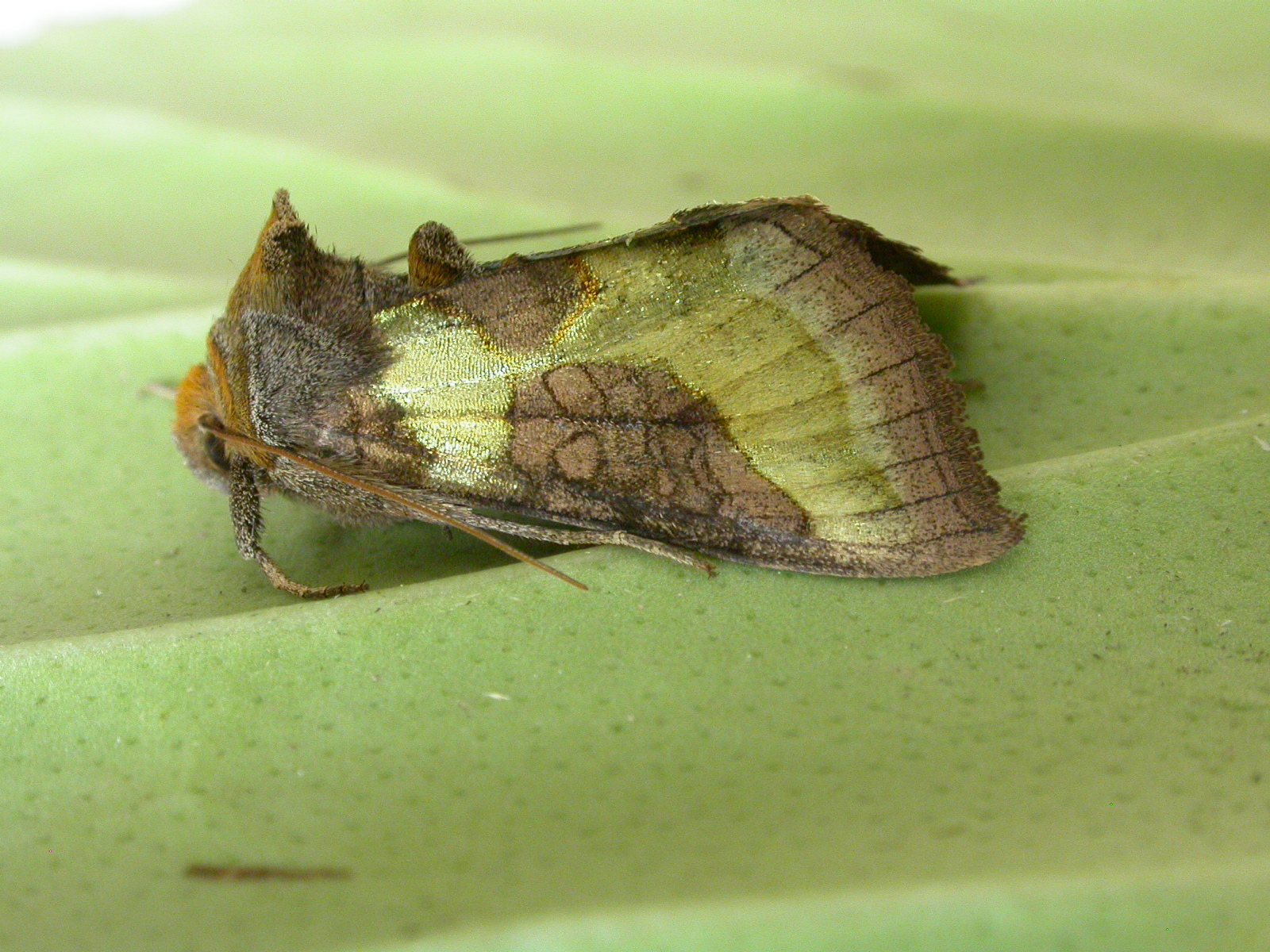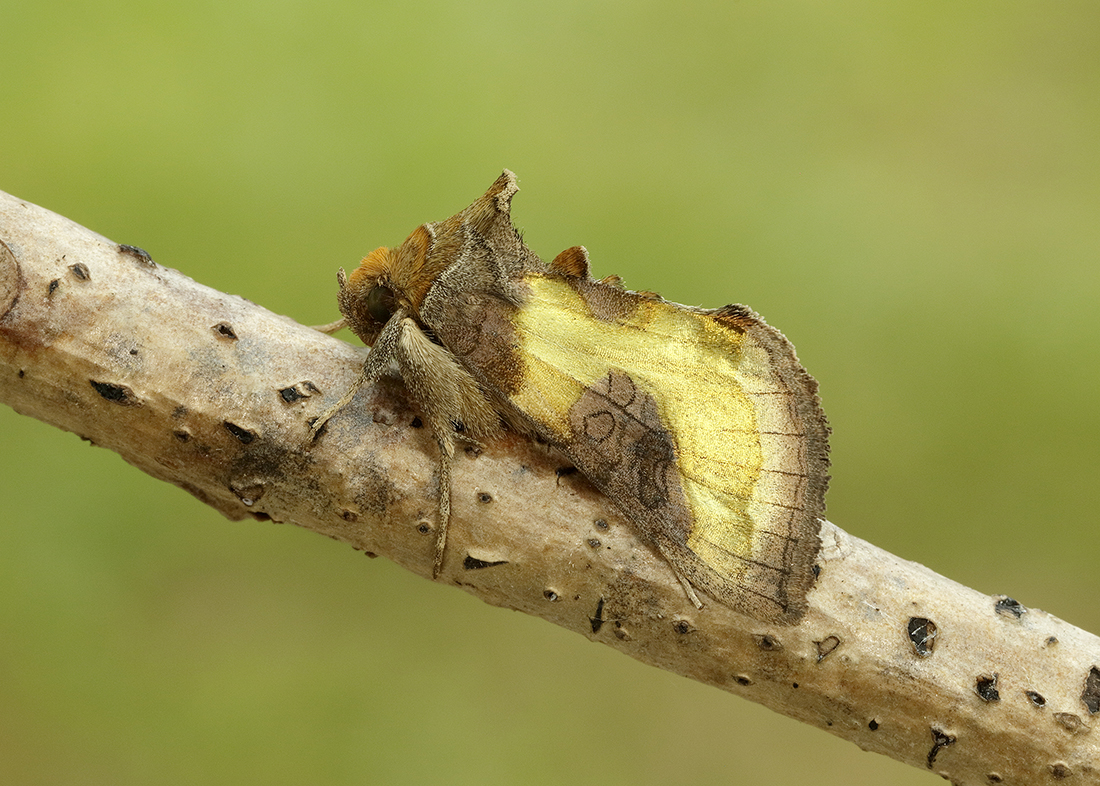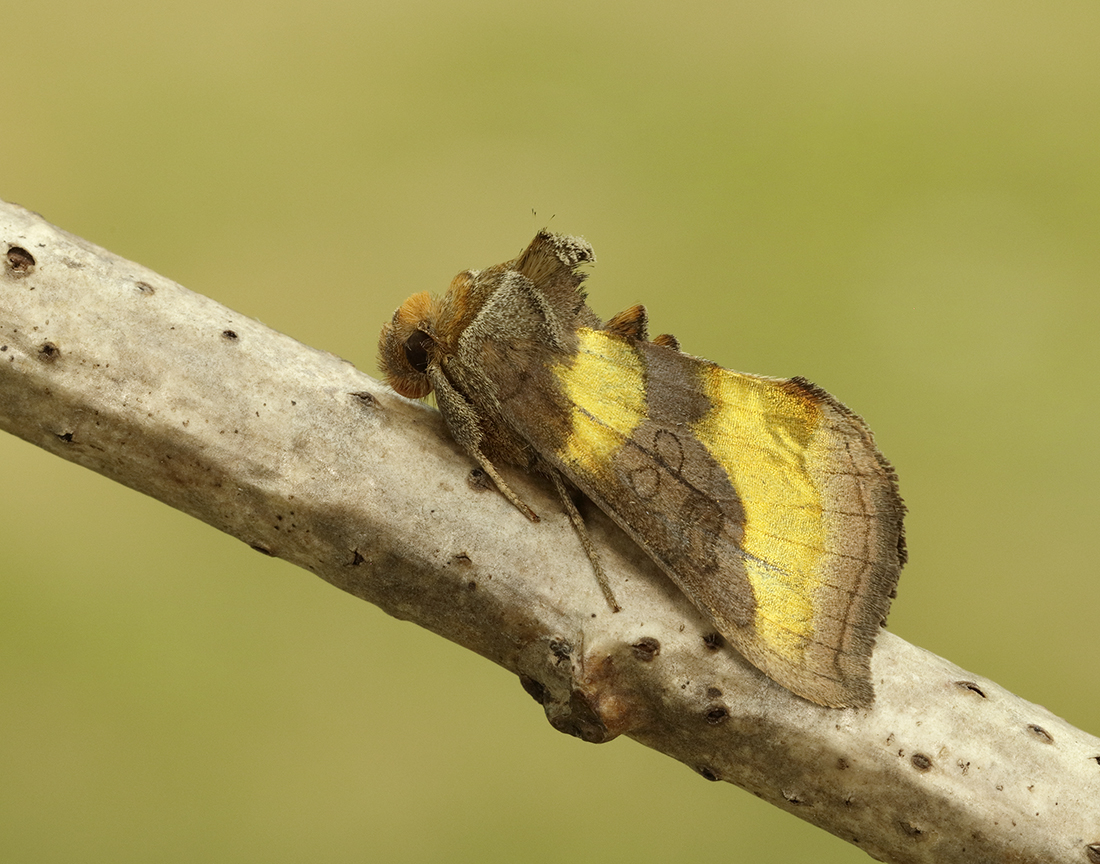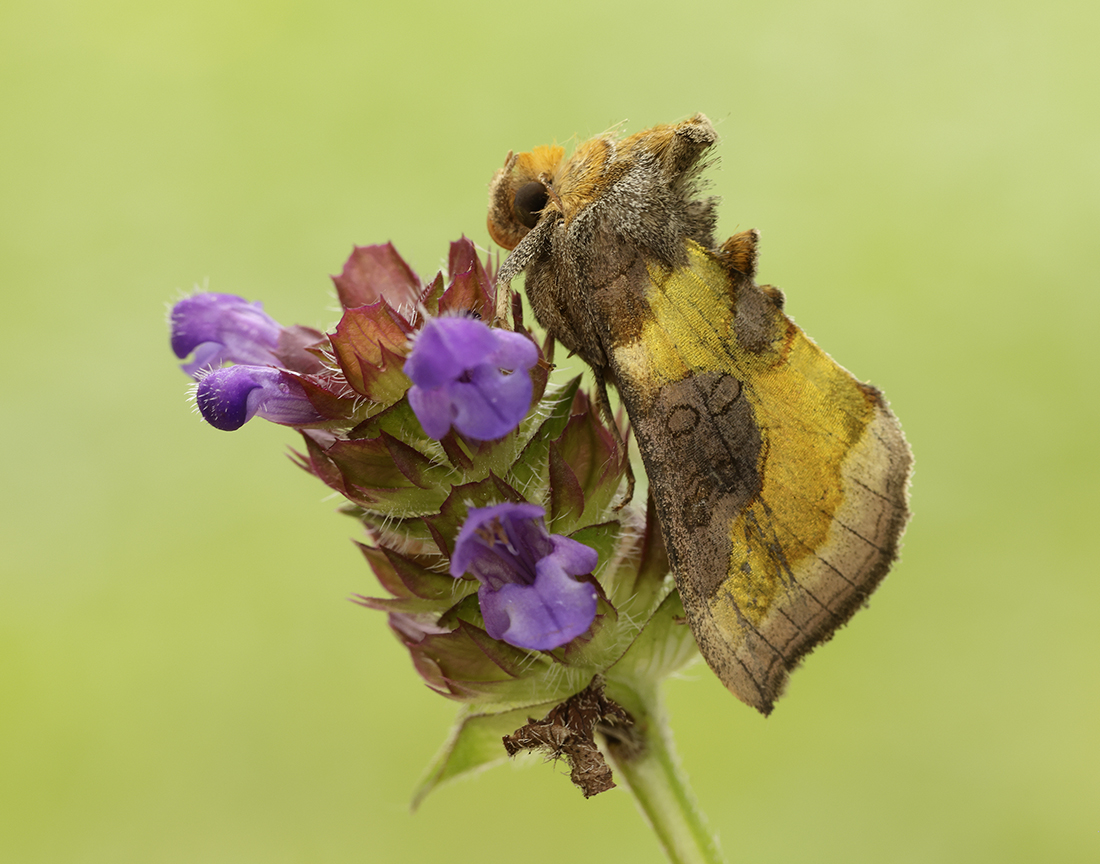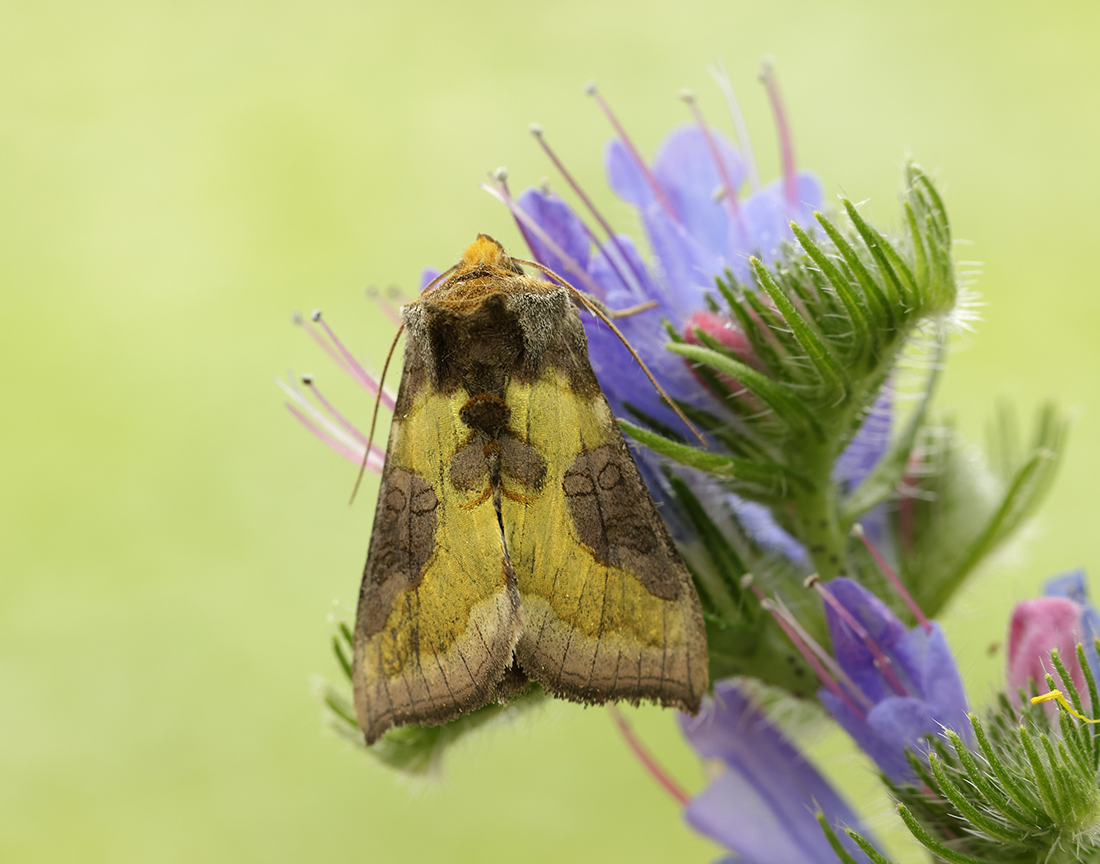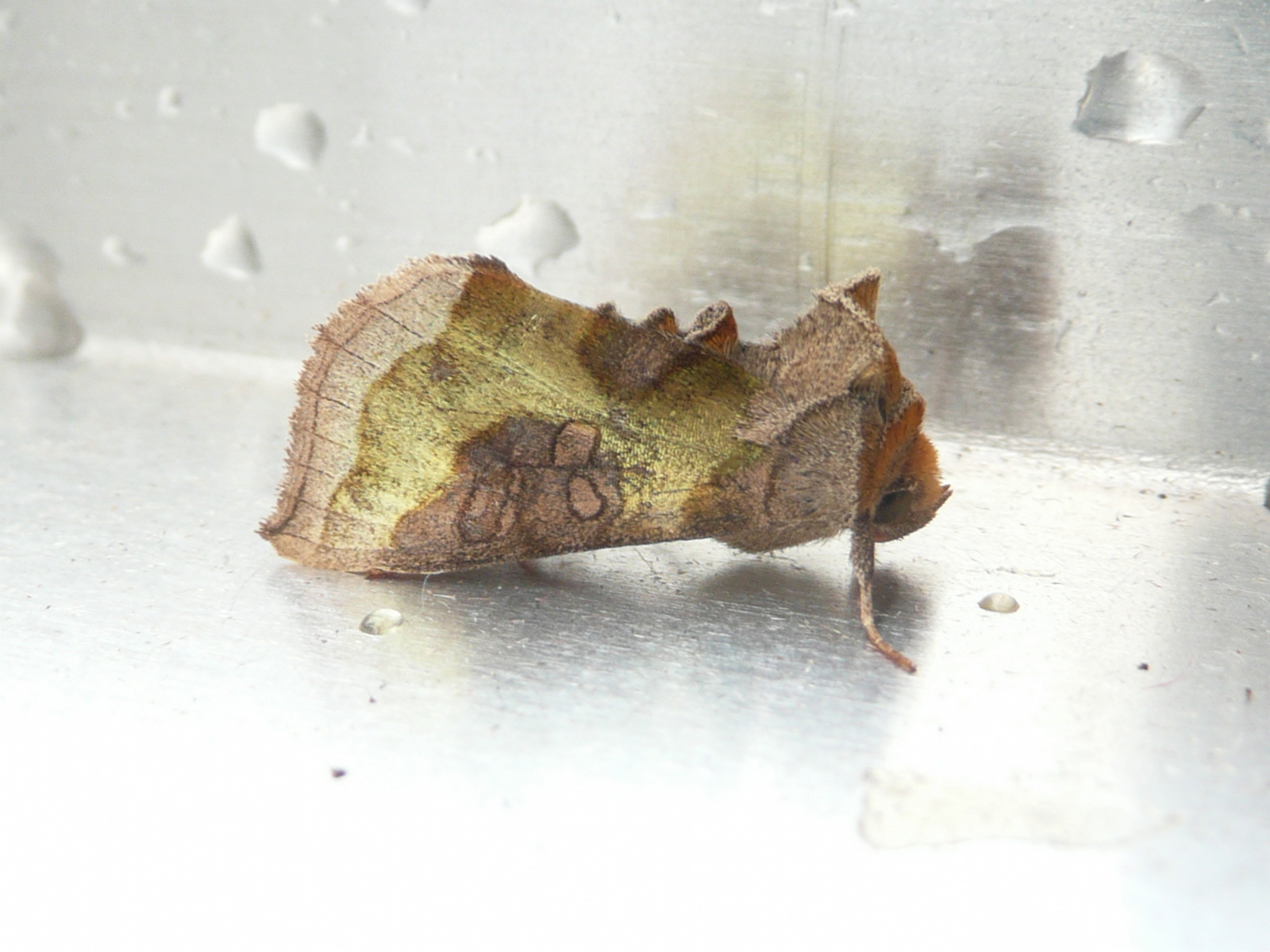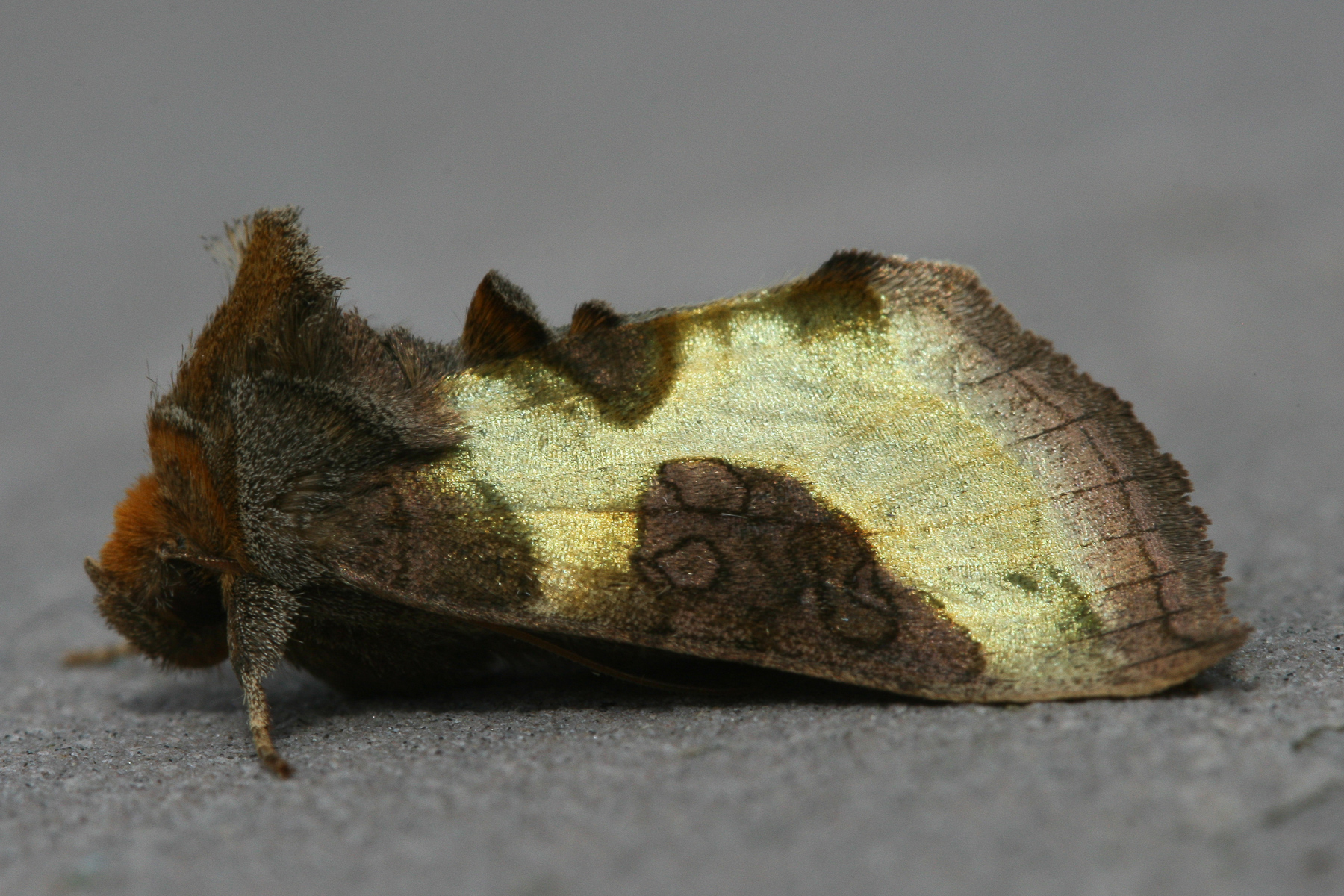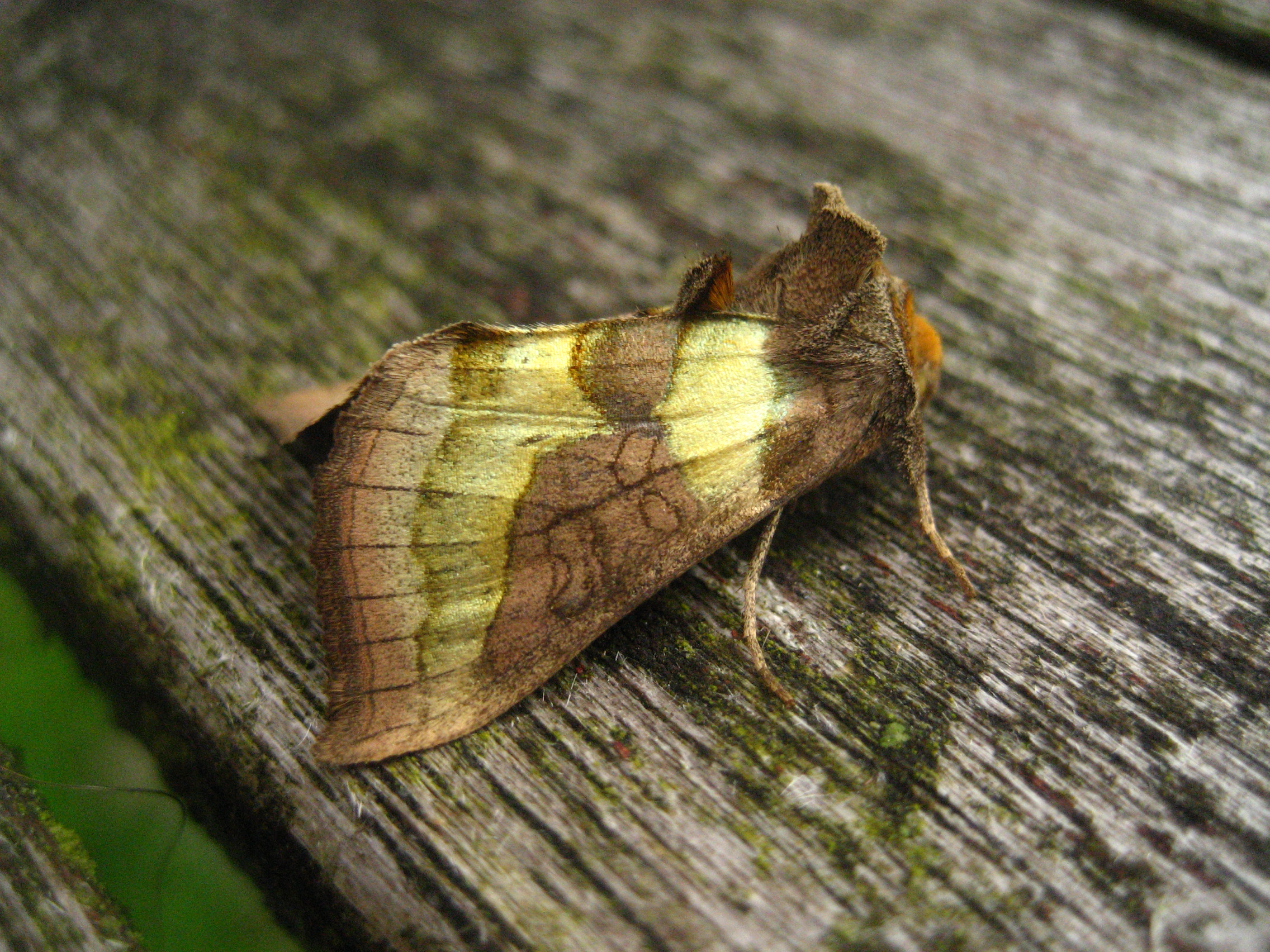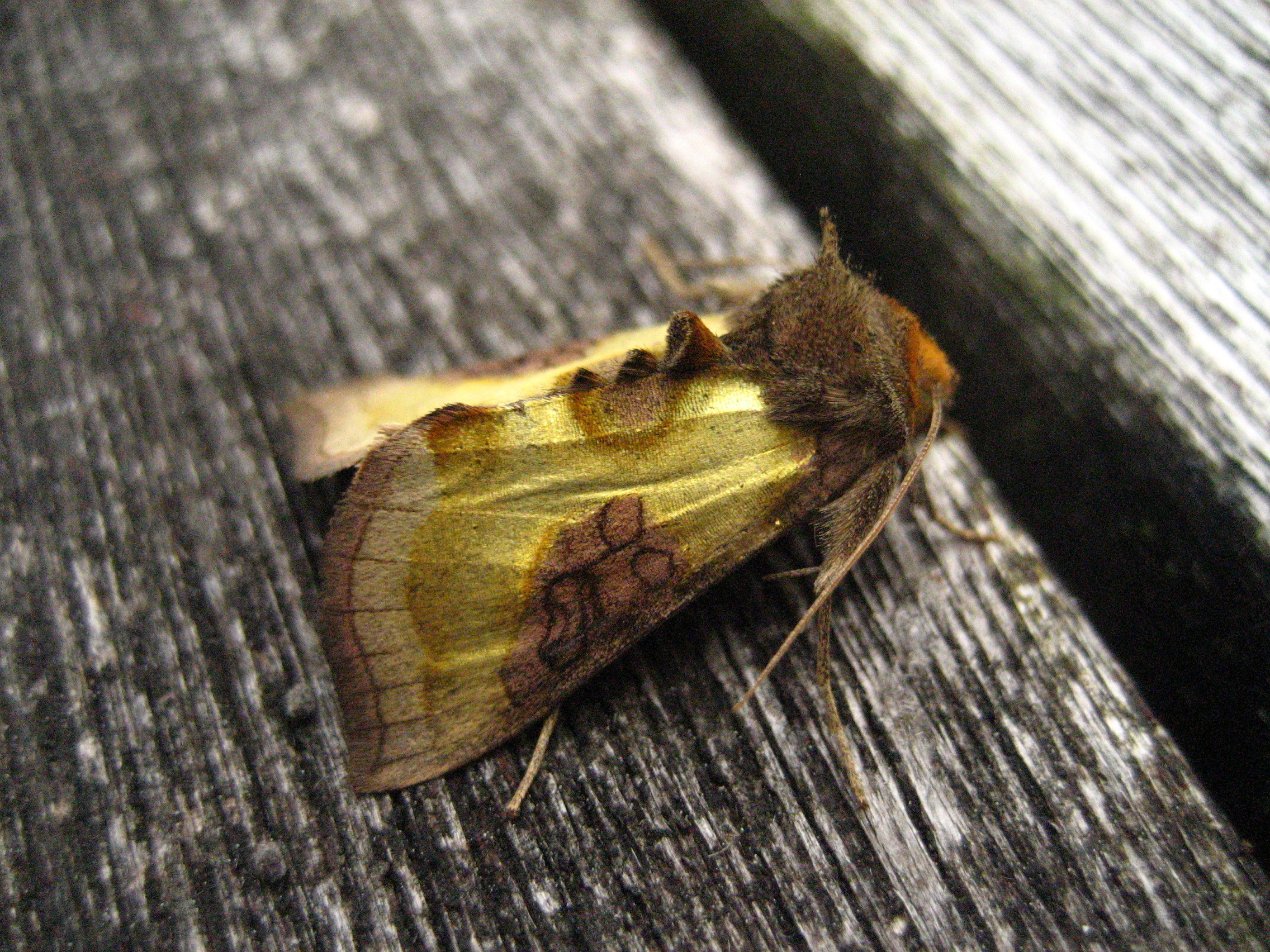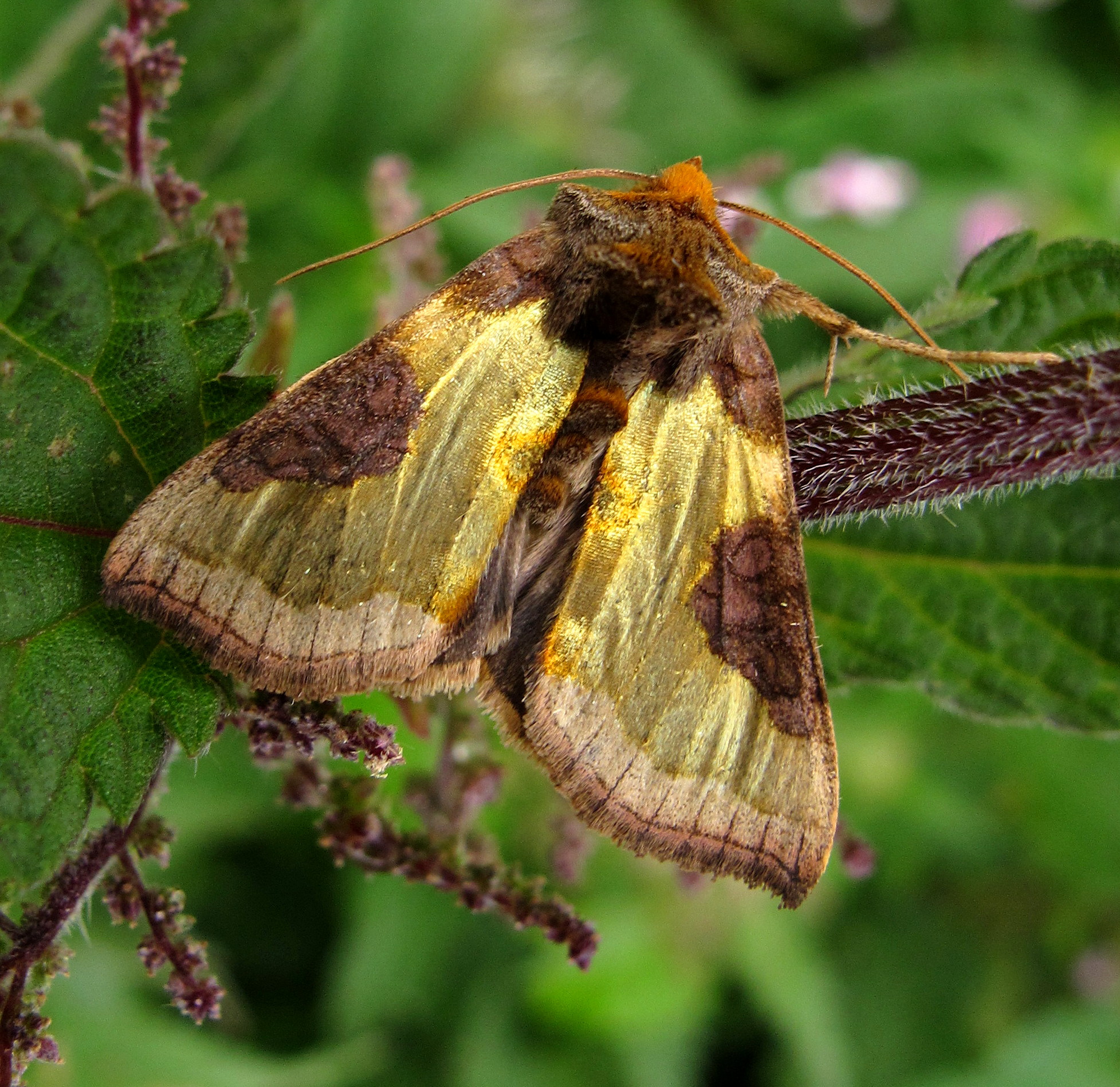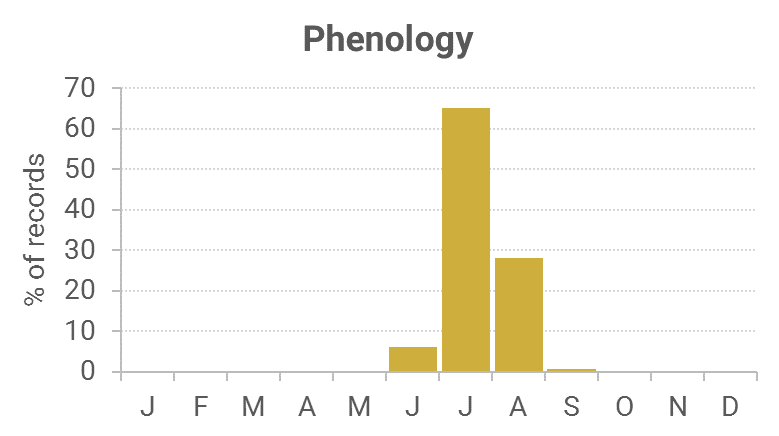

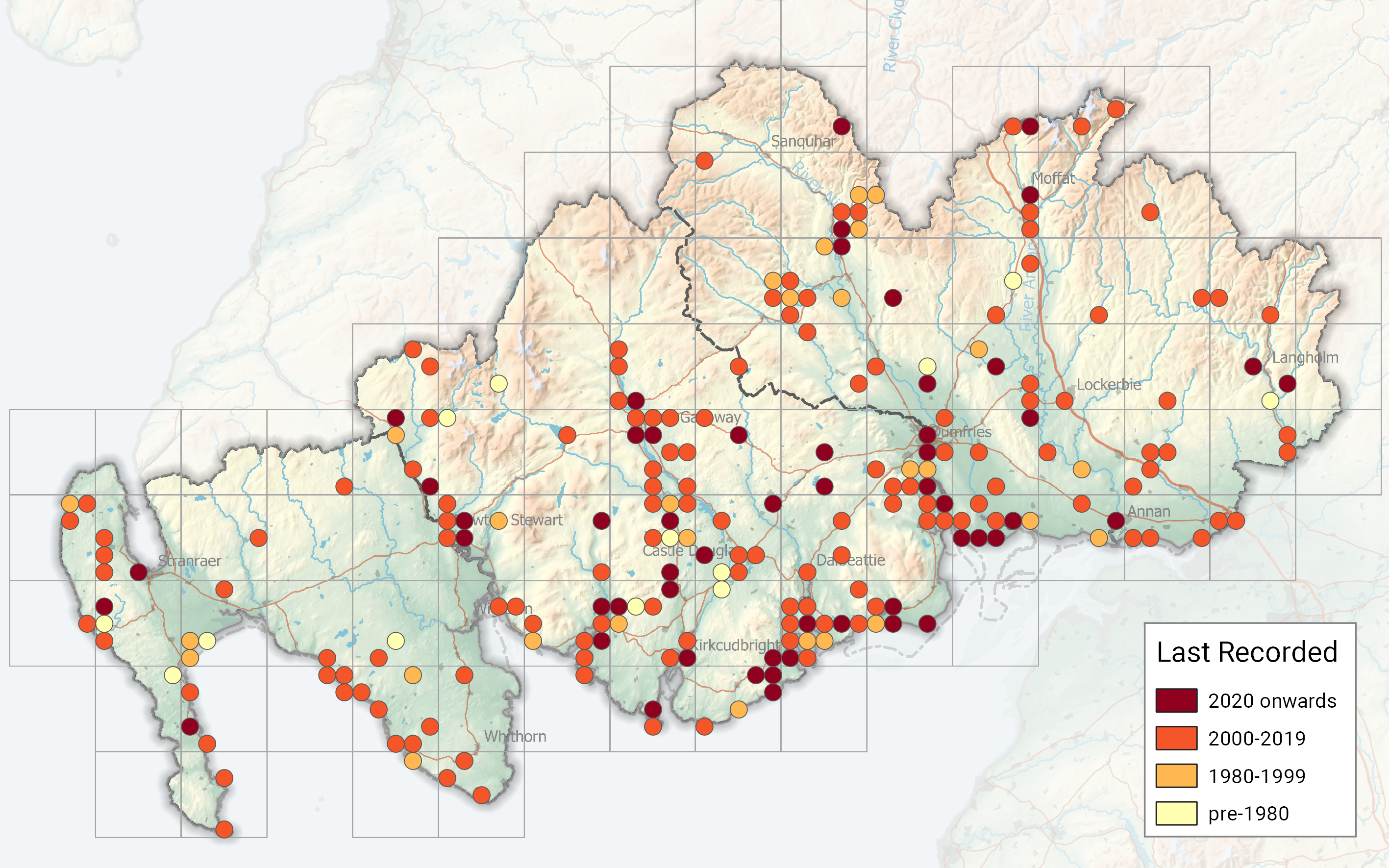
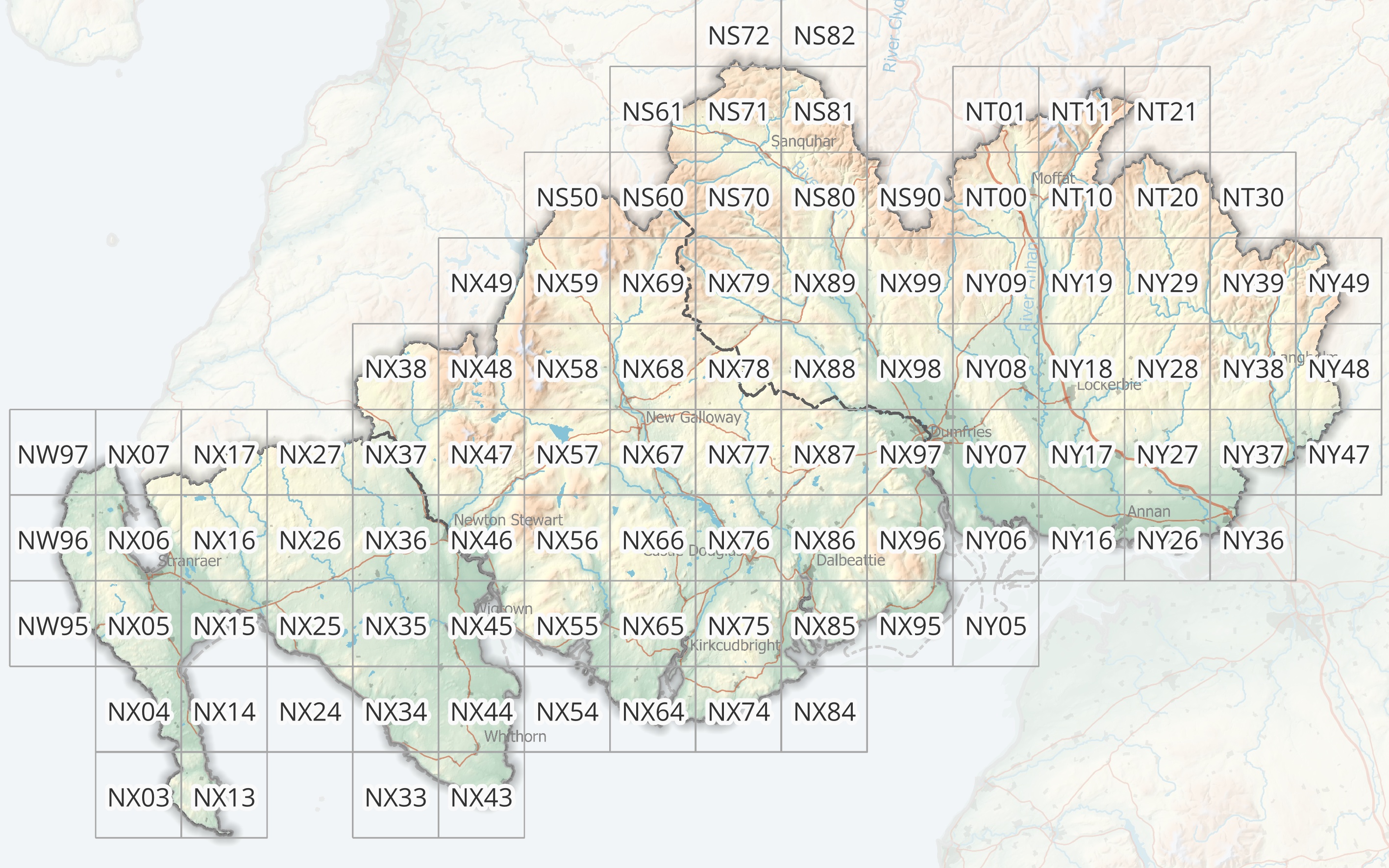
Red List: Least Concern (LC). GB Status: Common.
Identification
Usually distinctive.
Recording Method.
Attracted to light.
Life cycle
One generation. Overwinters as a small larva. Larvae July to May. Pupates in a cocoon formed on the underside of the larval foodplant.
Larval foodplants
Common Nettle, White Dead-nettle, Lesser Burdock and Spear Thistle.
Habitat
Wide range of habitats, usually with rough open grassland.
History
The earliest notification of this species is published in Stephens (1829) with the Rev. William Little recording it at Raehills (VC72) stating it to be rare.
Somerville (1858) on a visit to the Moffat area in August of that year was the first to record it for the Region. Lennon (1863) stated it was common in his ‘List of Lepidoptera taken near Dumfries.’ K. J. Morton of Edinburgh (1900) whilst on a visit in July 1899 to Wigtownshire had found this species in the Monreith area. R.S. Gordon (1913) found it common and generally distributed around Corsemalzie (VC74) and abundant at Valerian in his garden at dusk in June. Earliest date was 11th June 1906.
Archibald Russell (1944) whilst staying at Gatehouse of Fleet during 1942-43 had found it locally. Sir Arthur Duncan (1909-84) during his lifetime had found it at Closeburn, Tynron and Castlehill in Kirkmahoe parish (all VC72).
During 1974-93 six of the seven Rothamsted stations, Penninghame being the odd one out, recorded it many times proving it is one of our commonest moths. Many records from Kirkton and Durisdeer (VC72) and Cally Woods (VC73) with a wide scattering of records from other sites.
Forms aurea and juncta
Boths forms occur in all three vice-counties although they appear much scarcer in the west or just under recorded.