
Red List: Least Concern (LC). GB Status: Common.
Identification
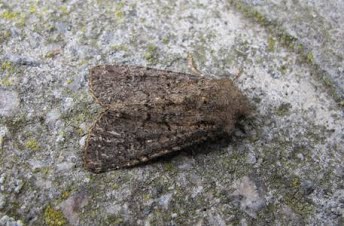
Usually distinctive. Care required, potential confusion withDusky Brocade.
Recording Method.
Attracted to light, also comes to sugar.
Life cycle
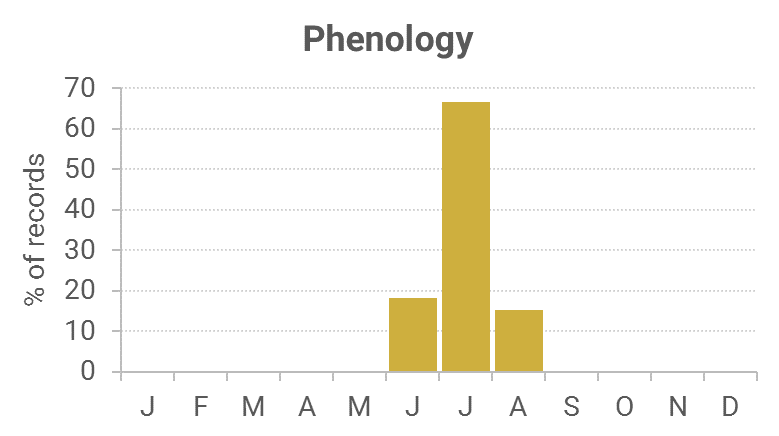
One generation. Overwinters as a larva.Larvae September to June. Pupates underground.
Larval foodplants
The roots and stems of various grasses, including Rough Meadow Grass and Wood Meadow Grass.
Habitat
Grassland.
History
Buchanan White of Perth (1895) listed it as occurring in Colvend and Southwick parishes (VC73). K. J. Morton of Edinburgh (1900) whilst on a visit in July 1899 to Wigtownshire had found this species in the Monreith area. Gordon (1913) found it not uncommon at sugar; he also recorded it at dusk in the meadows around Corsemalzie during late June. Earliest date was 18th June 1906. Additional to MOGBI for VC74. Duncan & Cunningham (1952) gave a general statement of its presence around Dumfries.
In 1977 the Bridge of Dee Rothamsted station recorded a series of records in the latter half of June through July, likewise, Mabie Forest had a series in 1987; these being the only RIS data.
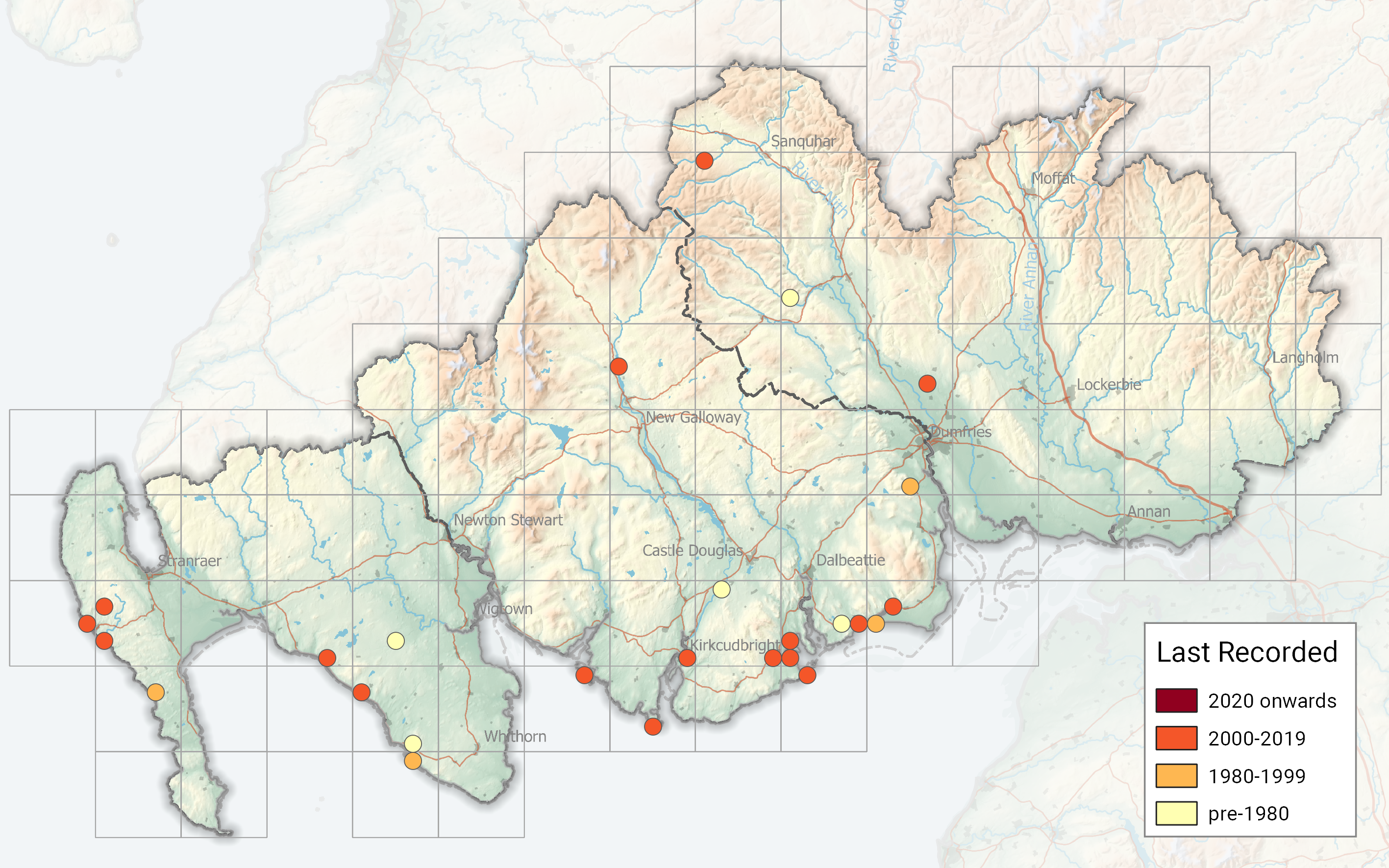
From 1988 to 2010 there are records from 17 widespread sites, from Carrifran (VC72) in the far east to Port Kale (VC74) in the west, proving it is very thinly scattered over a wide area.