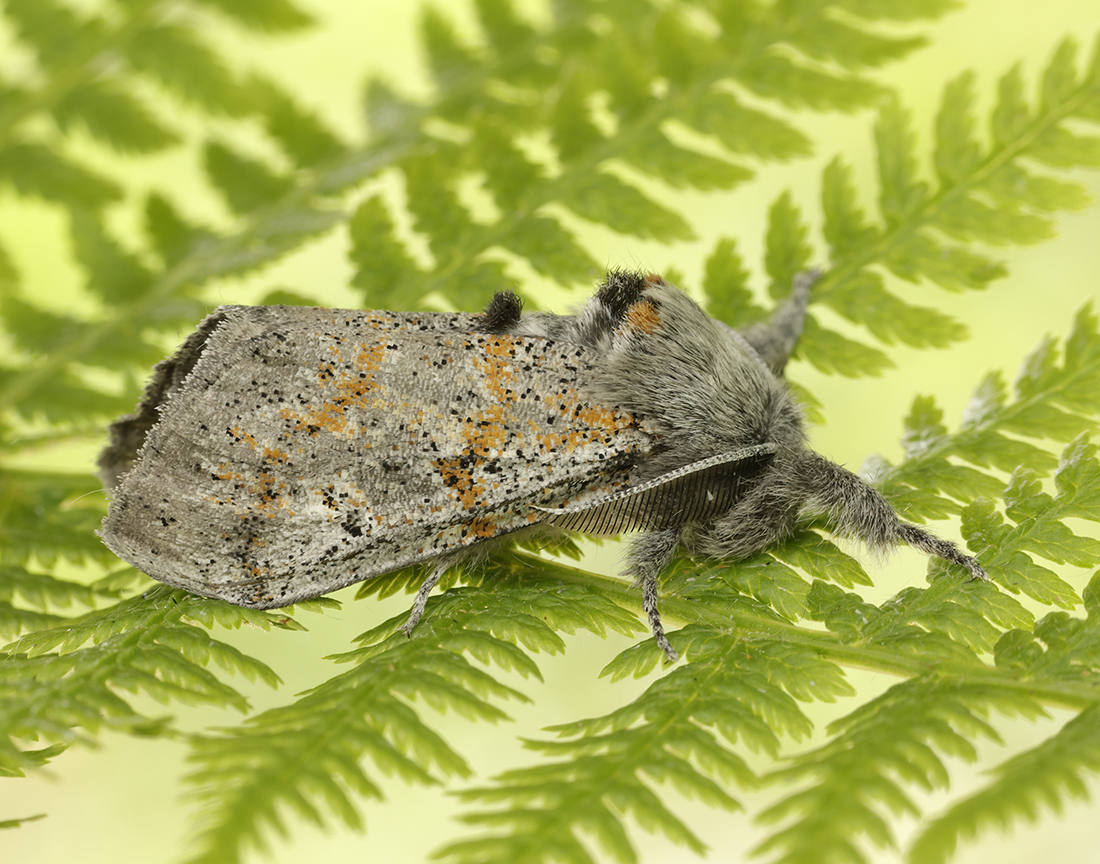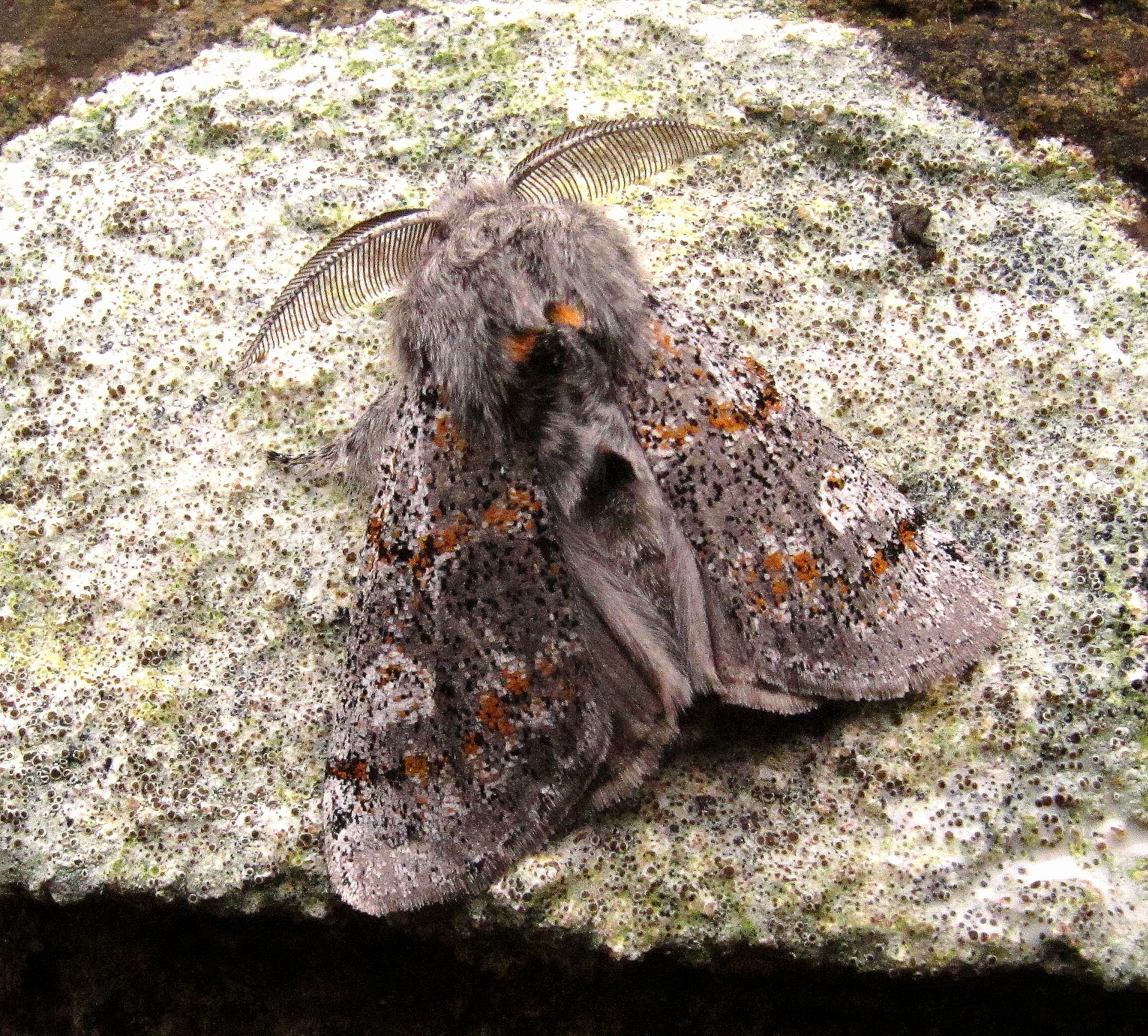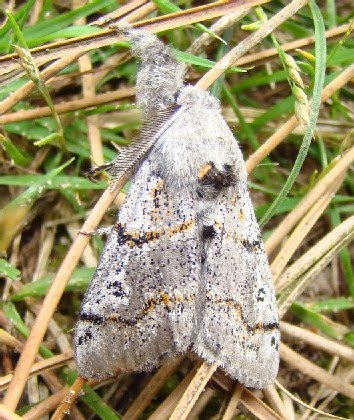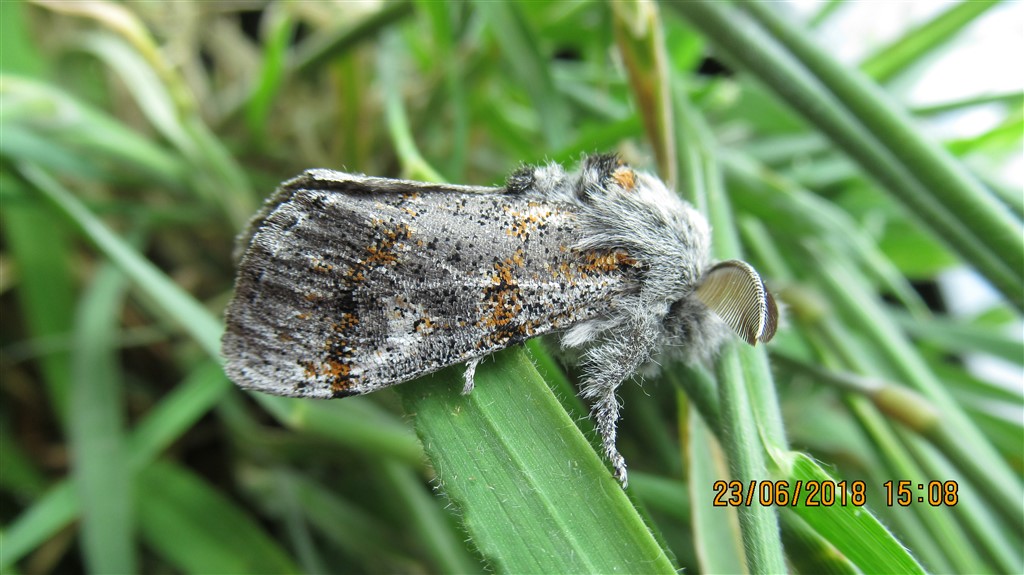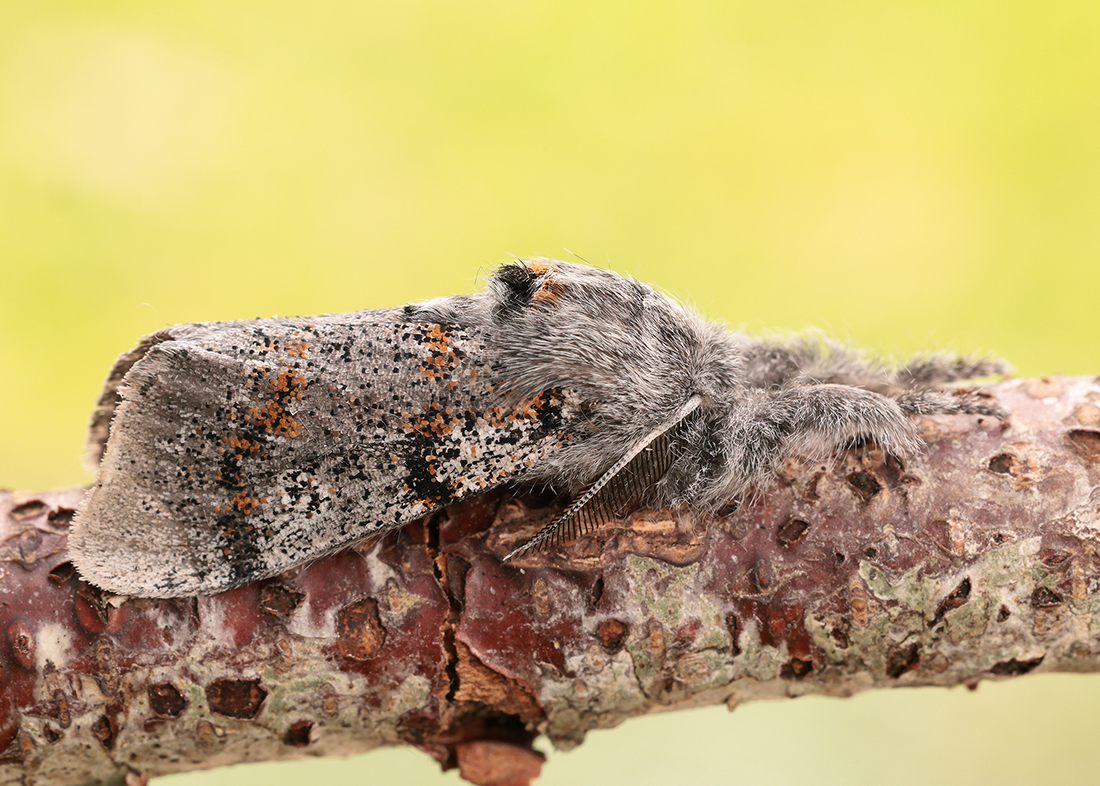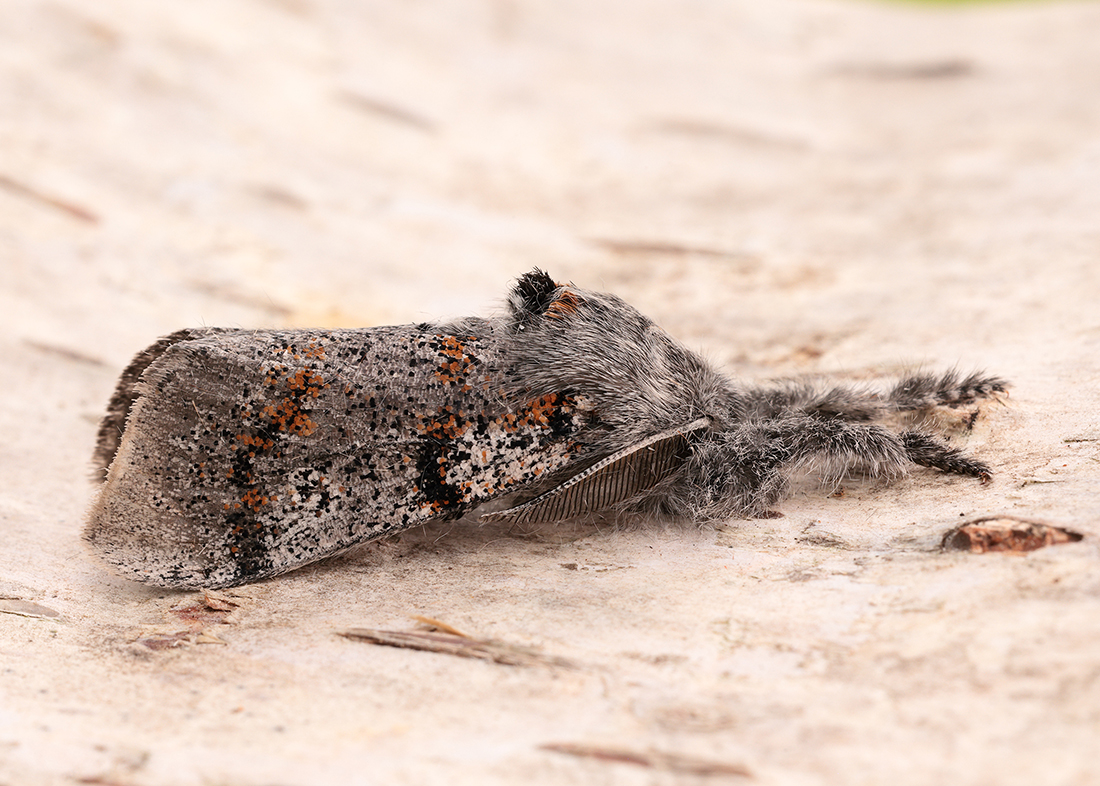

Red List: Least Concern (LC). GB Status: Common.
Identification
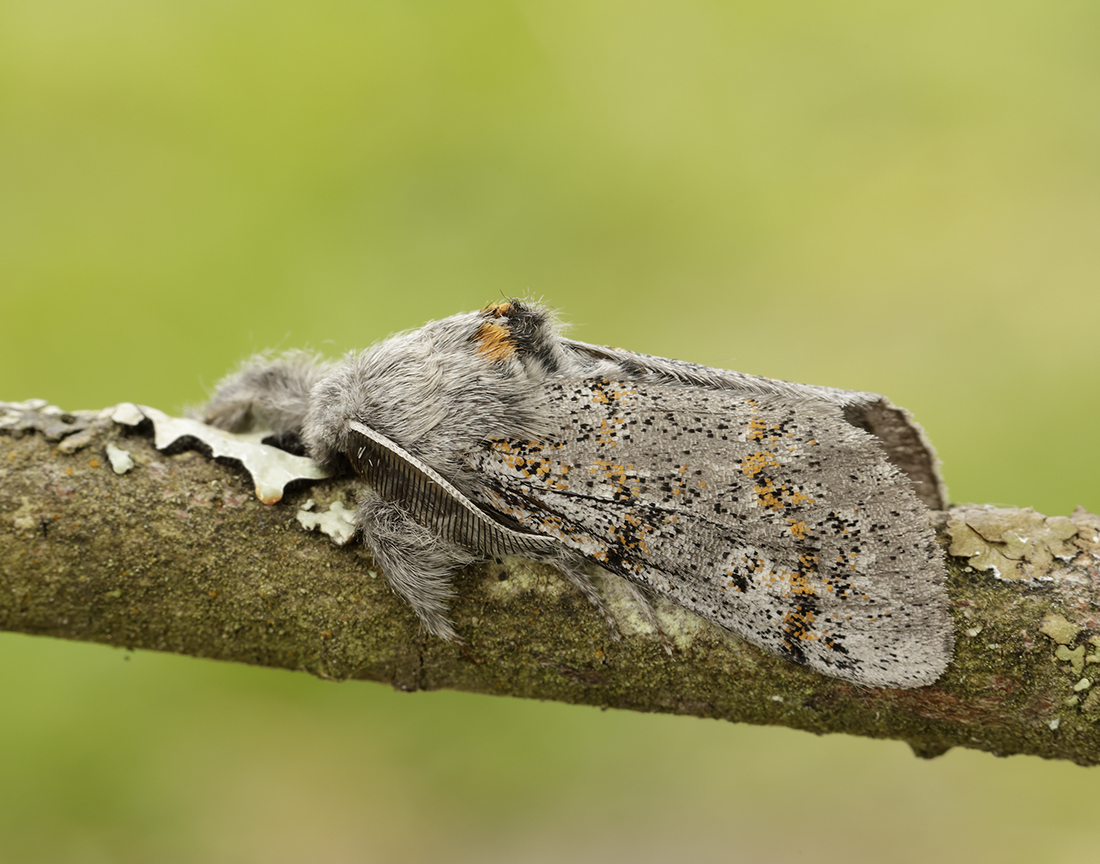
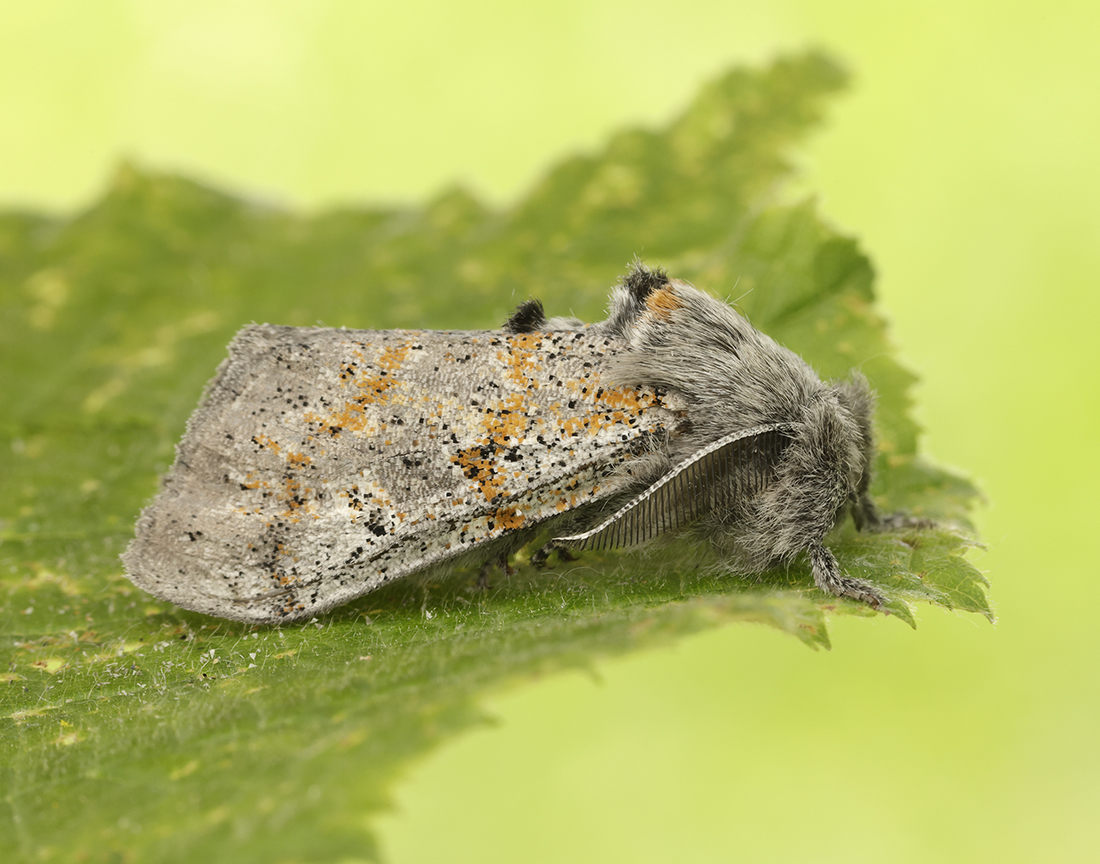
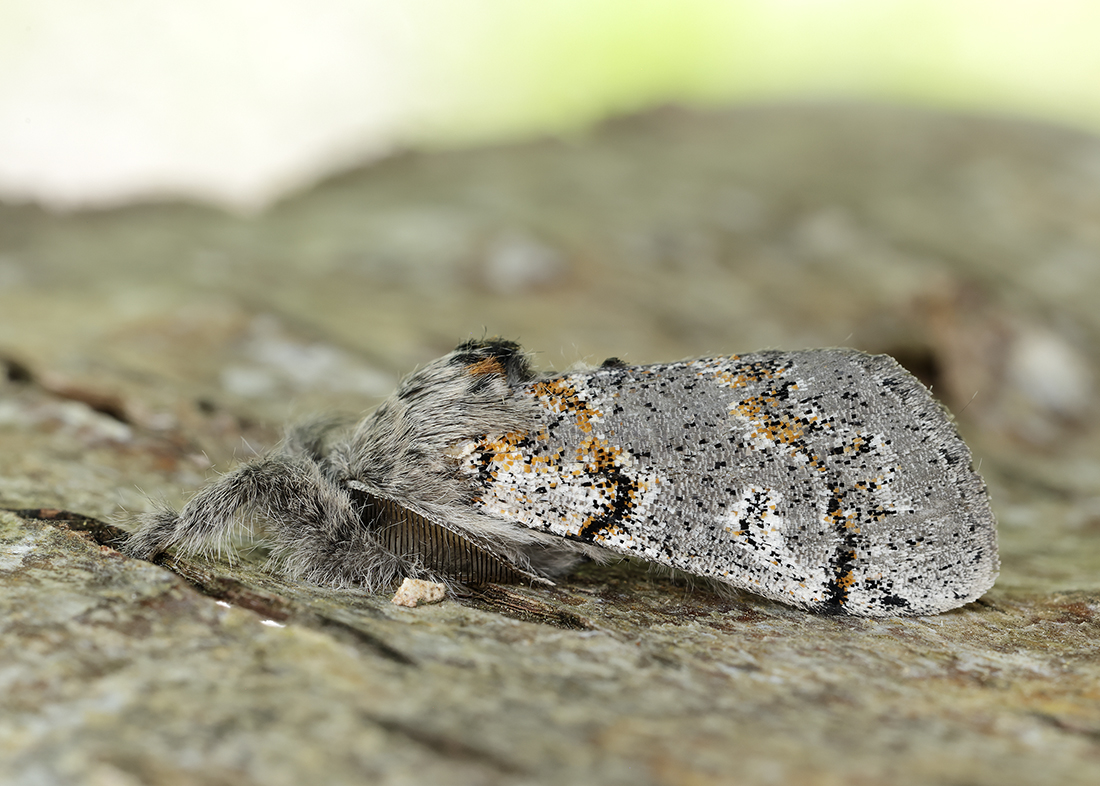
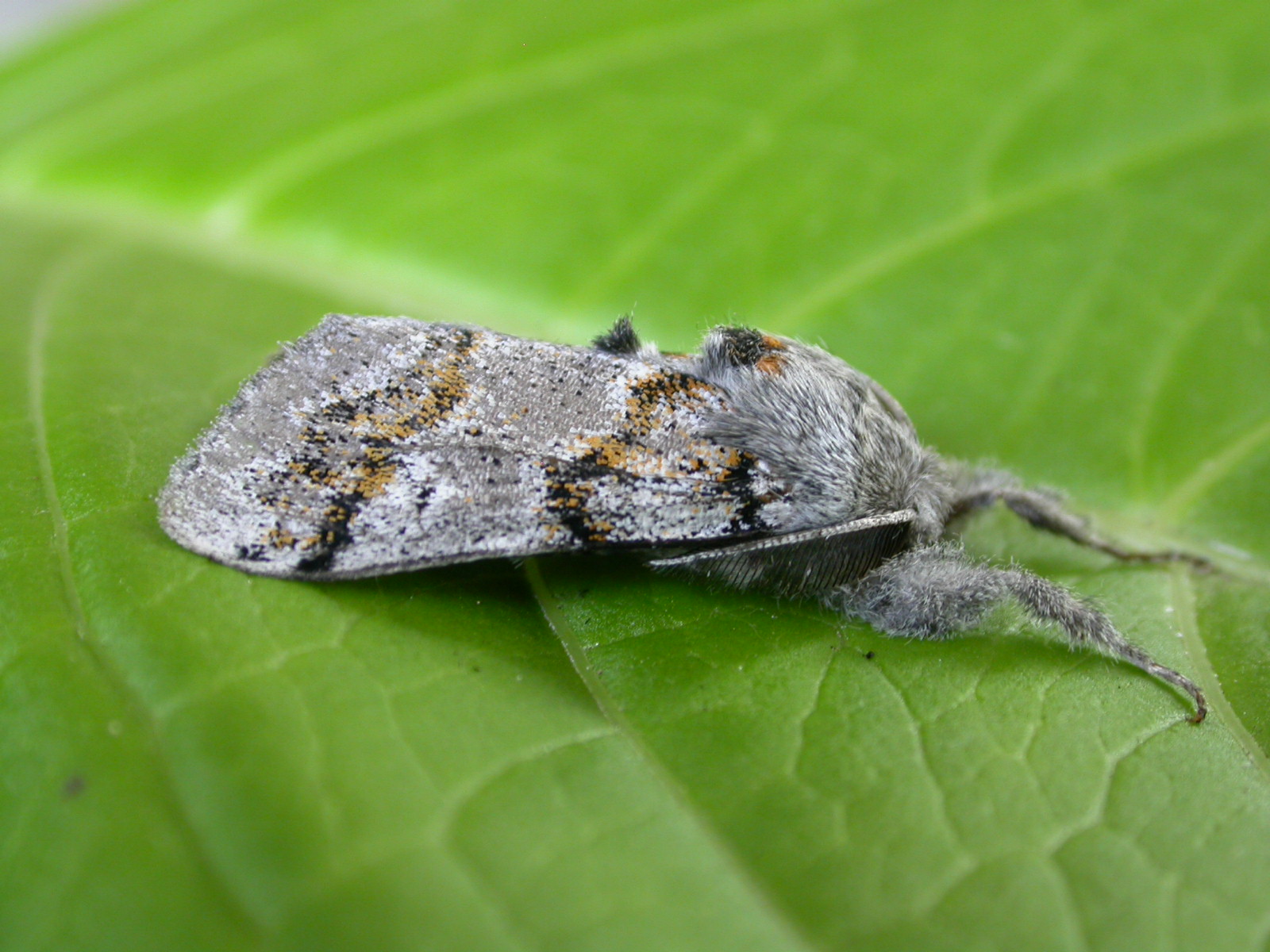
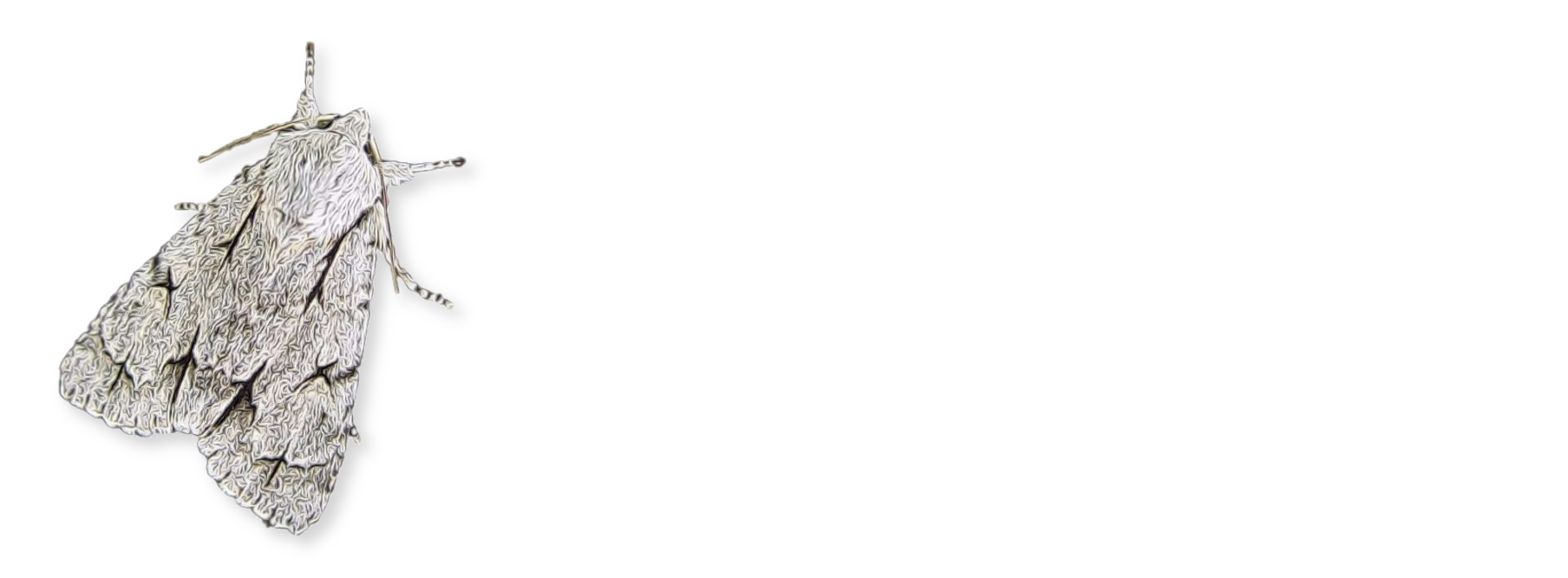
Usually distinctive.
Recording Method
Attracted to light.
Life cycle
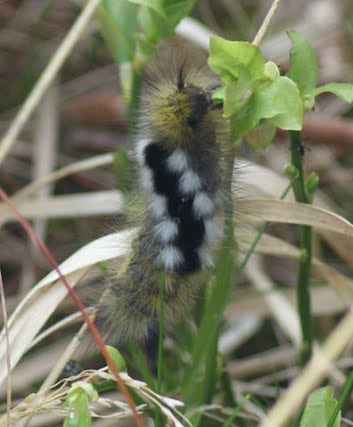
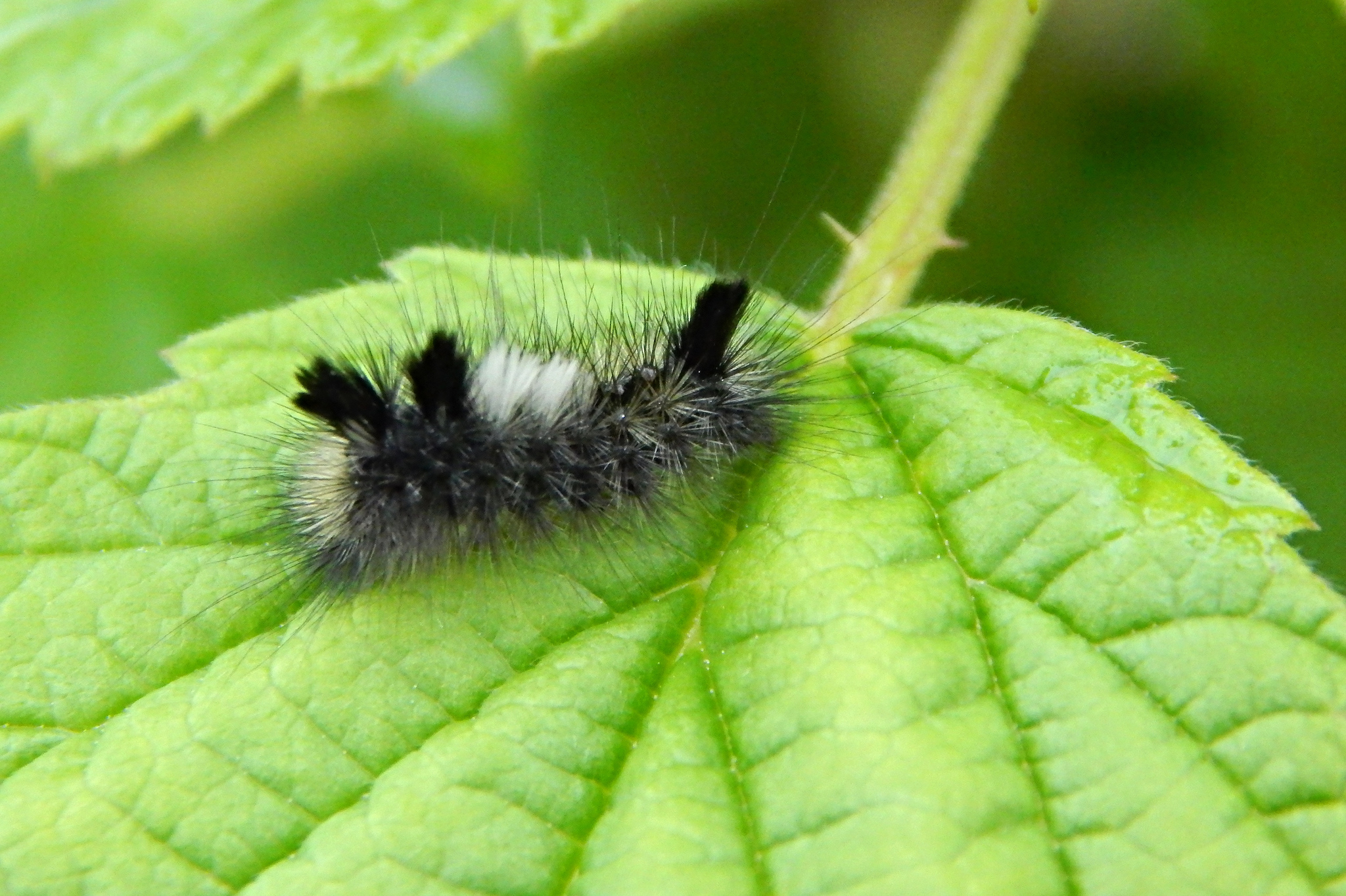
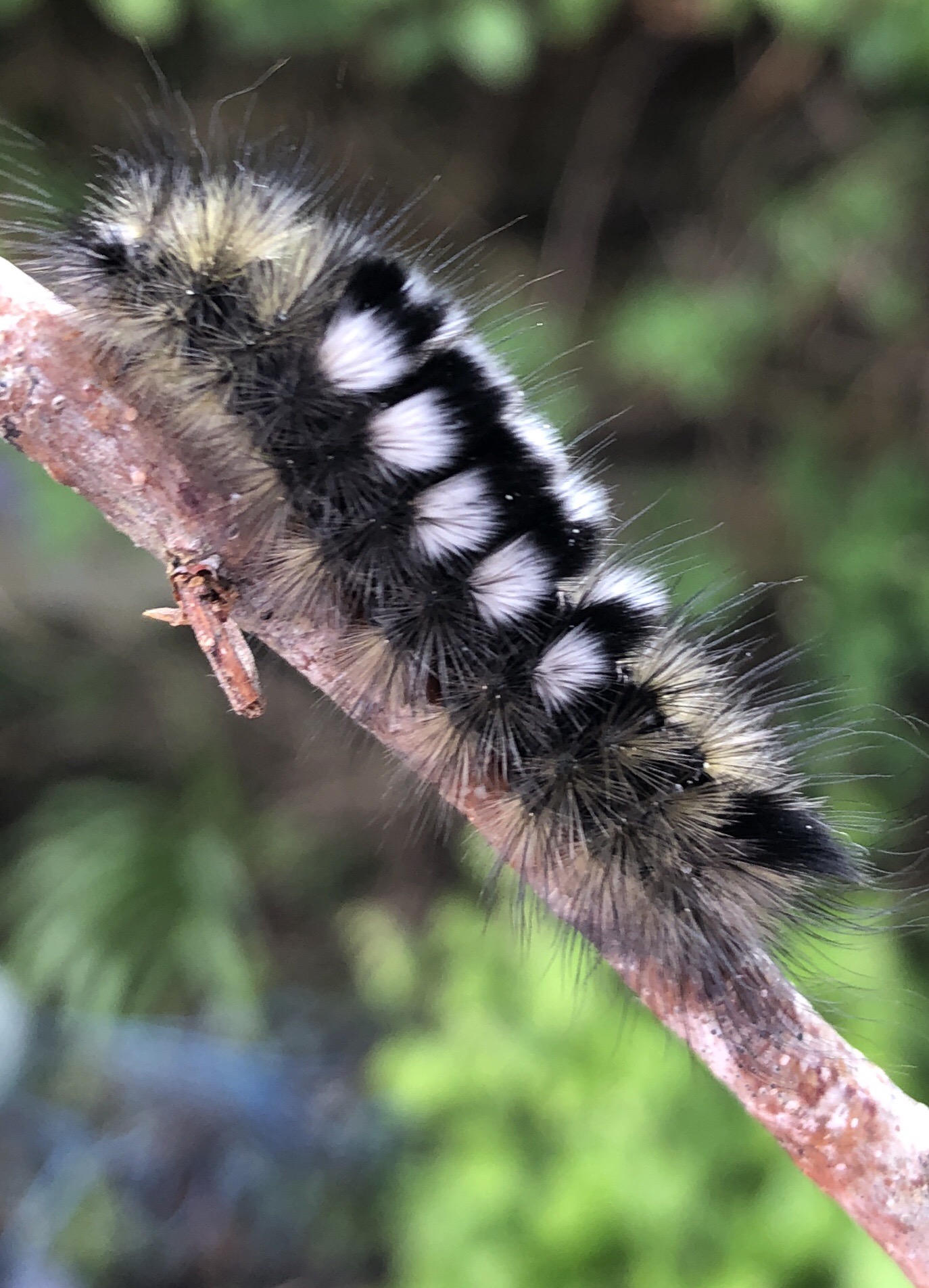
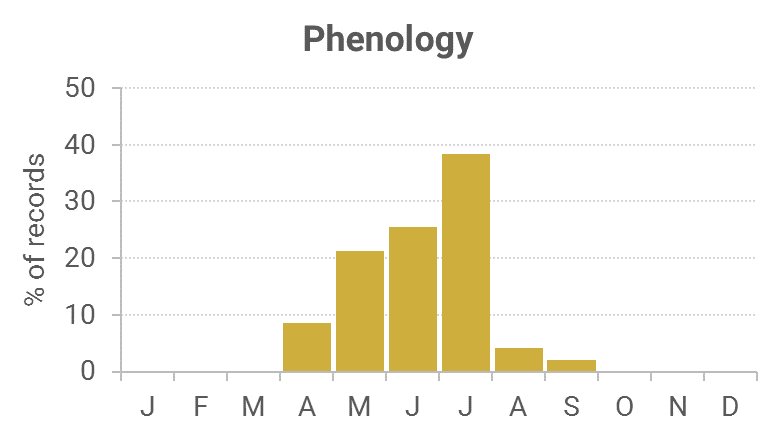
One generation. Overwinters as a small larva, sometimes twice. Larvae late August to May.
Larval foodplants
Mainly heather but also willows, Bramble, hawthorns and birches.
Habitat
Mainly heathland and moorland but also coastal sand-dunes and shingle beaches.
History
Lennon (1860) stated he had bred twenty on, presumably from larvae he had collected from around Dumfries whilst out rambling. By 1863, he further stated that it was not common, but that he had found it at Tinwald Downs and Dalskairth. R. S. Gordon (1913) had found the larvae common on all the moors around Corsemalzie, Wigtownshire. The imago rarely being seen, and then only at rest on heather. A large number of larvae were collected in May, 1898. This species is additional to MOGBI for VC74.
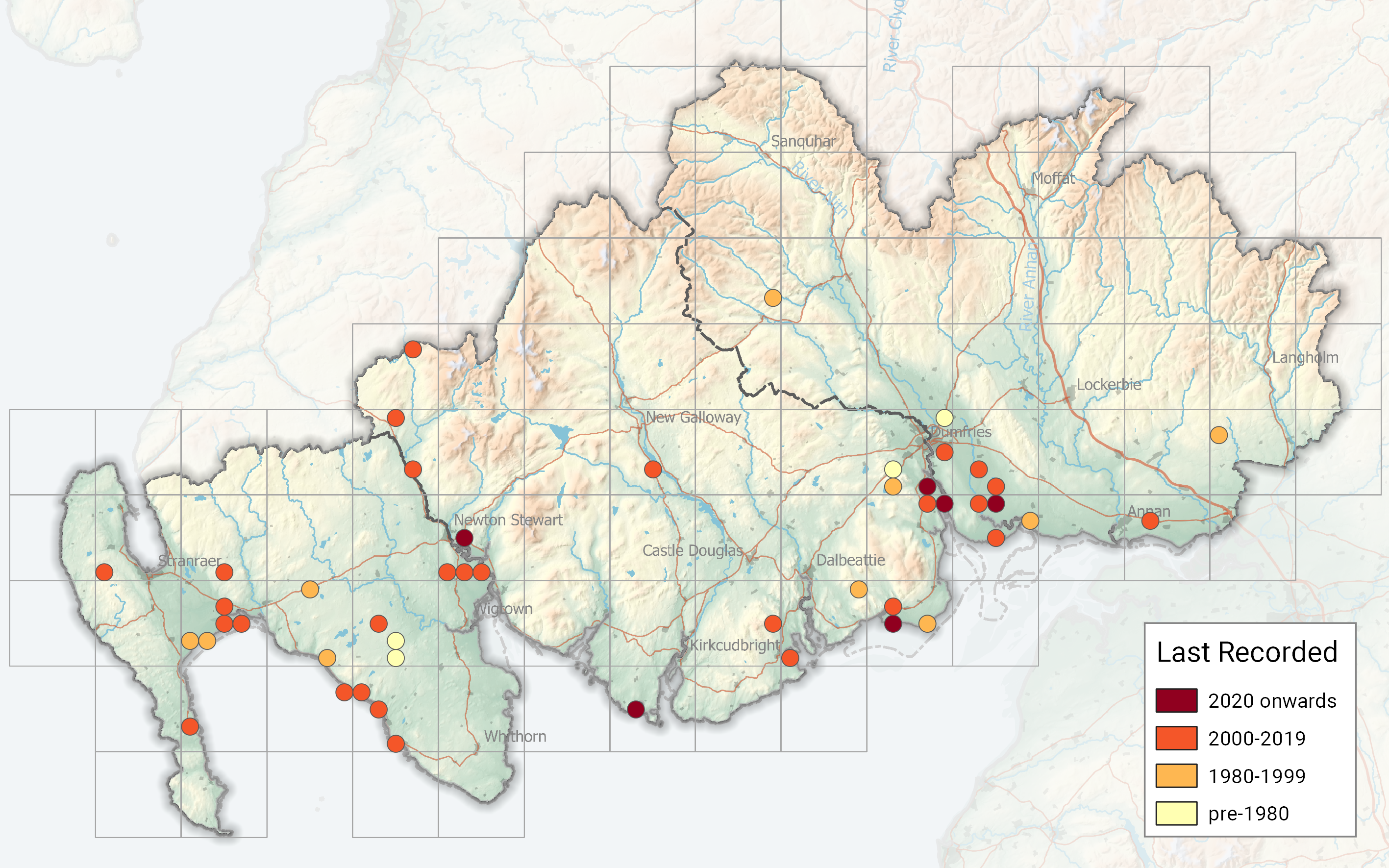
One record from the Caerlaverock Rothamsted station in 1975, is the only RIS data. Pelham-Clinton also found it at Stenhouse Wood SWT, Tynron in 1982, while in 1997 it was trapped on Bell’s Flow. These were all the records for Dumfriesshire since Lennon’s. Kirkcudbrightshire fared no better, with it being recorded at just eight sites during 1996-2010, and Wigtownshire mustered records from seven sites in the same period, proving that it is a scarce moth indeed.