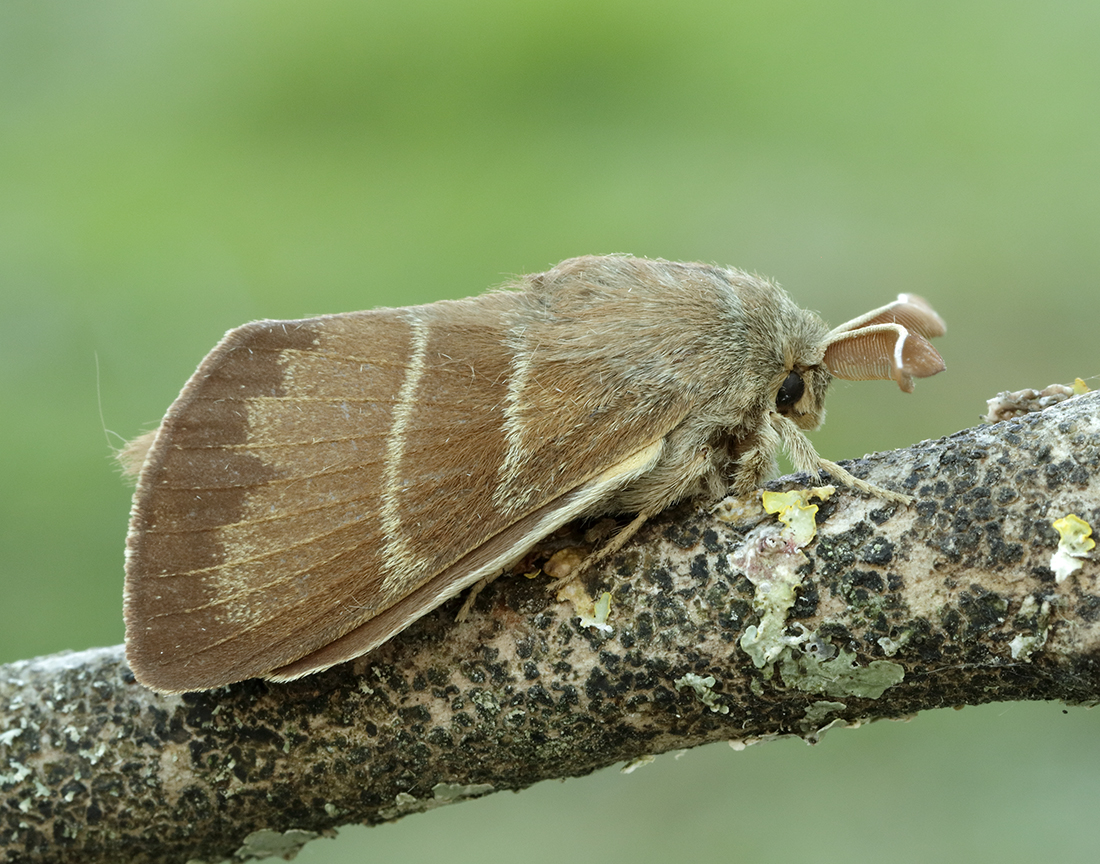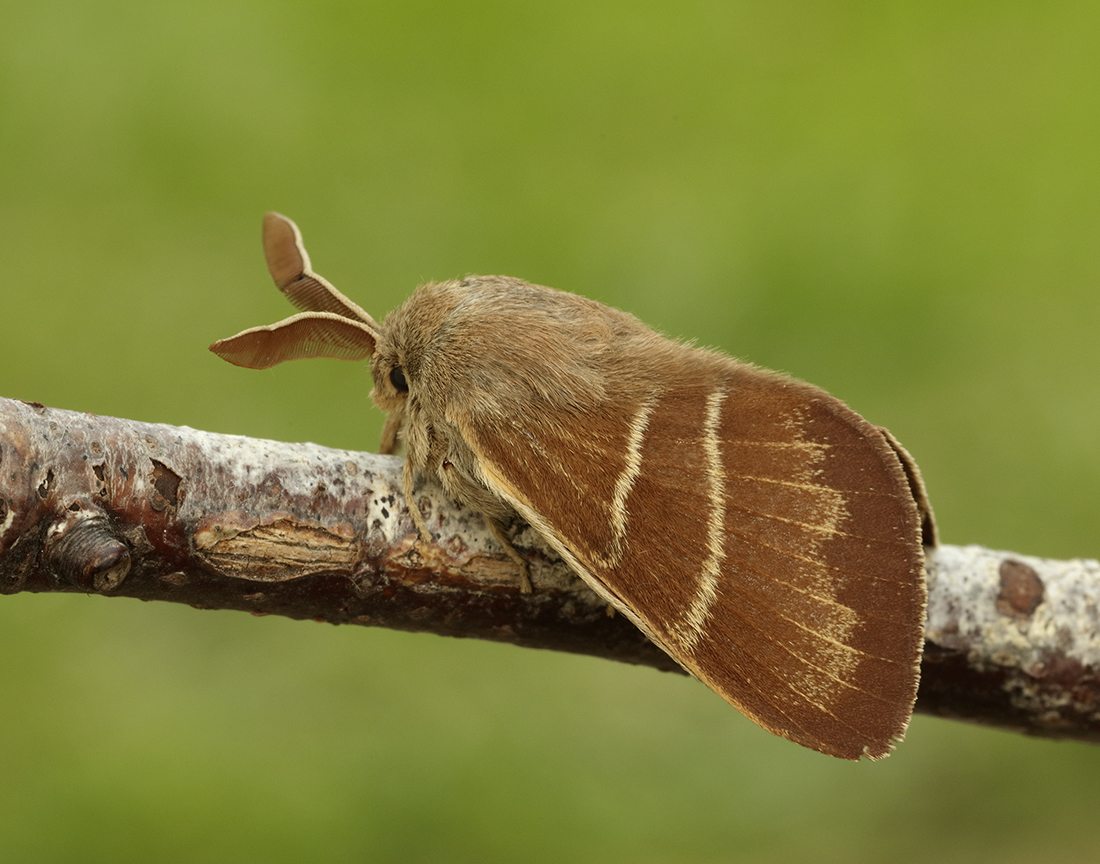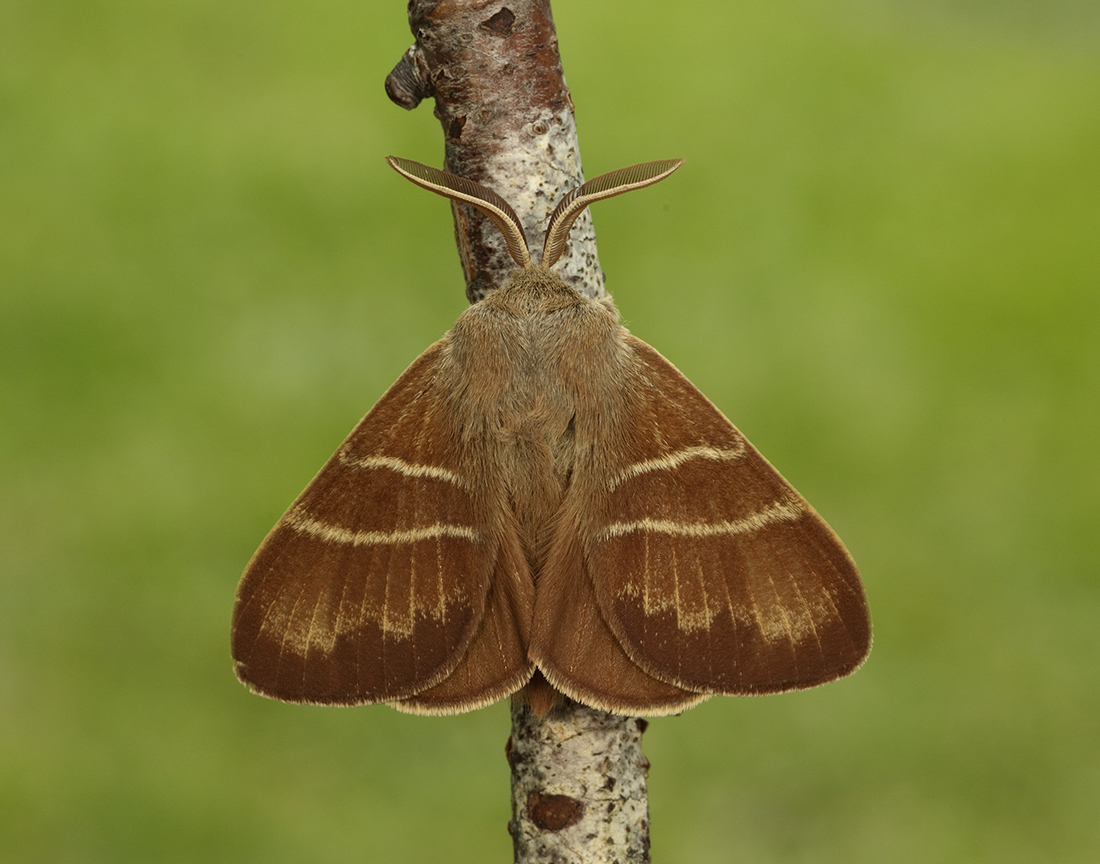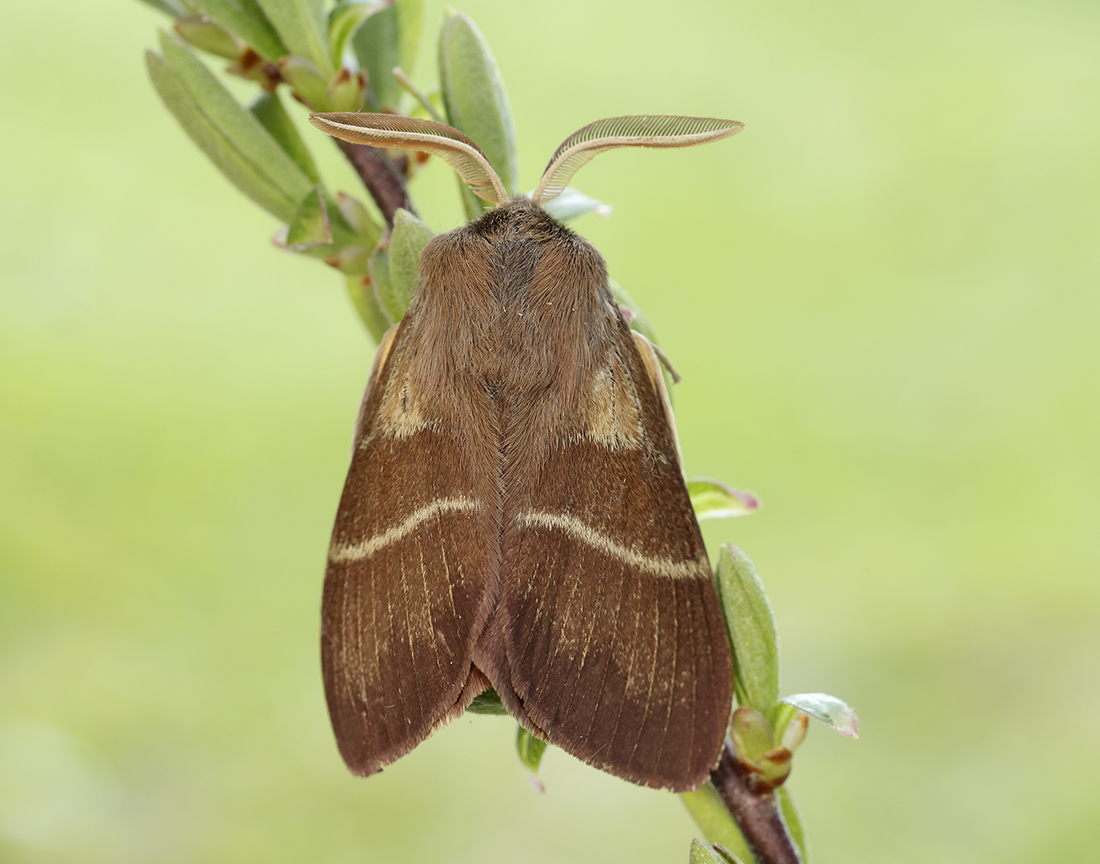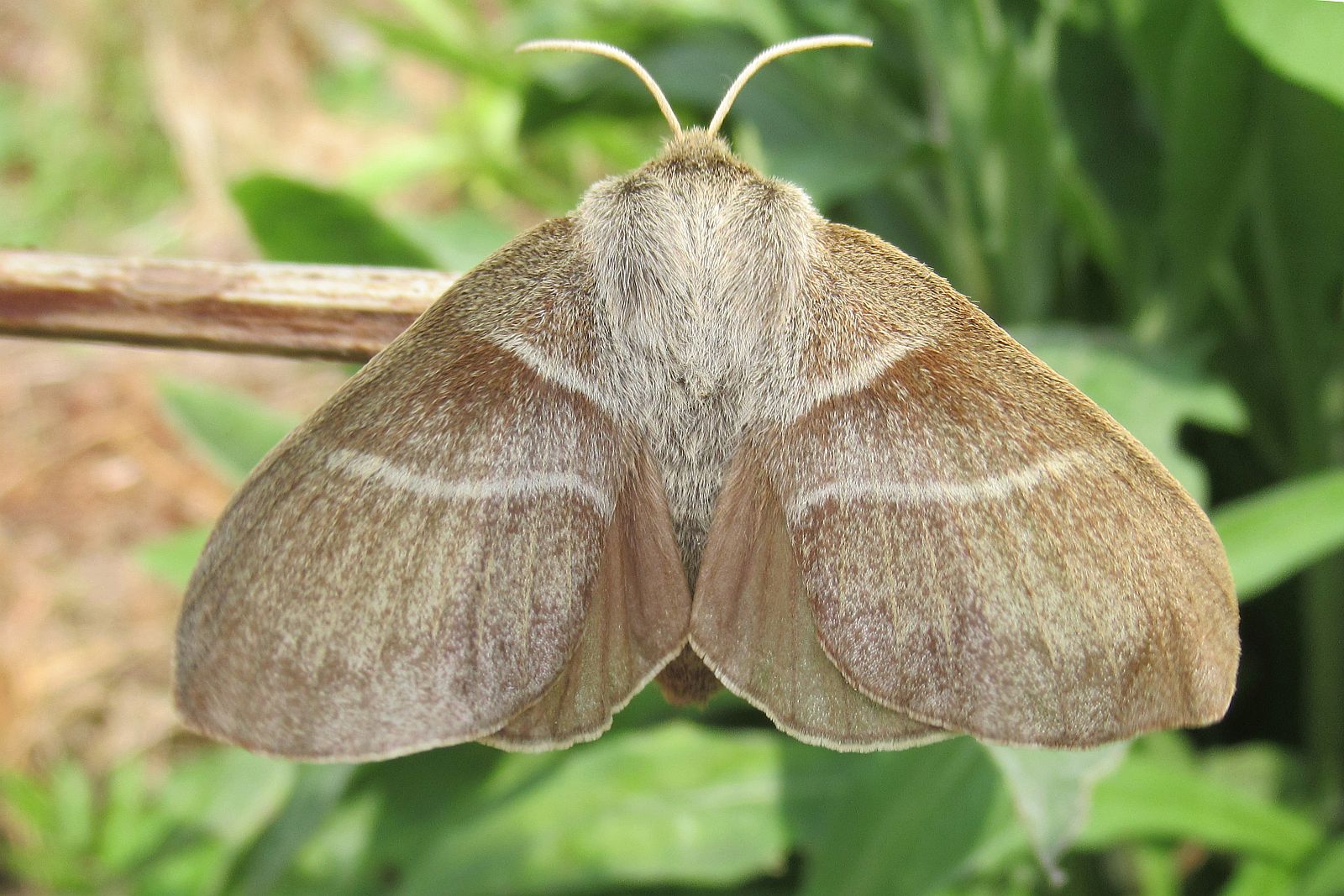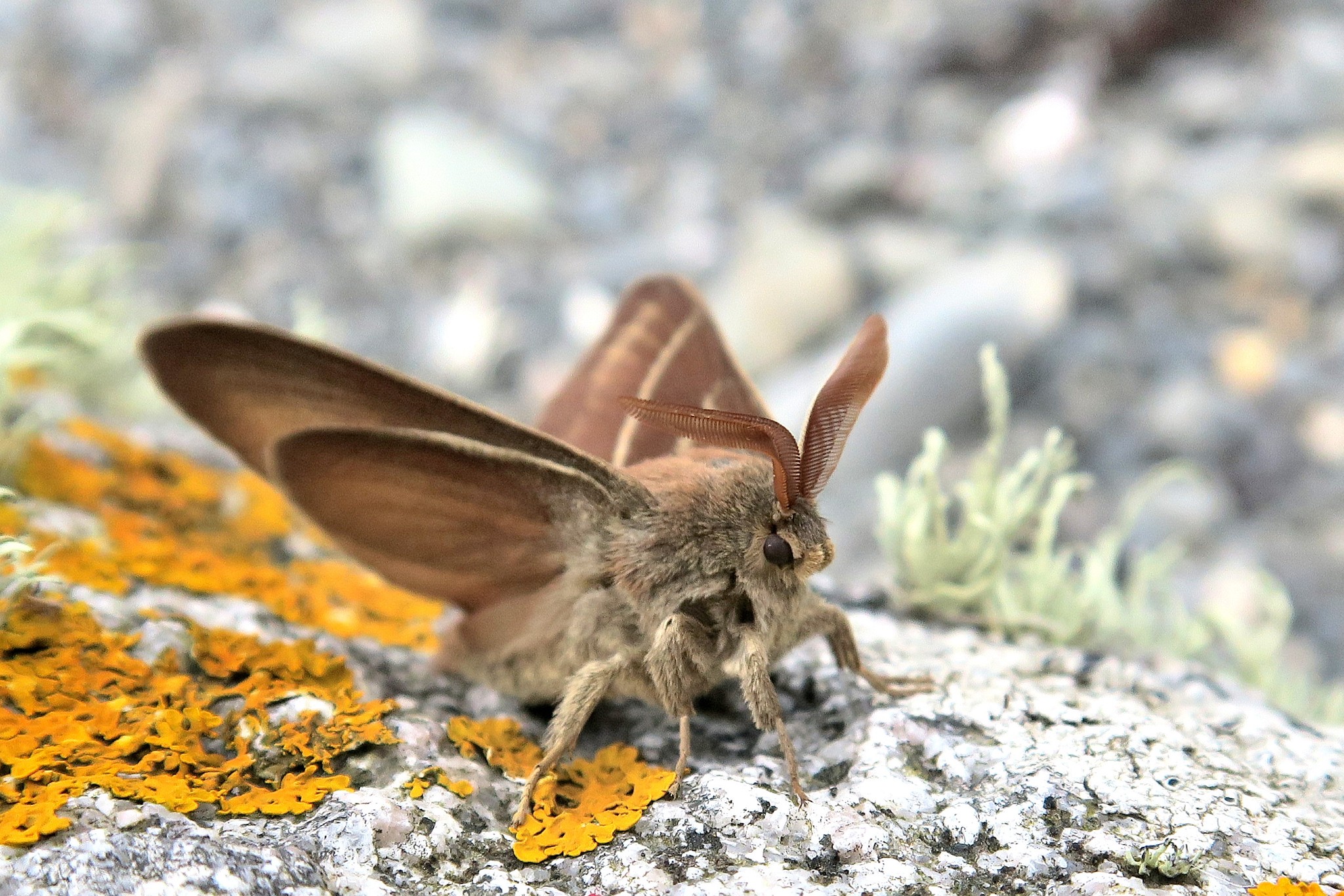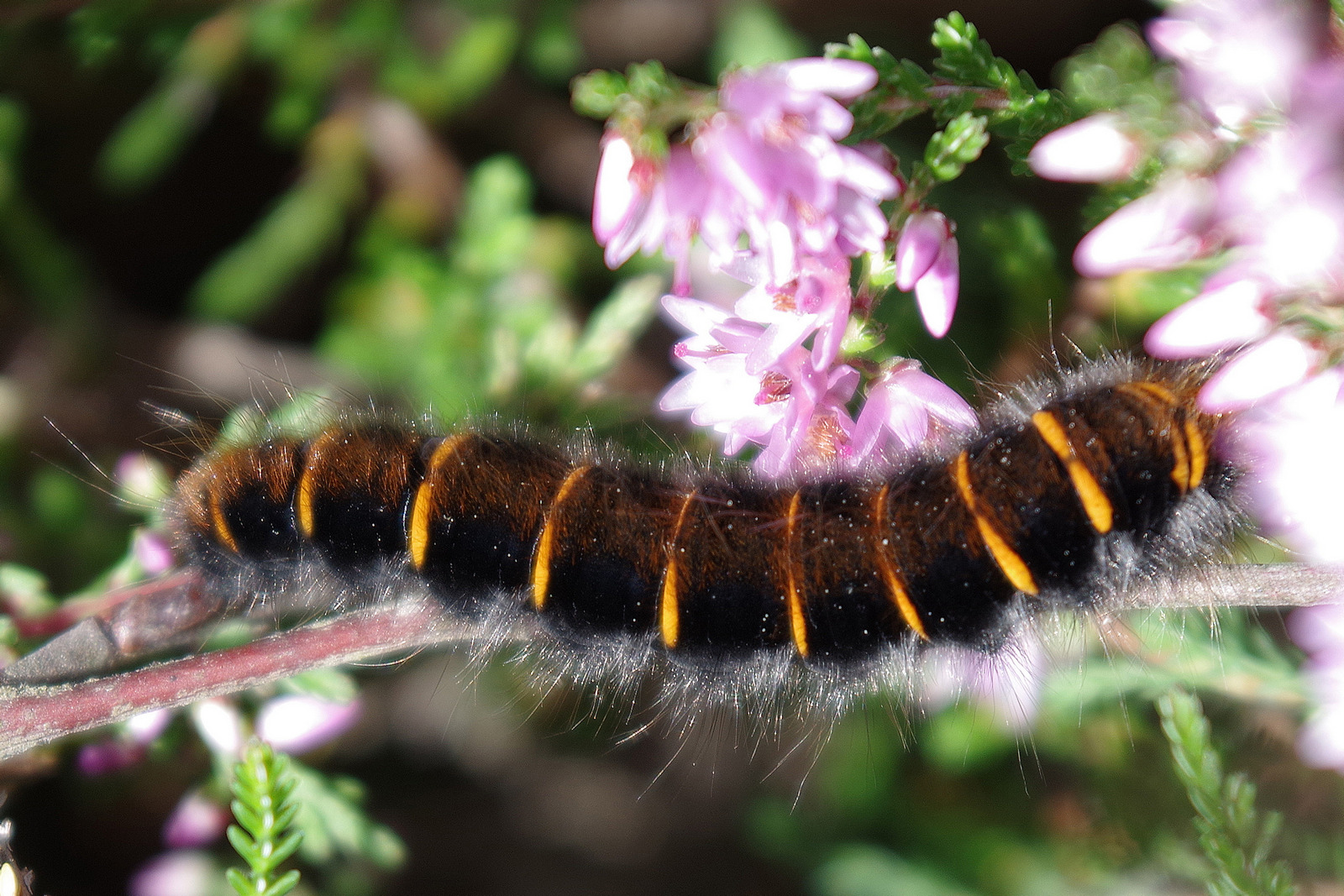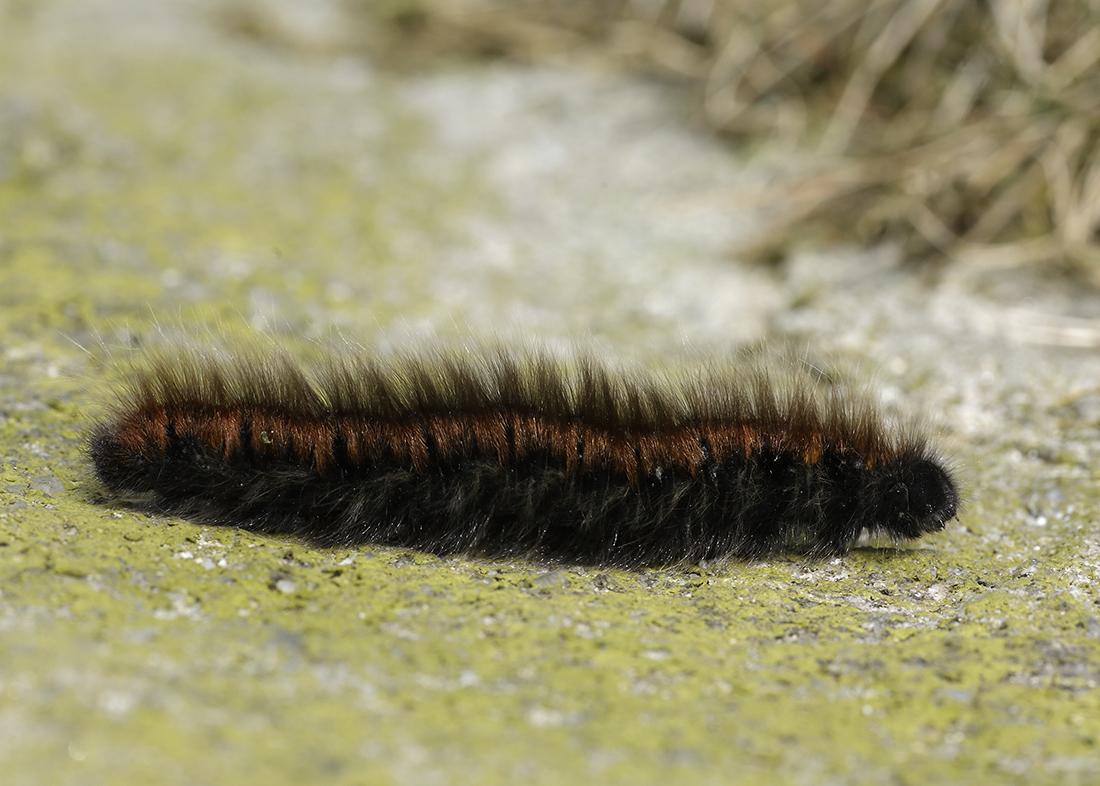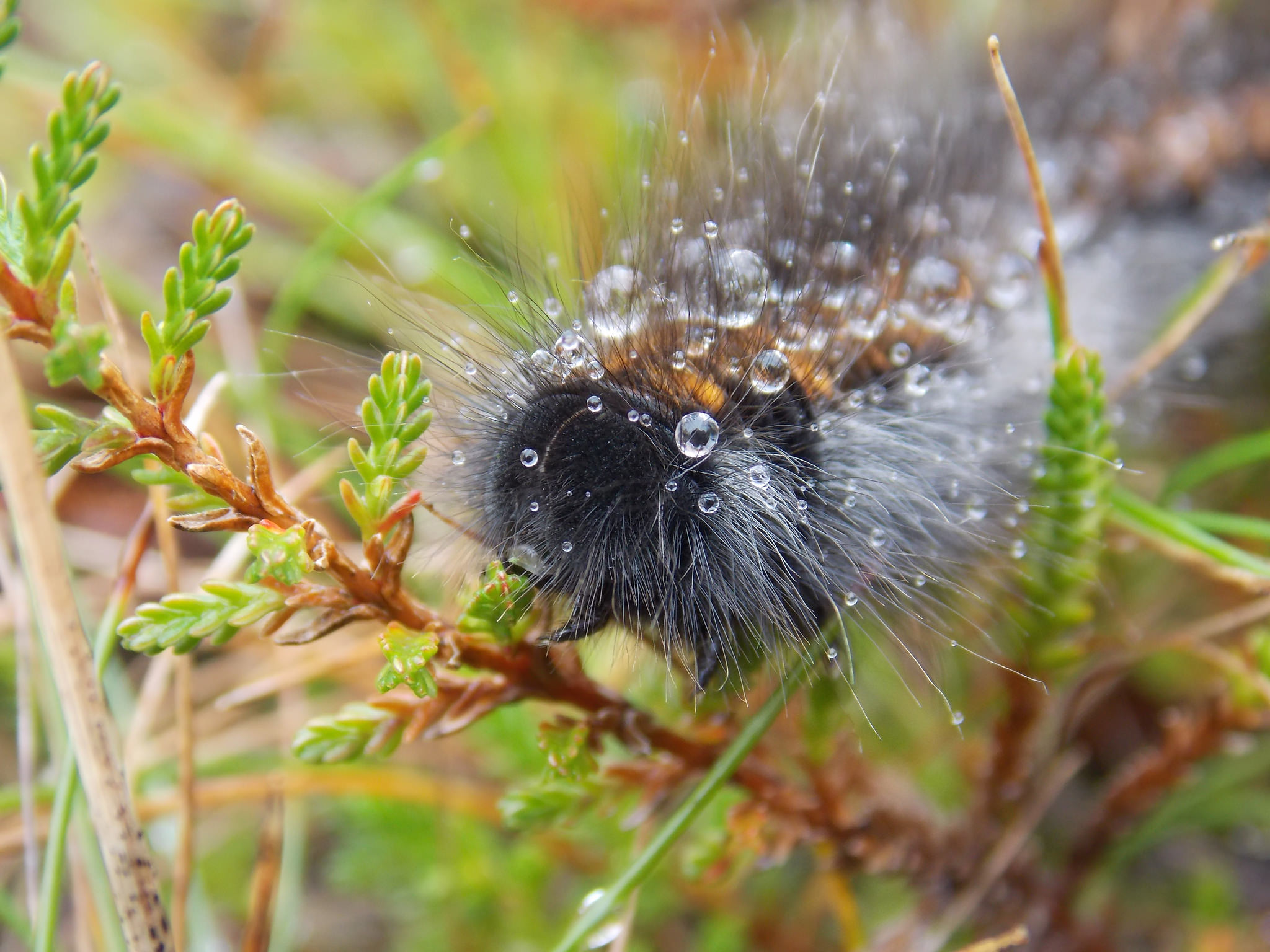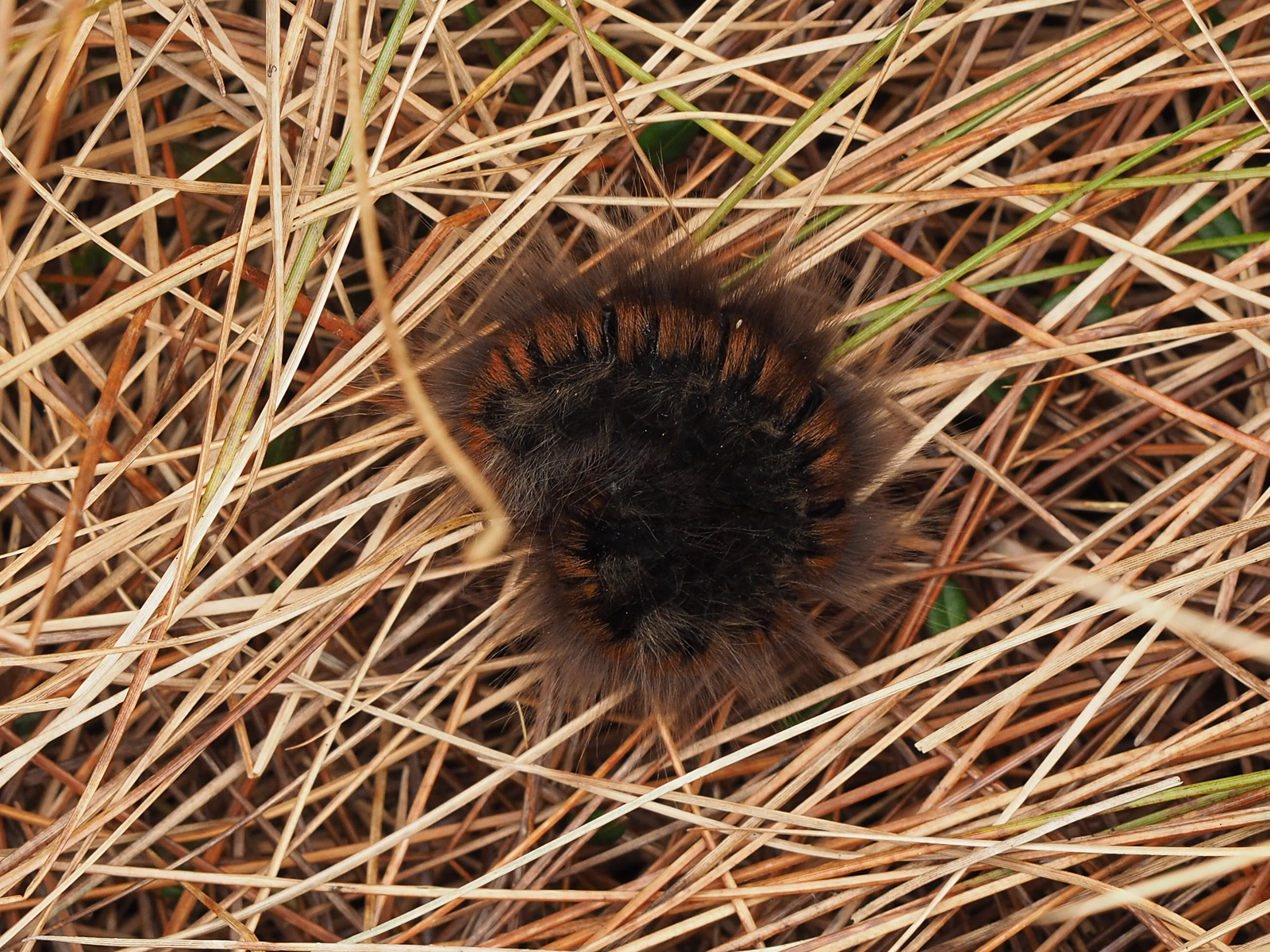

Red List: Least Concern (LC). GB Status: Common.
Identification
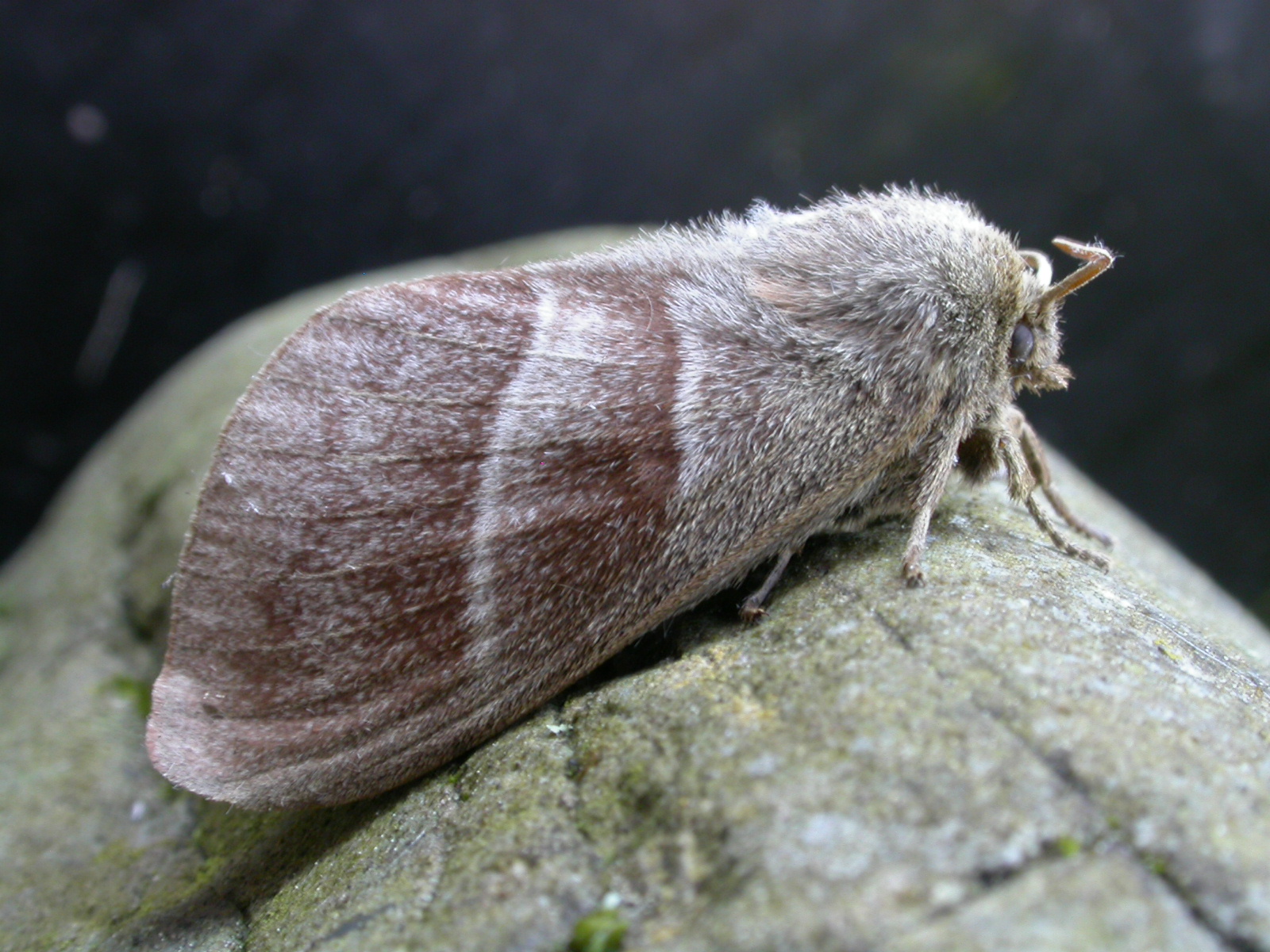
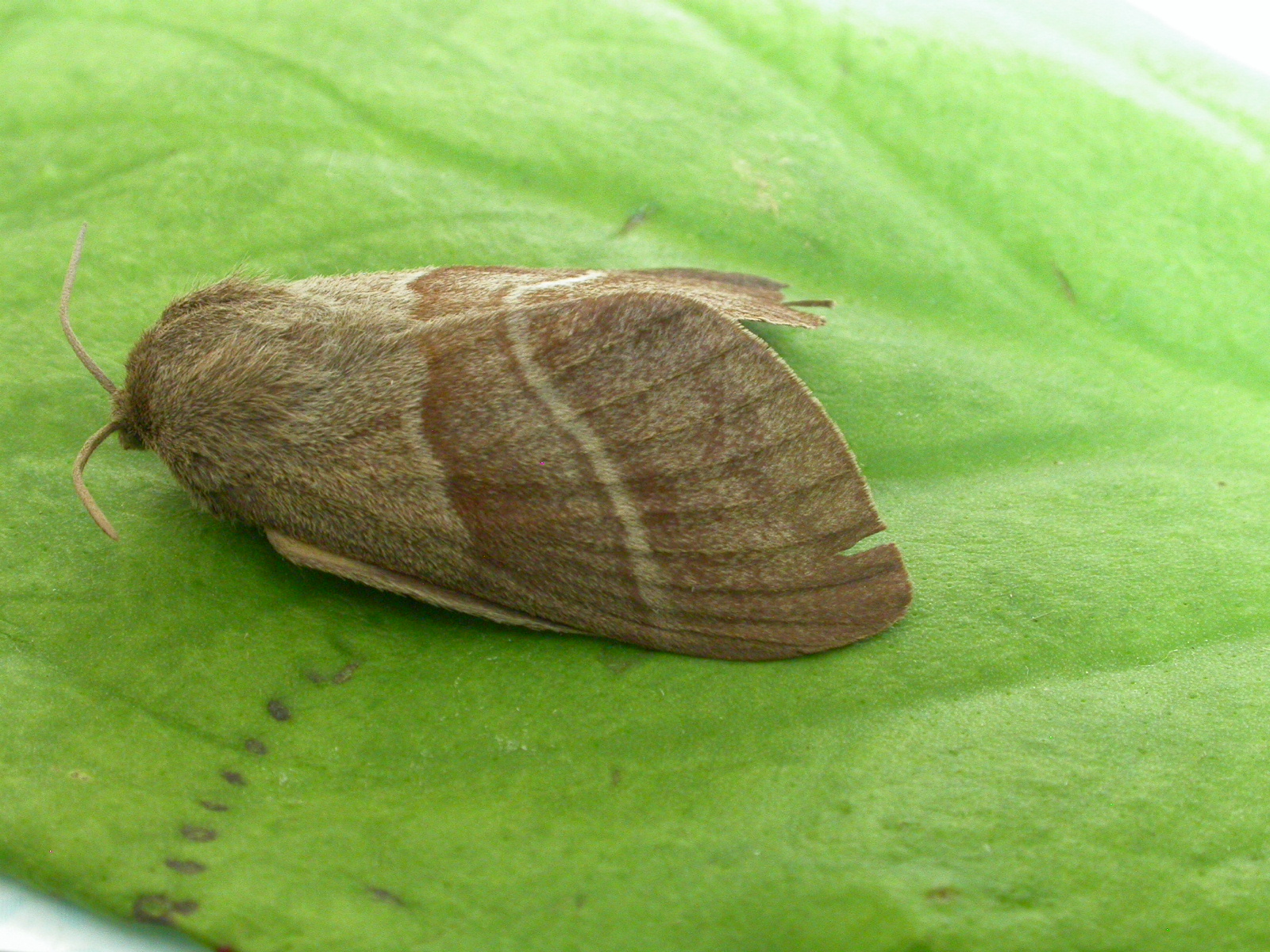
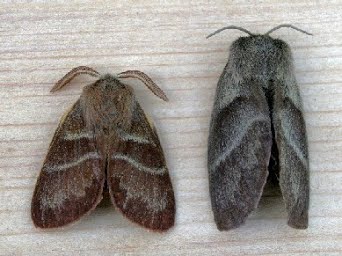
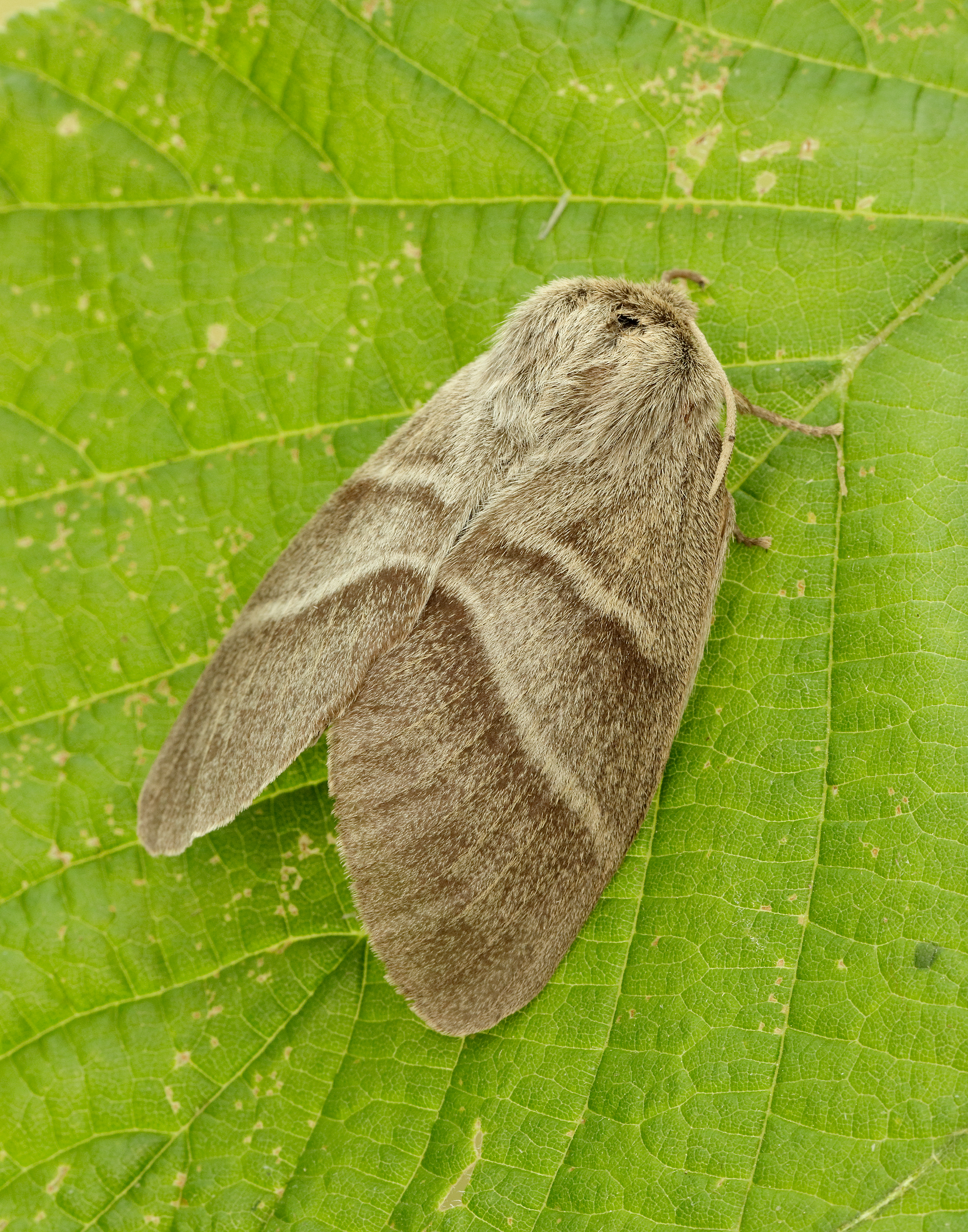
Usually distinctive.
Recording Method
Attracted to light. Females nocturnal and readily attracted to light, males less so. Males are active by day
Life cycle
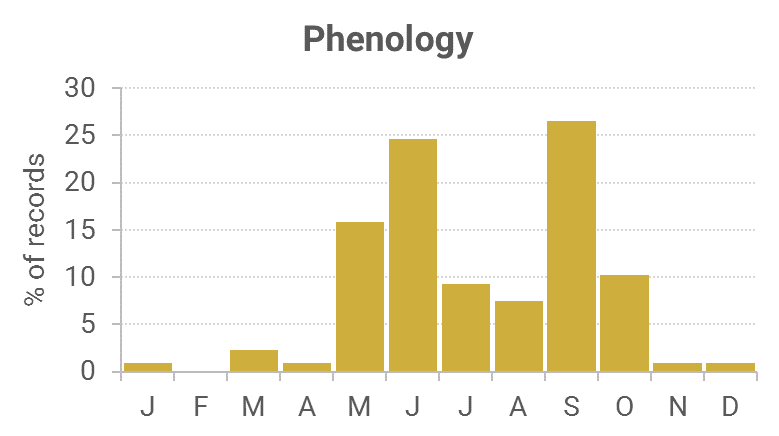
One generation. Overwinters as a fully grown larva under moss or leaf litter. Larvae July to April, feeding until October. Pupates in a long cigar-shaped cocoon close to the ground.
Larval foodplants
Larvae feed on heathers, Blaeberry, Bramble and Meadowsweet.
Habitat
Heathland, moorland, damp grassland and open woodland.
History
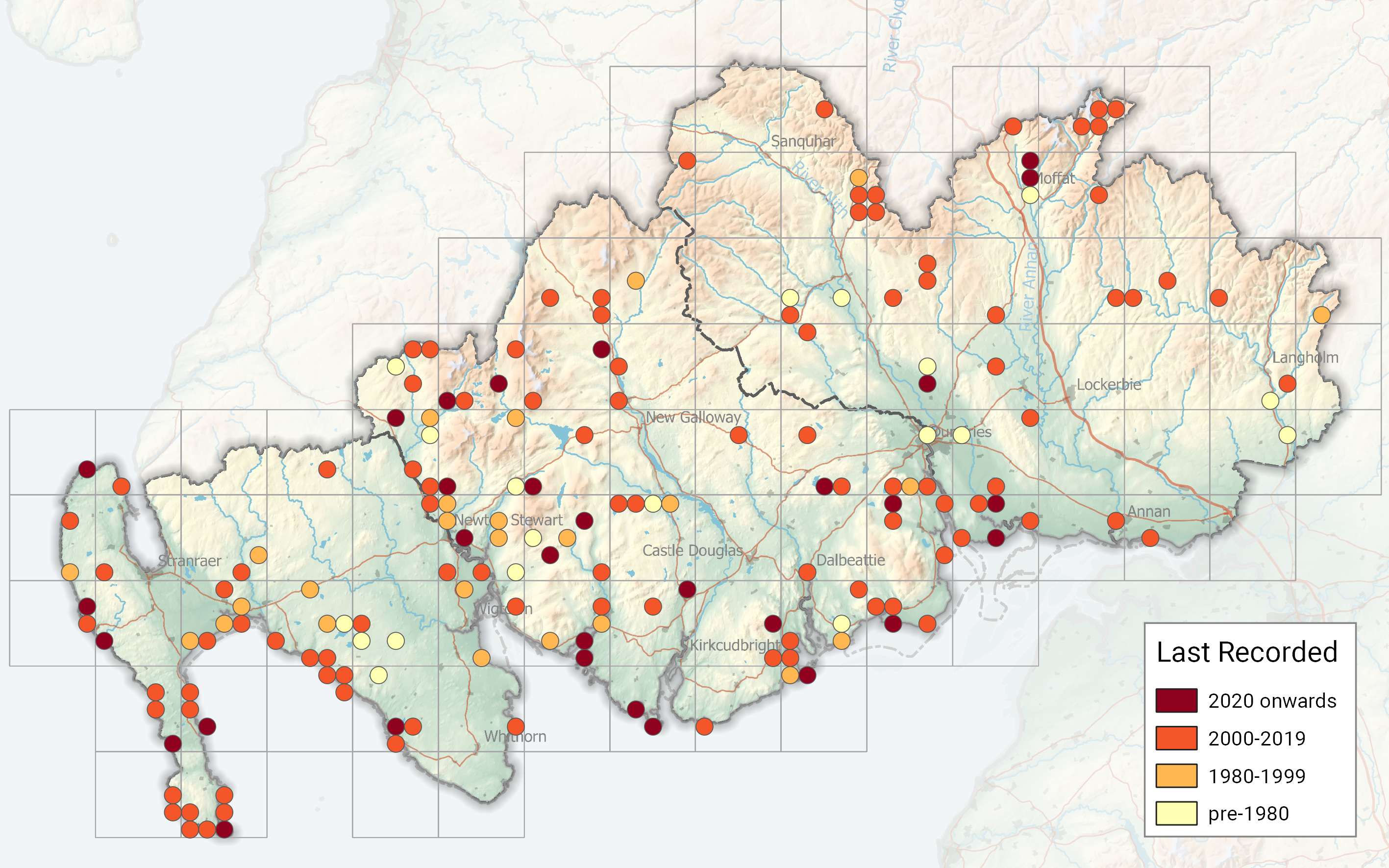
Alexander Somerville of Glasgow (1858) recorded larvae on his visit to the Moffat area (VC72) just prior to early September 1858. Lennon (1860) stated he had bred 10 on, presumably from larvae he had collected from around Dumfries whilst out rambling. By 1863, he stated that it was common on the heath.
Gordon (1913) listed the earliest date as 13th May 1901. He considered it common and widespread on all the moors. Larvae being especially abundant among white grass in the autumn, so much so that on 15th September 1903 with his brother they collected over 400 in one afternoon on Glenelrig Moor, Mochrum. Earliest date was 21st May 1901. Sir Arthur Duncan (1909-84) during his lifetime had found it at Closeburn, Tynron and Castlehill, Dumfries (all VC72).
During 1976-92 there were just nine records from four of the Rothamsted stations. Otherwise, as you would expect, most records from 1992-2010 were from moorland, heathland and the occasional coastal site.
The dates of the records of larvae ranged from 7th July to 30th October.