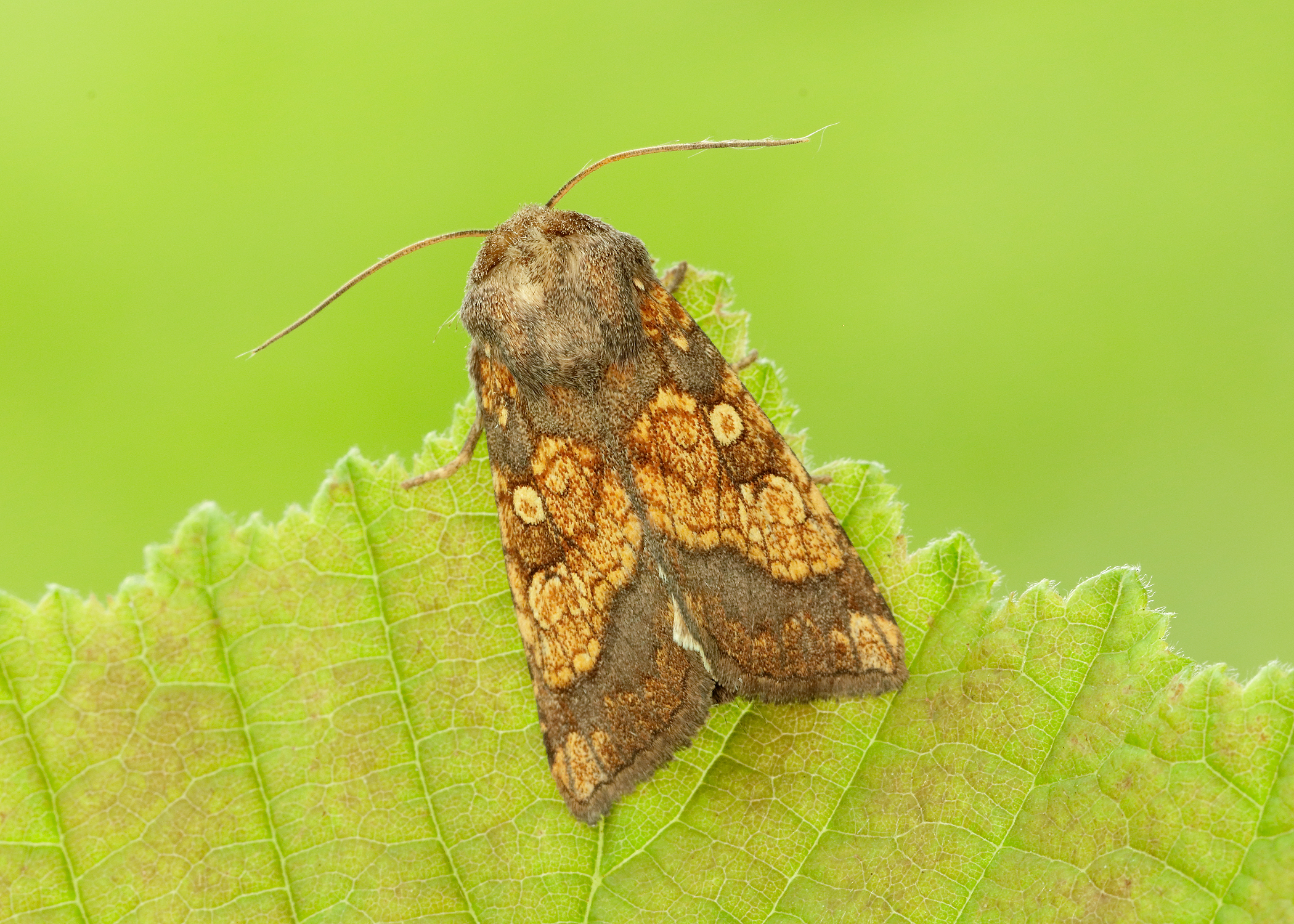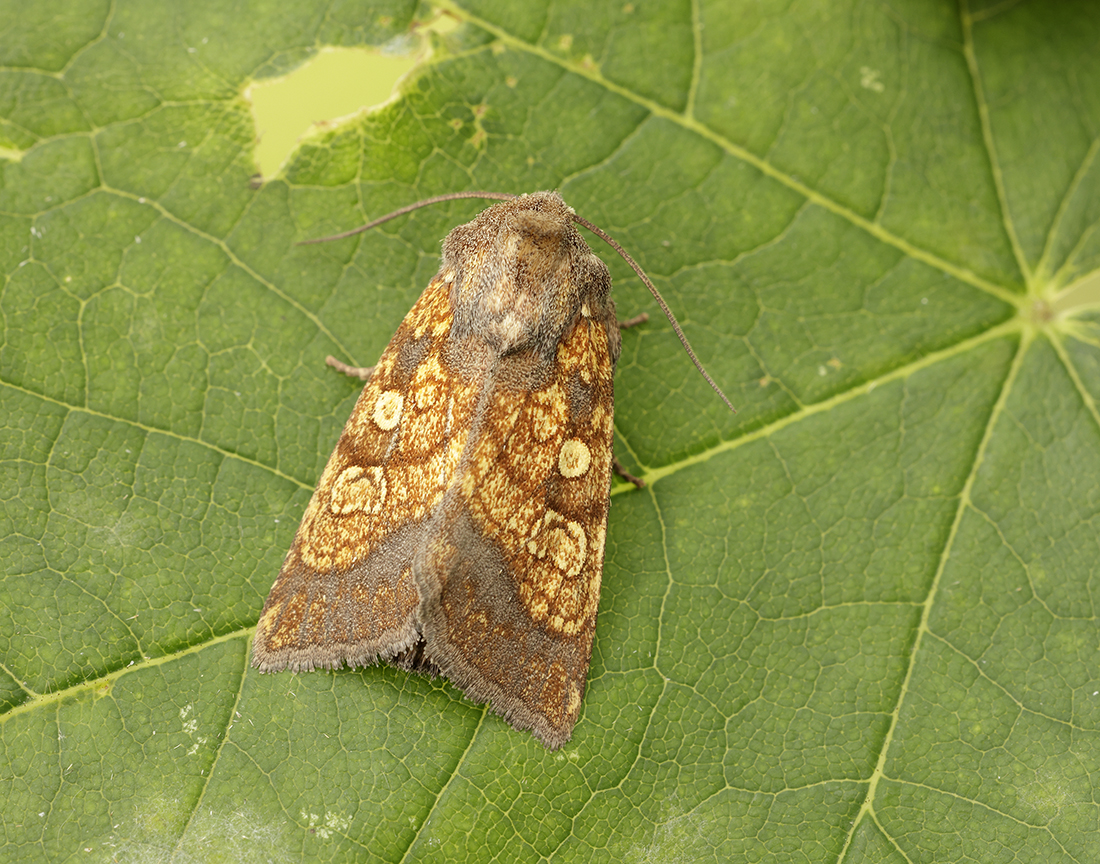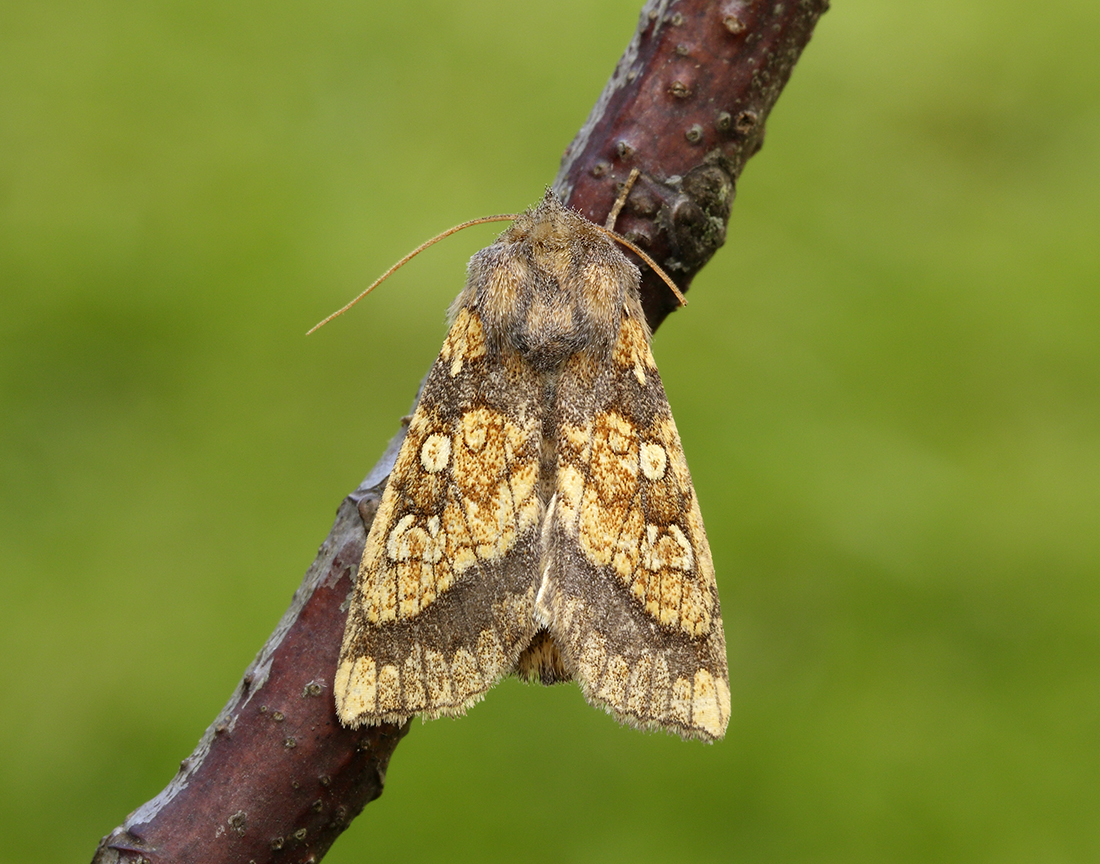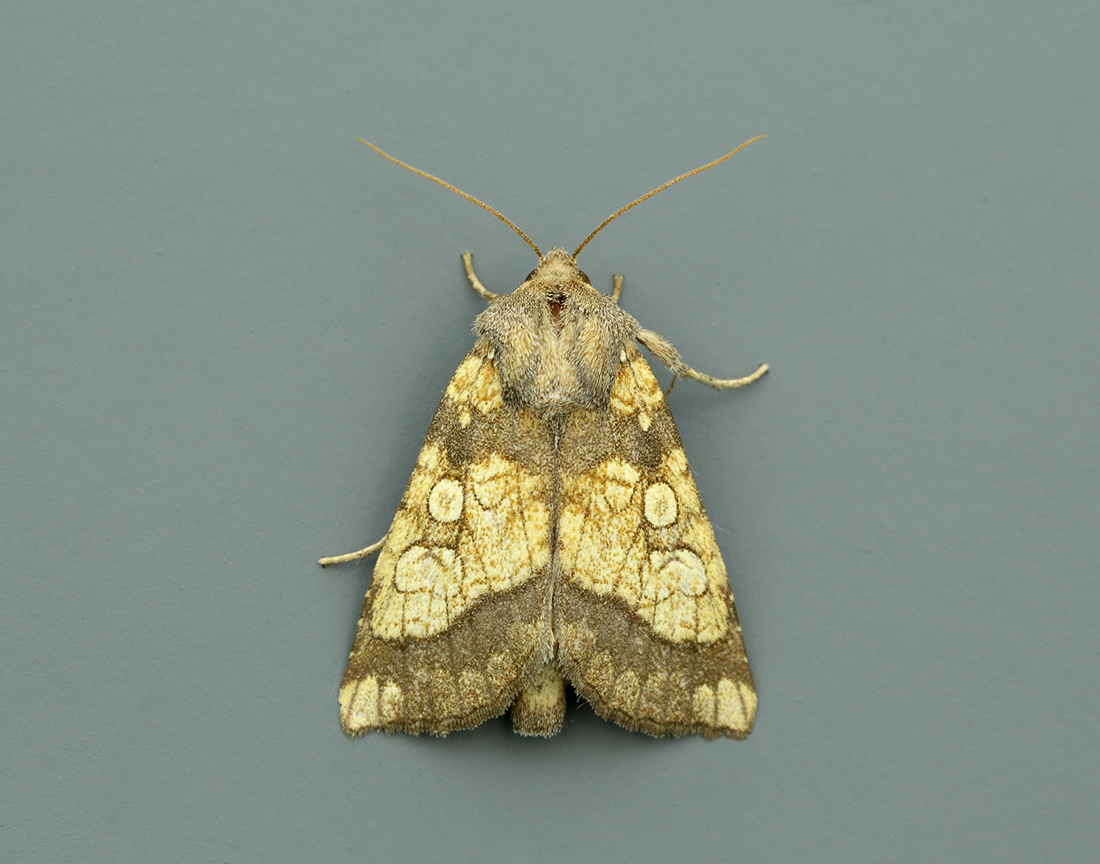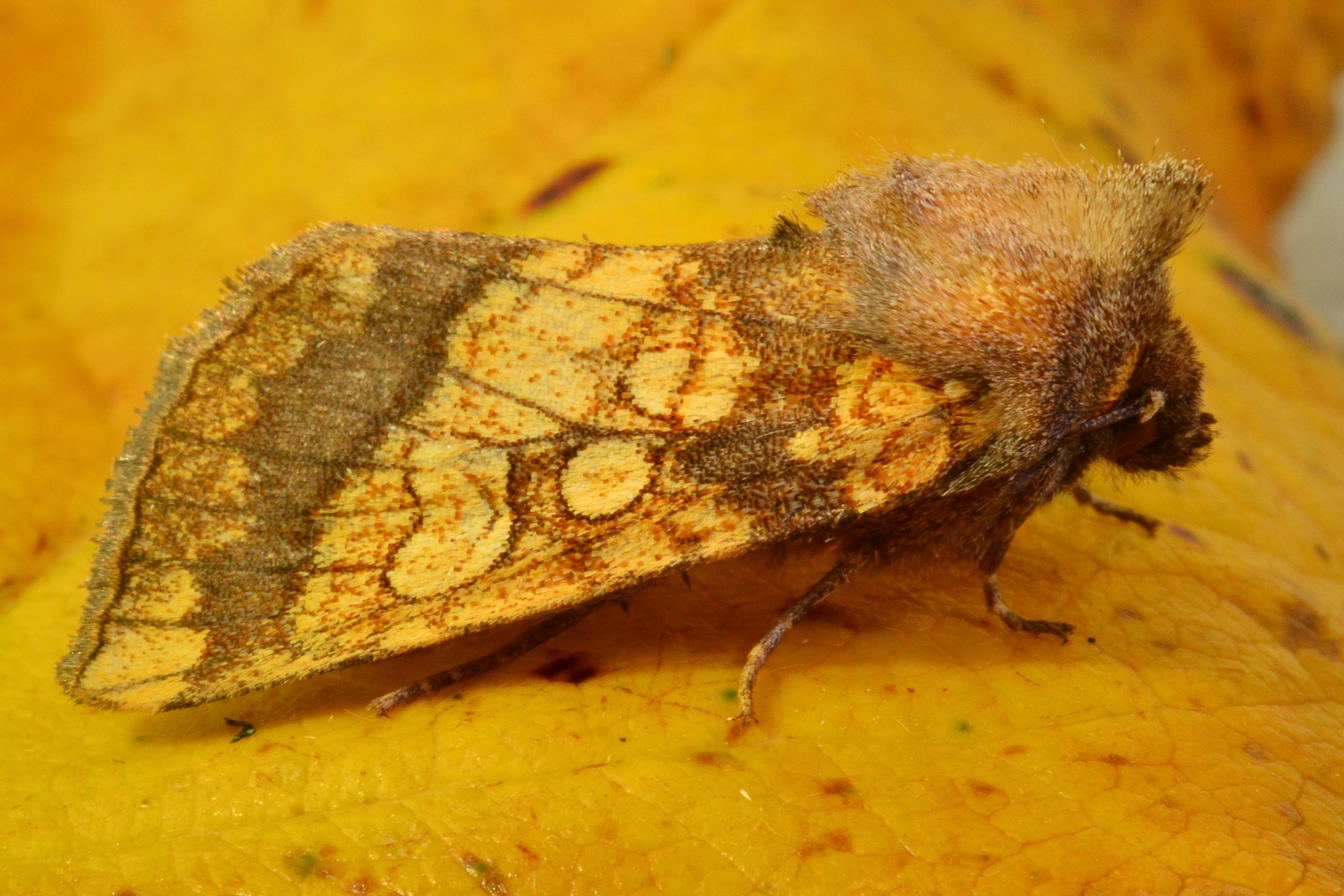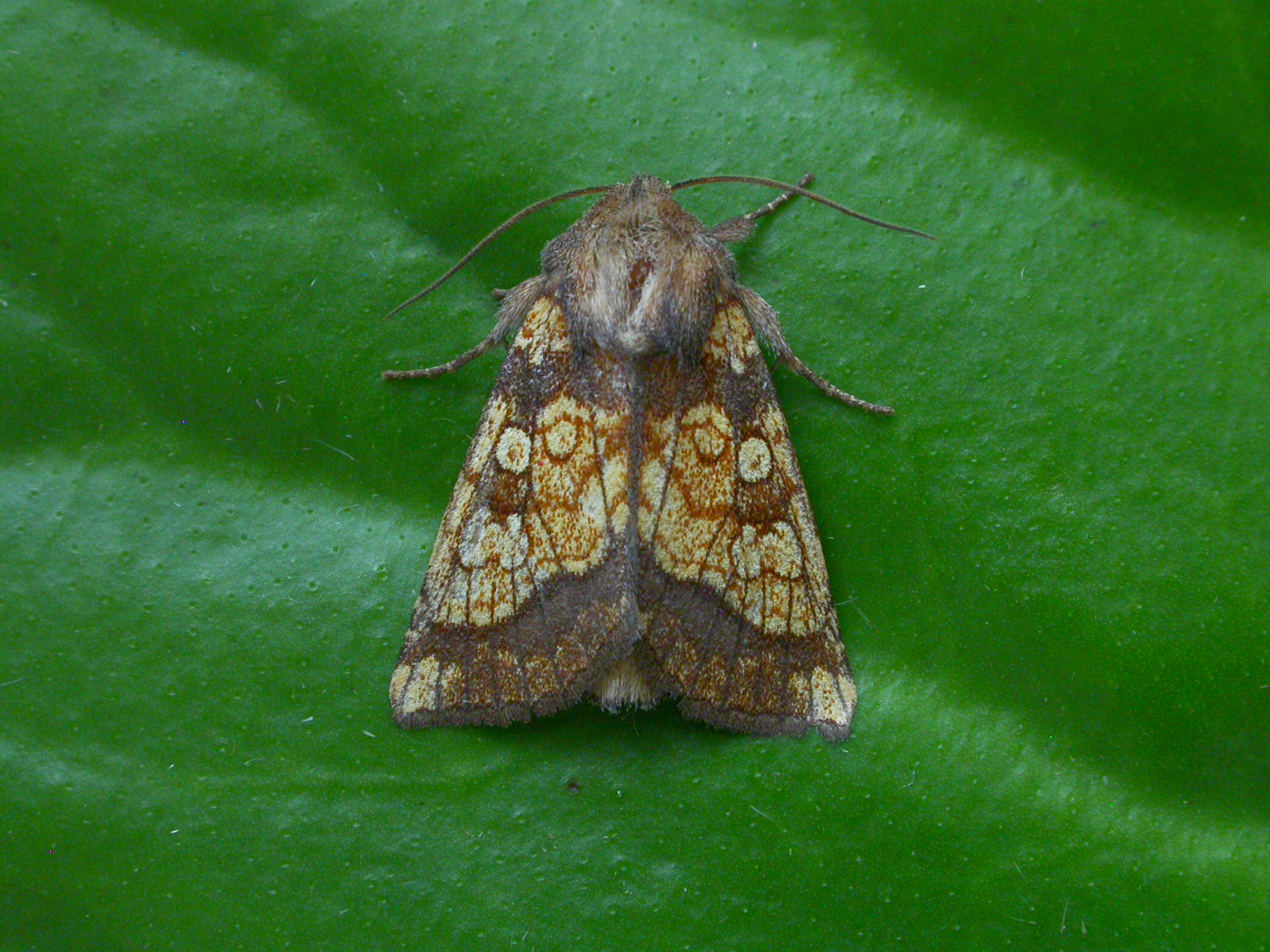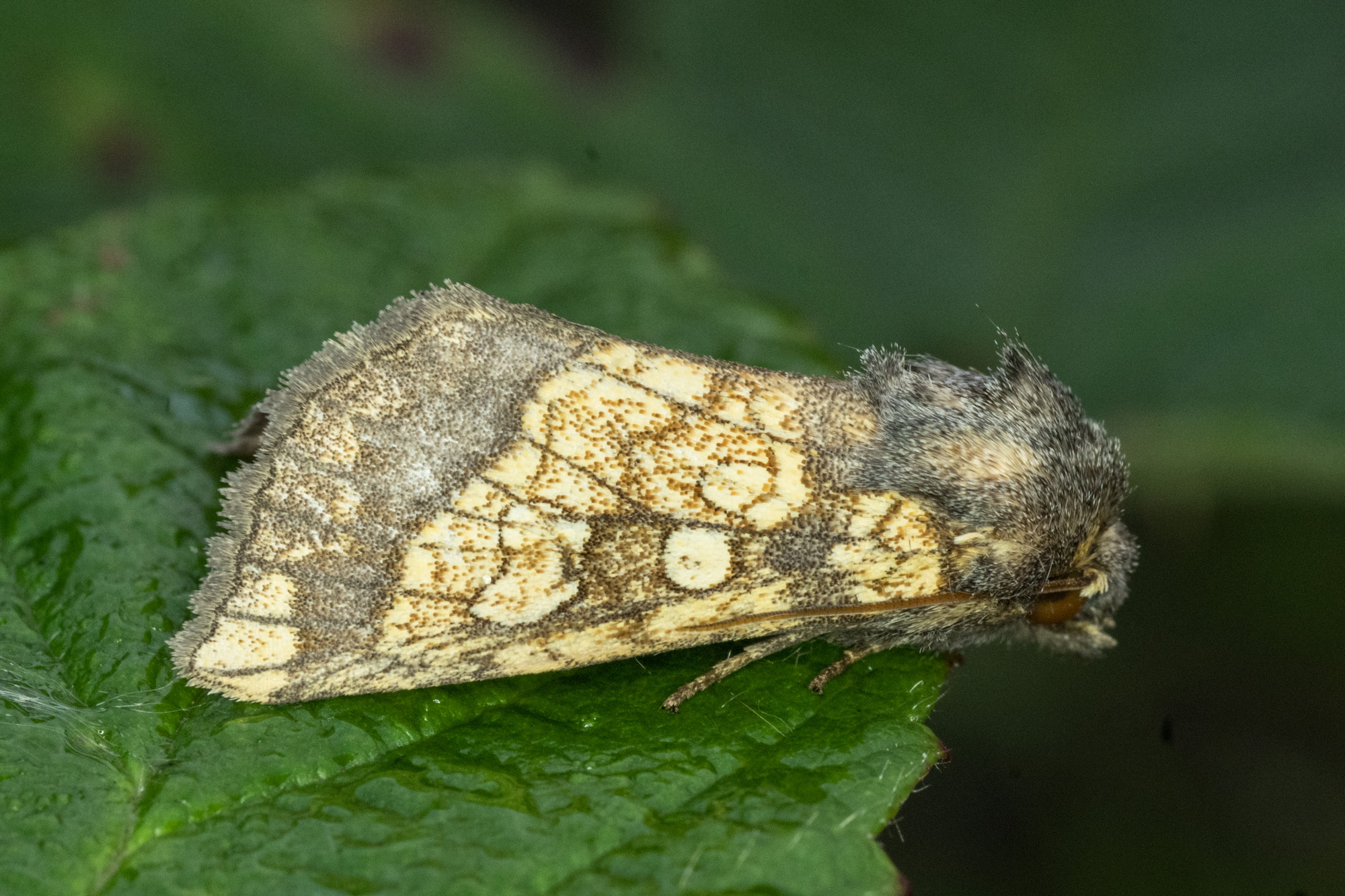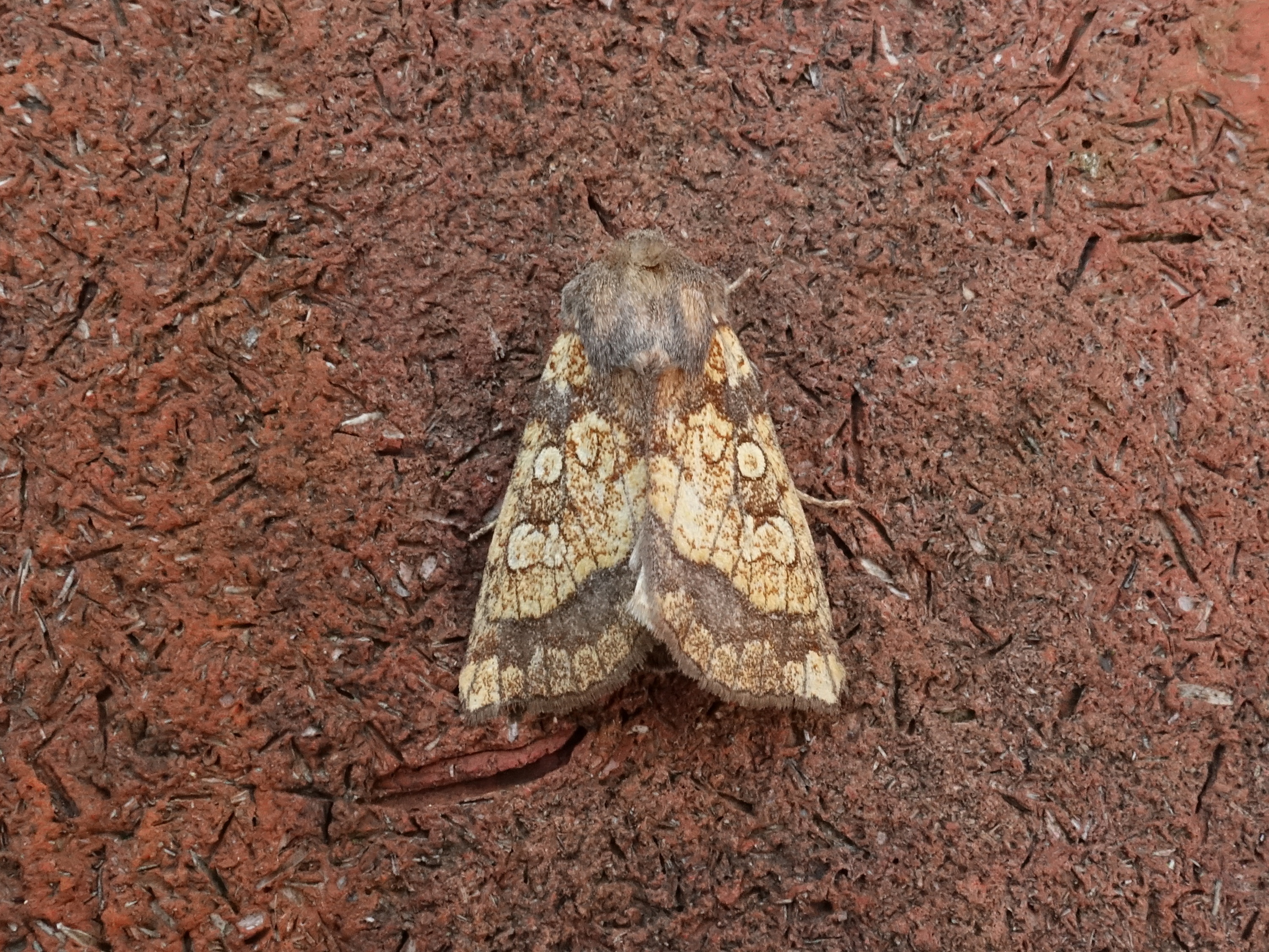

Red List: Least Concern (LC). GB Status: Common.
Identification
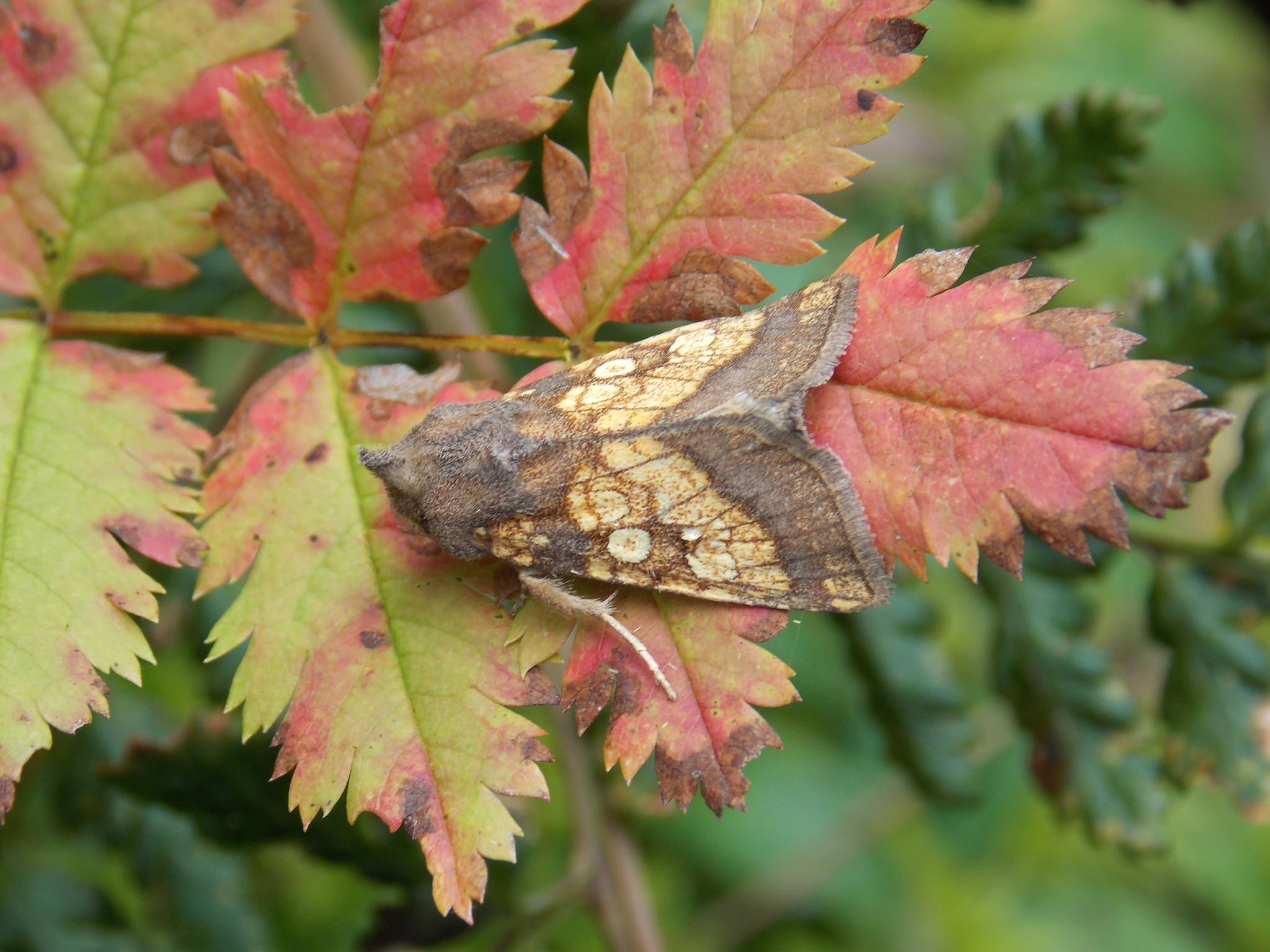
Usually distinctive.
Recording Method.
Attracted to light.
Life cycle
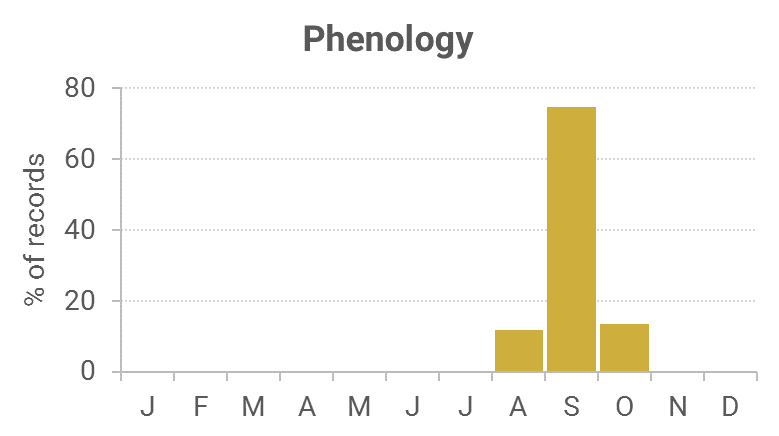
One generation. Overwinters as an egg. Larvae April to August feeding inside the stem of the foodplant. Pupates inside the lower part of the stem.
Larval foodplants
Burdocks, Foxglove and thistles.
Habitat
A wide variety of habitats including woodland rides, rough grassland, gardens, fens and marshes.
History
Lennon (1863) stated that it was not common, but that it had occurred at Kirkconnell (VC73). Sir Arthur Duncan (1909-84) during his lifetime had found it at Closeburn (VC72).
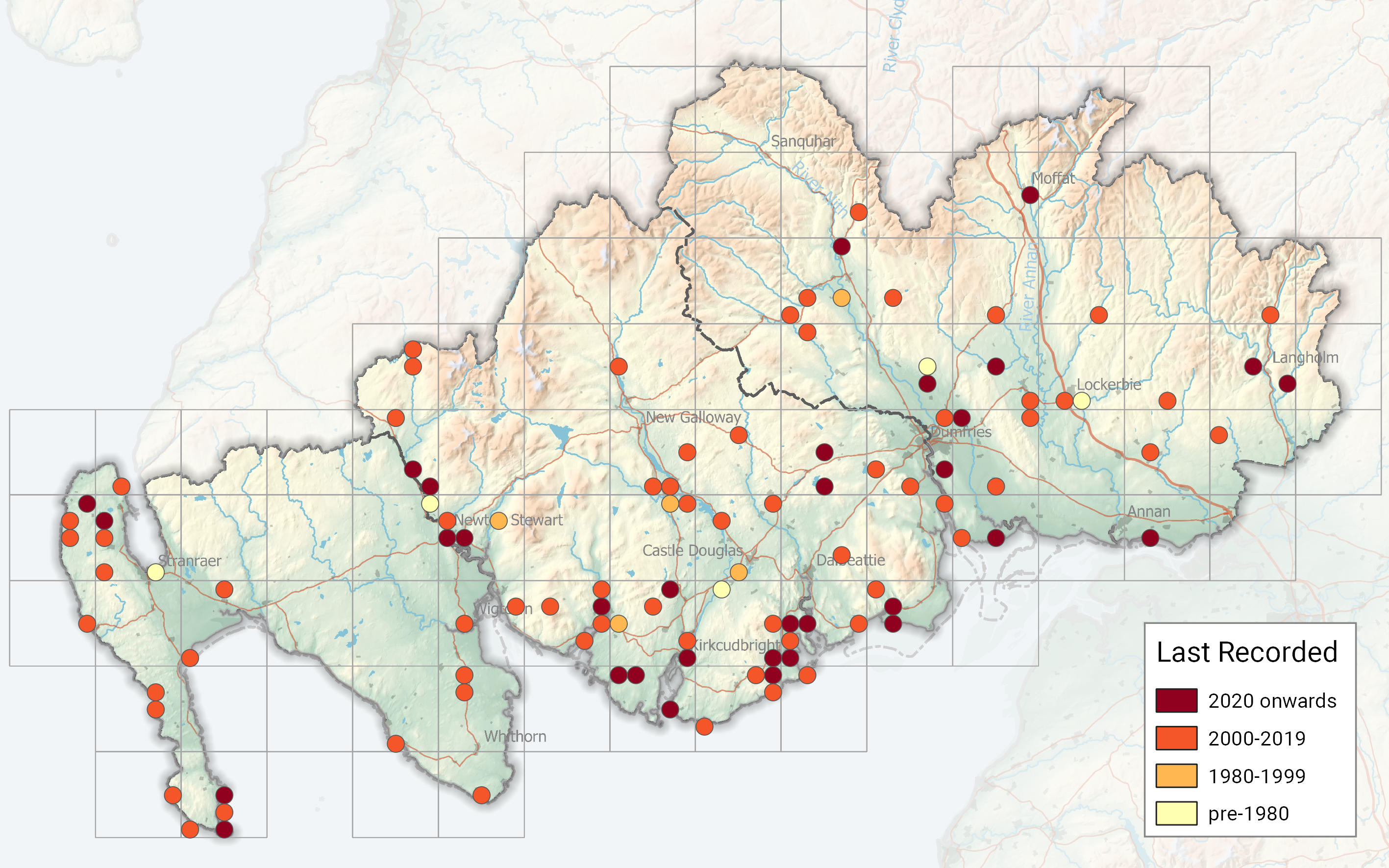
During 1974-92 there were nearly 100 records from all seven of the Rothamsted stations in varying numbers of records at each site. Then, from 1992 to 2010 it was mostly recorded from the regular trapped sites at Kirkton and Durisdeer (VC72), Carsfad near Dalry and Cally Woods (VC73), with a widespread number of sites across the region also contributing.