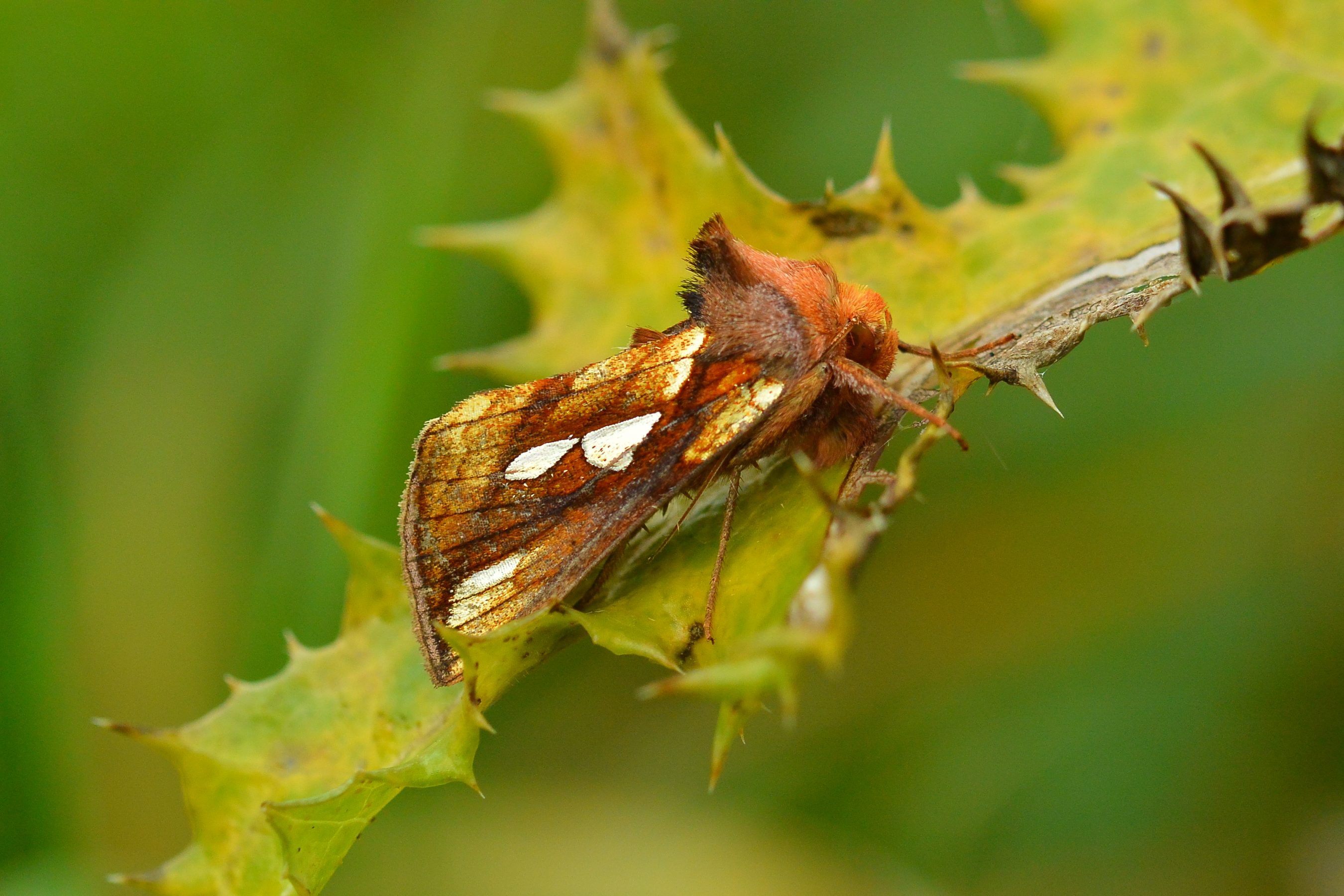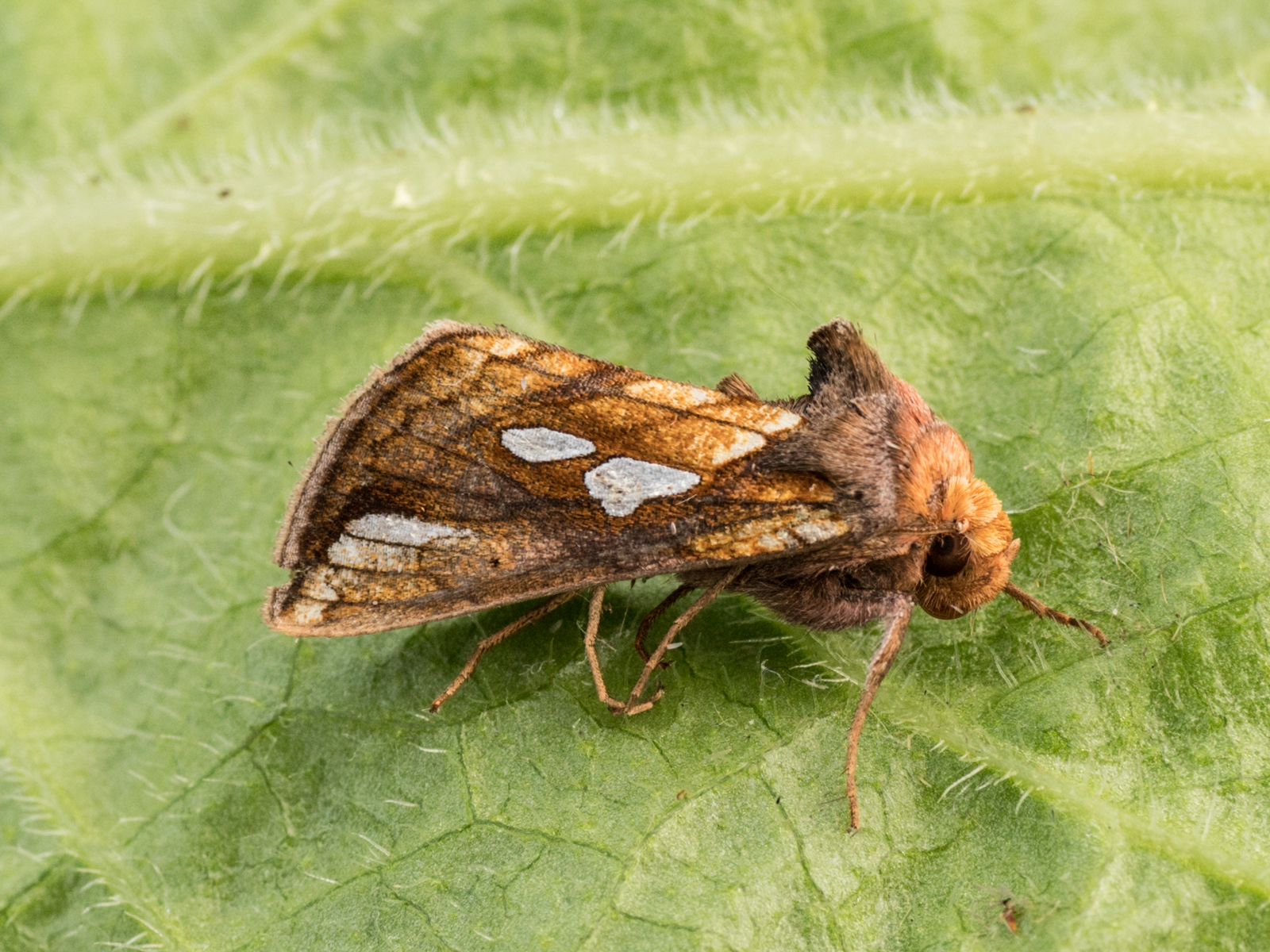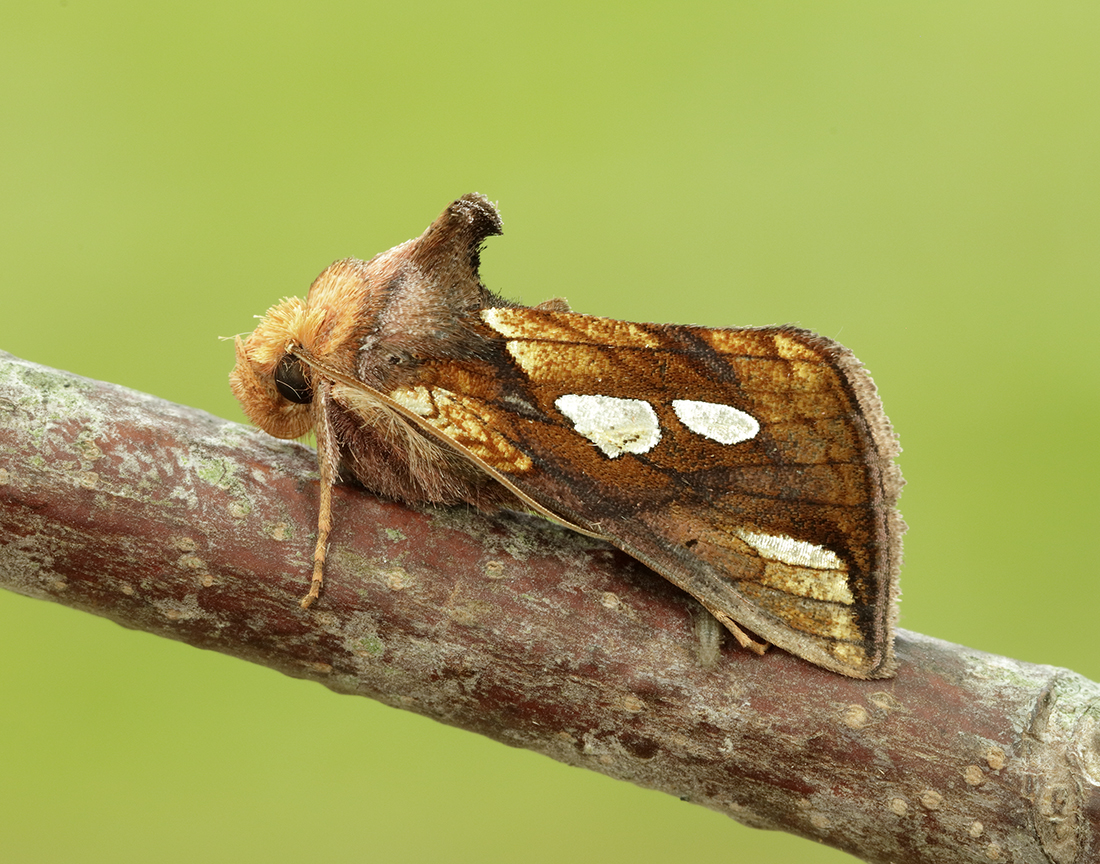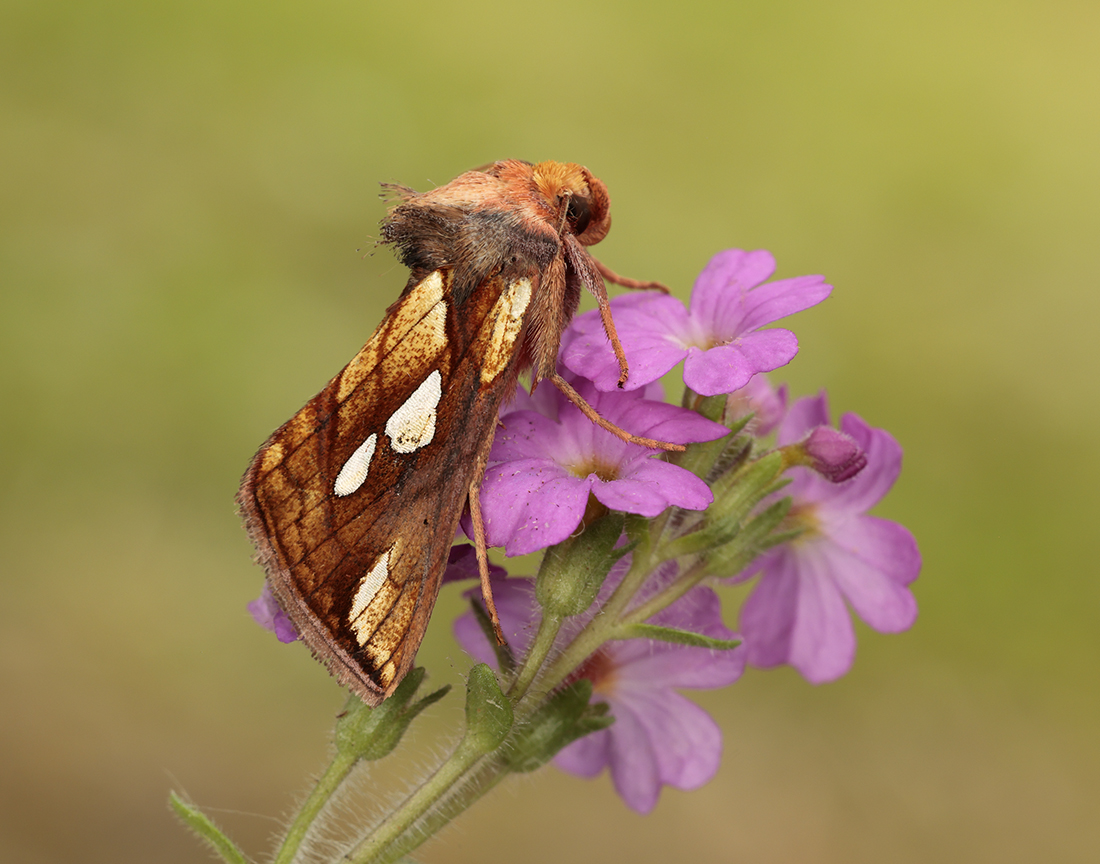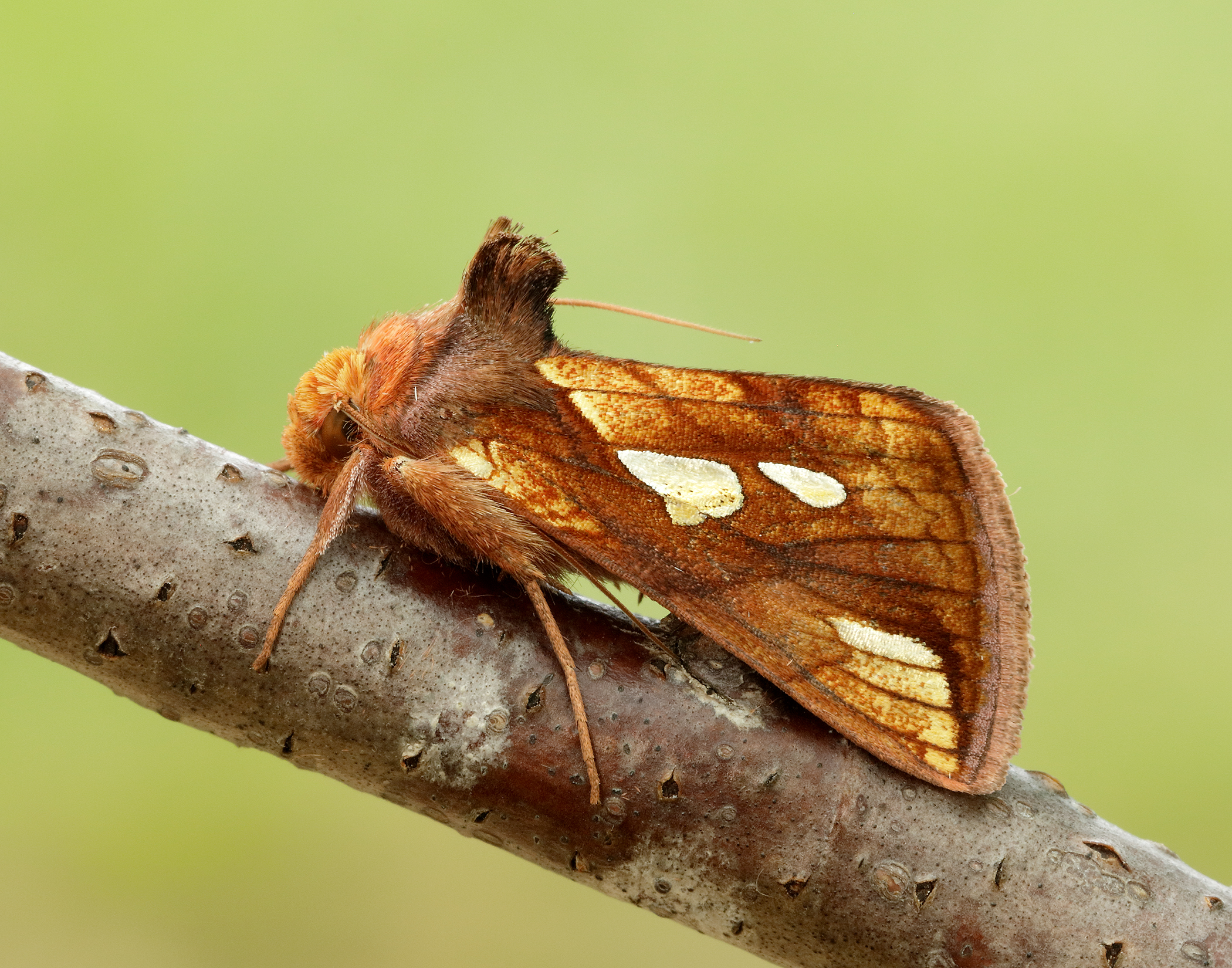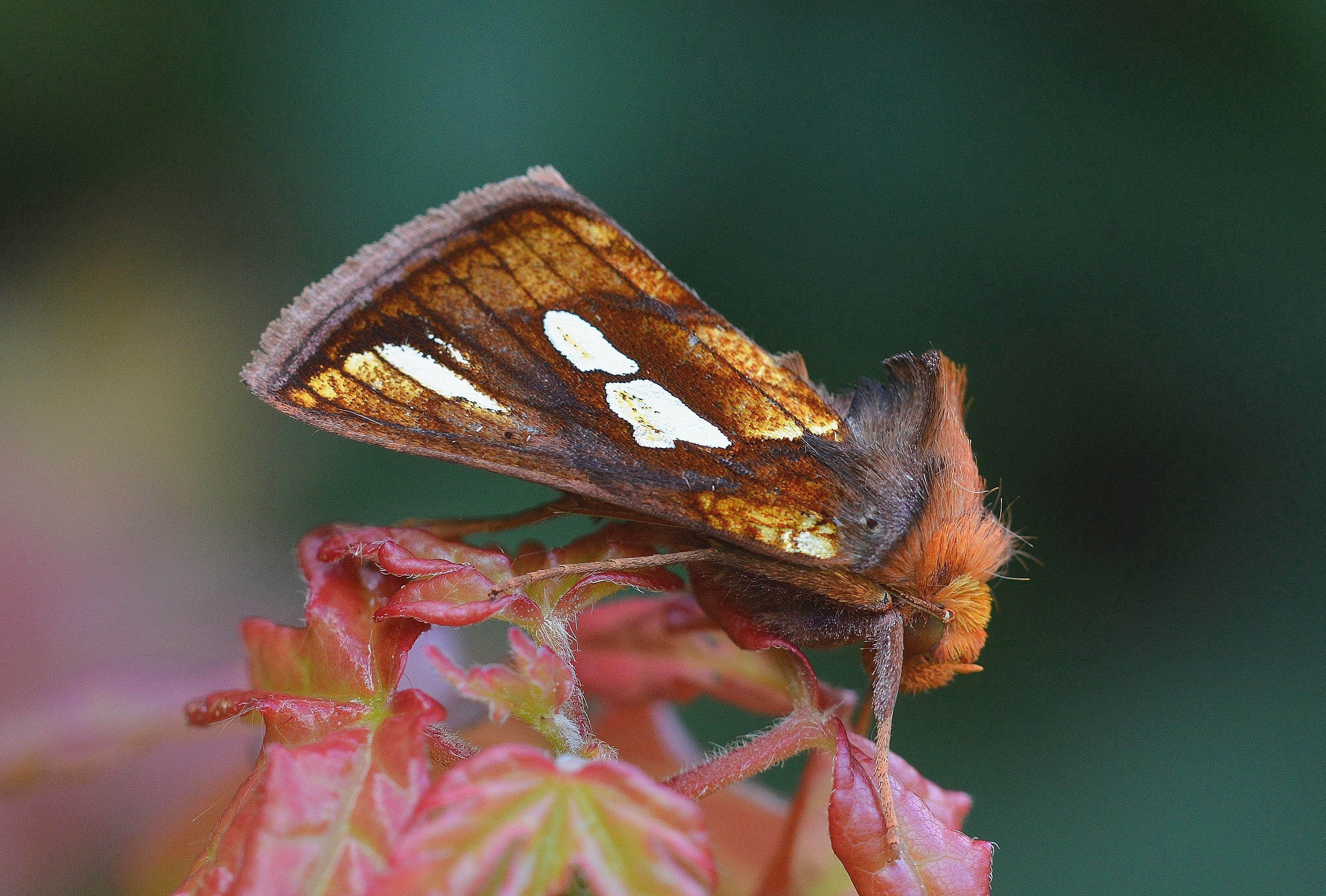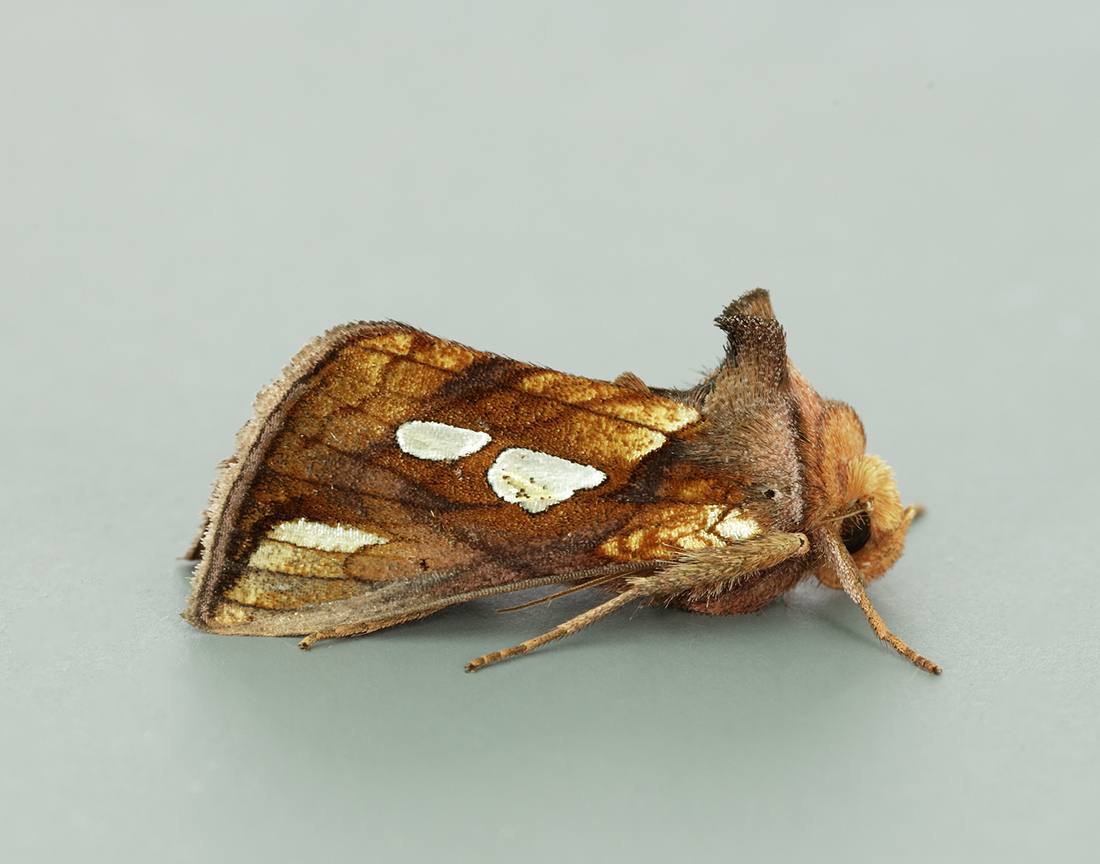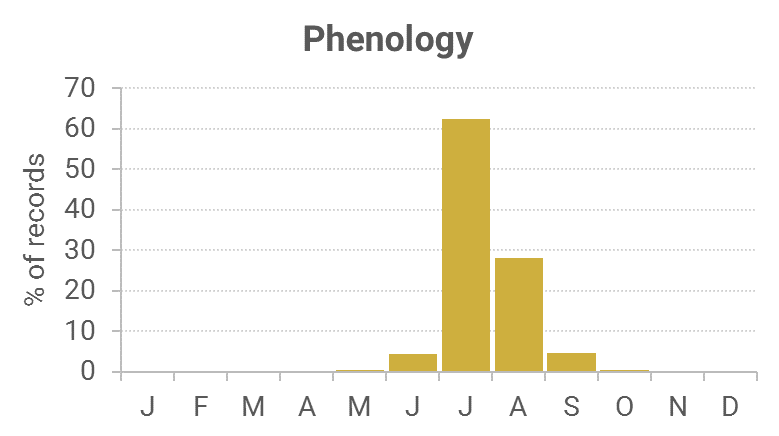

Red List: Least Concern (LC). GB Status: Common.
Identification
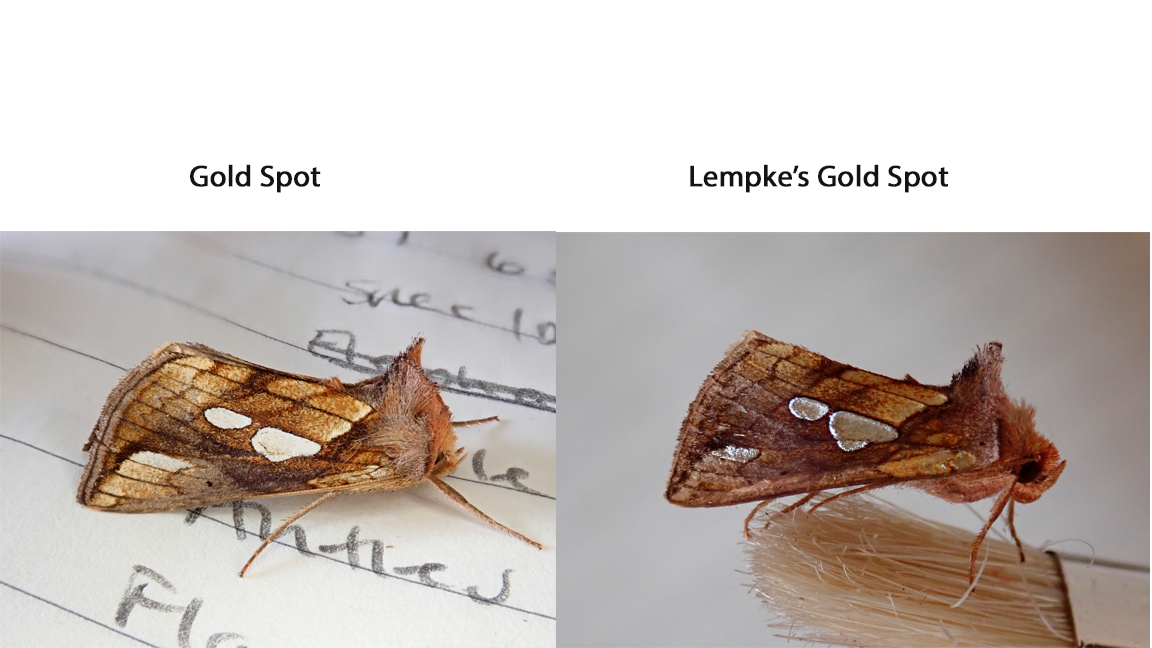
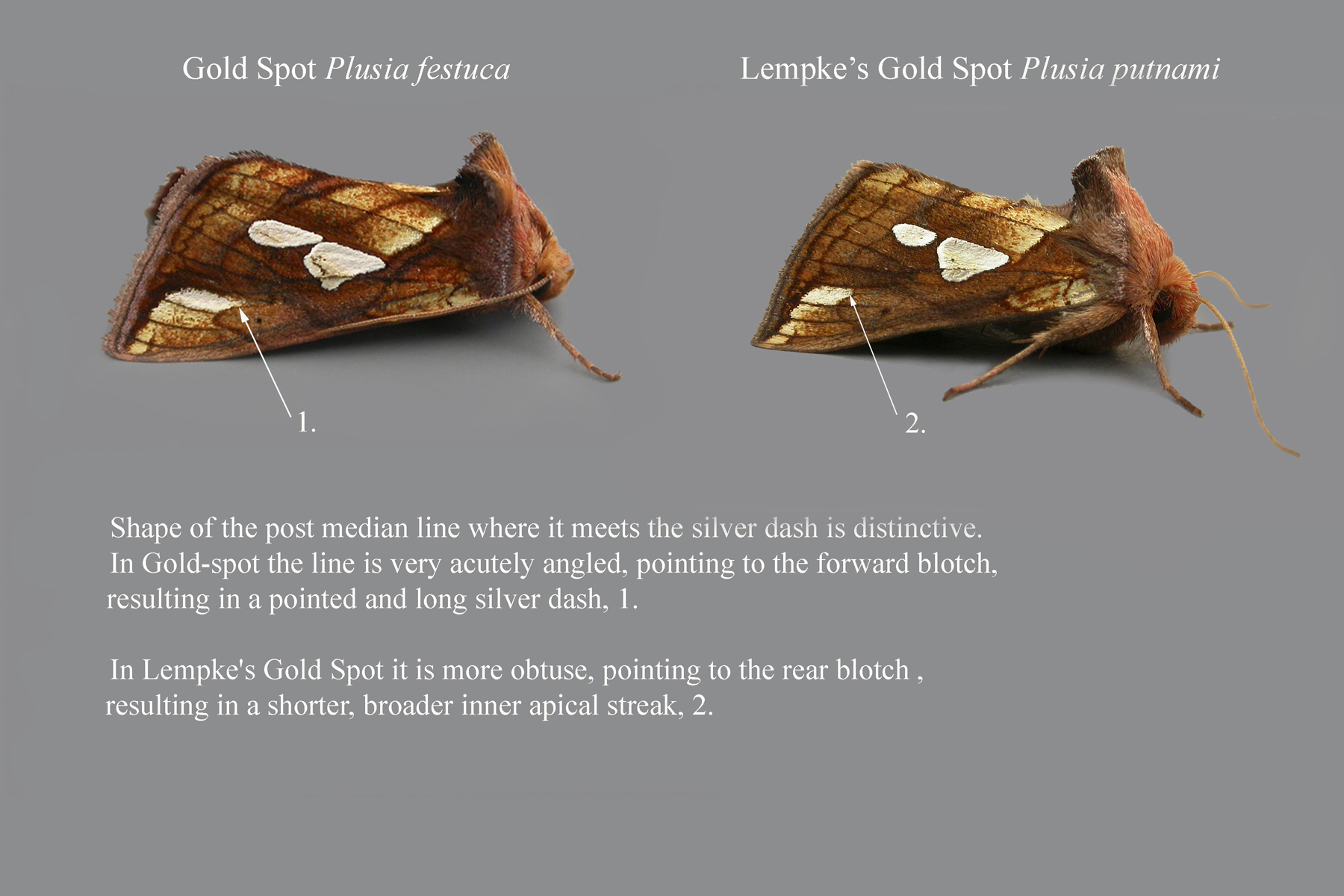
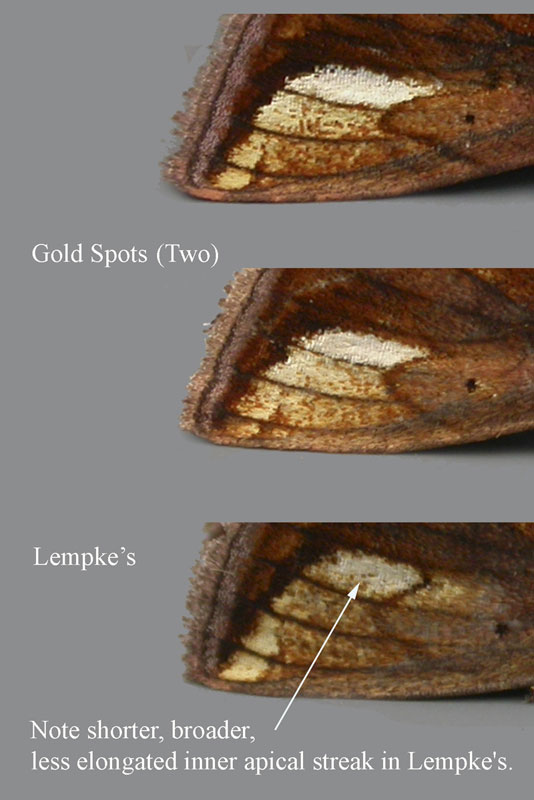
Usually distinctive. Care required, potential confusion with Lempke’s Gold Spot. More information here, and here.
Recording Method.
Feeds on flowers at dusk. Attracted to light.
Life Cycle
One generation. Overwinters as a small larva. Larvae September to May. Pupates in a transparent cocoon spun vertically between the stems or leaves of the foodplant.
Larval foodplants
Sedges and other wetland plants.
Habitat
Most common in wetlands, but can be found in a wide range of habitats.
History
Somerville (1858) on a trip to the Moffat area had found it at Kirkpatrick in August of that year. Lennon (1863) stated it was not common but that he had found it near Terregles (VC72). Gordon (1913) found it not uncommon locally around Corsemalzie, Wigtownshire. Occasionally he found it at flowers in his garden and in damp places near the Malzie Burn; it was also common at the loch side at Park Place, Glenluce (VC74). Earliest date was 27th June 1896.
Sir Arthur Duncan (1909-84) noticed it in his lifetime at Closeburn and Tynron (VC72).
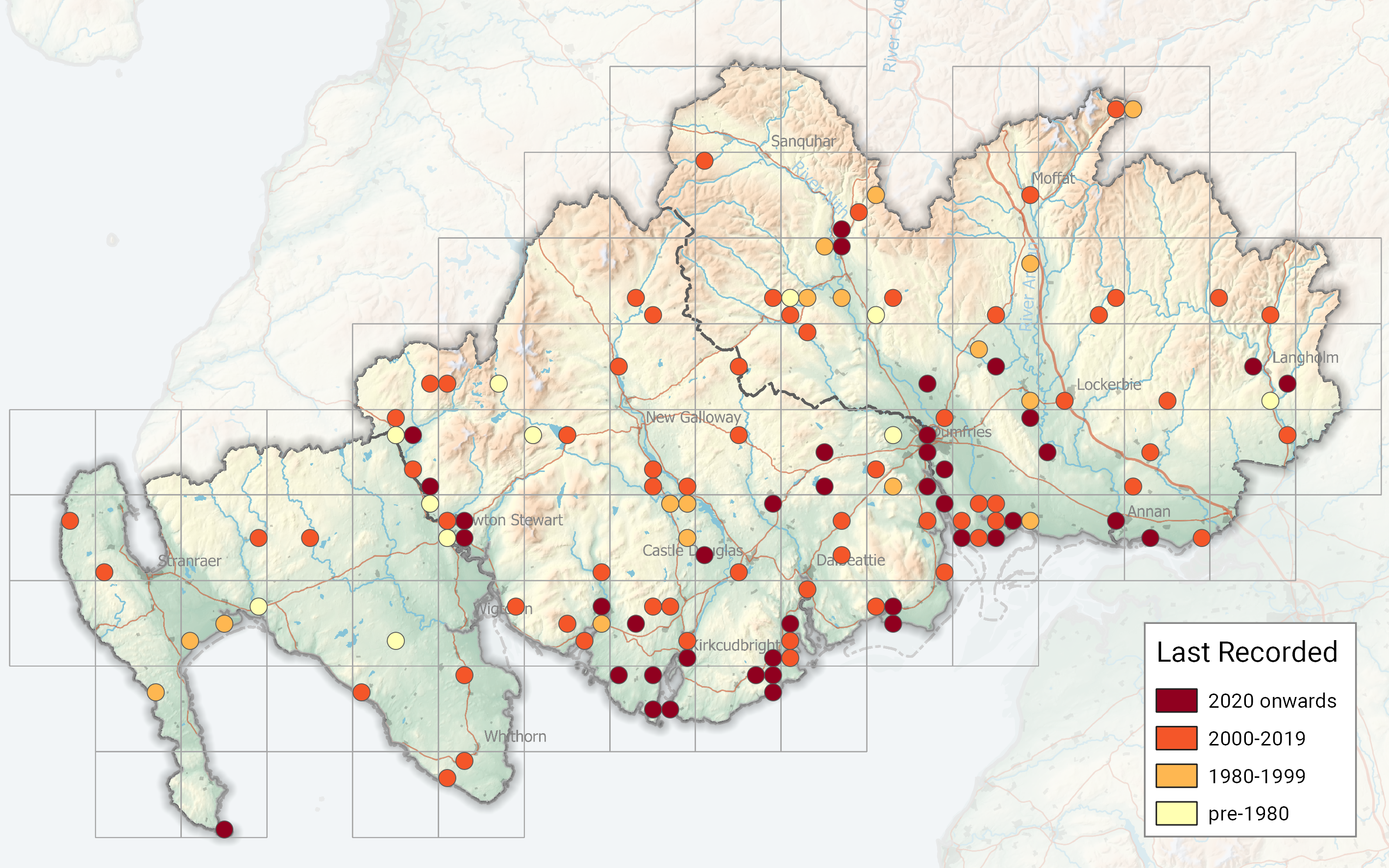
During 1976-82 eleven records was all that was mustered from three of the Rothamsted stations, Waterside Mains at Keir (VC72), Penninghame and Newton Stewart (VC74). In 1982-83 it was trapped on the Hensol Estate (VC73).
It was not trapped again until 1992 when regular trapping at Kirkton found it. From then until 2010 it had been found at annually at a number of sites across VCs 72 and 73, with just four records from Wigtownshire at Float Bay, Claymoddie, Forest Moor and Torrs Warren.