
Red List: Near Threatened (NT). GB Status: Common.
Identification
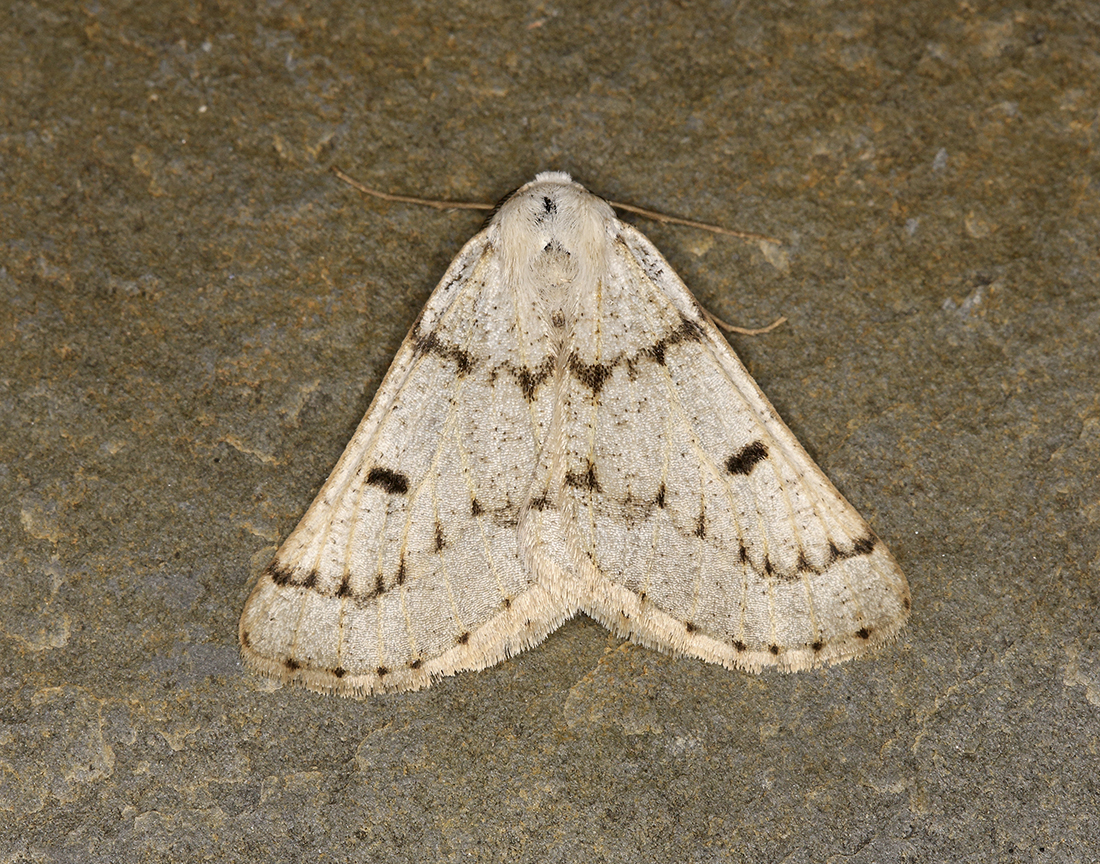
Usually distinctive.
Recording method
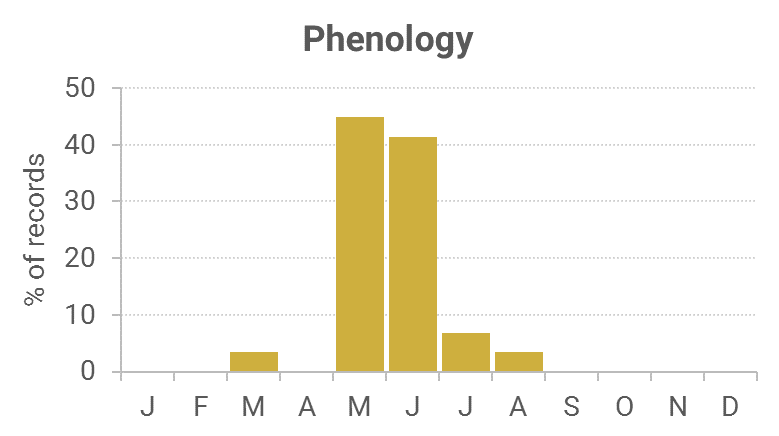
Can be disturbed by day. Attracted to light.
Life cycle
One generation. Overwinters as a small larva. Larvae July to May. Pupates in a cocoon on the foodplant or among plant debris.
Larval foodplants
Heathers.
Habitat
Bogs, heathland, moorland and raised mosses.
History
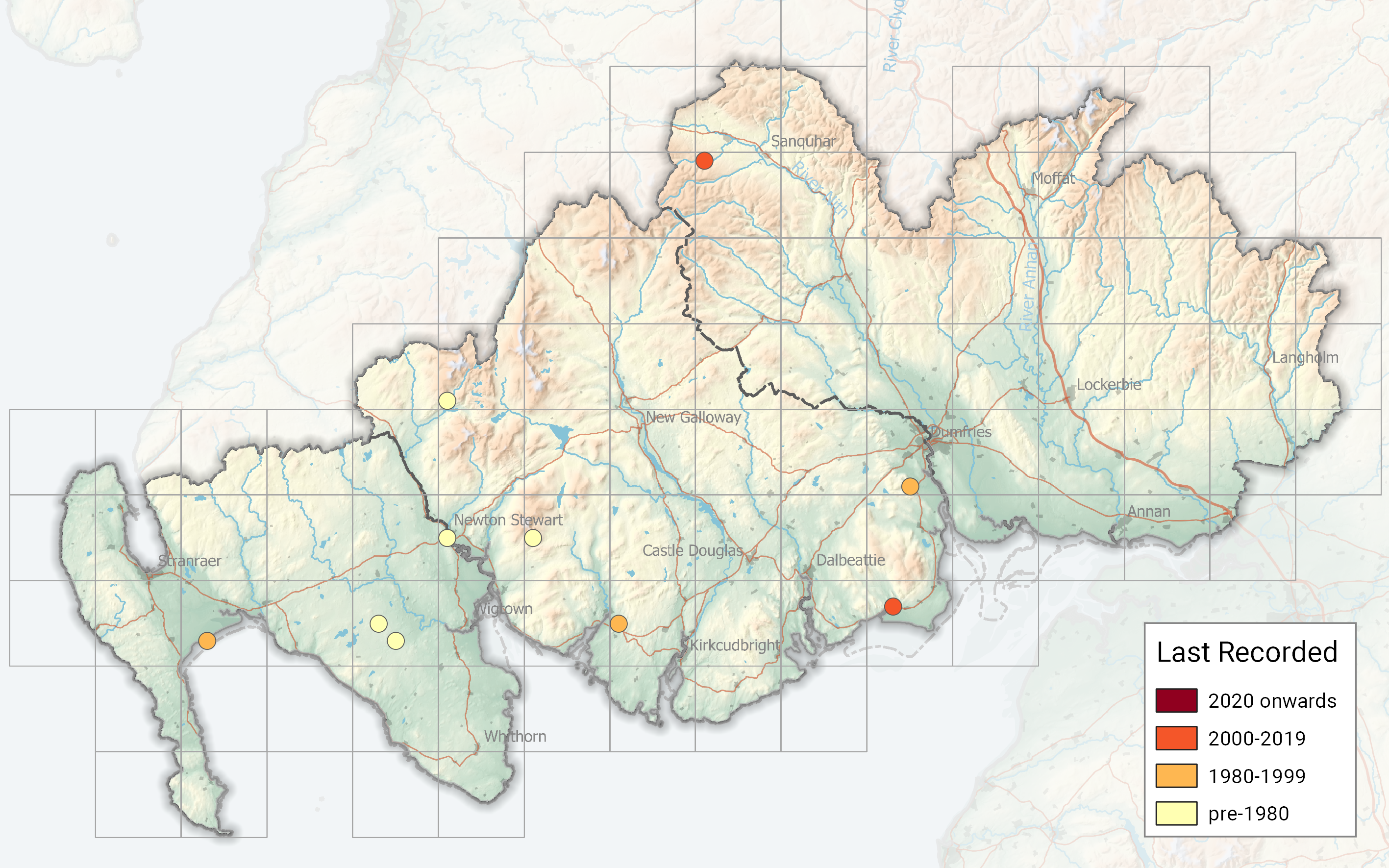
First recorded for Dumfries and Galloway in 1881 for VC73 on the Cairnsmore of Fleet by Lennon ‘resting next to a granite rock, which nearly went unnoticed due to its similarity to it’, in 1897 for VC74 at Corsemalzie by Gordon who had found it ‘frequent on all moors in Wigtownshire’; ‘larvae were also common on heather’, but not until 2003 for VC72 at Corserig Hill by Richard Mearns.