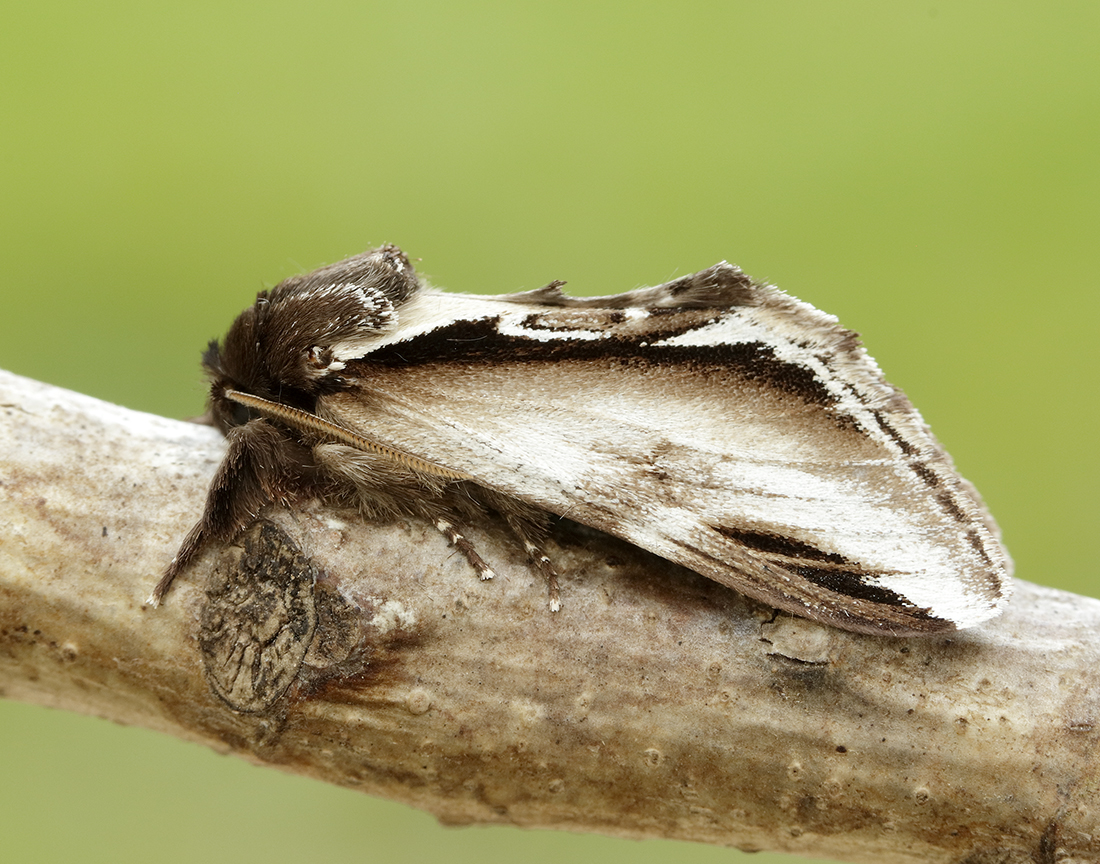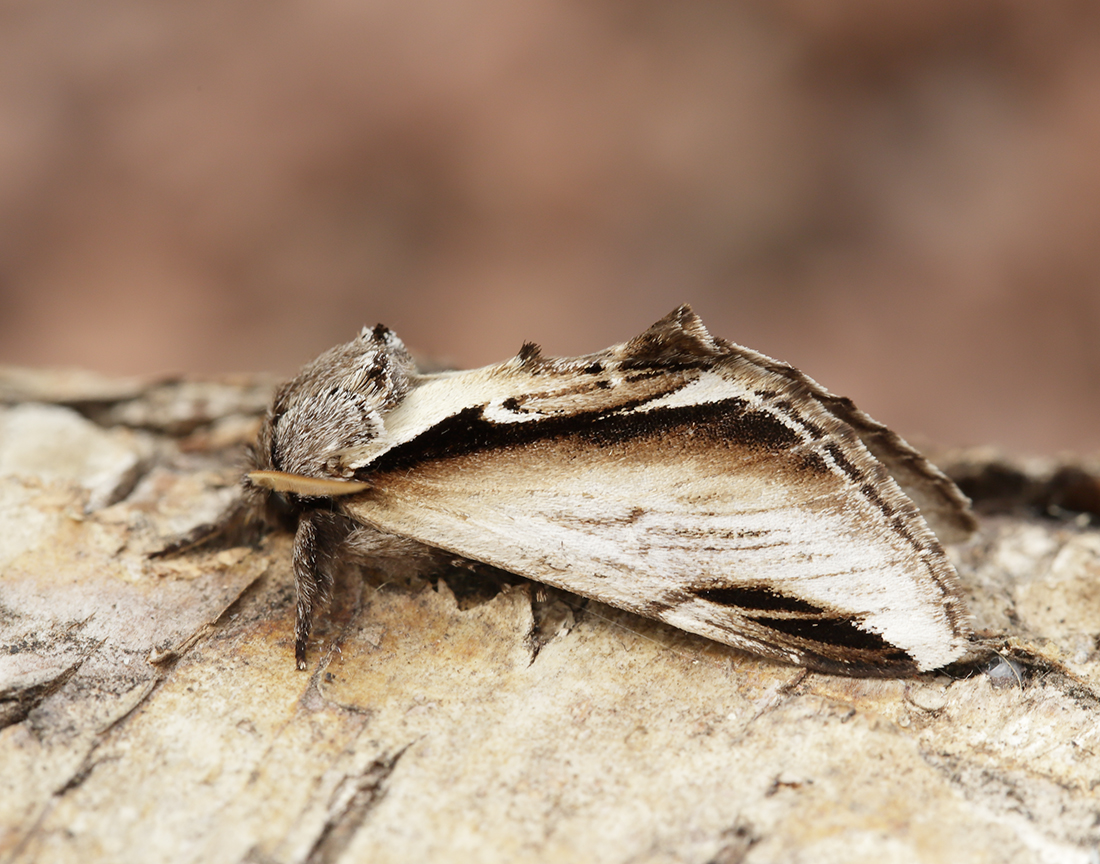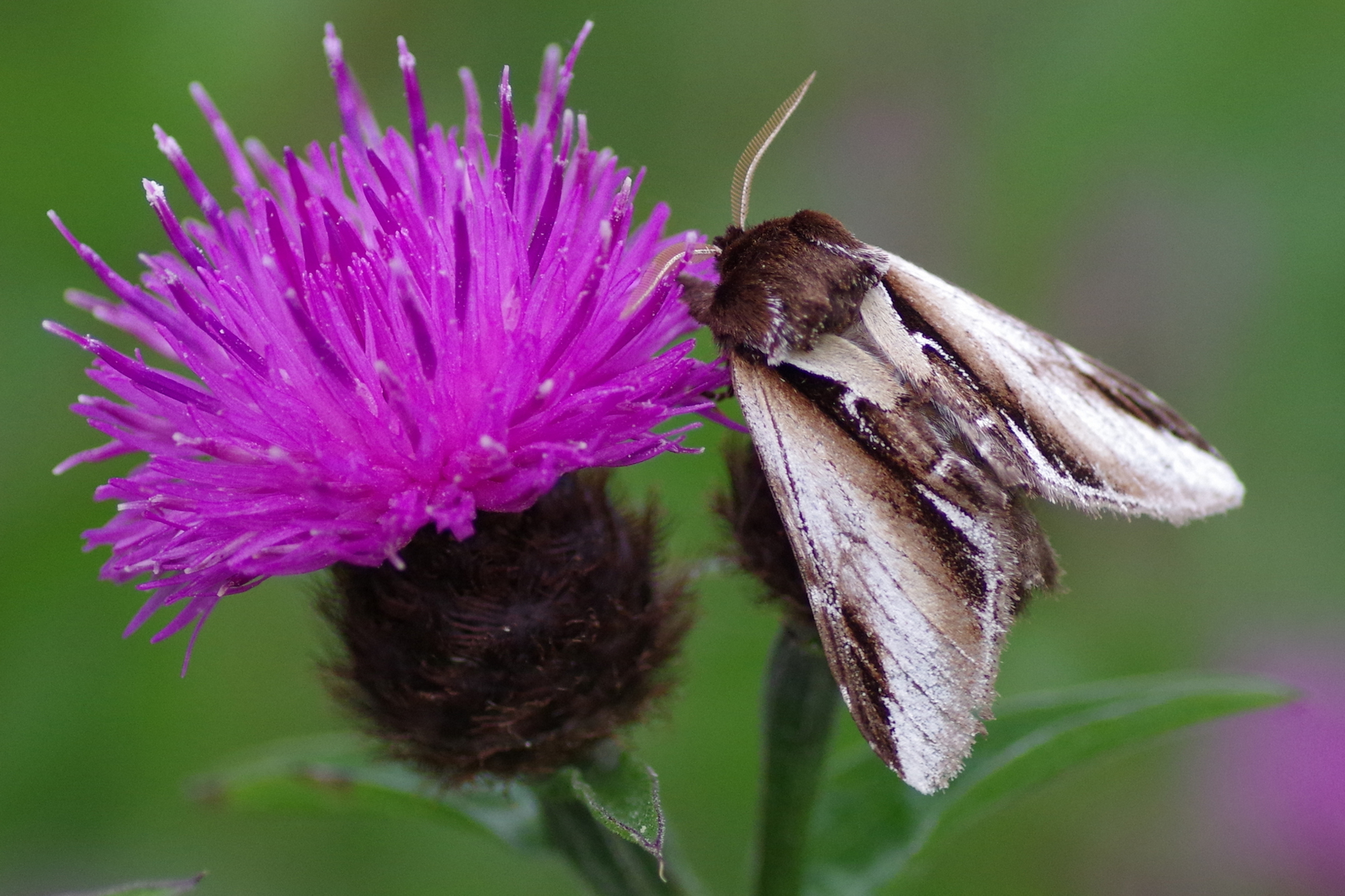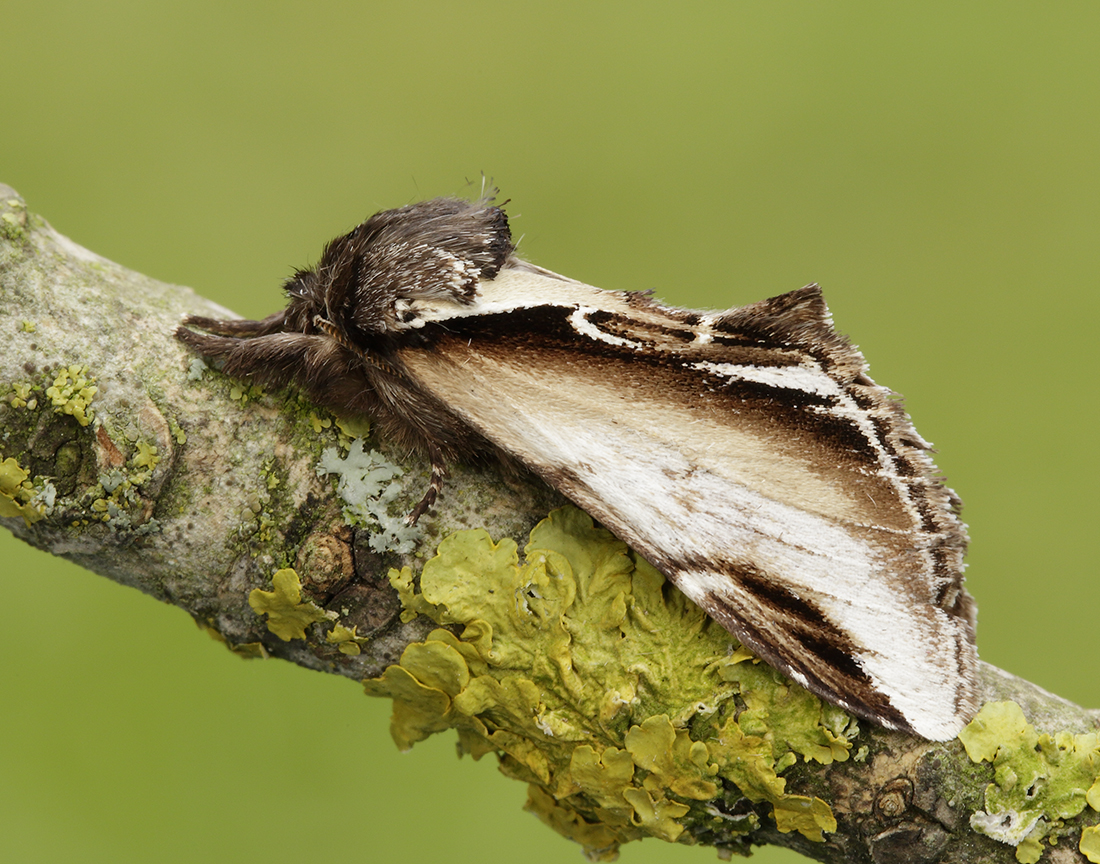

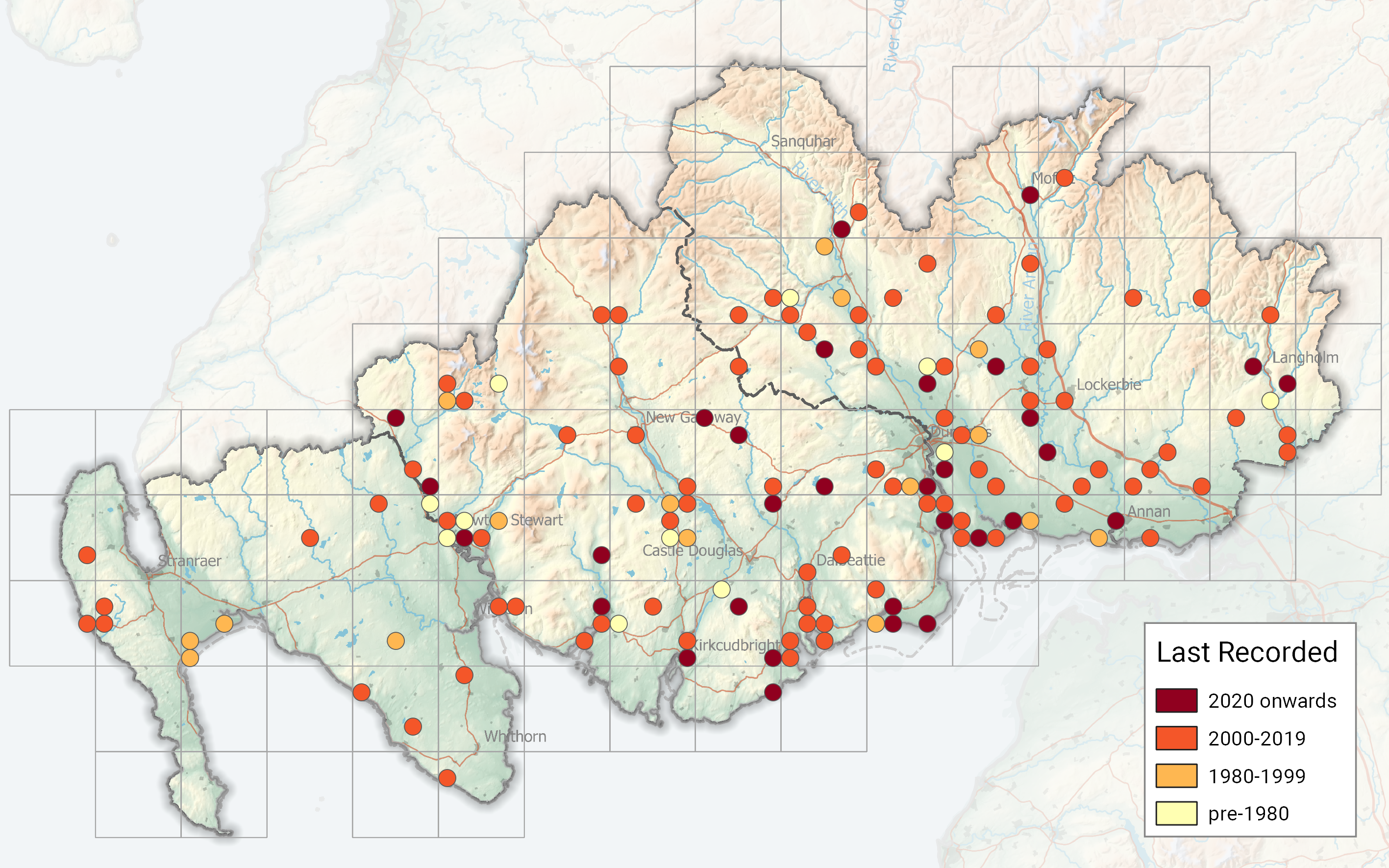
Red List: Least Concern (LC). GB Status: Common.
Identification
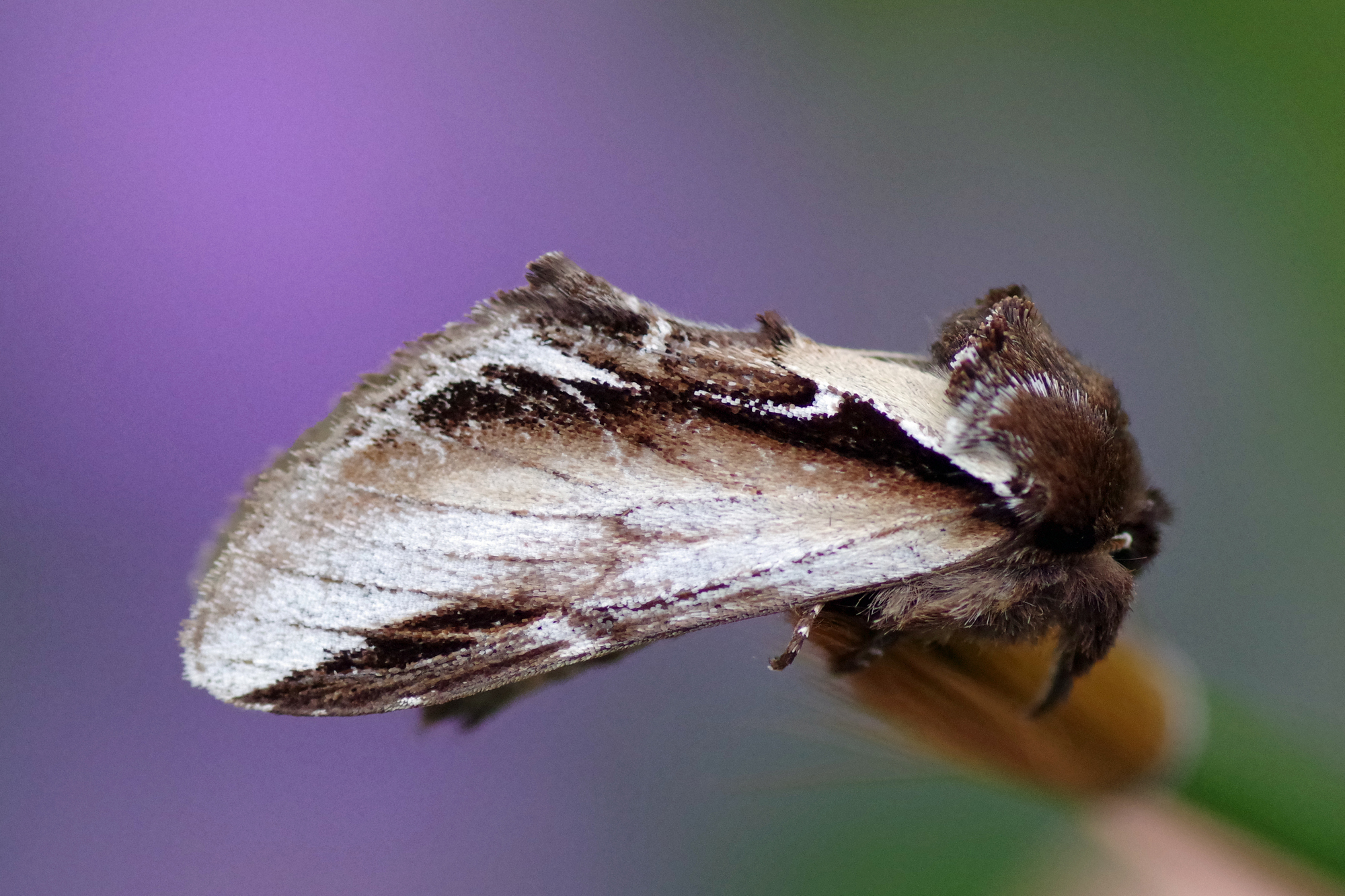
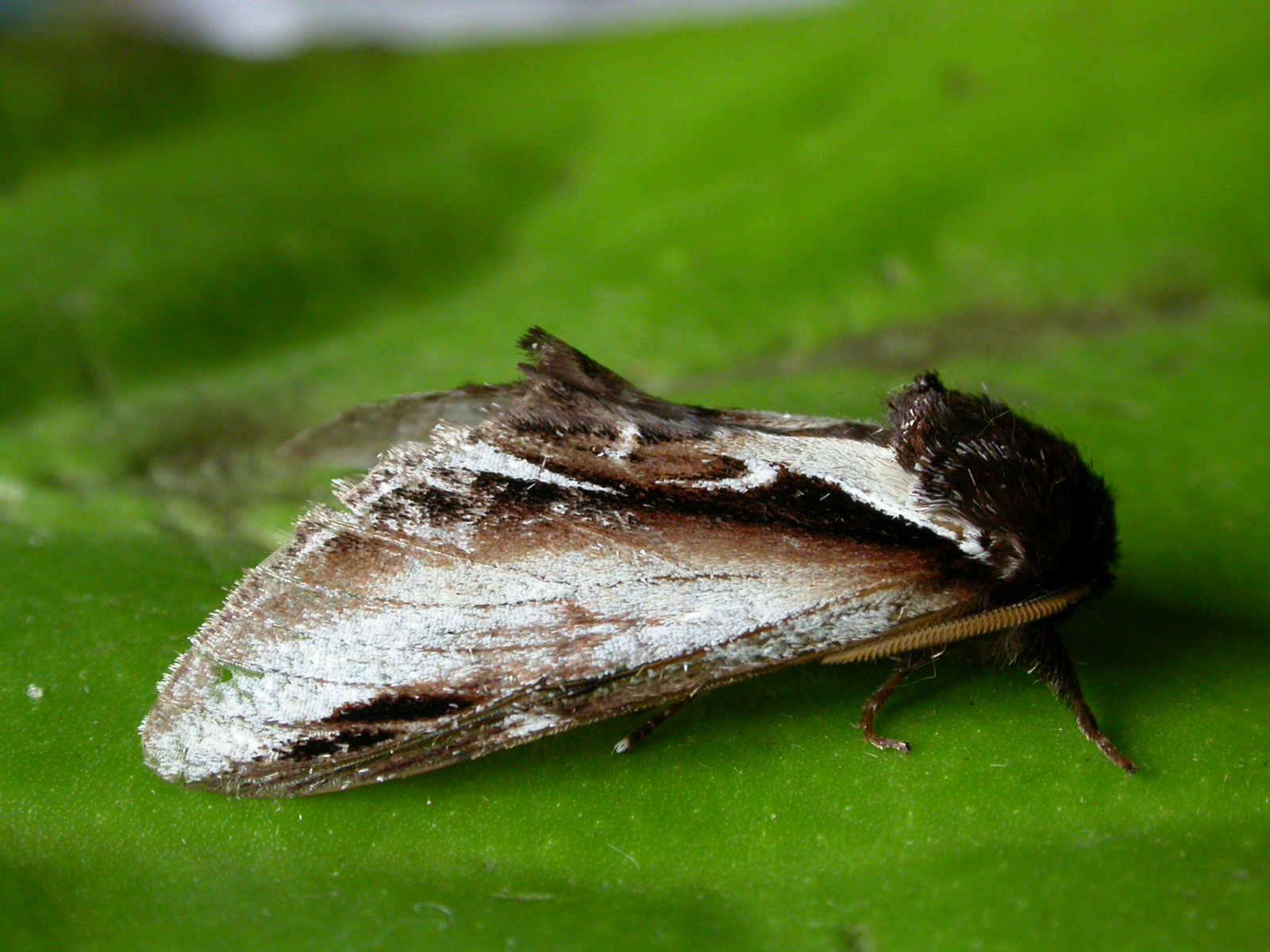
Usually distinctive. Care required, potential confusion with Swallow Prominent.
Recording Method
Attracted to light.
Life cycle
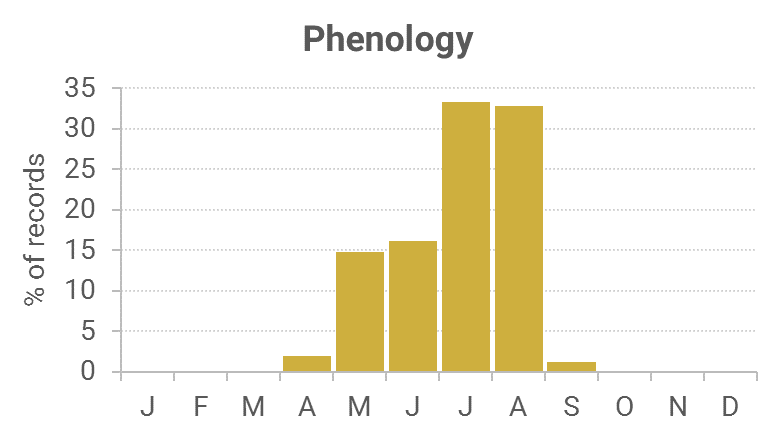
Two overlapping generations. Overwinters as a pupa. Larvae June to July and late August to September.
Larval foodplants
Downy Birch and Silver Birch.
Habitat
Downland, heathland, moorland and woodland.
History
Stainton (1859) mentioned Edinburgh as the only Scottish locality for this moth, but Lennon (1864) found four larvae in the Crichton Institution garden, but had described it as rare. All Gordon (1913) had to say was that larvae were occasionally taken on birch. Sir Arthur Duncan (1909-84) during his lifetime had found it at Closeburn, Tynron and Castlehill, Dumfries (all VC72).
Fewer than ten records were recorded in the early 1970s, four from the Moffat area (VC72), and Silver Flowe, Woodhall Loch, Ravenshall and Glen Trool being the others from VC73. But during 1974 to 1982 there were just under sixty records from all of the Rothamsted stations, apart from Caerlaverock, with further RIS data from Mabie Forest during 1985-90. There were a number of records, also, from the Hensol Estate in the period 1982-85.
From 1992 to 2010 the regular trapped sites at Kirkton, Cally Woods, Carsfad near Dalry, Forest Moor and Old Torr contributed a portion of the 200 records, with the remainder from widespread sites across the region.