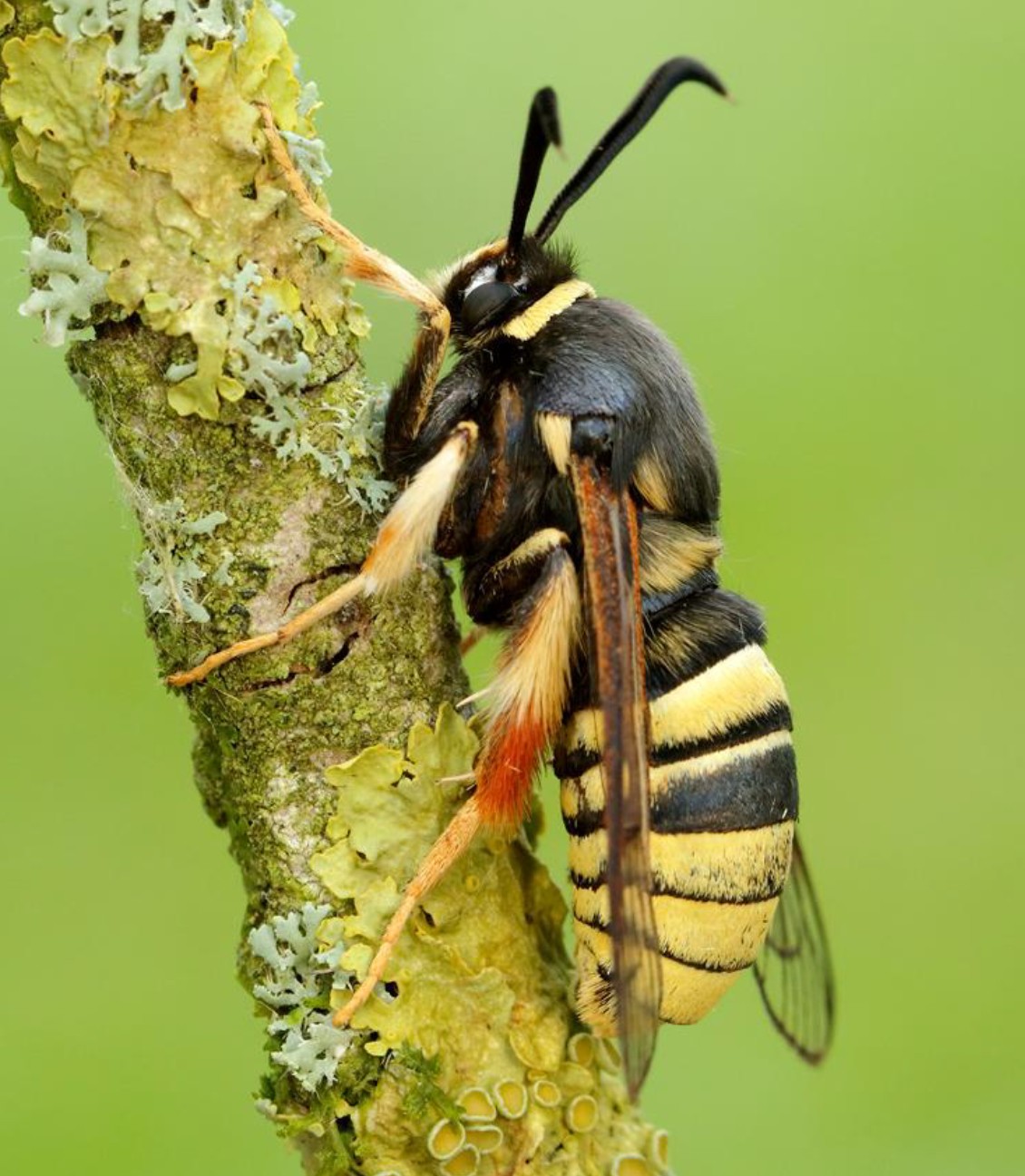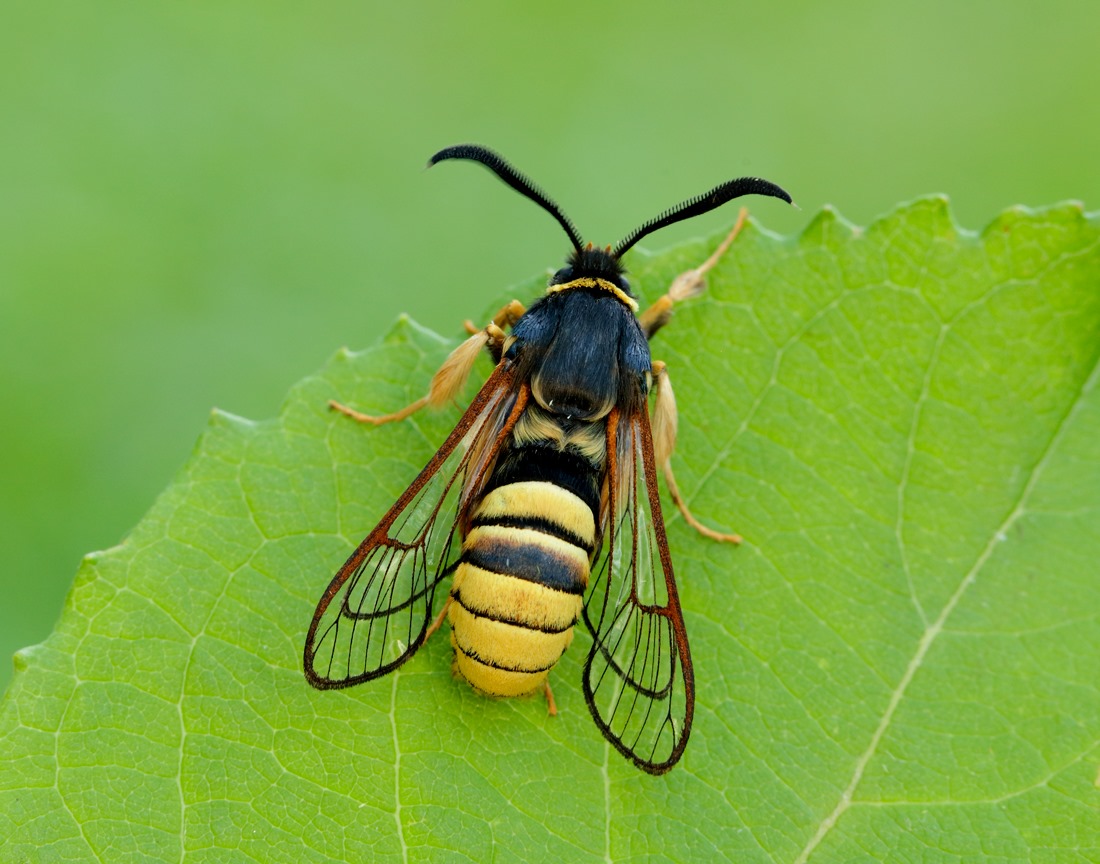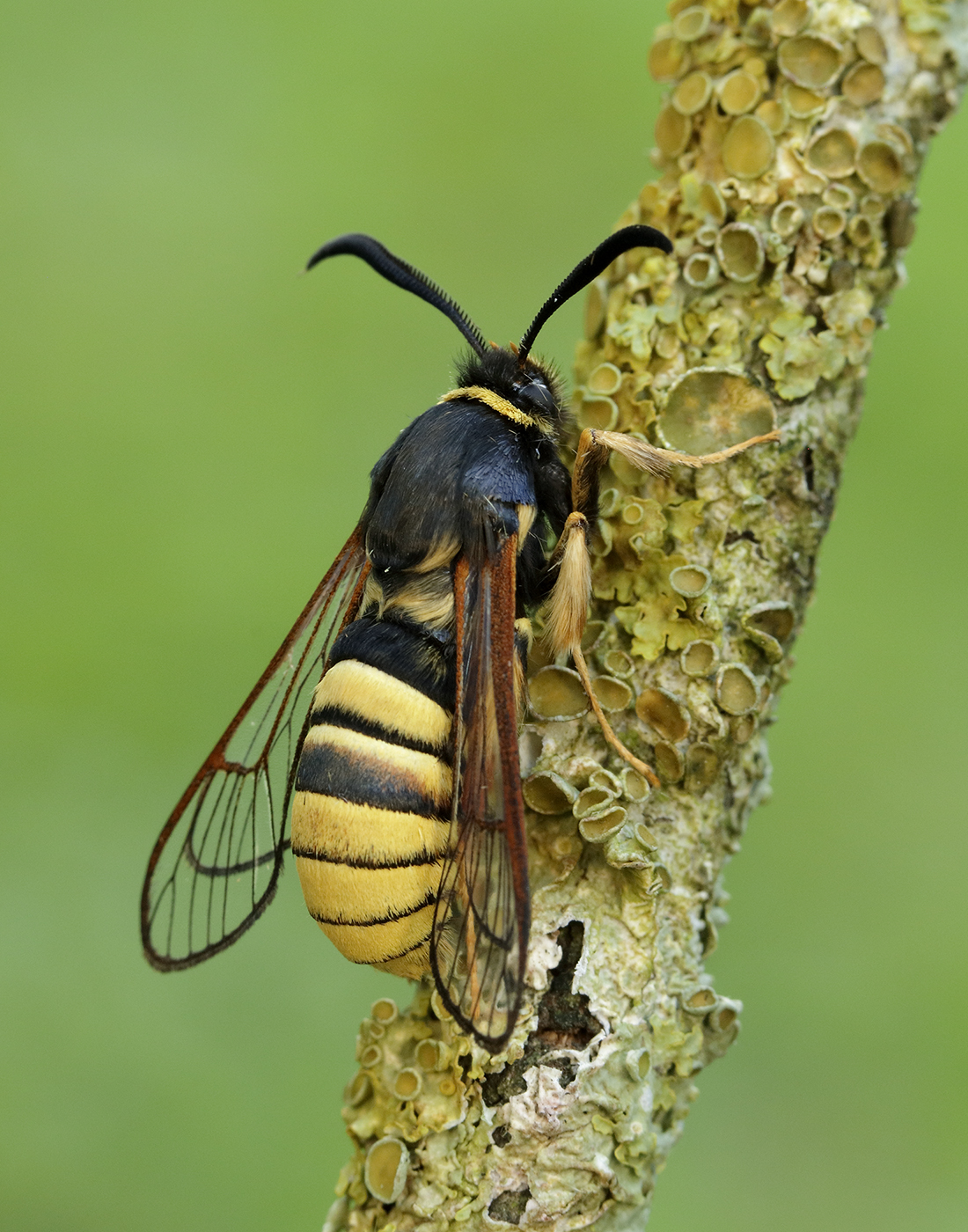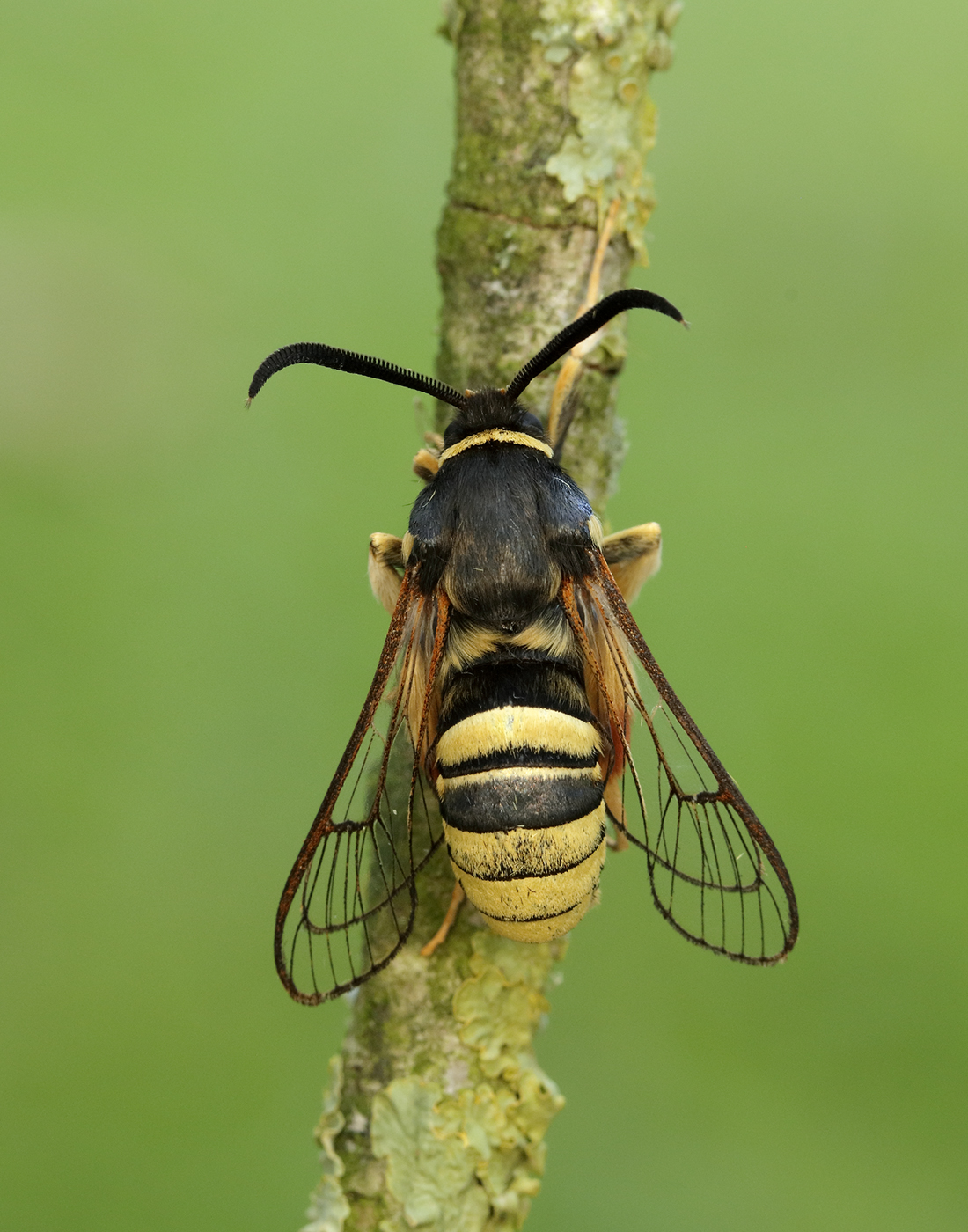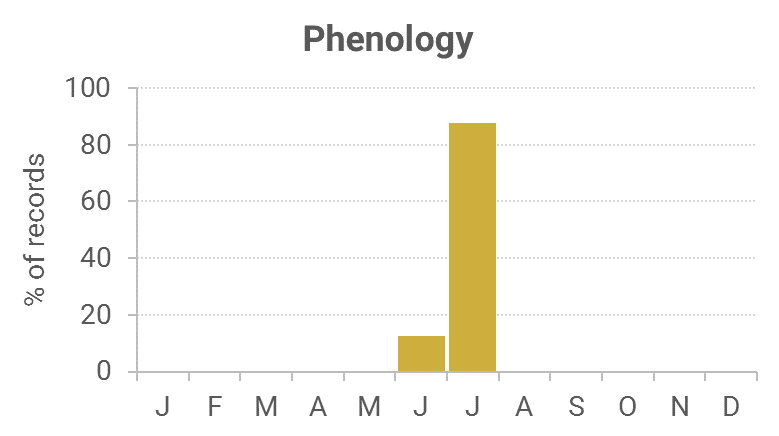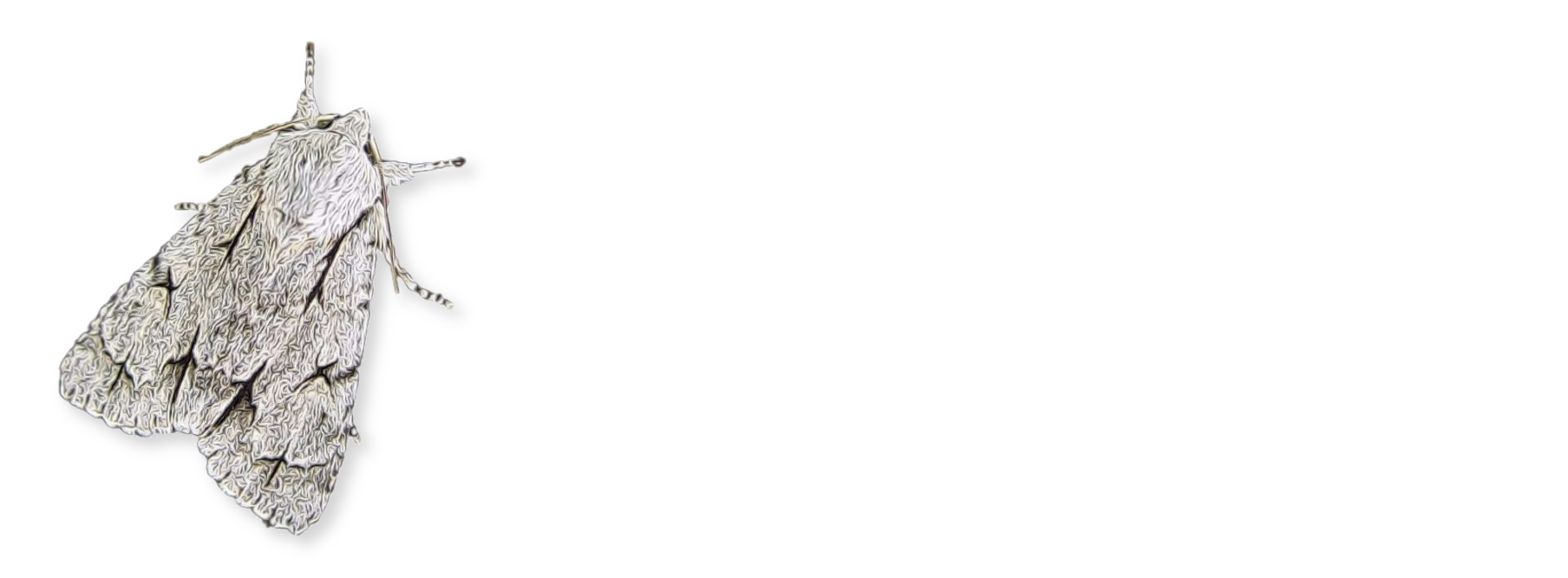

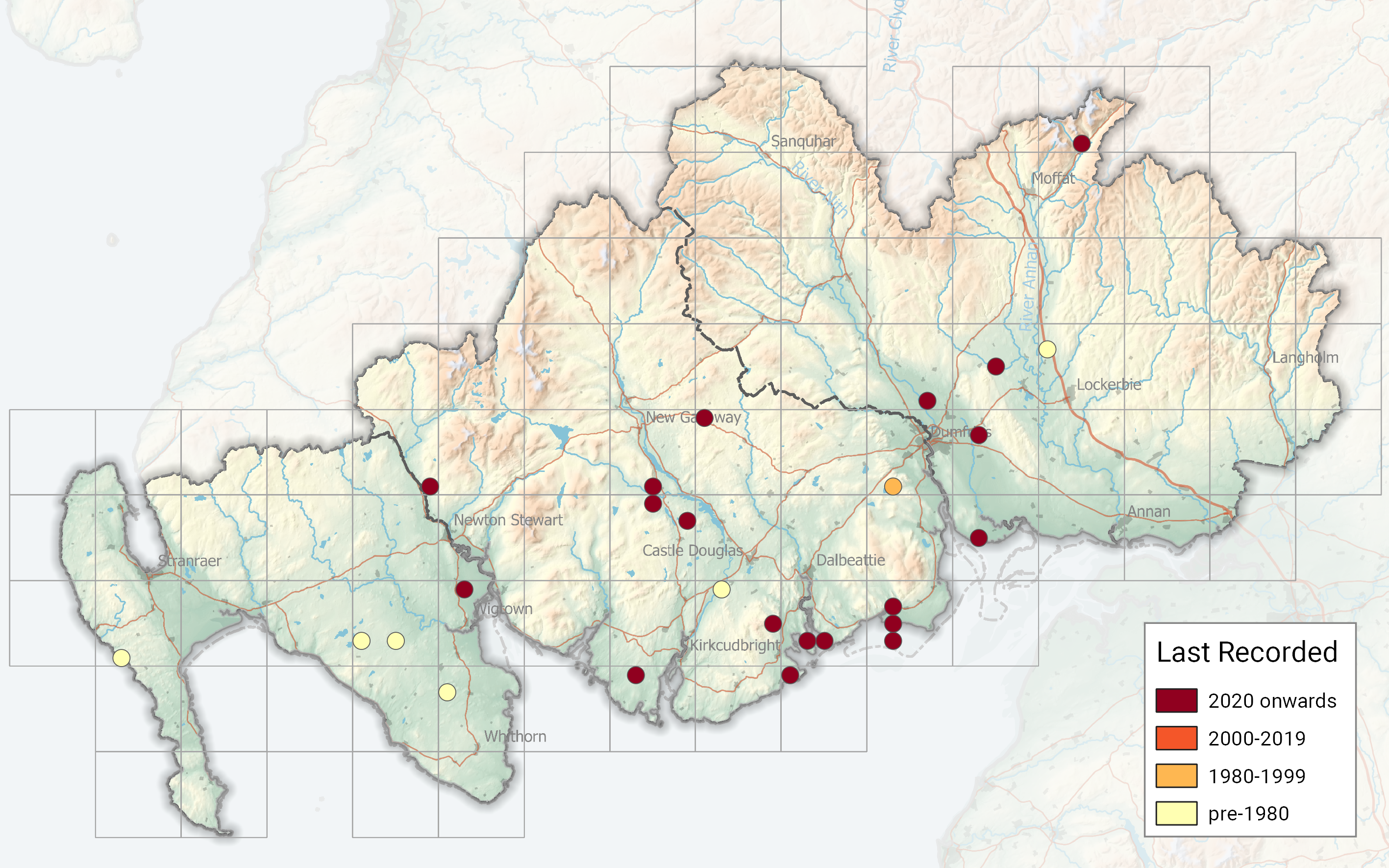
Red List: Least Concern (LC). GB Status: Common.
See also Moth of the Week (10/07/2020) and Moth of the Week (20/06/2023).
Identification
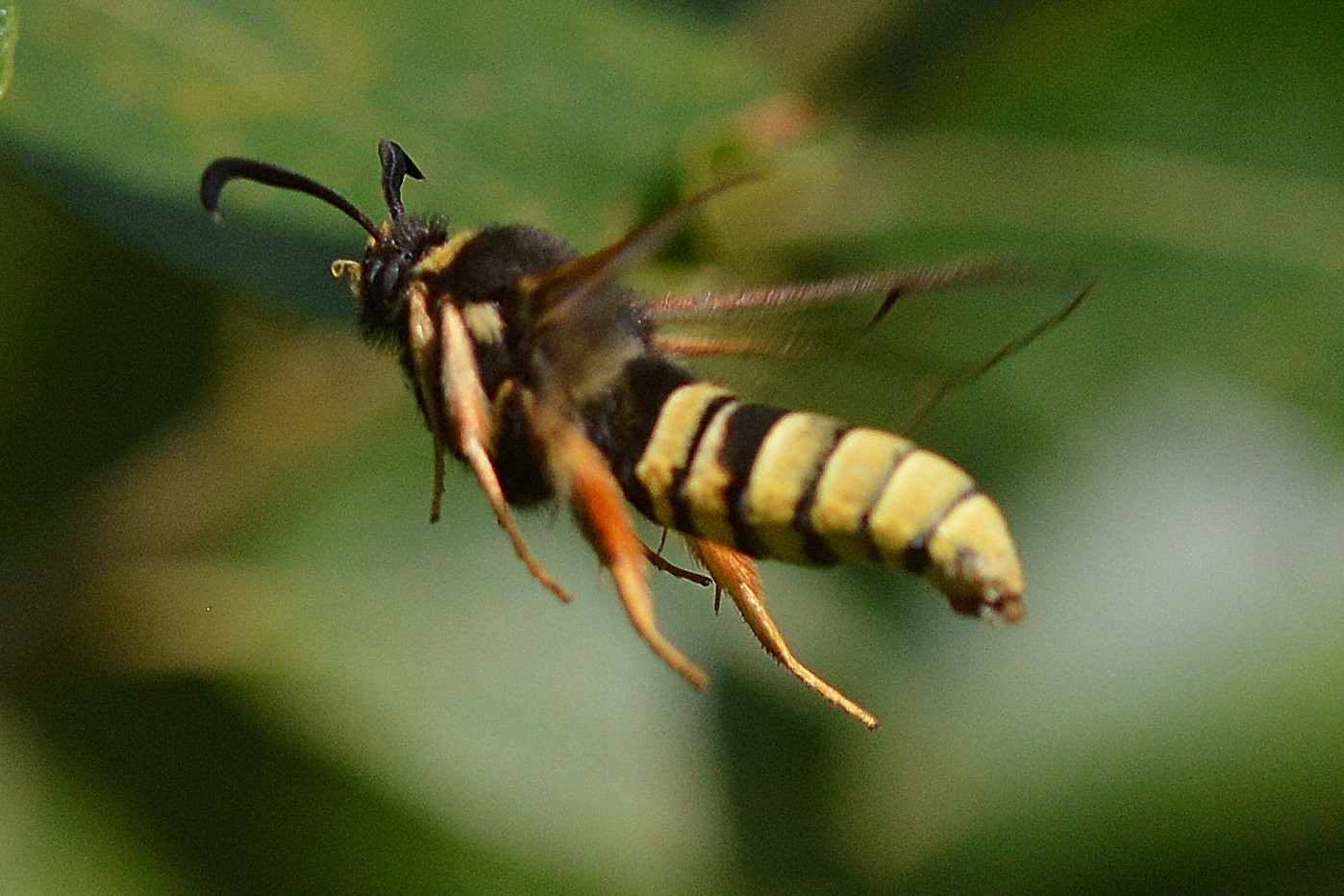
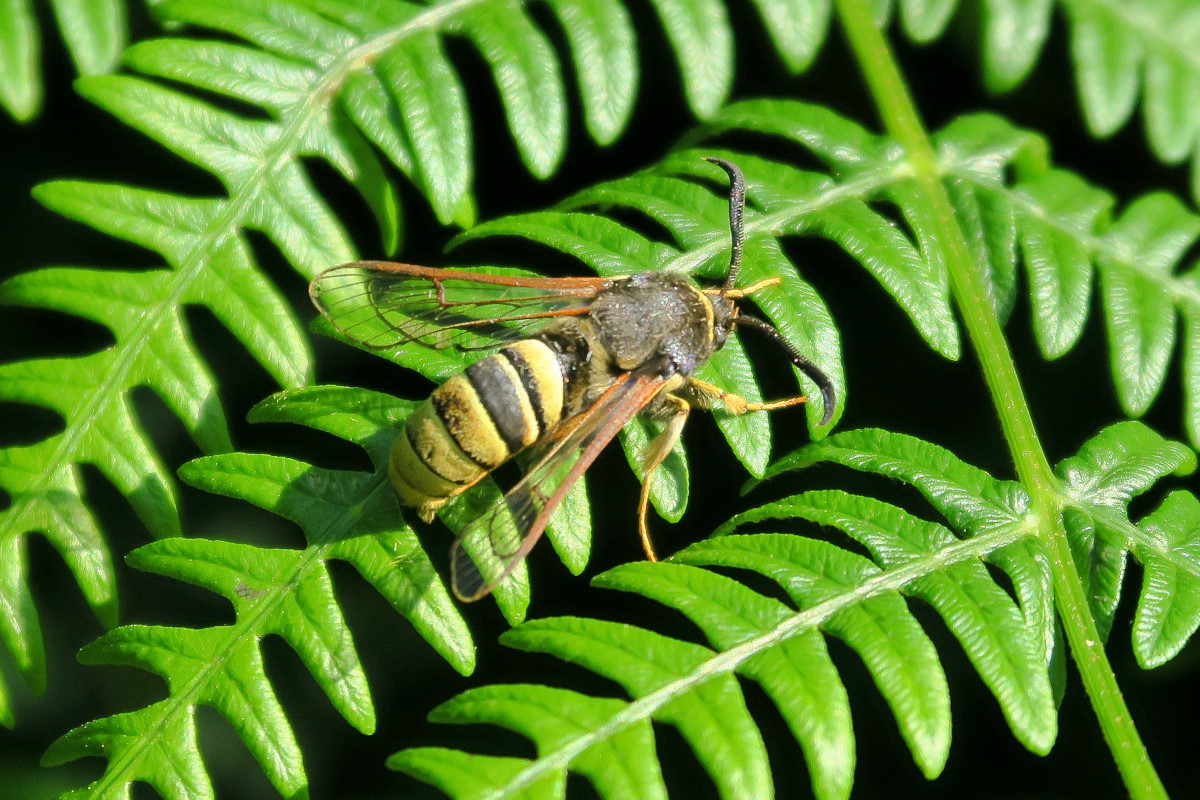
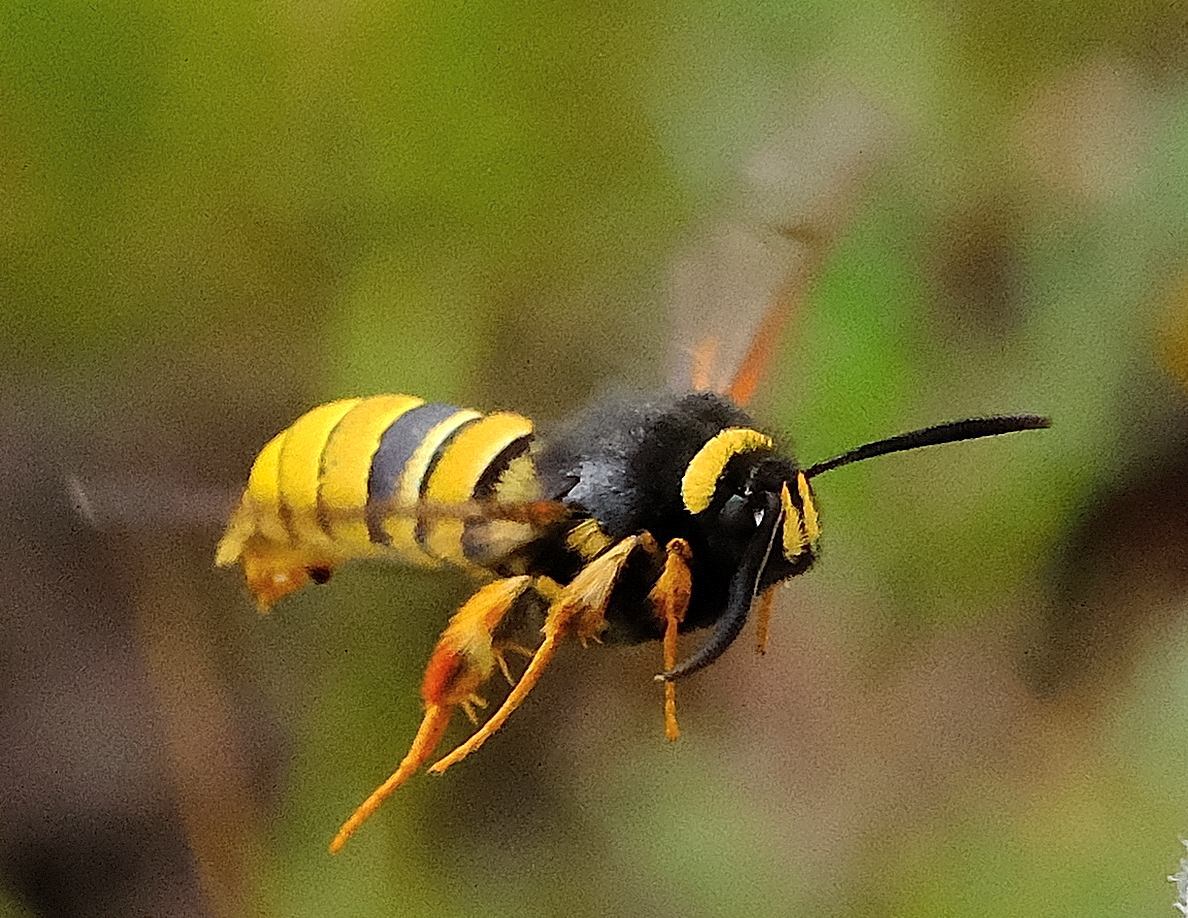
Usually distinctive.
Recording Method.
Males are readily attracted to pheromone lures.
Historically, the presence of this species was identified by locating exit holes in willows or from the presence of larval tunnels in felled stumps. Many older records relate to these methods.
A highly effective pheromone lure is now available and this has transformed our understanding of this moth in the region. This moth is much commoner and more widespread than older records suggest.
Life cycle
Overwinters, normally twice, as a larva. Larvae August to spring. Pupates just underneath bark.
Larval foodplants
Larvae feed in the lower trunk and upper roots of willows, especially mature trees in wet locations.
Habitat
Mature sallow in wet habitats favoured. Fens, open woodland, moors and heaths in damp situations.
History
William Jardine (1837) says: ‘In Dumfries-shire it is abundant, inhabiting in the larva state S. caprea and the Black Italian poplar. The perfect insect, however, is scarcely ever taken, and specimens are to be procured with certainty only by rearing the caterpillar.’
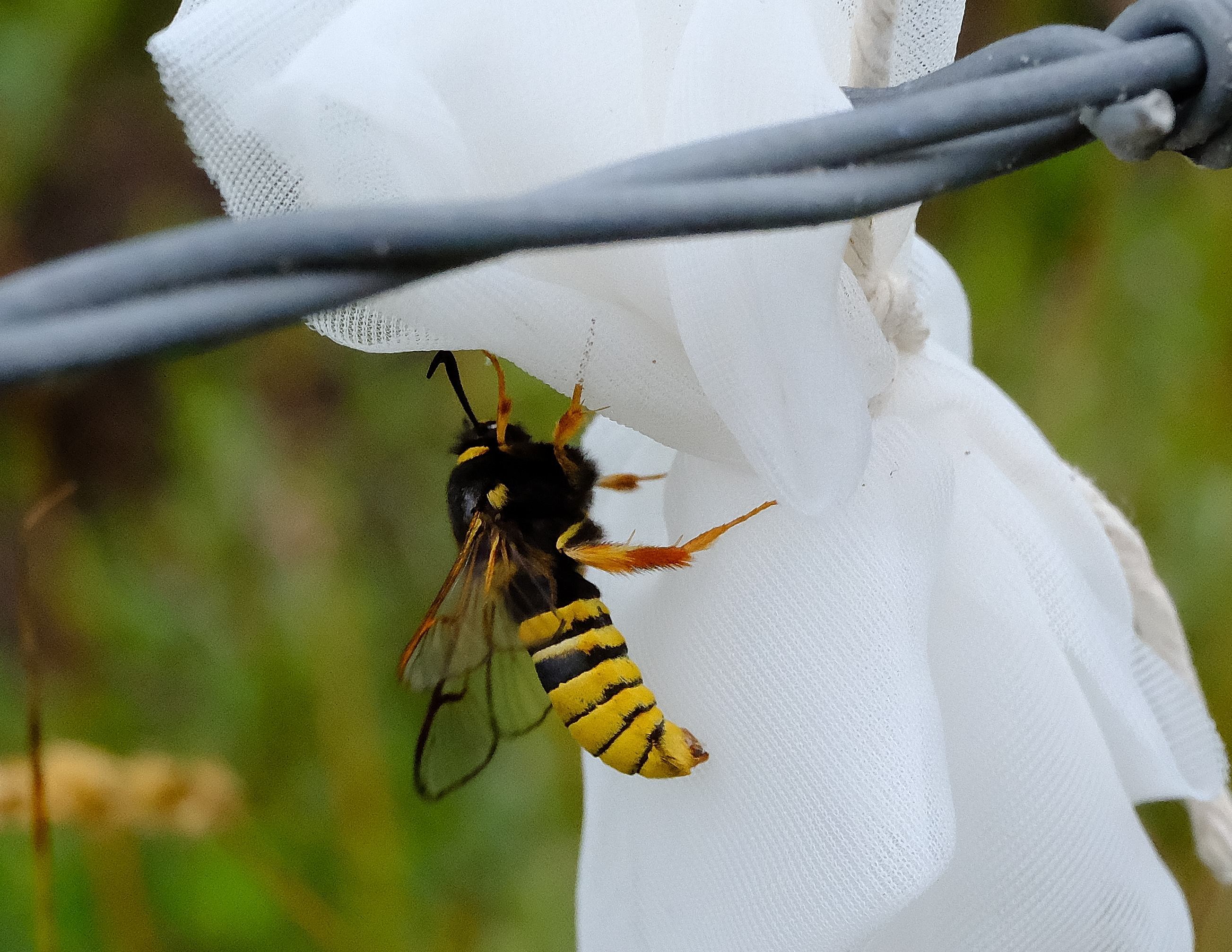
R. S. Gordon (1913) under A. formiciformis (Red-tipped Clearwing) said: ‘I have never seen the perfect insect. Took several larvae and pupae in willow on islands, Drumwalt Loch, Mochrum; along with bembeciformis, 27/6/98.’ Under T. bembeciformis he adds: ‘fairly common in the larval state wherever willows are plentiful, but I have only taken the imago by tying muslin bags over holes in tree trunks at Drumwalt, Corsemalzie and Dowalton Wood.’ Unfortunately, these records were undated.
In 1979 it was found at Rhonehouse, while at Stroan viaduct on 22nd July 1994 some willows that had been cleared for car parking were found to contain larvae, and these were bred on. On the 13th July 2004 a stunned specimen was found in the car park at Rockcliffe (VC73).