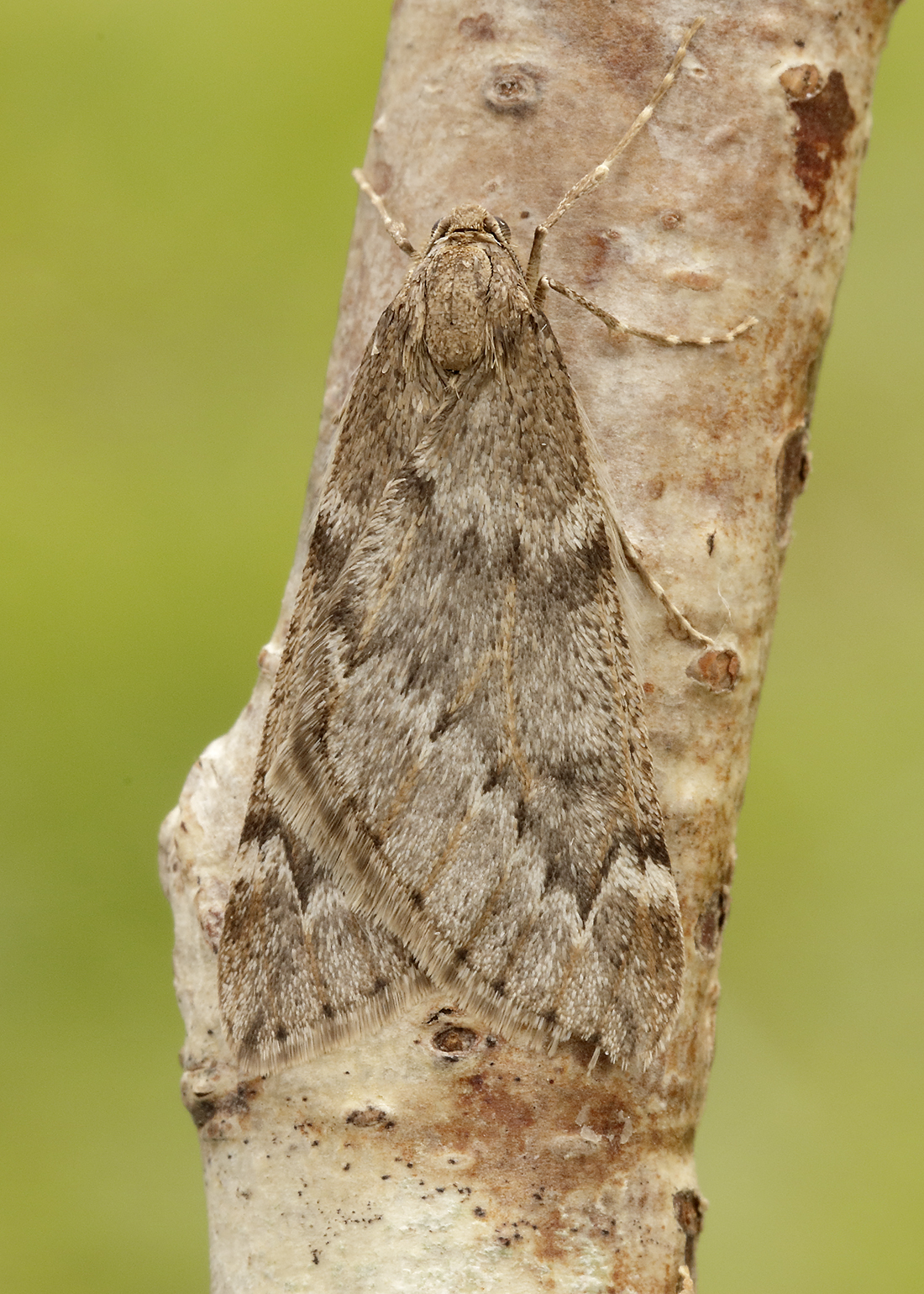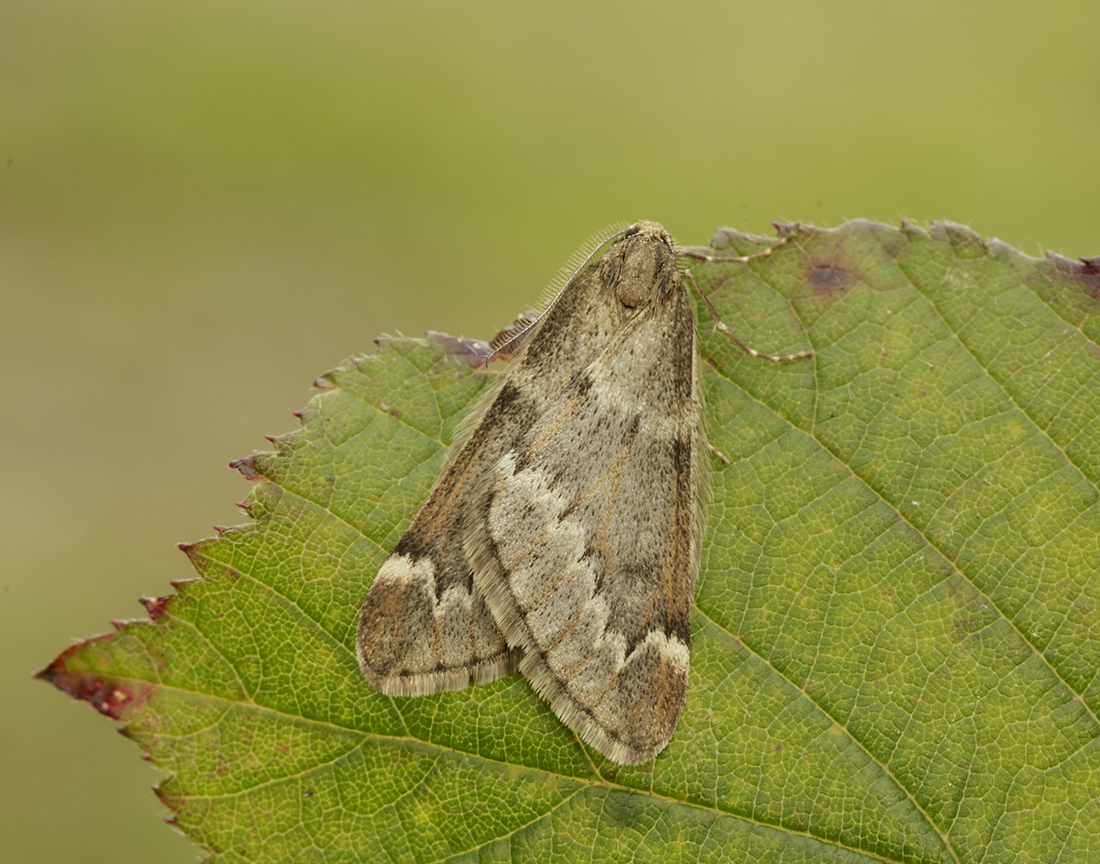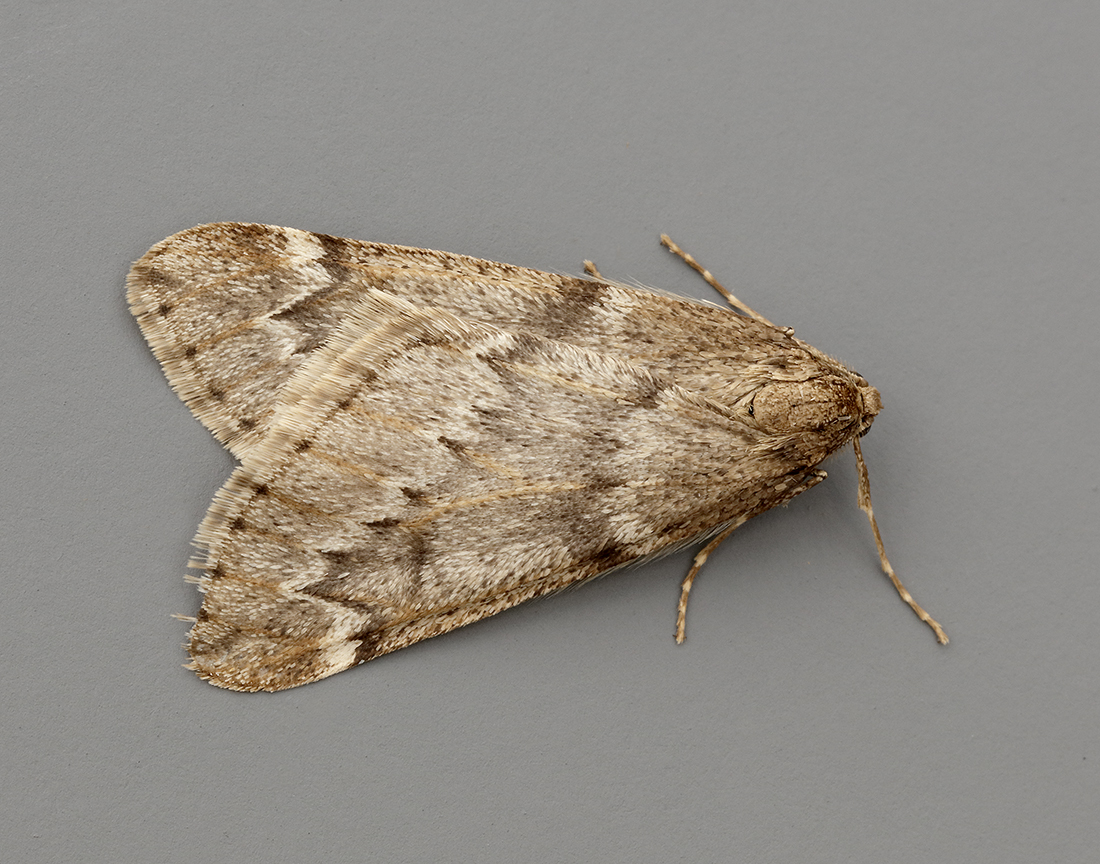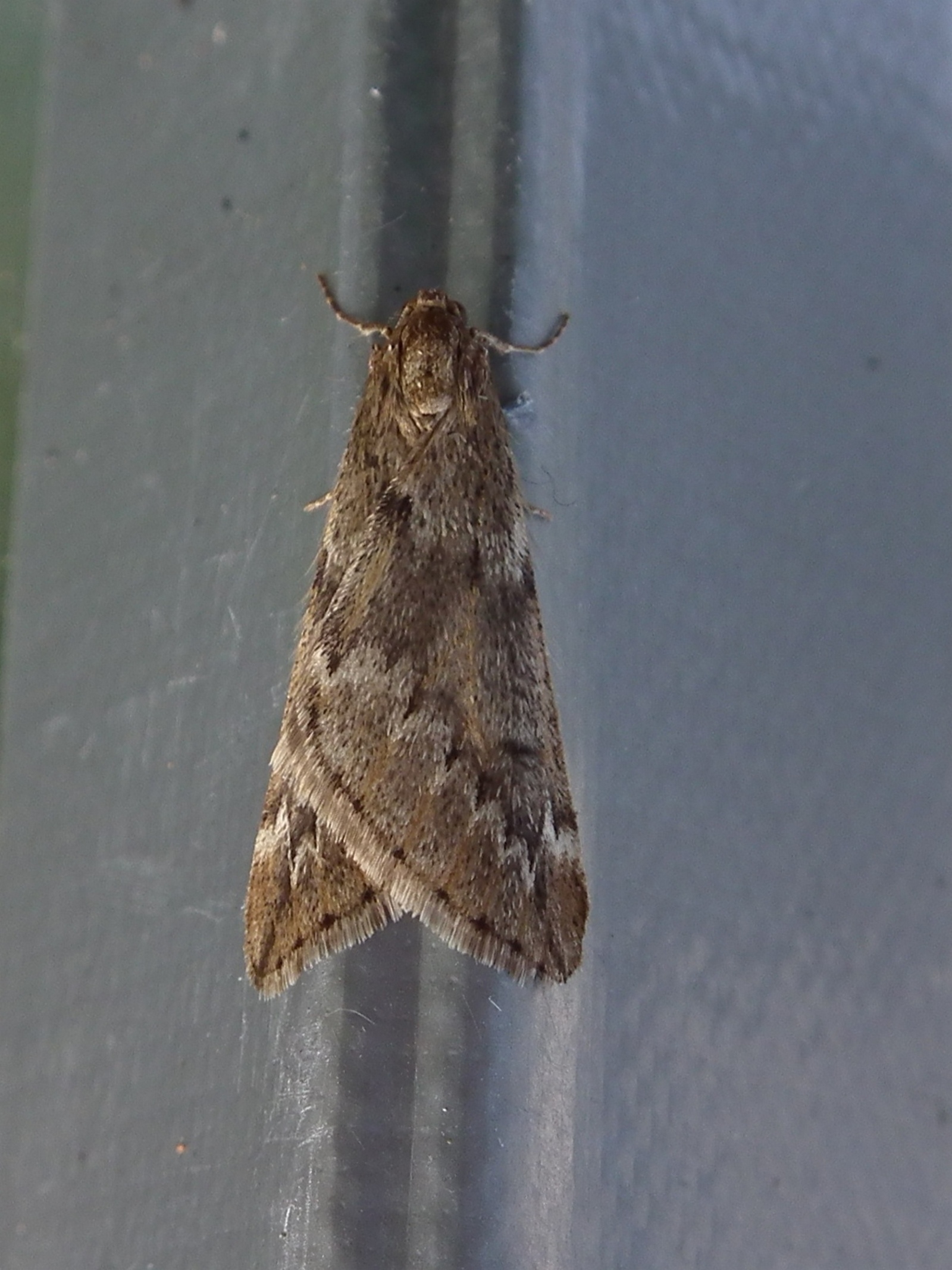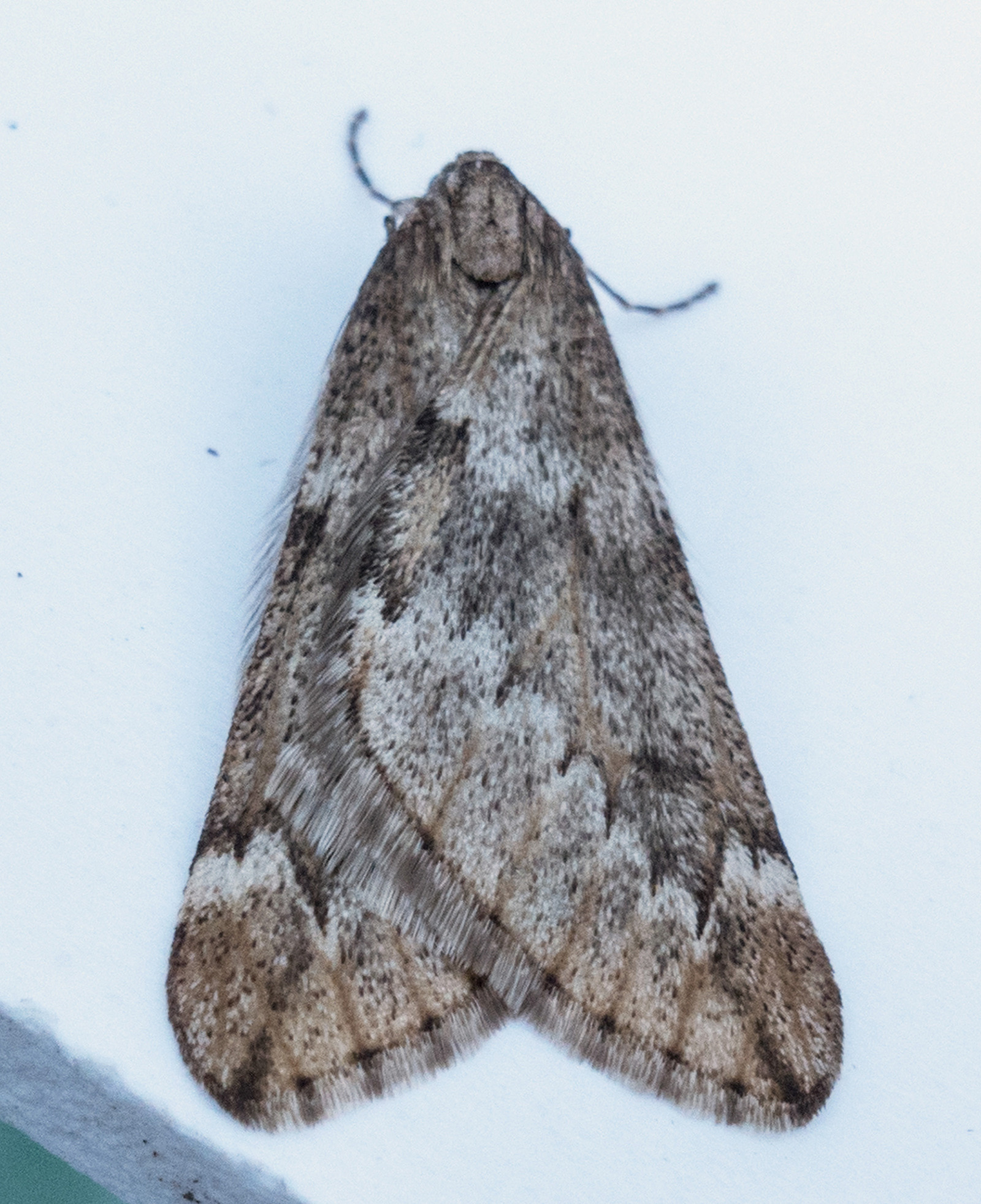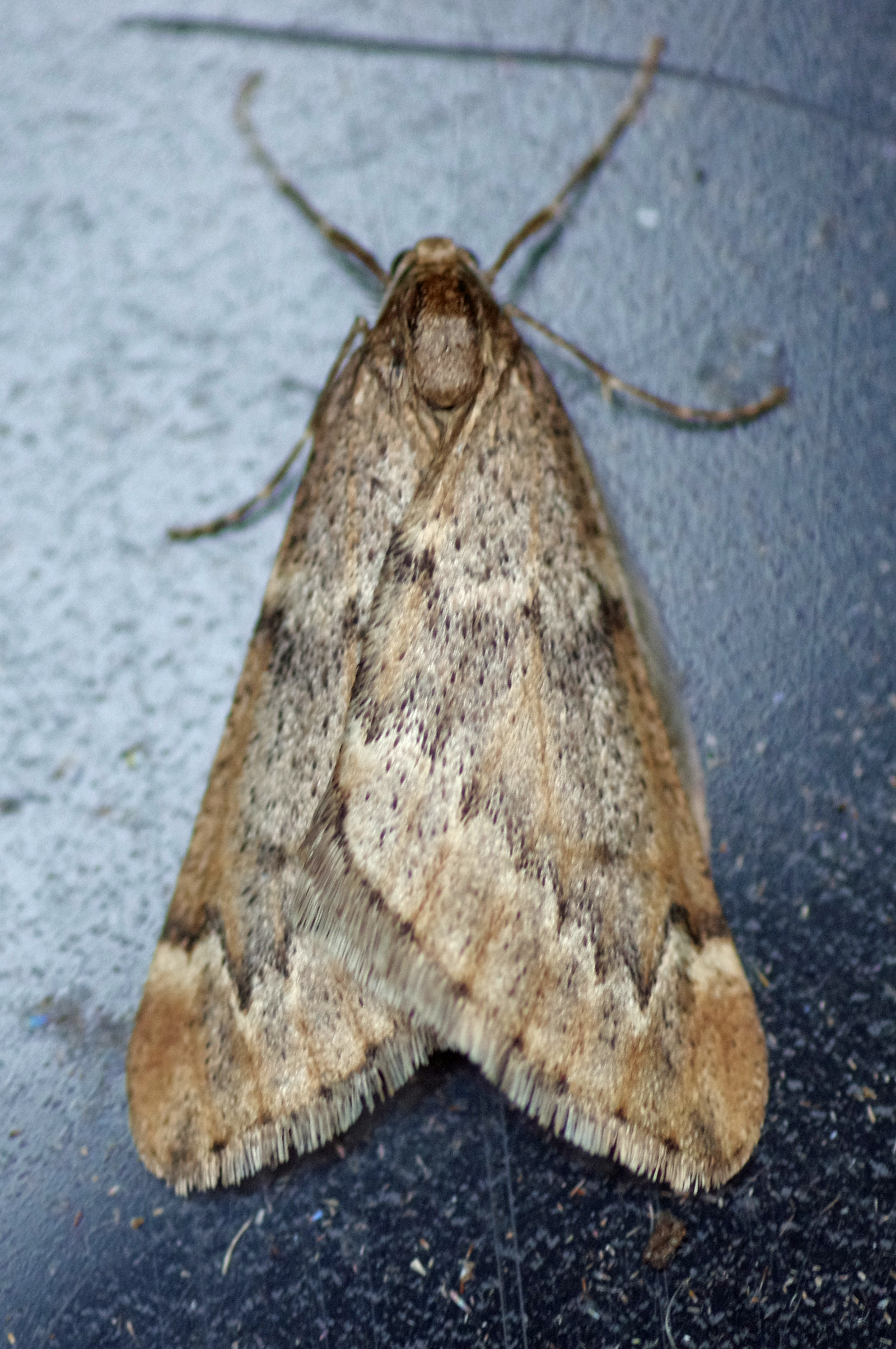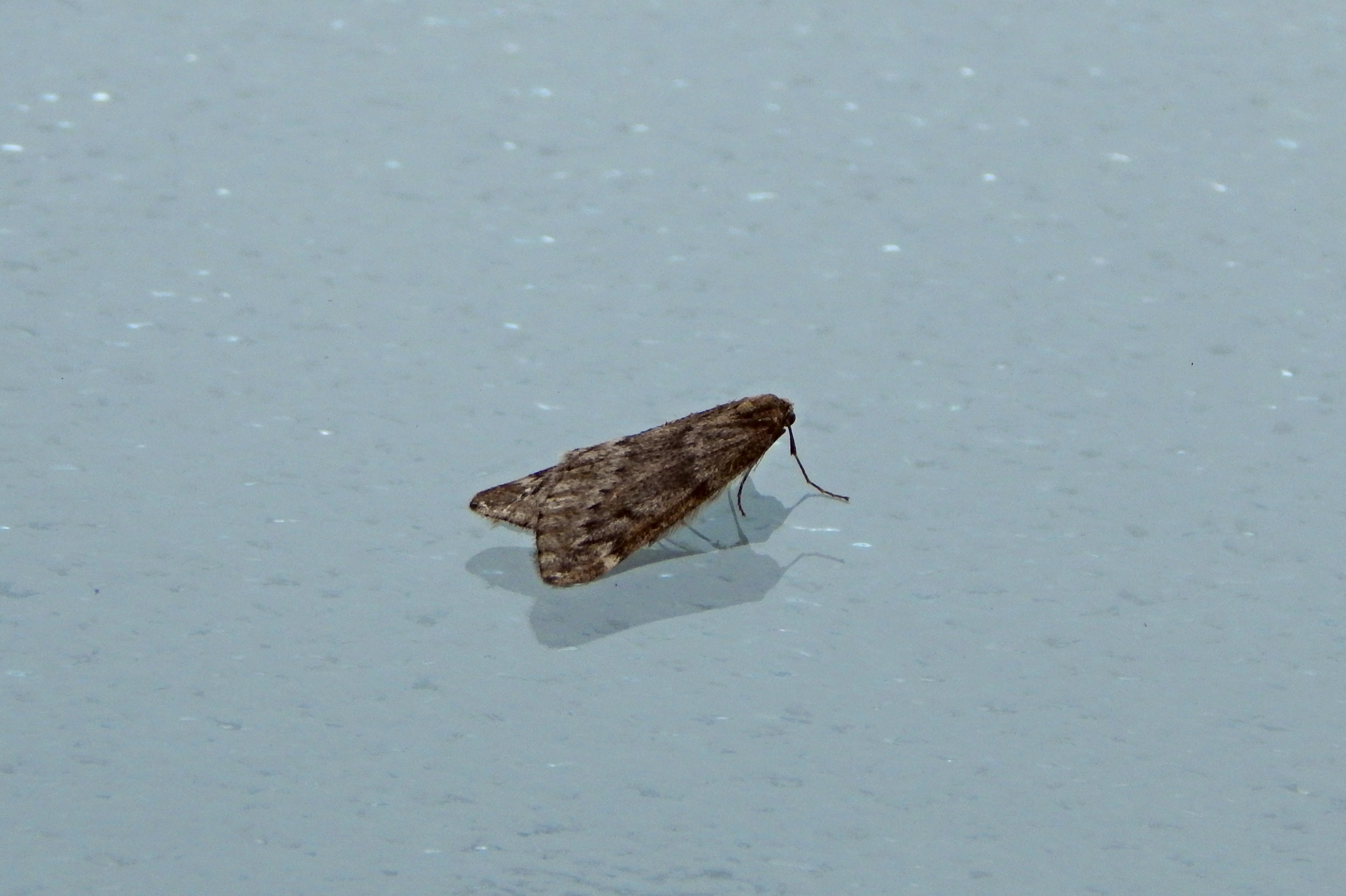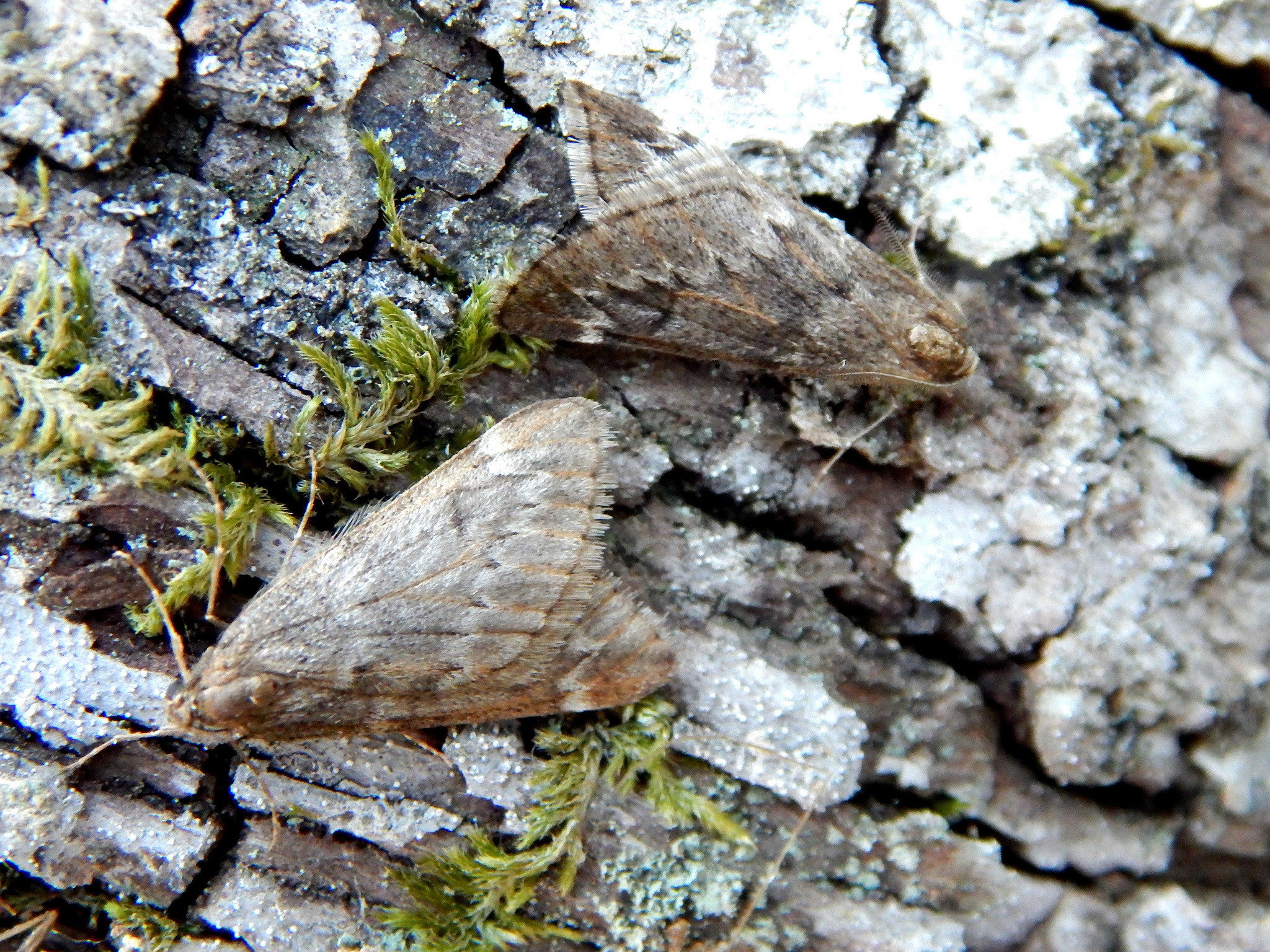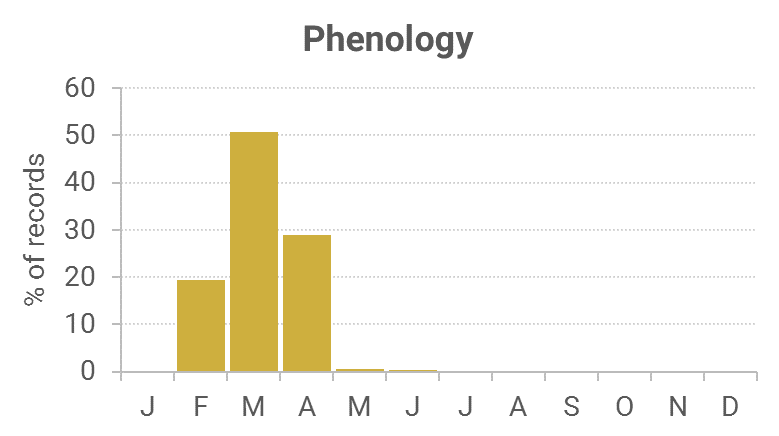

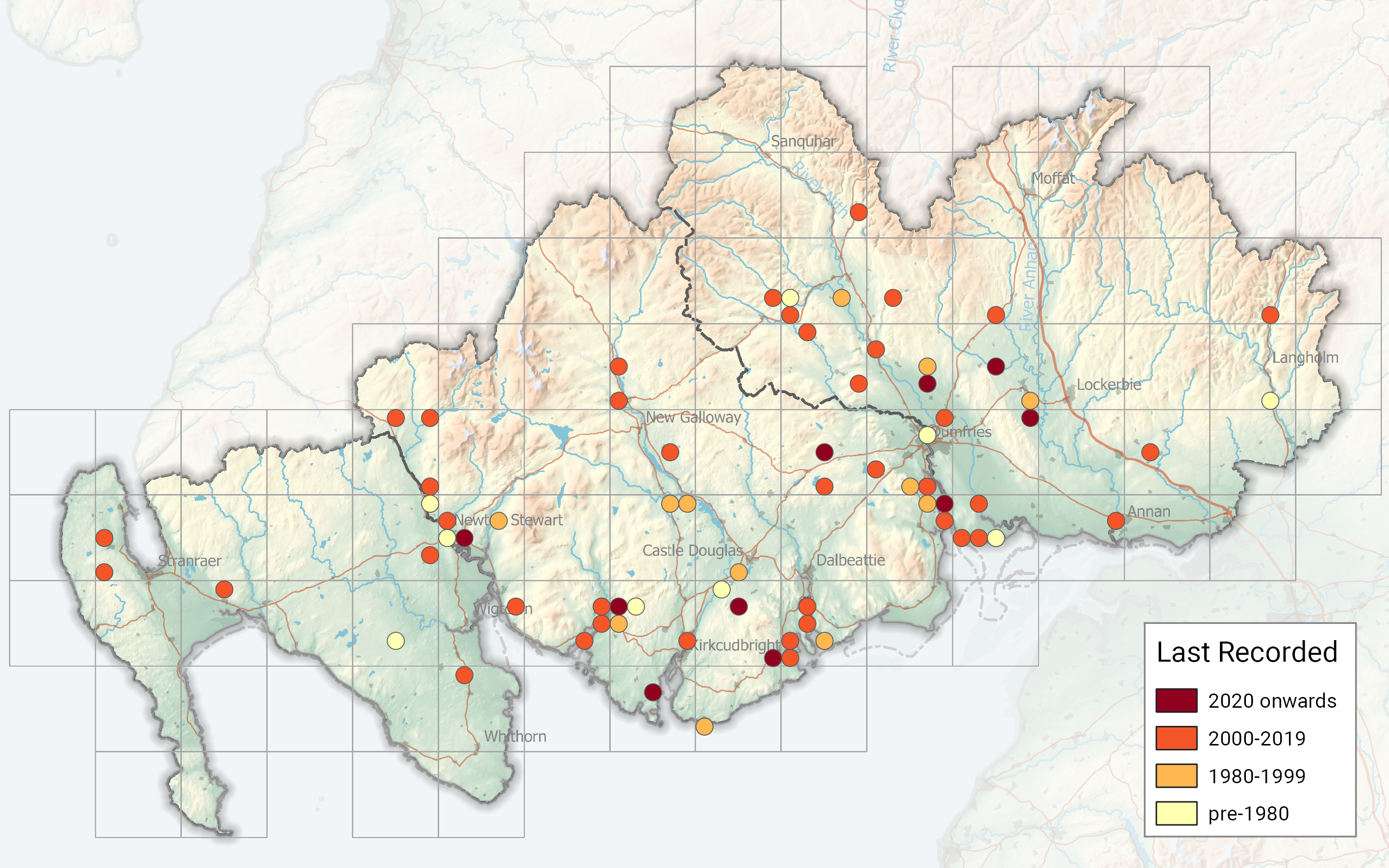
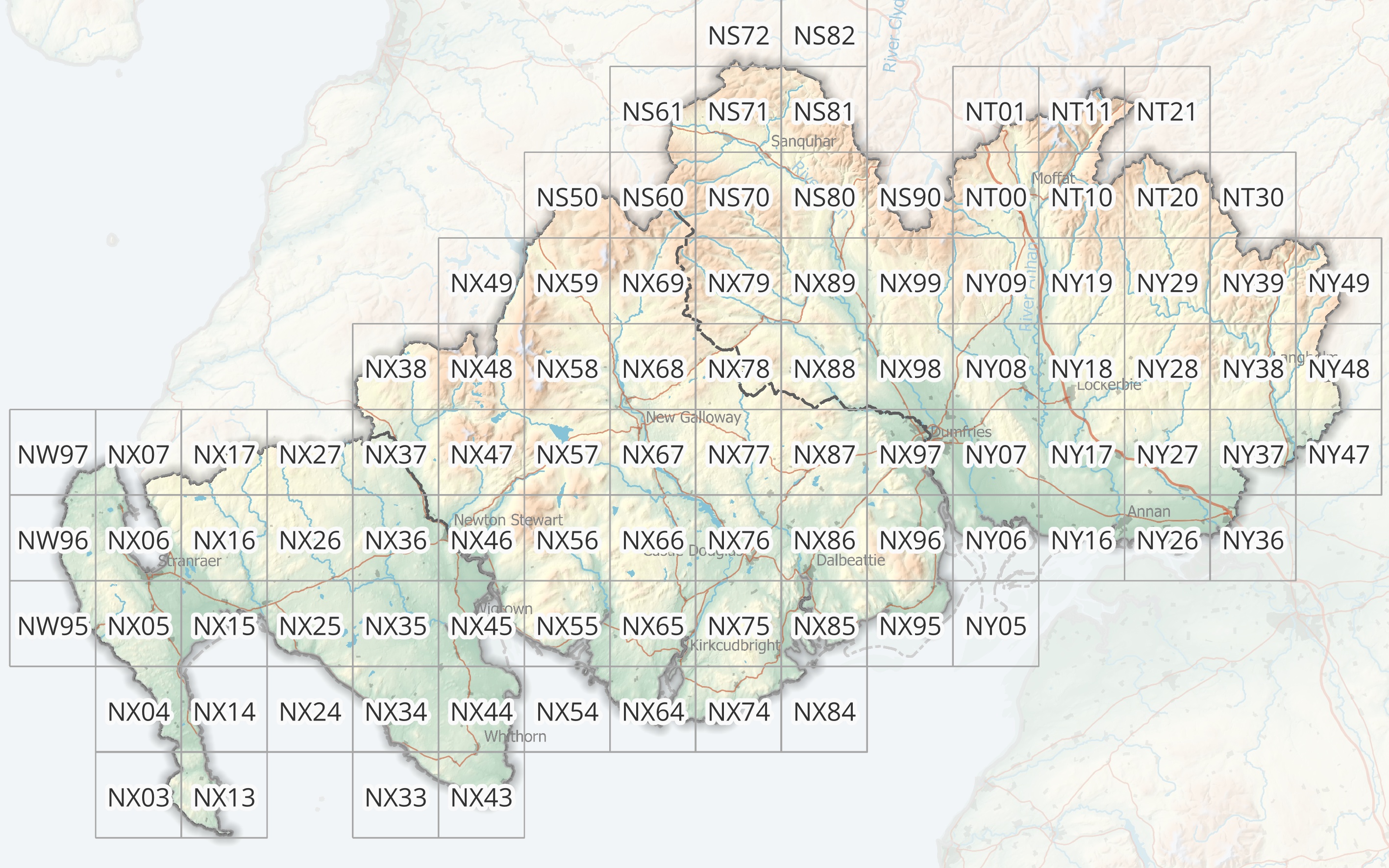
Red List: Least Concern (LC). GB Status: Common.
See also Moth of the Week (10/03/2020)
Identification
Usually distinctive. Female is wingless and flightless.
Recording method
Females can be found at night on tree trunks. Males attracted to light.
Life cycle
One generation. Overwinters as a pupa. Larvae late April to June. Pupates underground.
Larval foodplants
Many broadleaved trees and shrubs including oaks, Hawthorn, Blackthorn, Crab Apple, willows and birches..
Habitat
A wide range of habitats, mainly open woodland but also parks and gardens.
History
First recorded for Dumfries and Galloway in 1862 for VC72 near Dumfries by Lennon who recorded it as ‘common everywhere around the Dumfries area’, in 1895 for VC74 at Corsemalzie by Gordon who found it ‘common at light and on tree trunks during daylight in Wigtownshire’ and in 1942 near Gatehouse of Fleet by Russell.