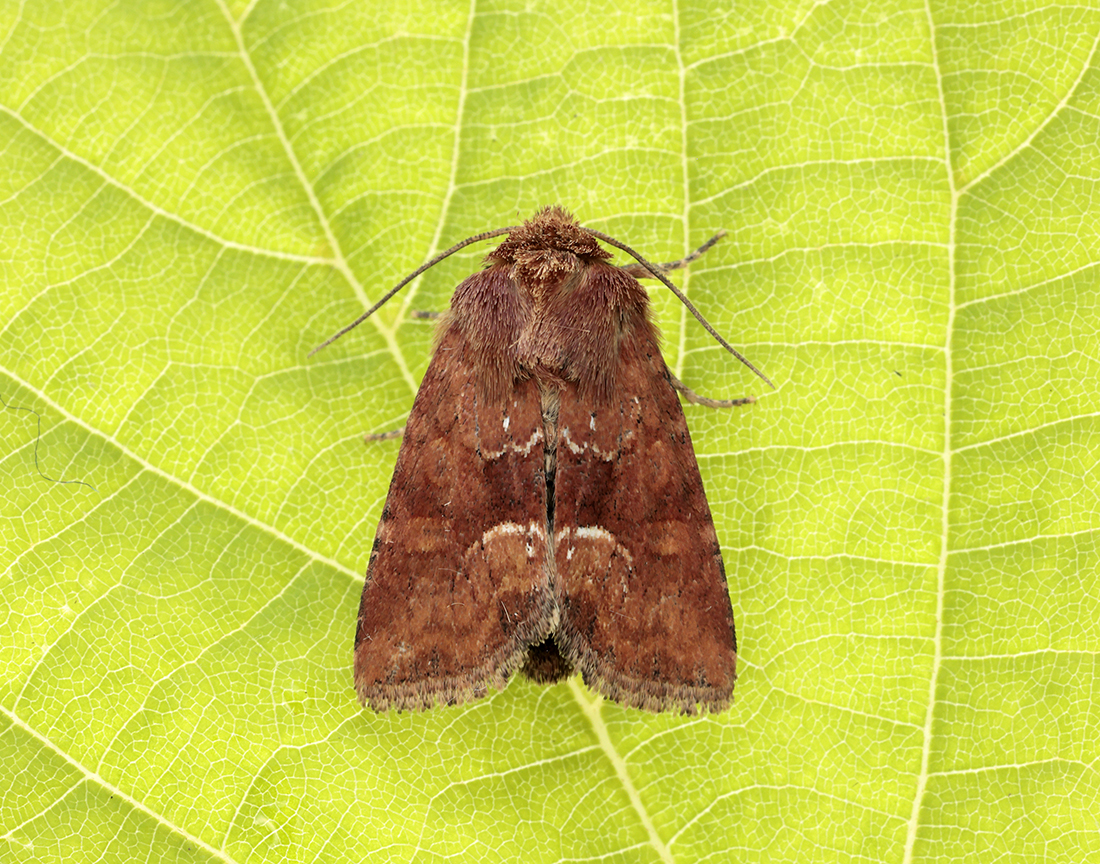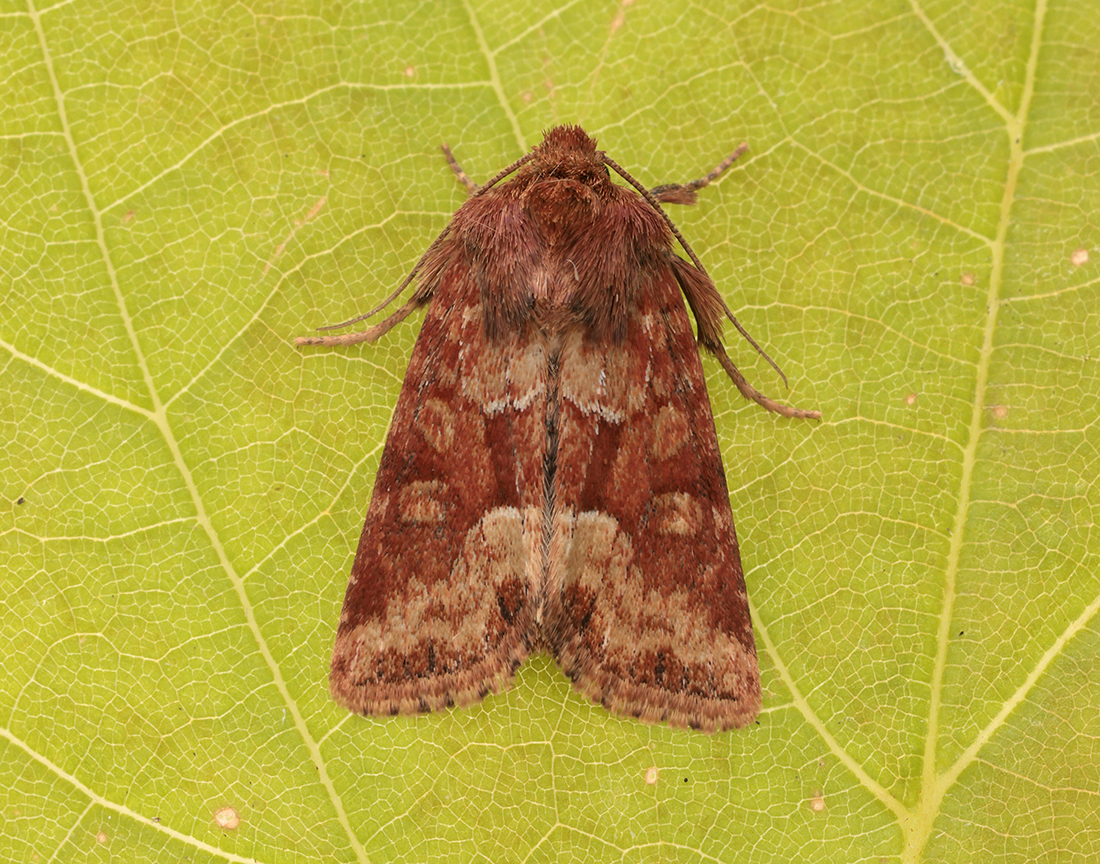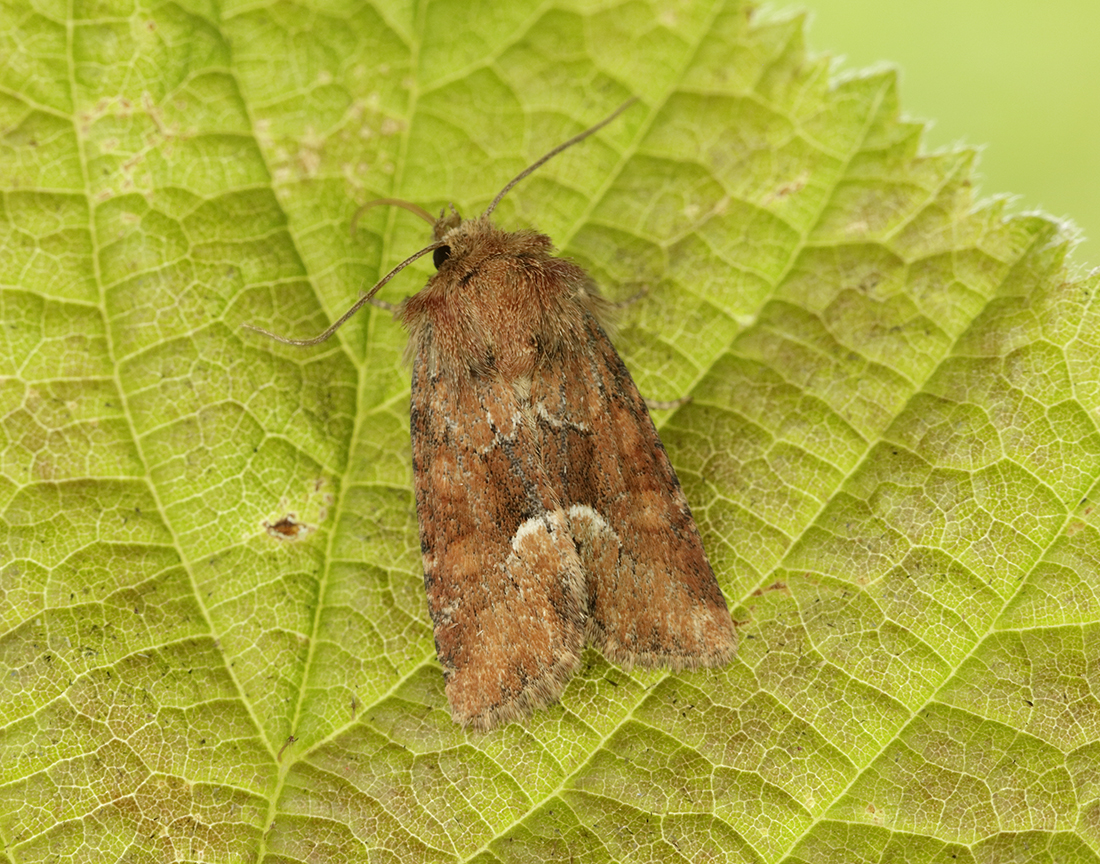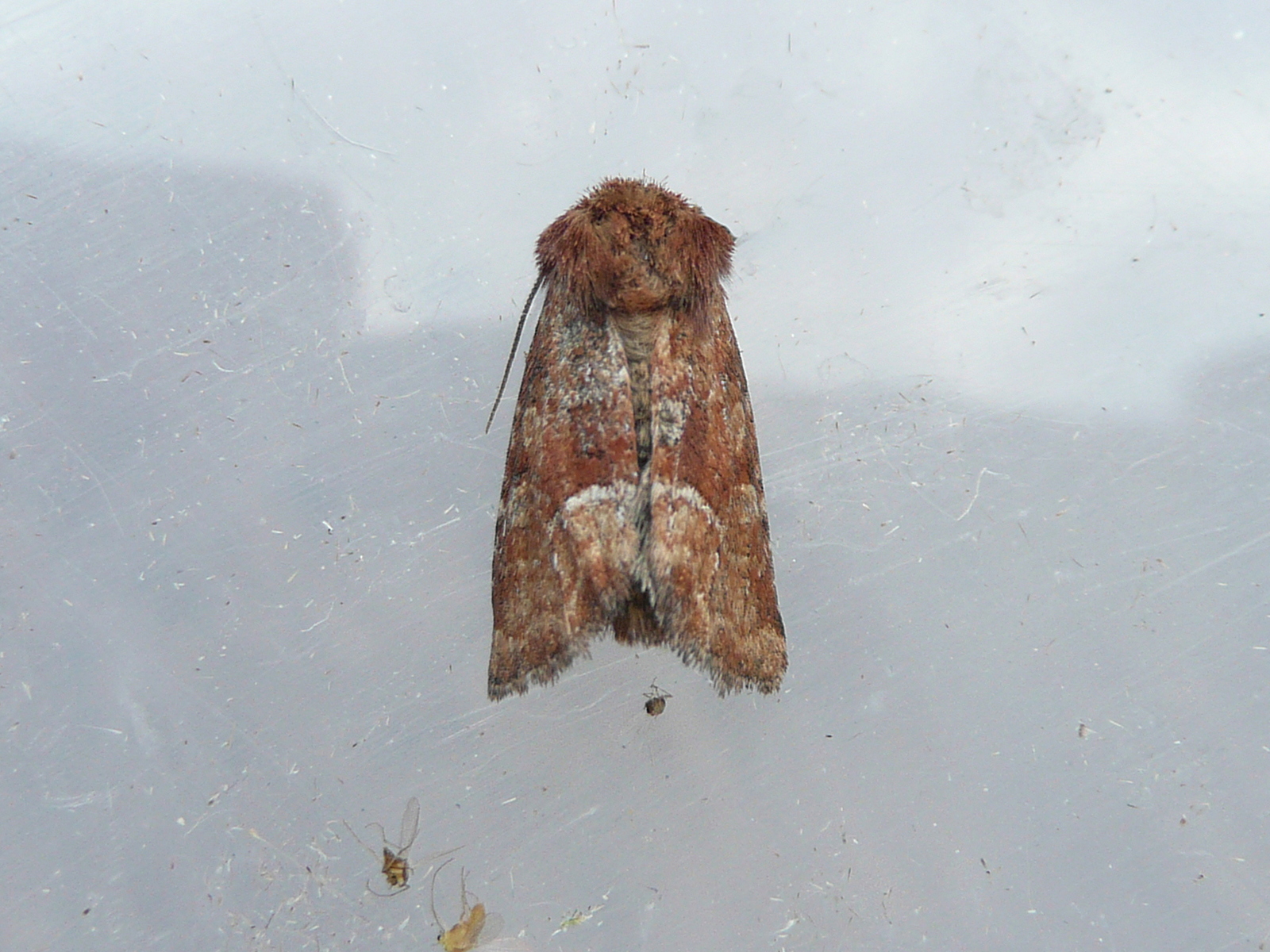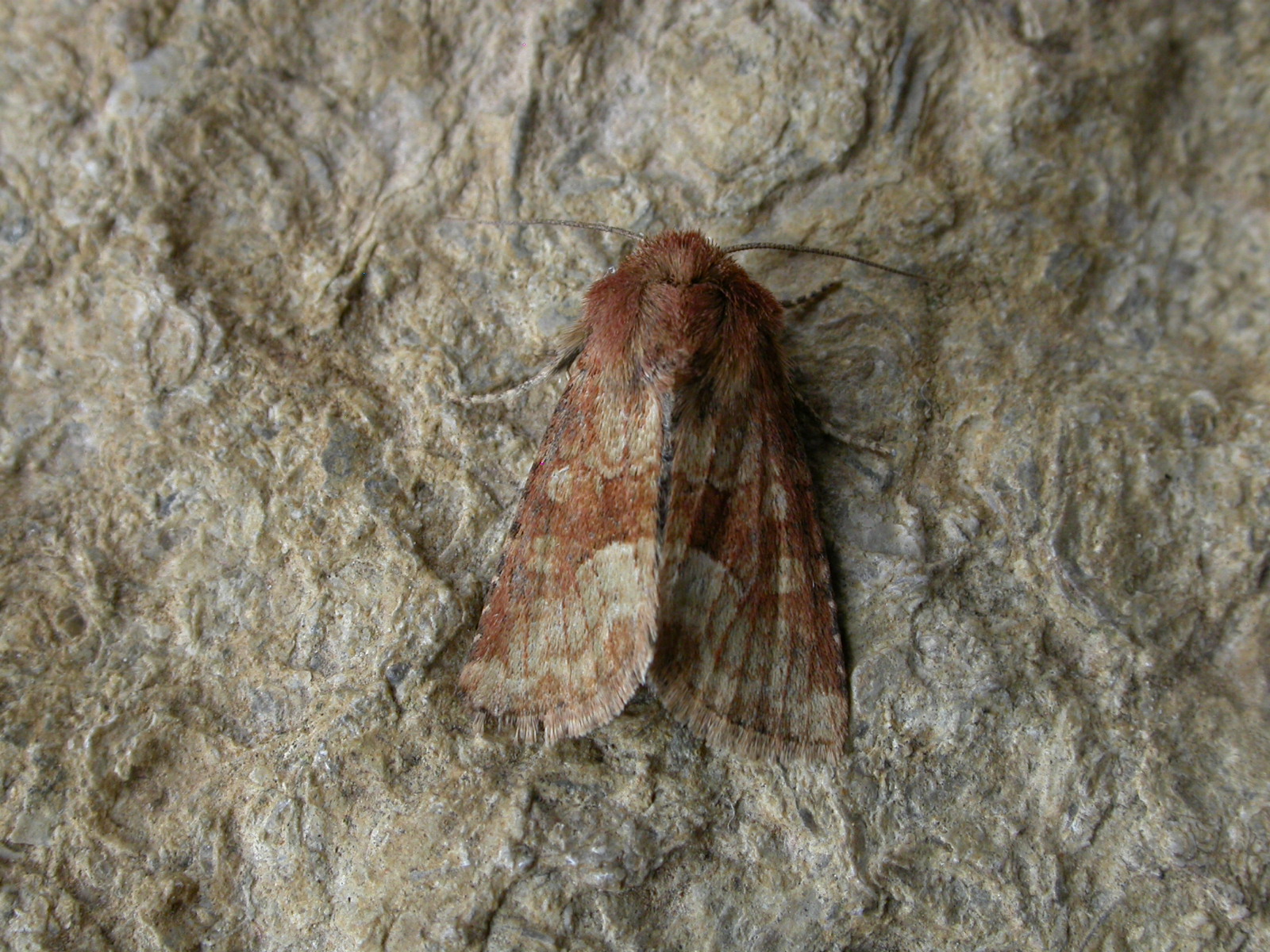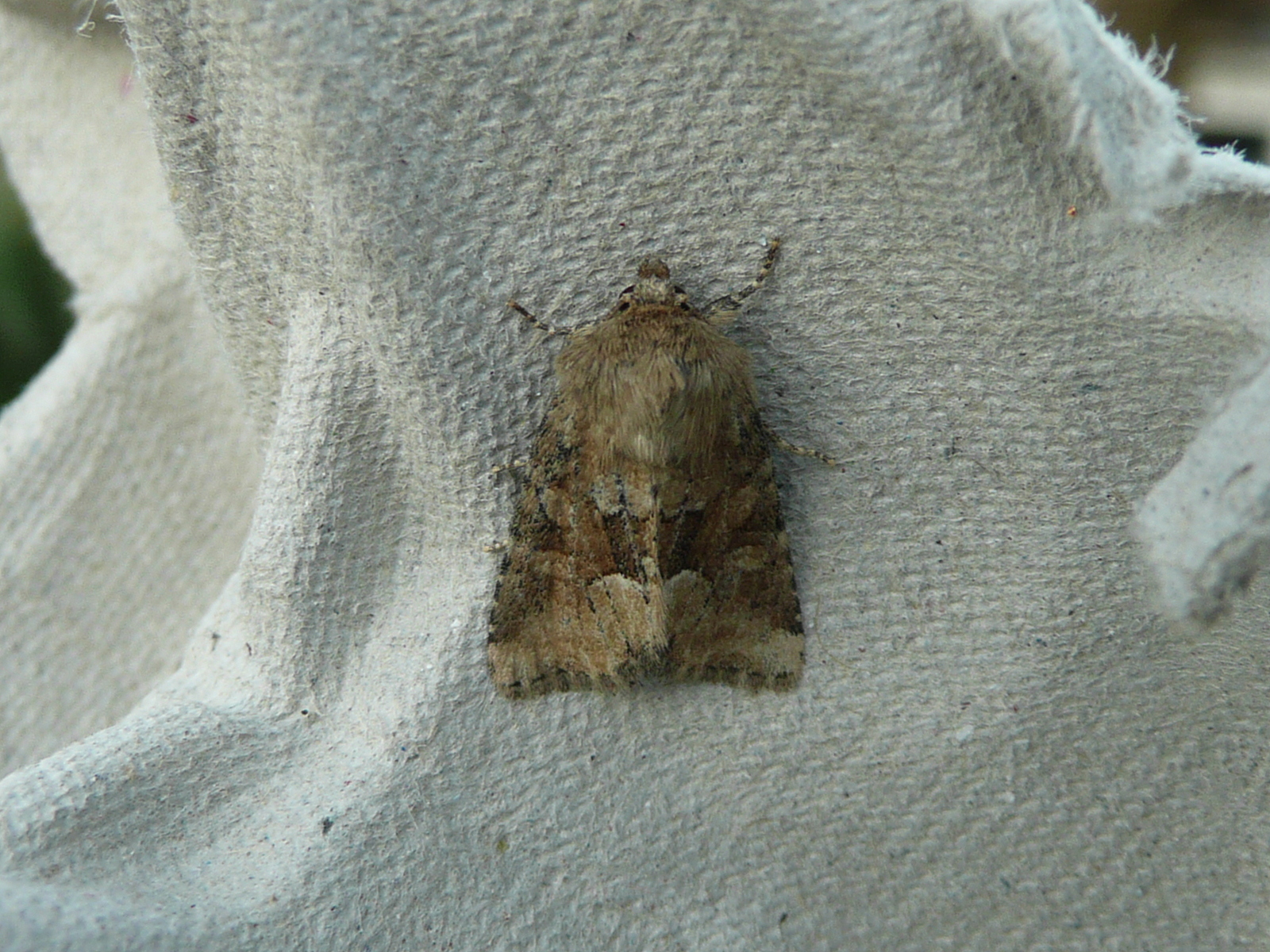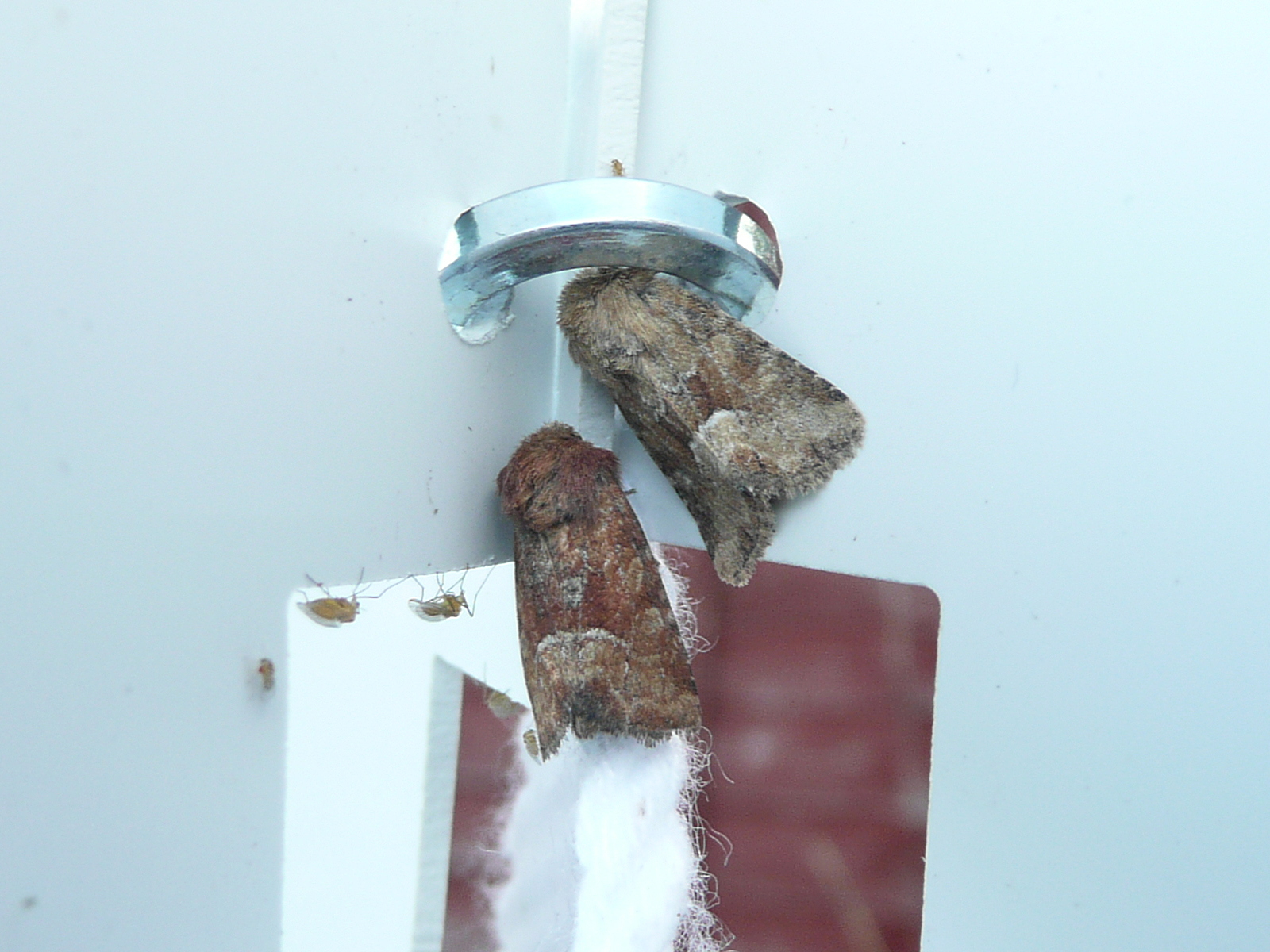

Red List: Least Concern (LC). GB Status: Common.
Identification
Usually distinctive.
Recording Method.
Attracted to light, also comes to sugar and flowers.
Life cycle
One generation. Overwinters as a larva. Larvae August to May. Pupates in a cocoon close to the ground.
Larval foodplants
Tufted Hair-grass and other grasses.
Habitat
Wetland, open woodland and damp grassland.
History
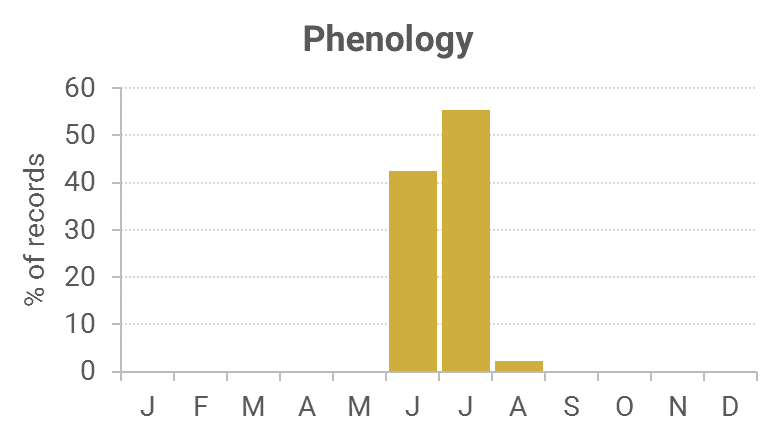
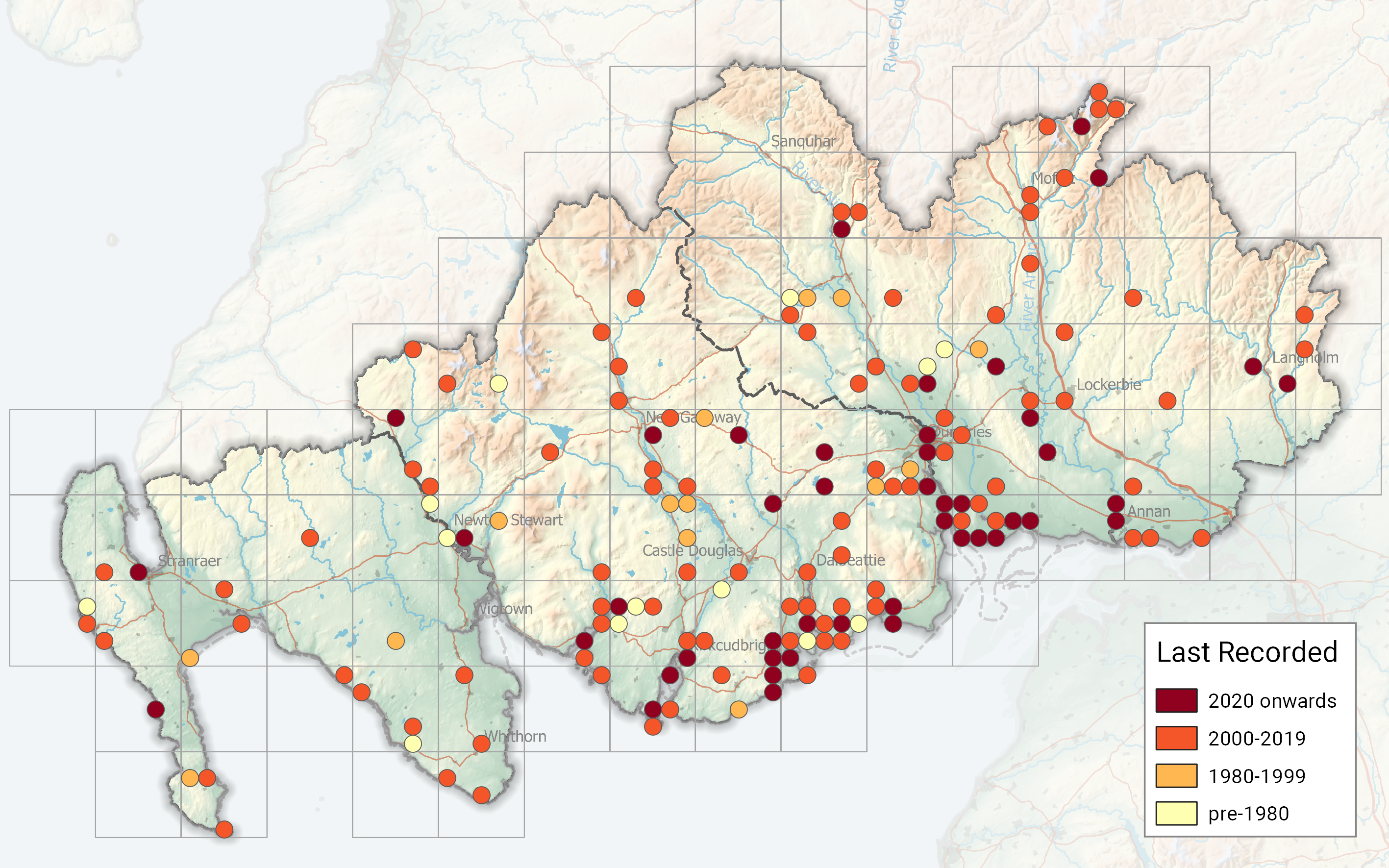
Douglas Robinson (1870-71) had found it not common at sugar on Almorness (VC73) during July. K. J. Morton of Edinburgh (1900) whilst on a visit in July 1899 to Wigtownshire had found this species in the Monreith area. Gordon (1913) had found it to be common and generally distributed around Wigtownshire, with the typical red and clay coloured forms occurring during June. Earliest date was 17th June 1899.
Sir Arthur Duncan (1909-84) during his lifetime had found it at Closeburn, Tynron and Castlehill, Dumfries (all VC72). Archibald Russell (1944) listed it as occurring near Gatehouse of Fleet (VC73) during the years 1942-43.
During 1974-93 over 200 records were recorded at the seven Rothamsted stations. From 1992 to 2010 the regular trapped sites at Kirkton, Caerlaverock WWT, Durisdeer, Kirkcudbright, Mersehead RSPB, Old Torr, Forest Moor and Carsfad at Dalry recorded most of the 260 records, with others from widely scattered sites across the region.