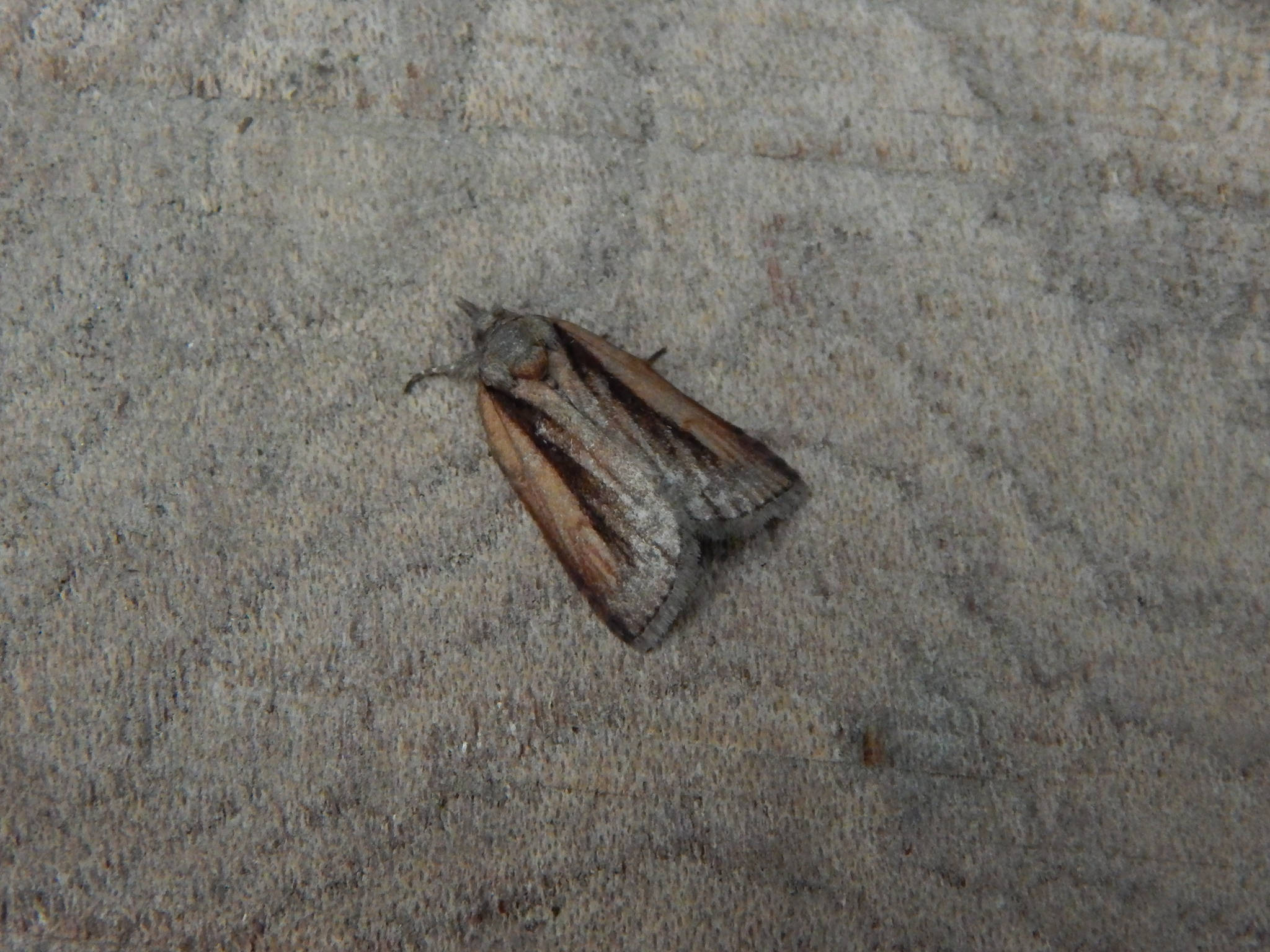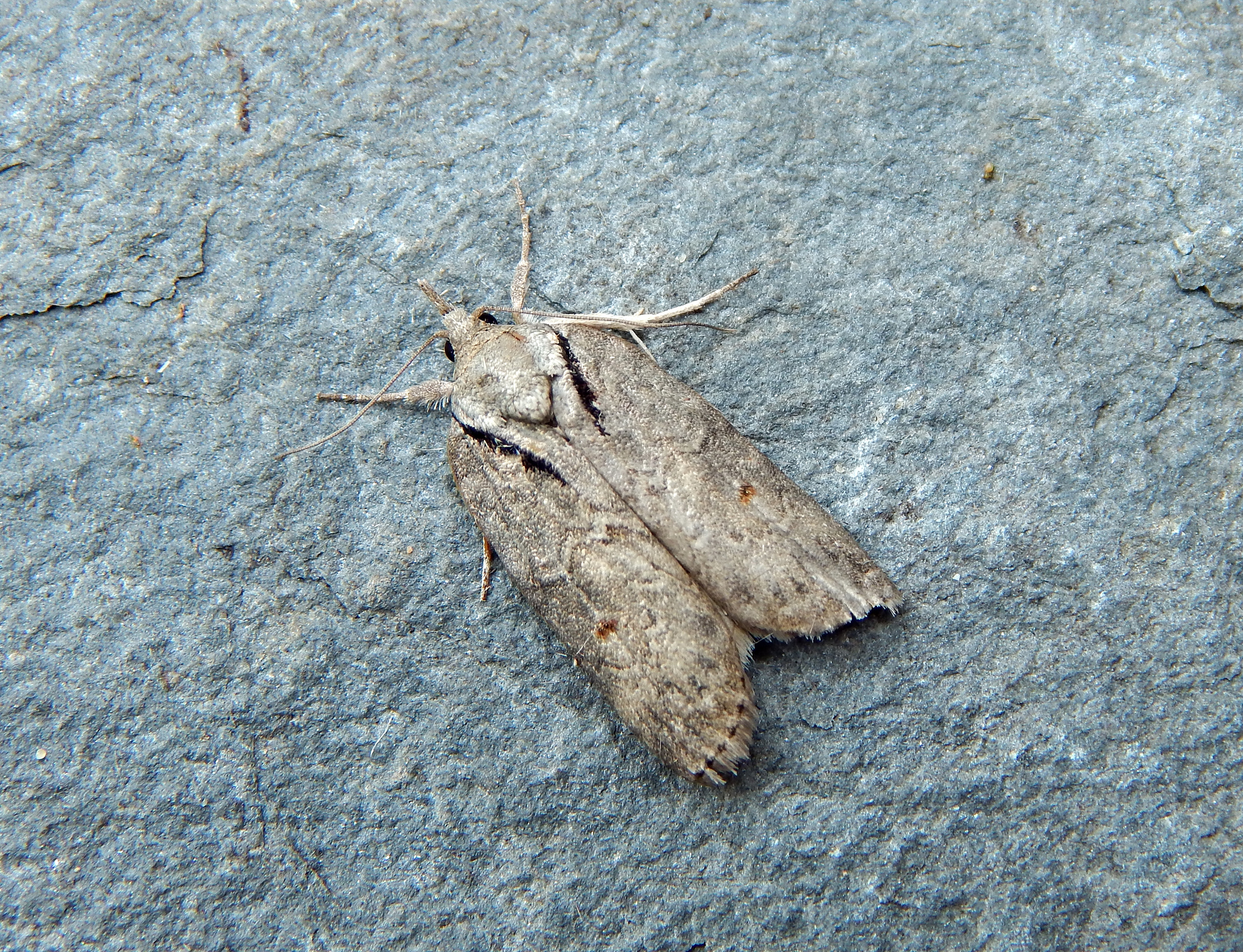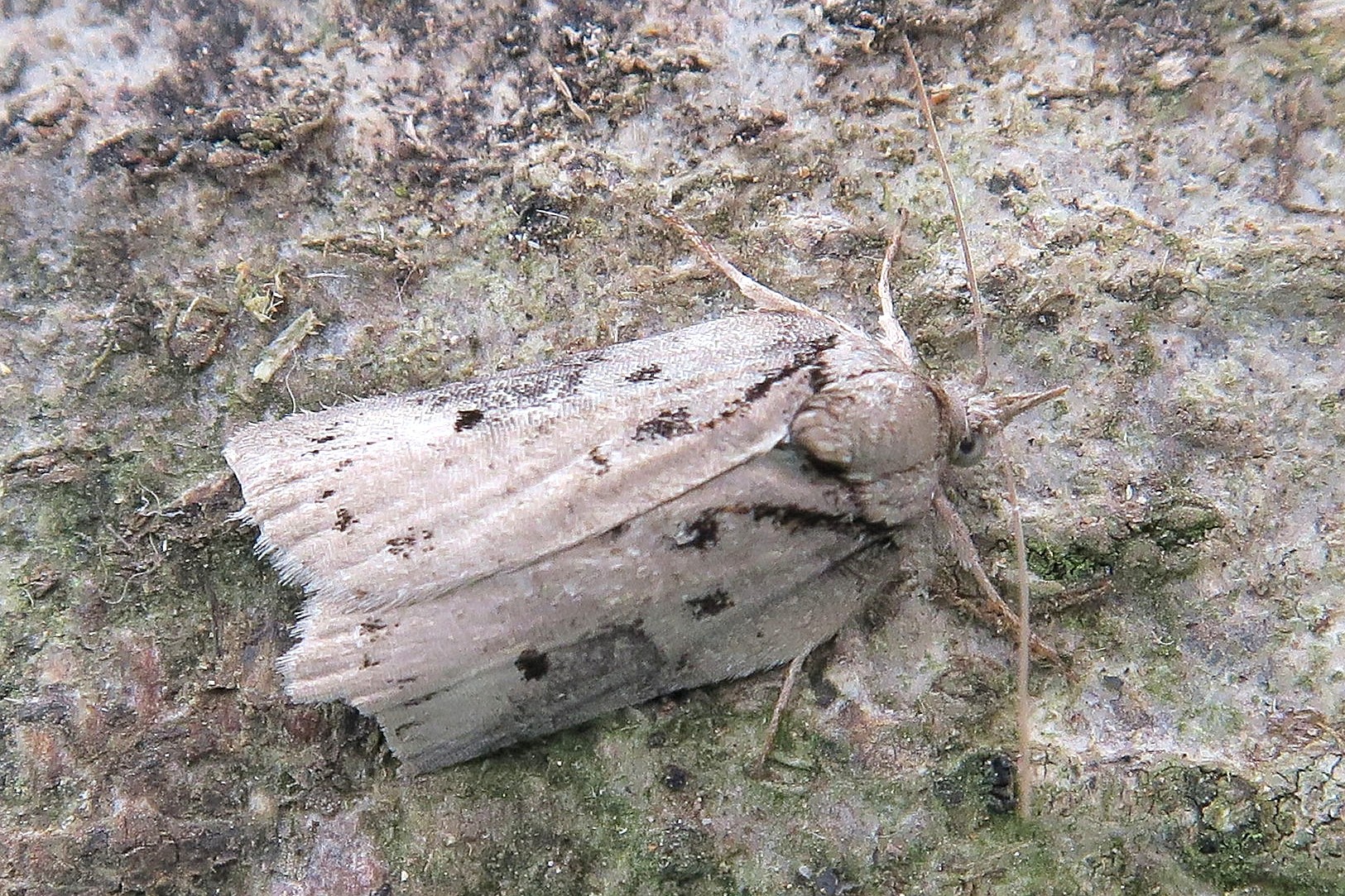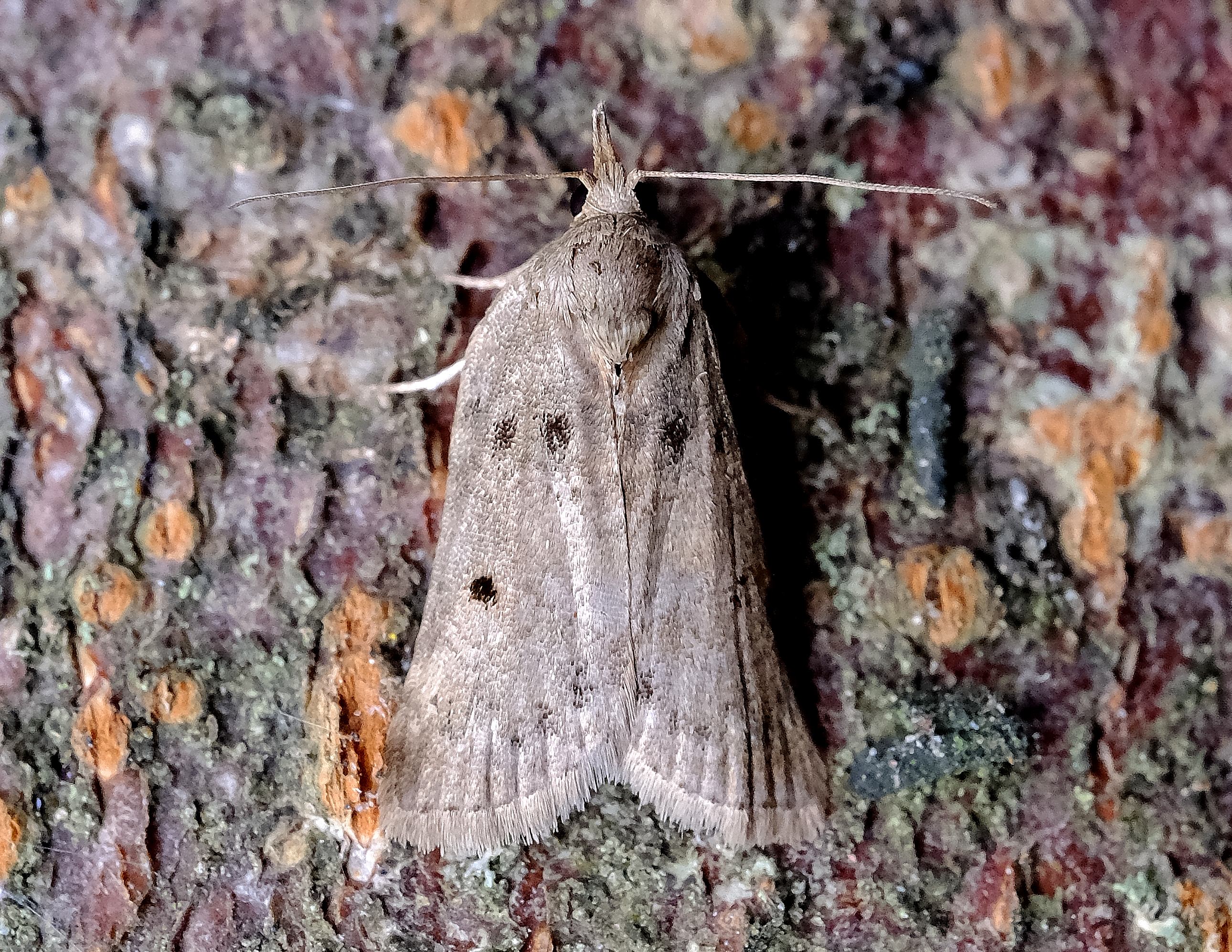

Red List: Least Concern (LC). GB Status: Common.
Identification
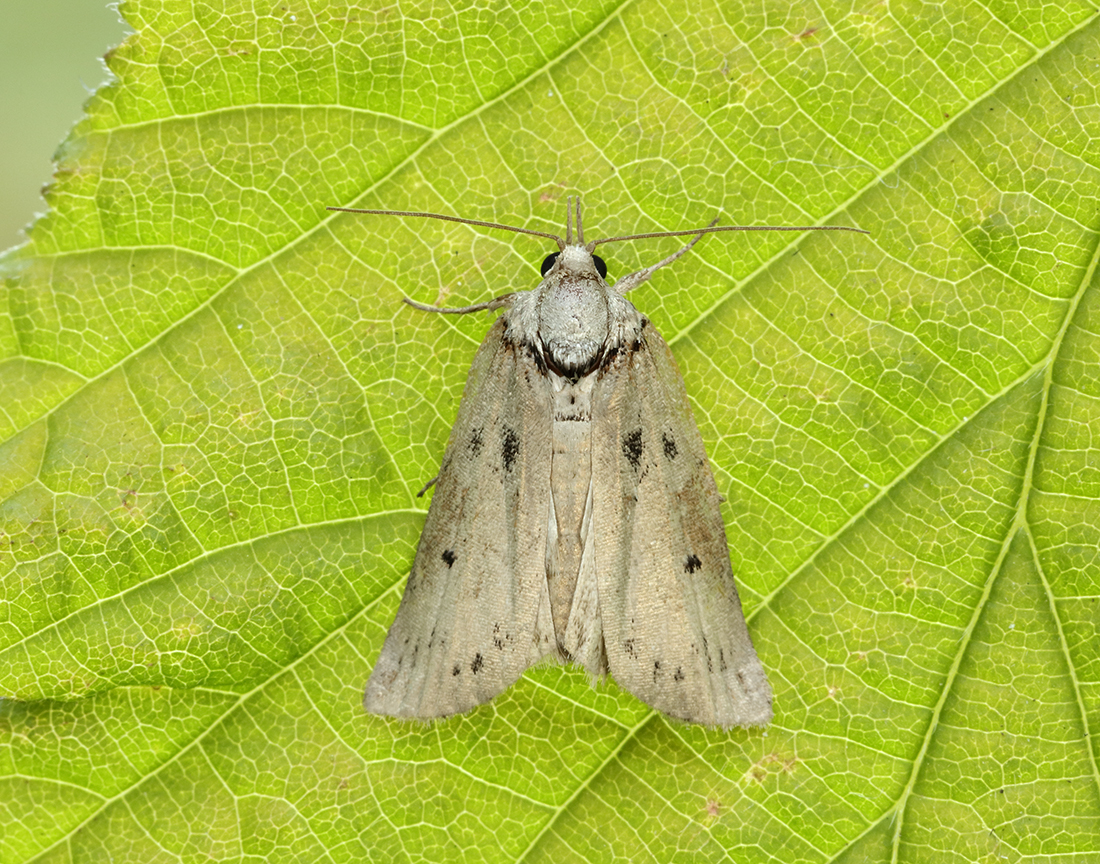
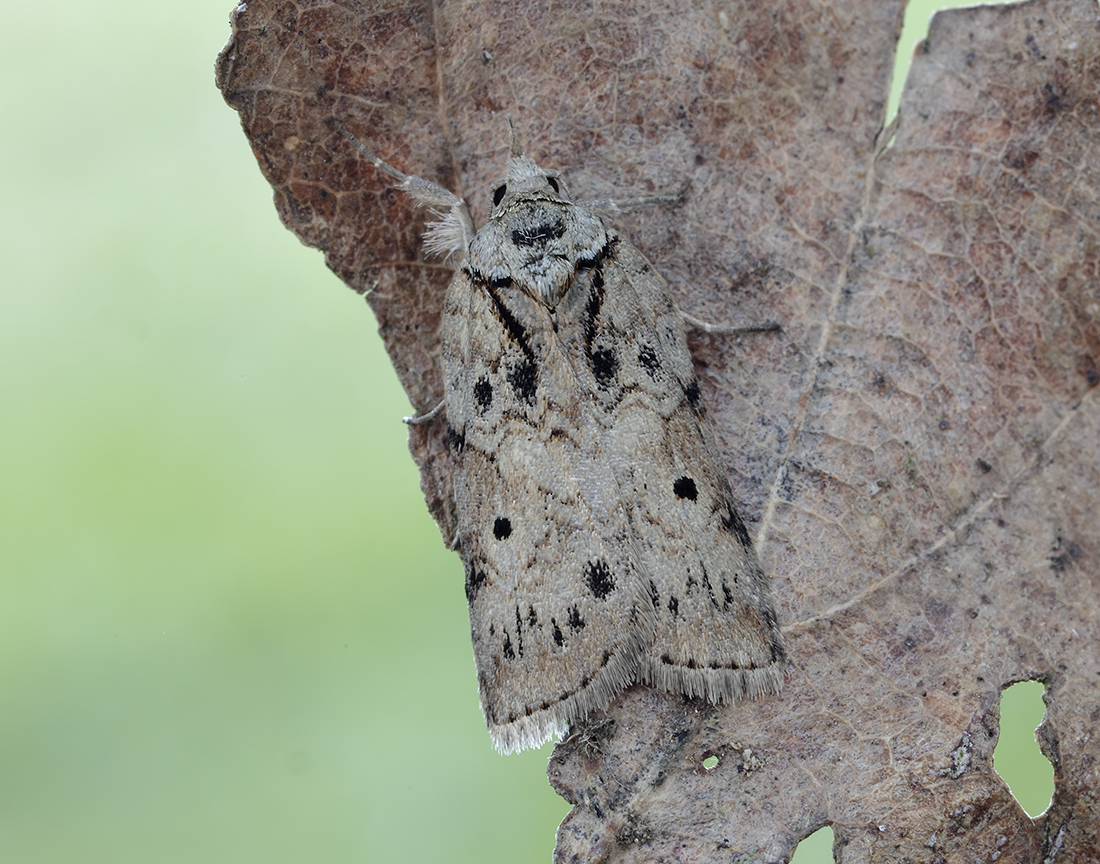
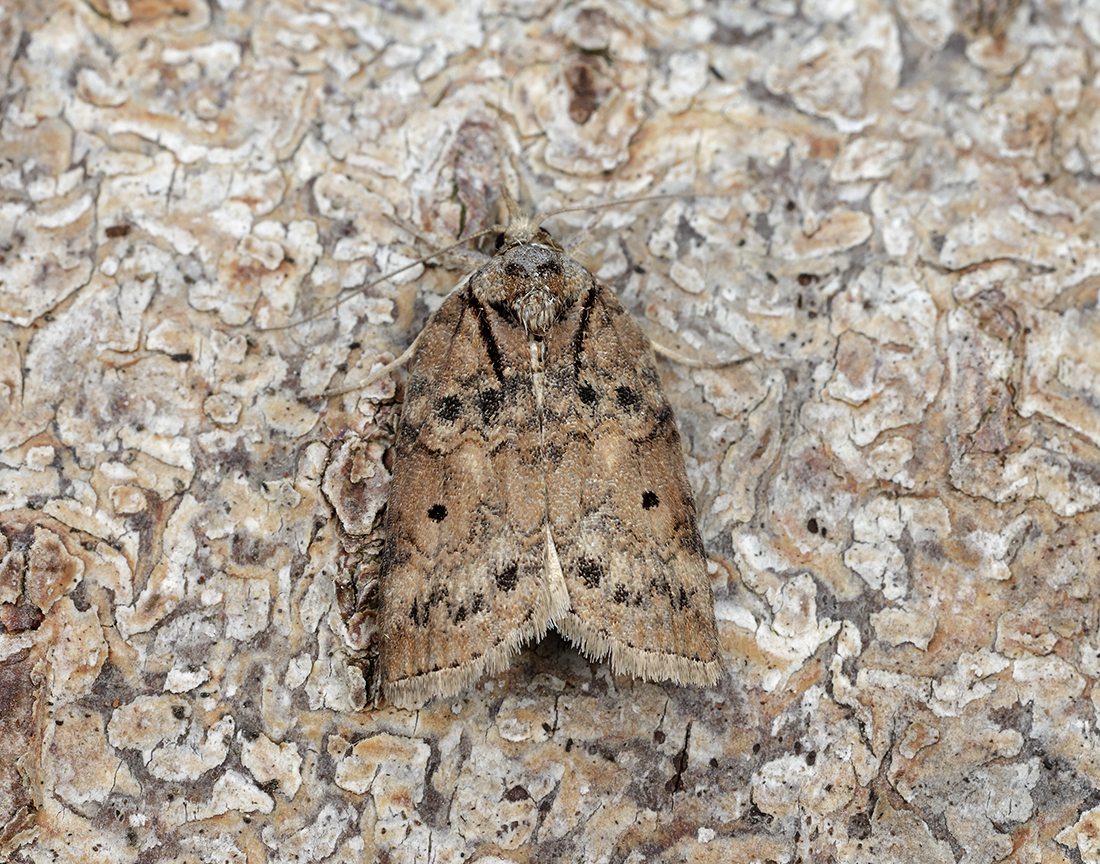
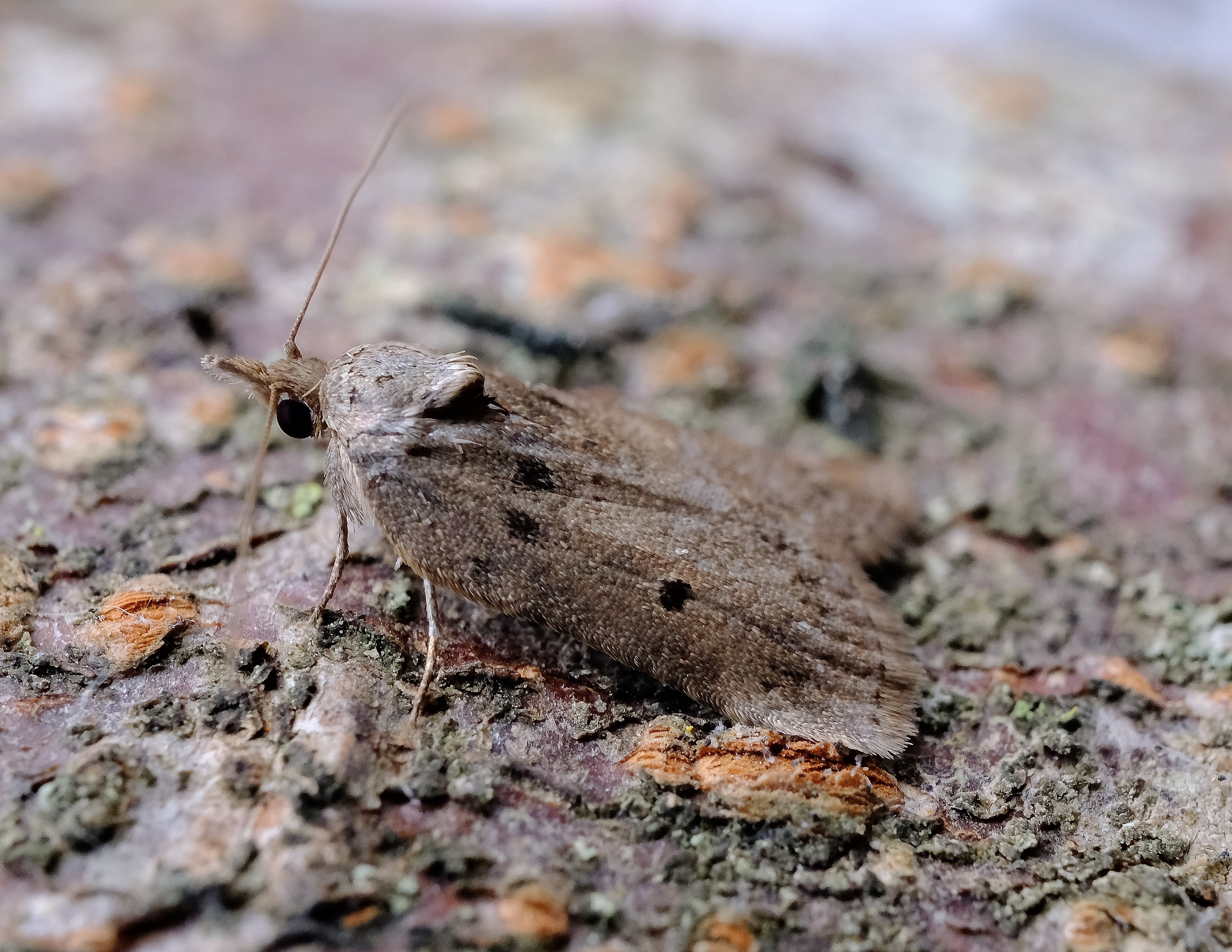
Variable but usually distinctive.
Recording Method.
Attracted to light and sugar.
Life cycle
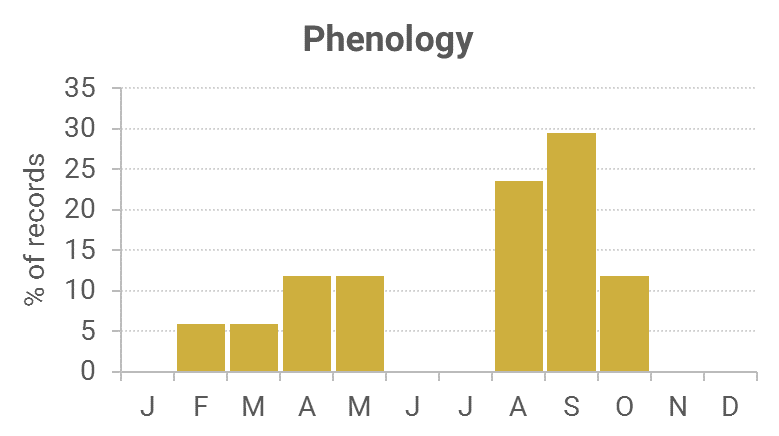
One generation. Overwinters as an adult. Larvae May to July. Pupates in a cocoon on the underside of an oak leaf.
Larval foodplants
Pedunculate Oak and probably Sessile Oak.
Habitat
Broadleaved woodland.
History
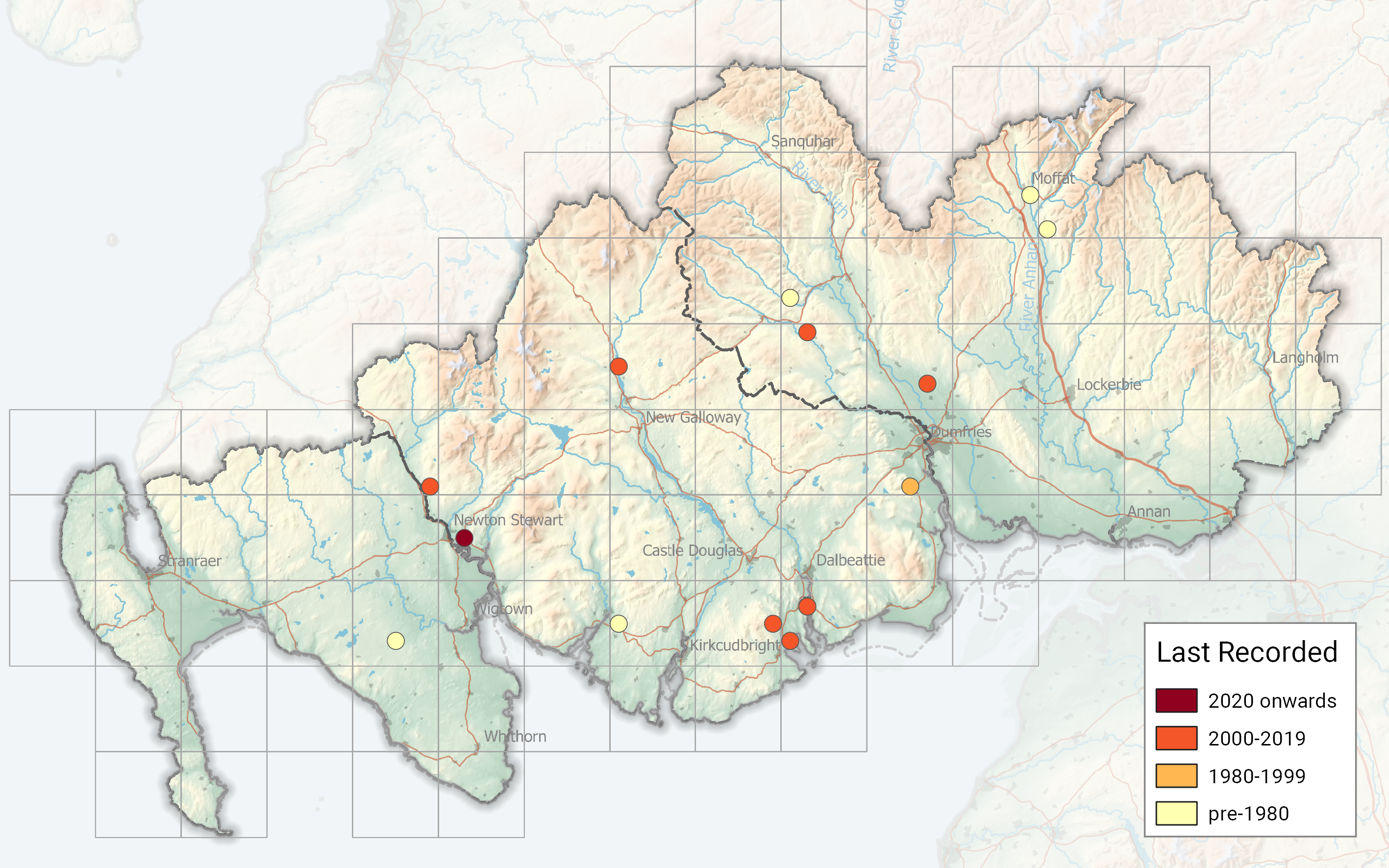
Somerville (1858) during his visit to the Moffat area in August had found the larva on birch, which he bred on, and caught another at Beld Craig Wood (VC72). Gordon (1913) had found it scarce, having taken it on a tree stump in February 1910, beaten from oak during August 1910, on heather bloom during September 1910 and on a dead branch of rhododendron in March, 1912, on berberis during April, 1912; all of these records additional to MOGBI for VC74.
Sir Arthur Duncan (1909-84) during his lifetime had found it at Tynron (VC72).
One was caught at the Gatehouse of Fleet Rothamsted station in 1979, and during 1985-87 it was also caught at the Mabie Forest station on four occasions.
In 2002 one was trapped at Carsfad near Dalry on 5th May, with the only other for the same decade from Palnackie on 7th August 2007.
One of the form rosea was trapped by Auchencairn Bay on 22nd April 2011.