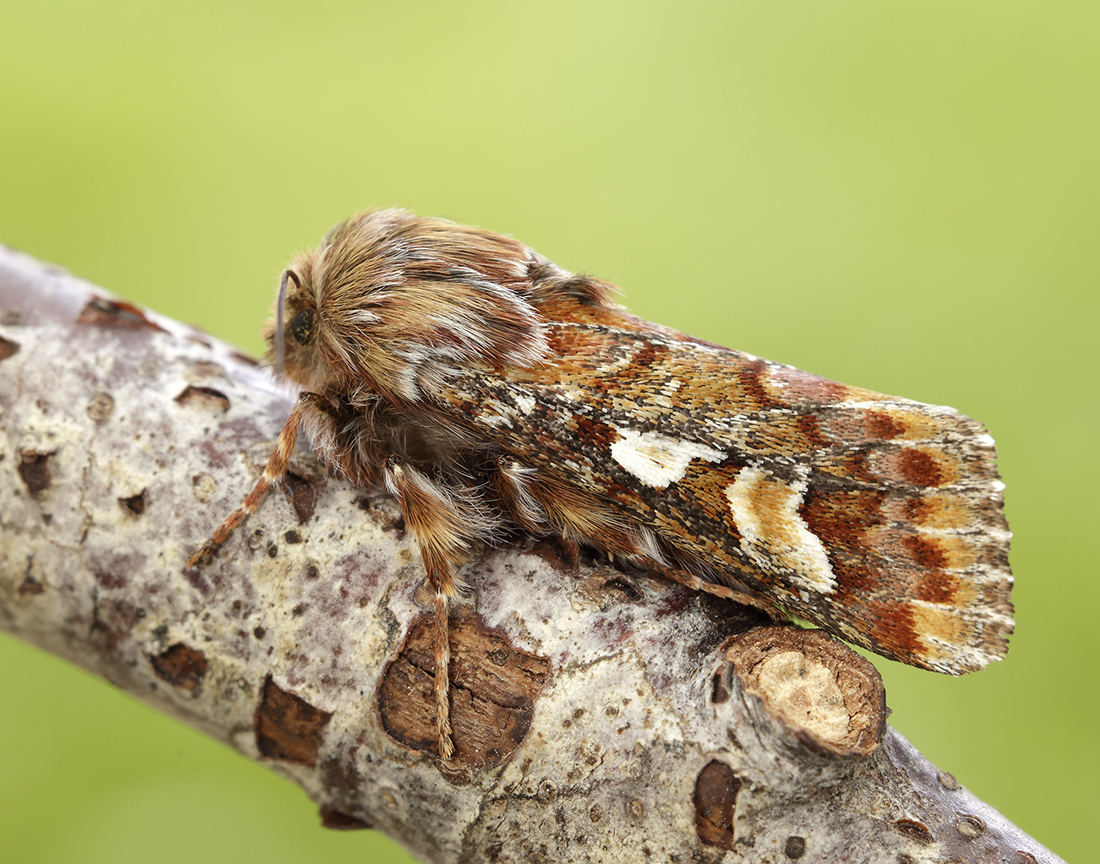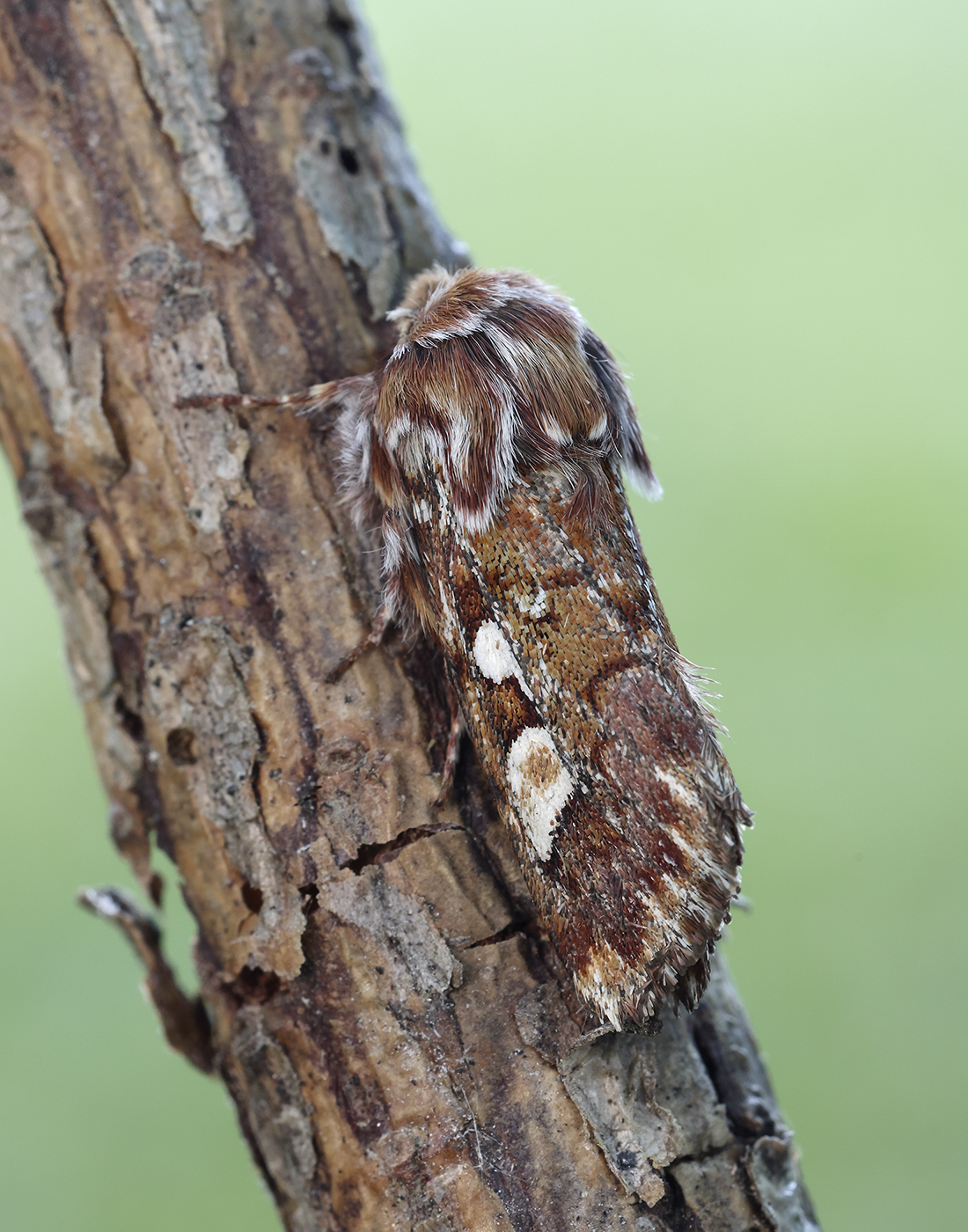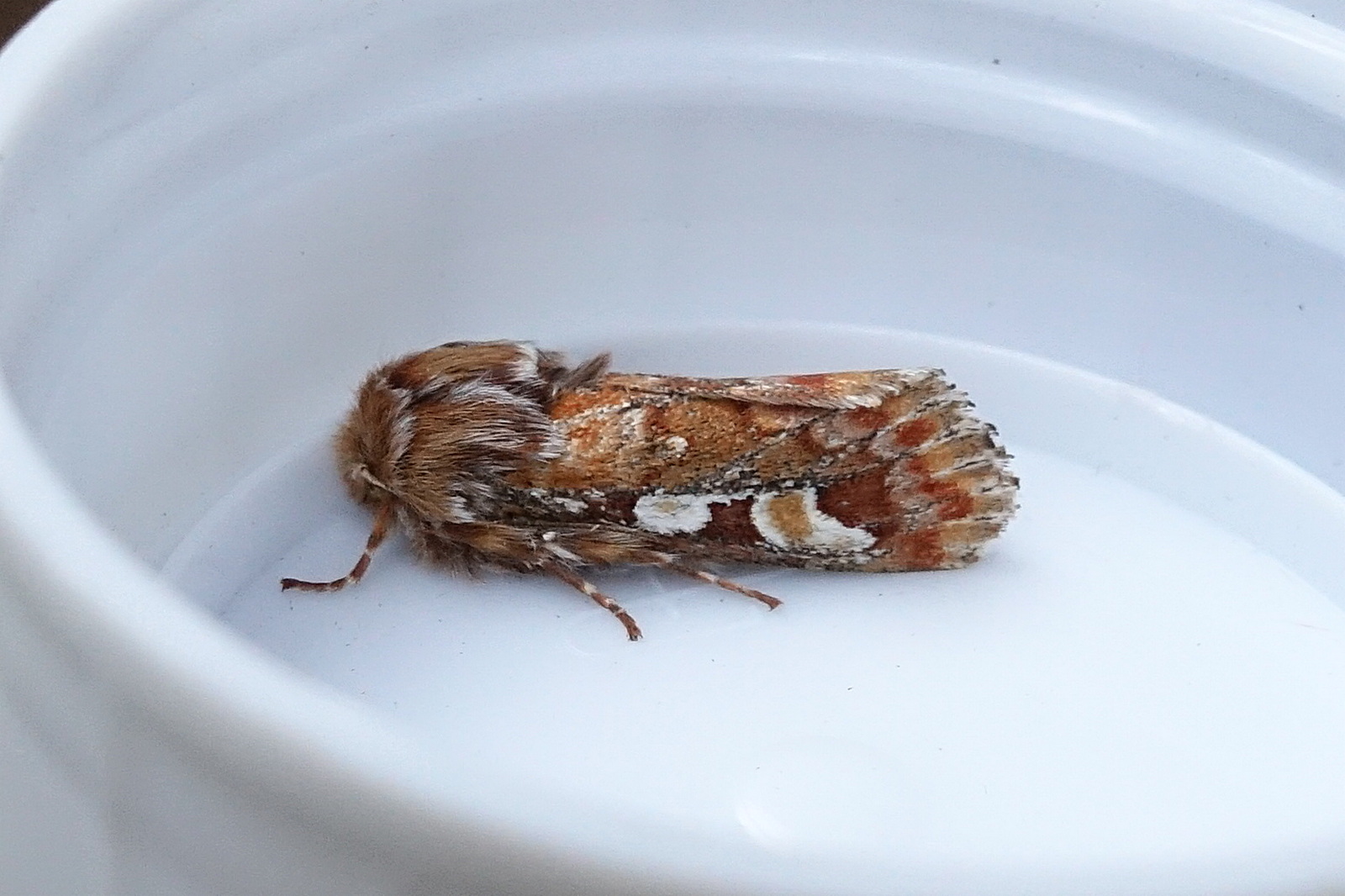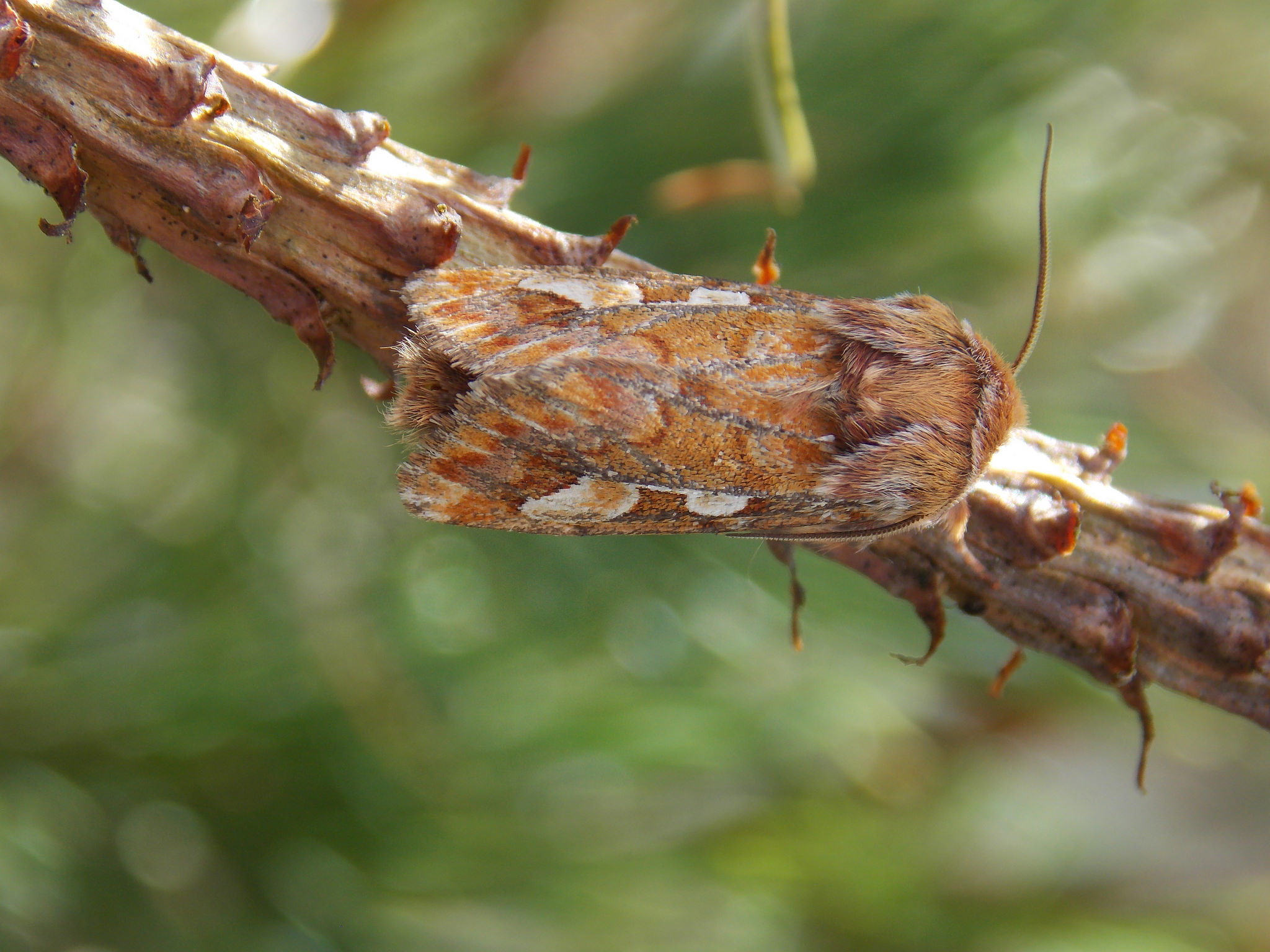

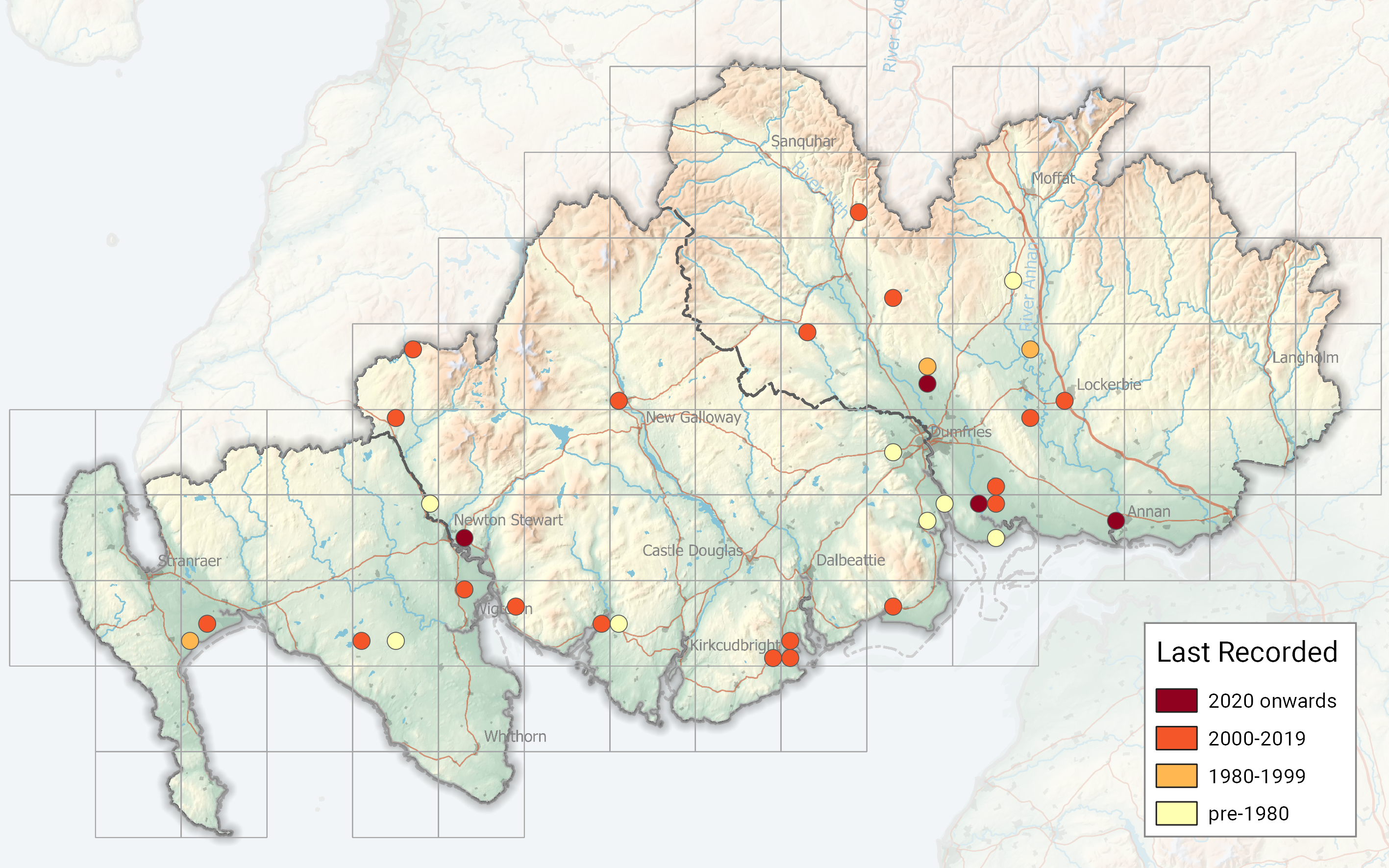
Red List: Least Concern (LC). GB Status: Common.
Identification
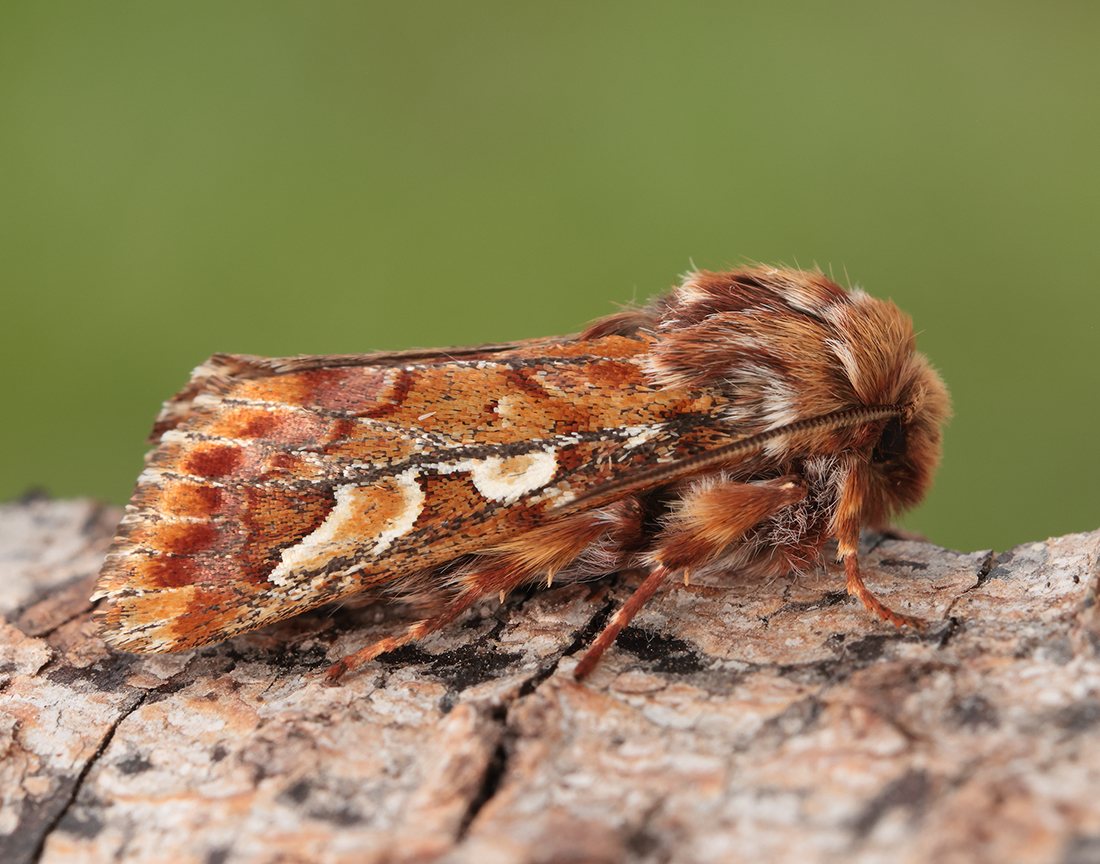
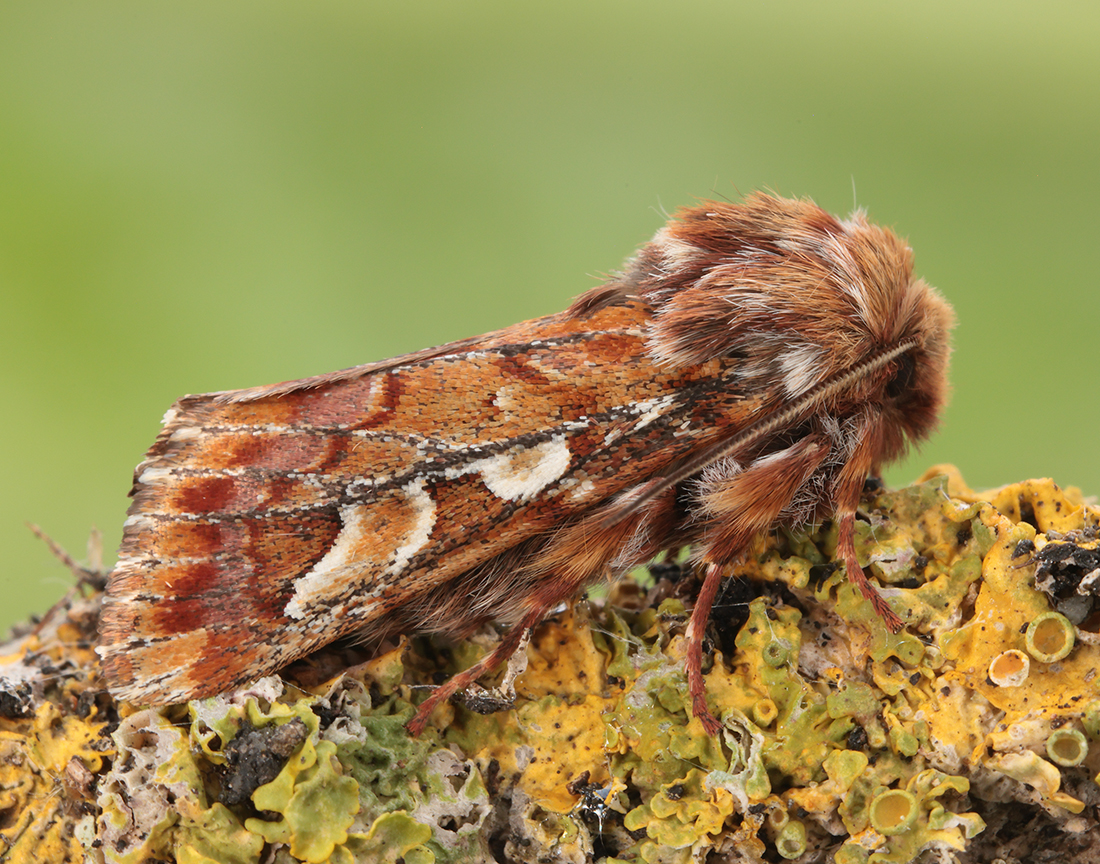
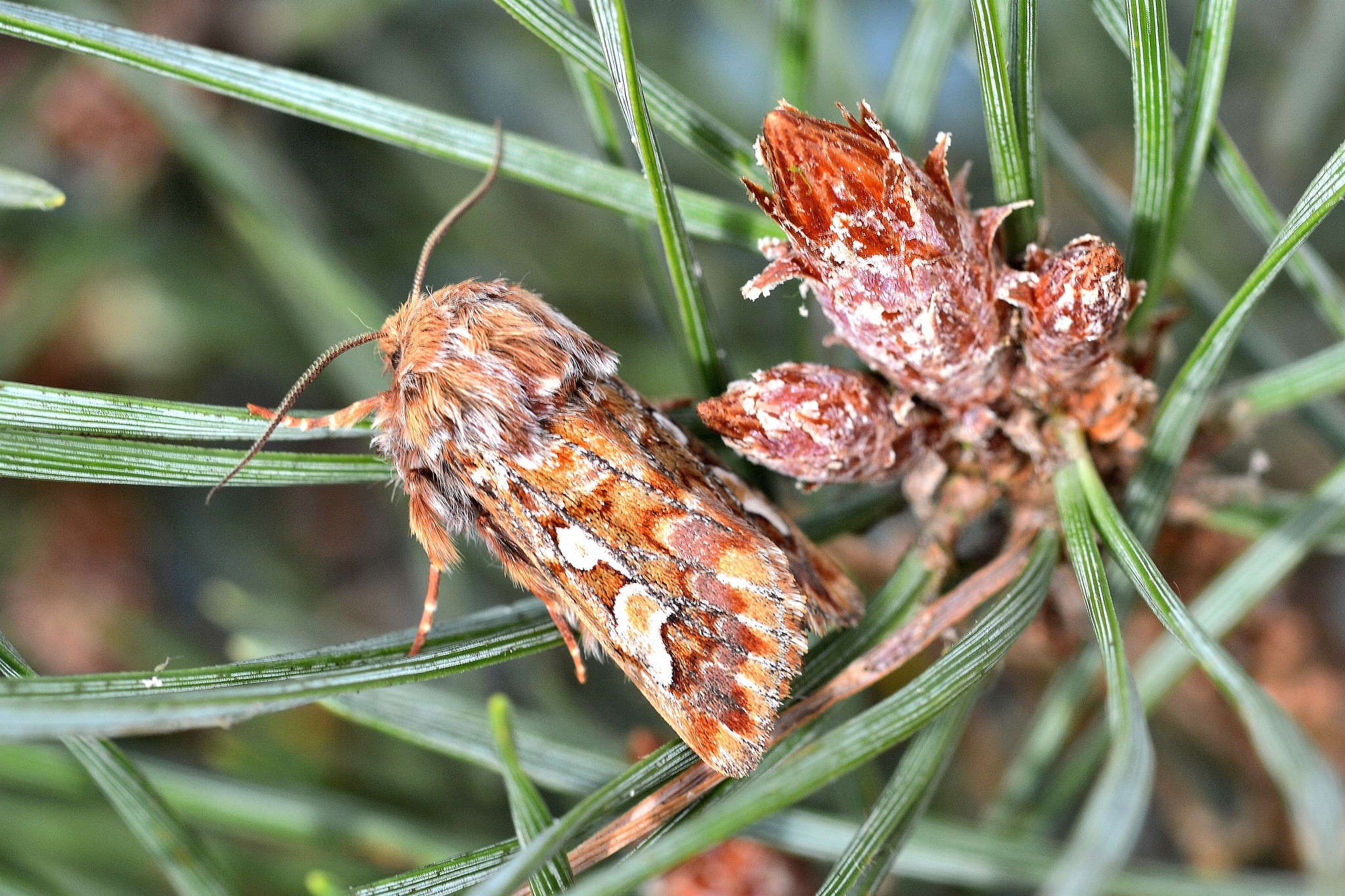
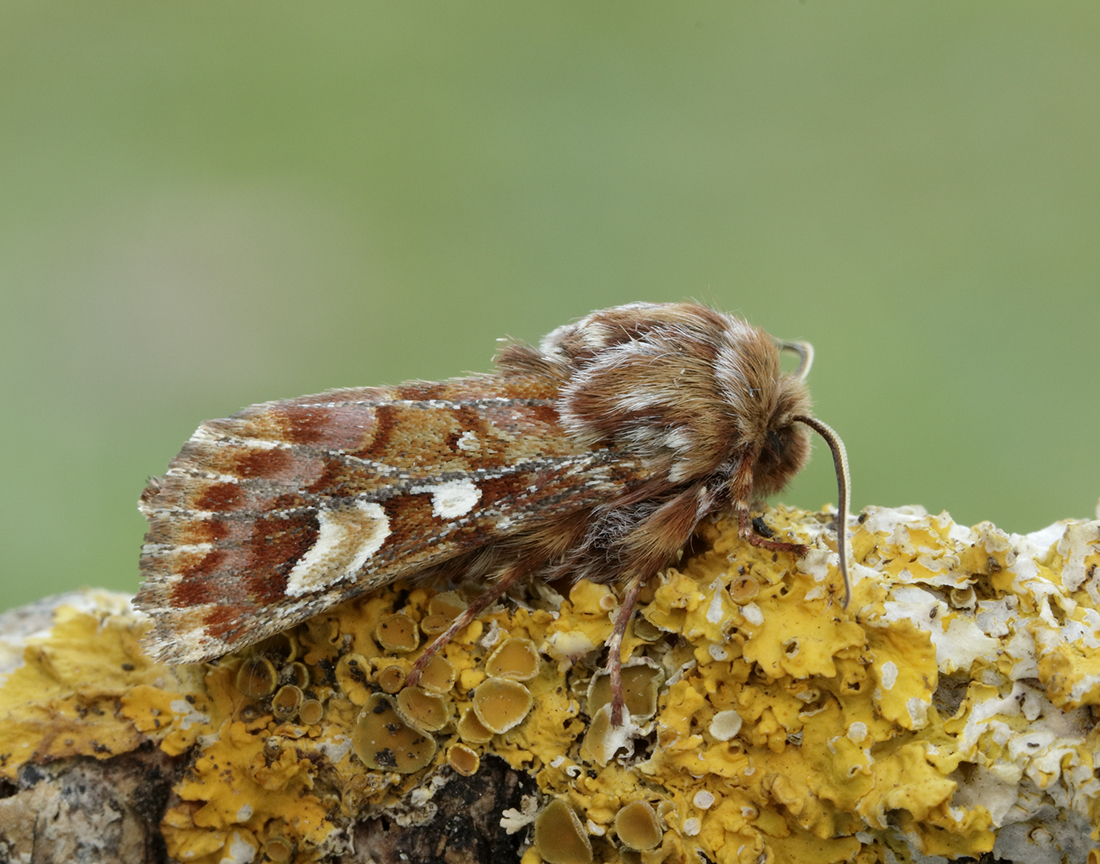
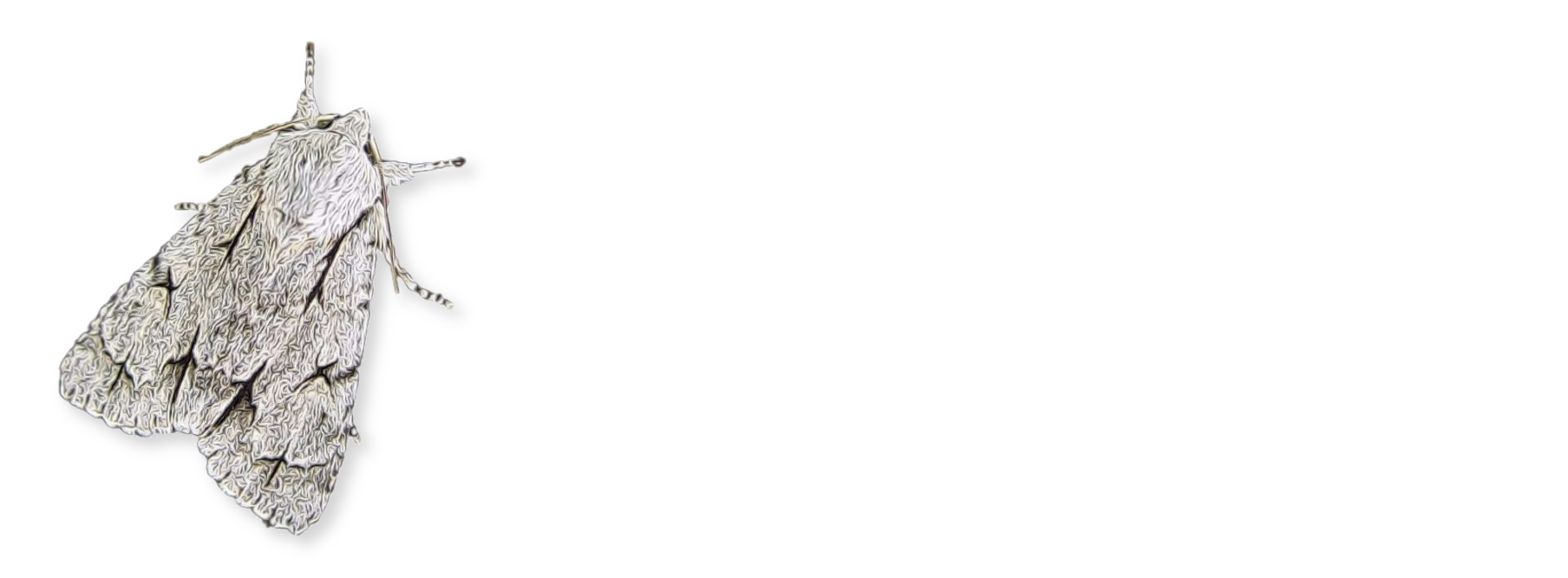
Usually distinctive..
Recording Method.
Attracted to light.
Life cycle
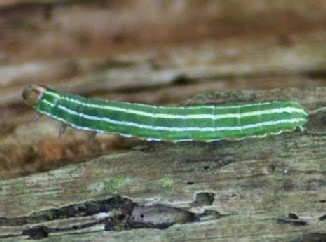
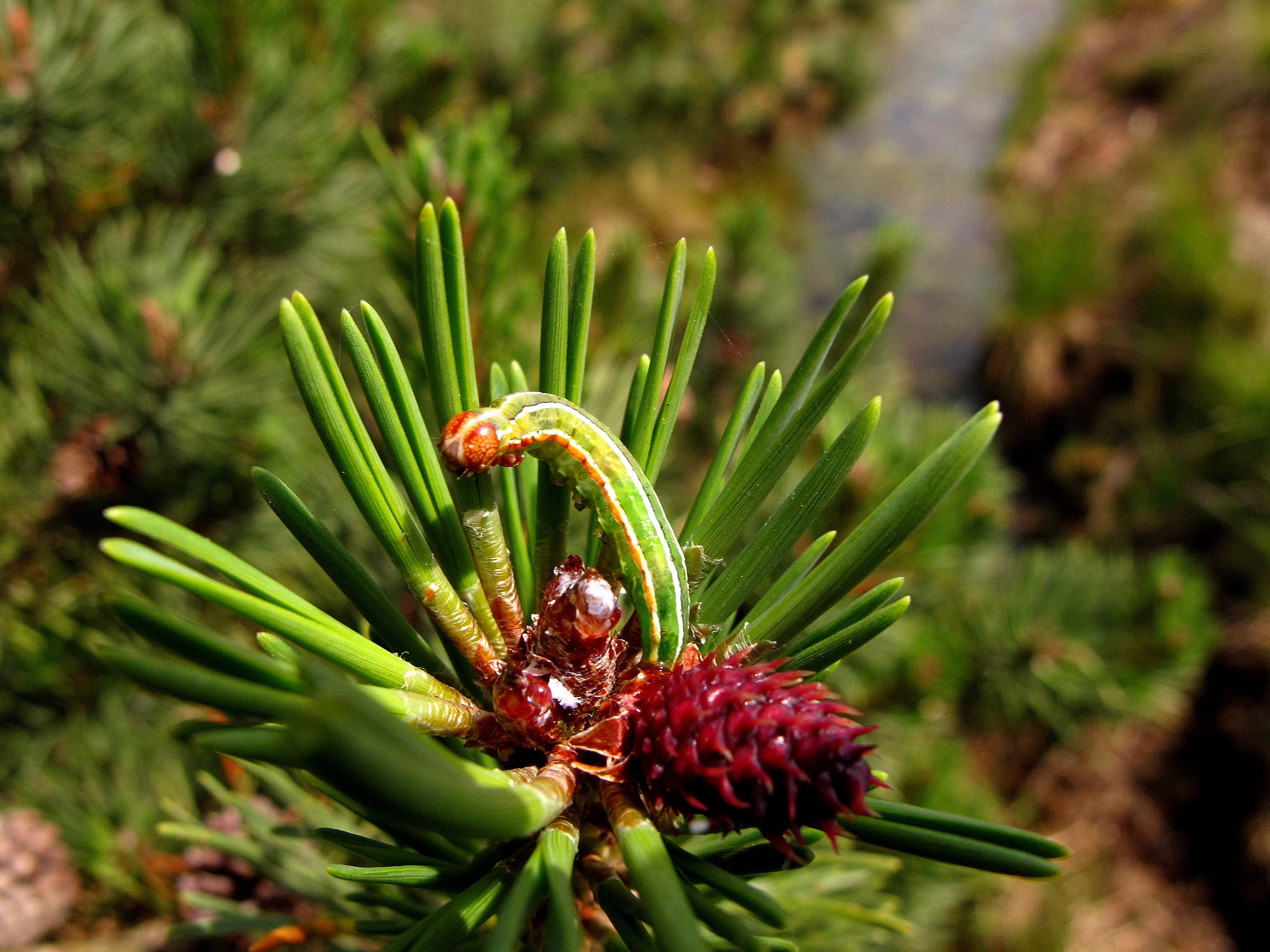
One generation. Overwinters as a pupa. Larvae May to July. Pupates amongst leaf litter or a crevice on a tree trunk.
Larval foodplants
The needles of Scots Pine, Lodgepole Pine, Corsican Pine and occasionally larches.
Habitat
Plantations and pine forests.
History
The earliest notification of this species is published in Stephens (1829) with the Rev. William Little recording it at Raehills (VC72).
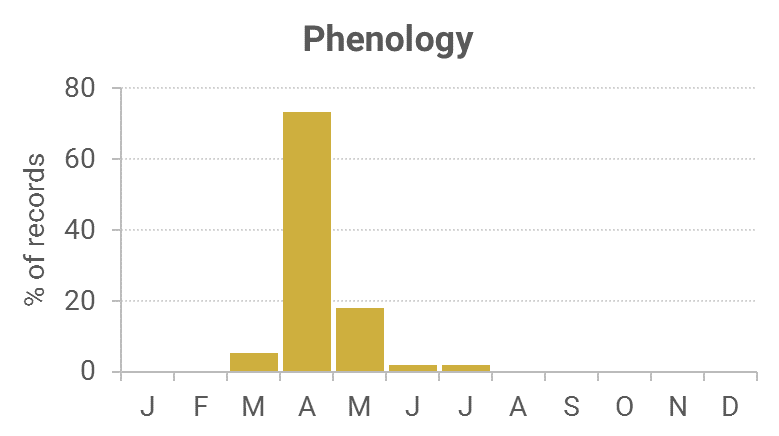
Lennon (1863) had stated that it was very rare, but that it had occurred near Glen Mills (VC72). Gordon (1913) had stated it used to be not uncommon but had now become rare. He had several at sallow blossom at Corsemalzie on 4th April 1896, and one on a daffodil 12 days later. His earliest date was 2nd April 1899 and 1912.
Sir Arthur Duncan (1909-84) during his lifetime had found it on Kirkconnell Flow (VC73).
During 1976-79 it was recorded singly from the Caerlaverock Rothamsted station, twice from the Gatehouse of Fleet station and eleven times from the Penninghame station. In the latter year it was also found by Loch Trool.
From 1994 to 2010 there were sixteen records, from Kirkton, Closeburn and Durisdeer (VC72), Auchencairn, Kirriereoch, Cally Woods, Carsluith and Old Toor (VC73) and Mochrum Loch (VC74). On 12th April 2012, not surprisingly, one was trapped at Eskrigg NR, Lockerbie.