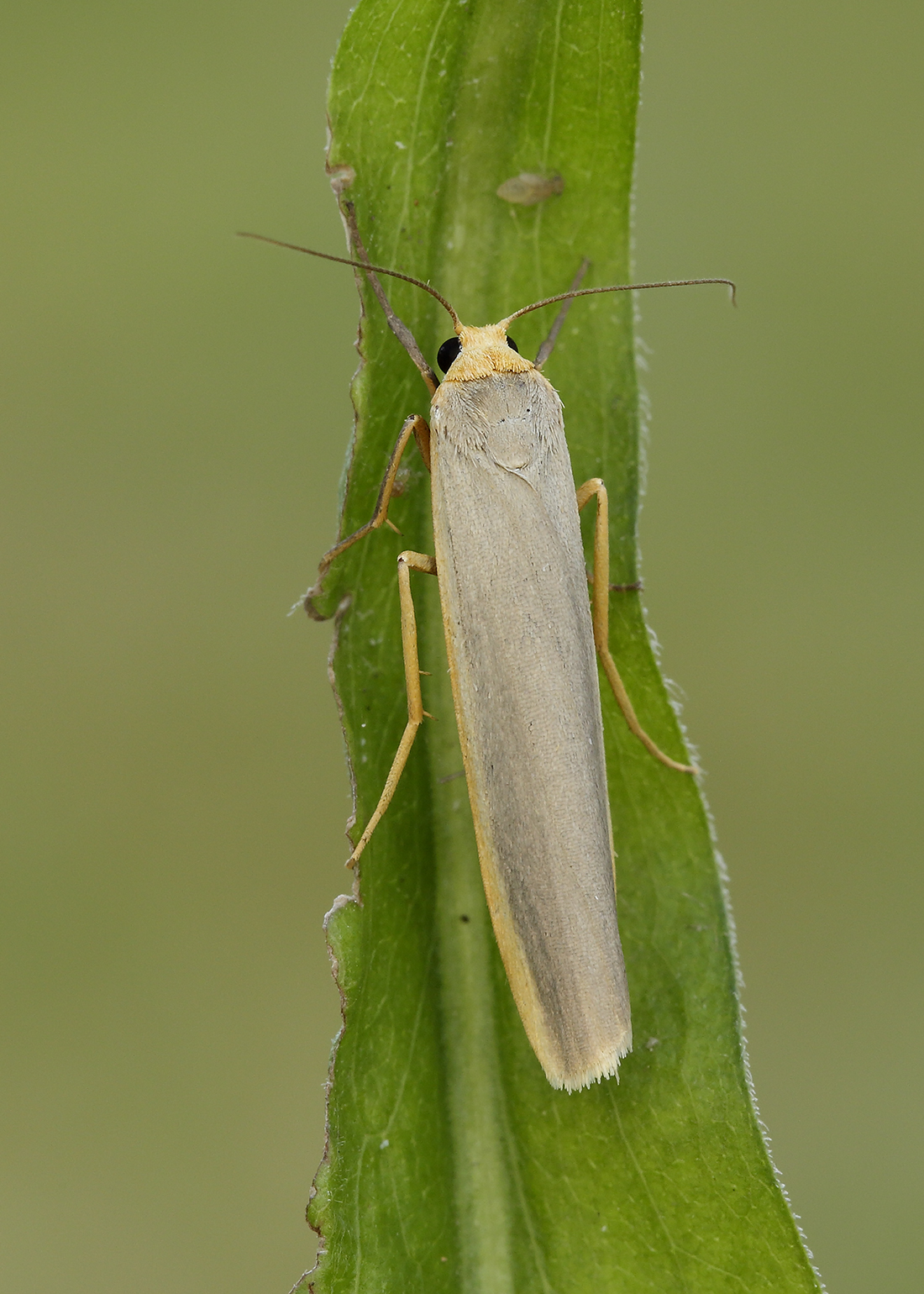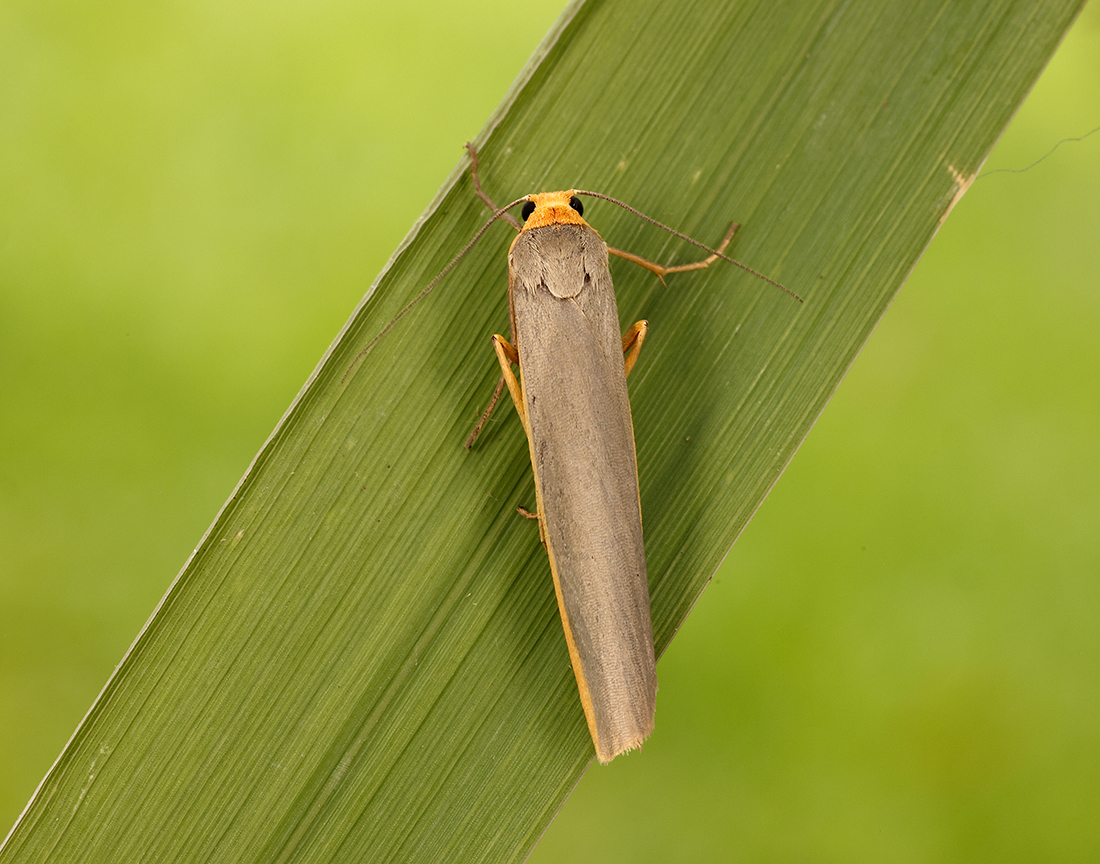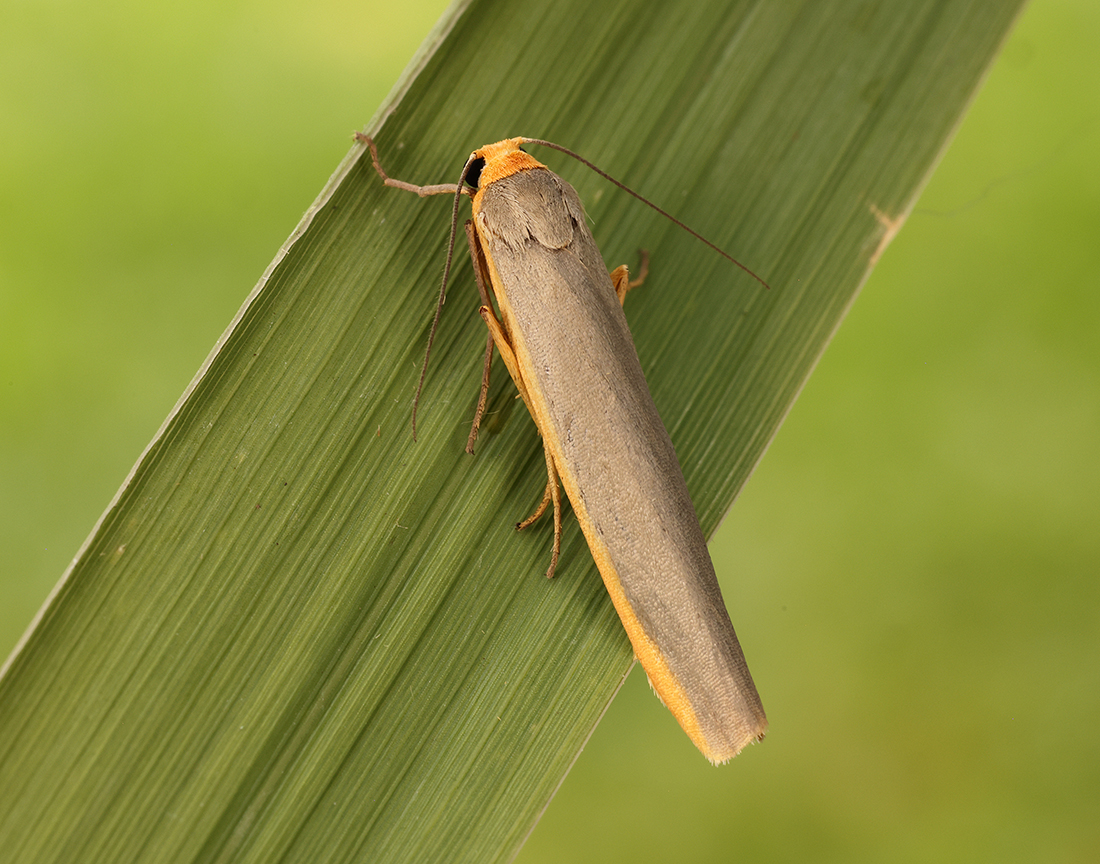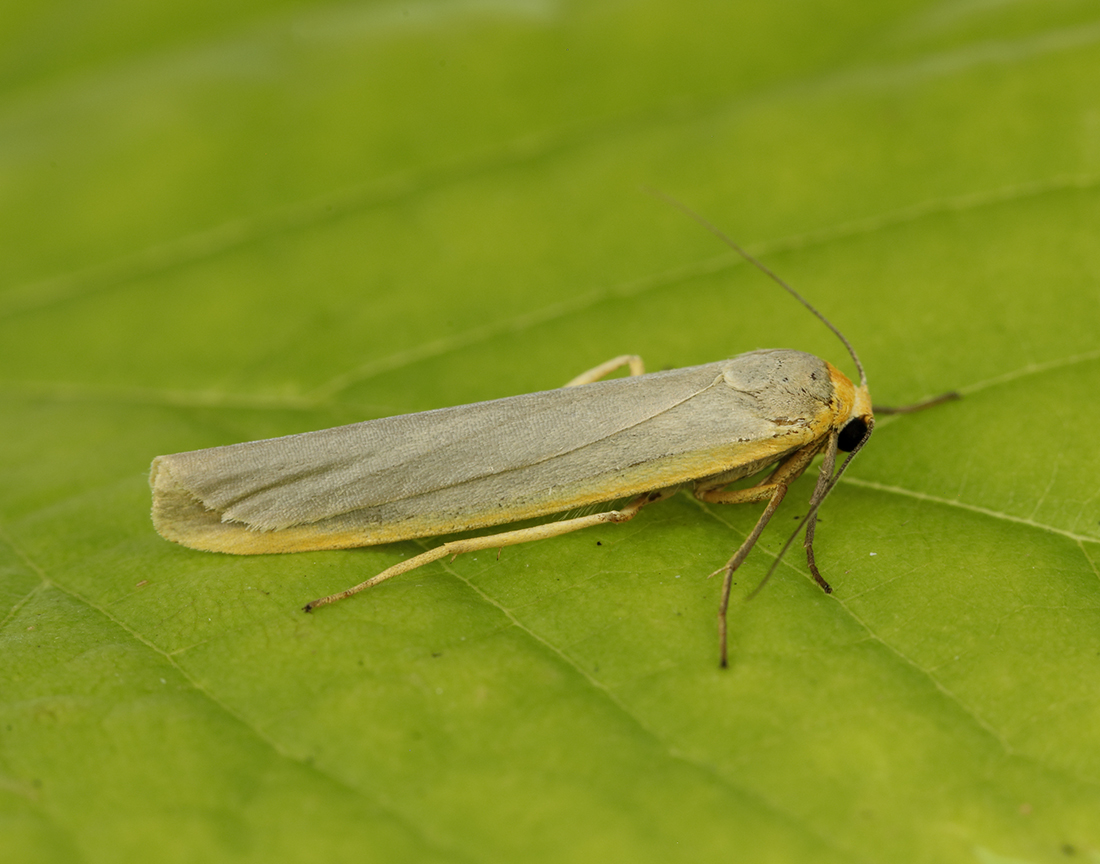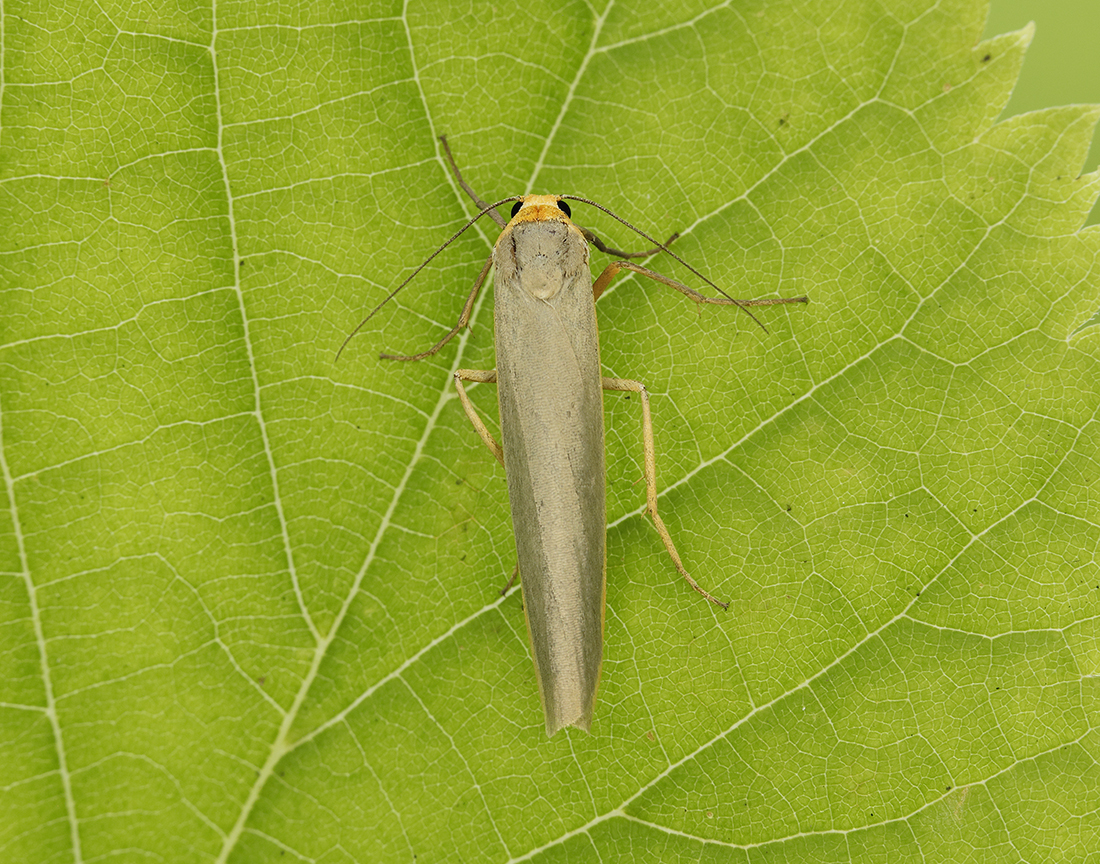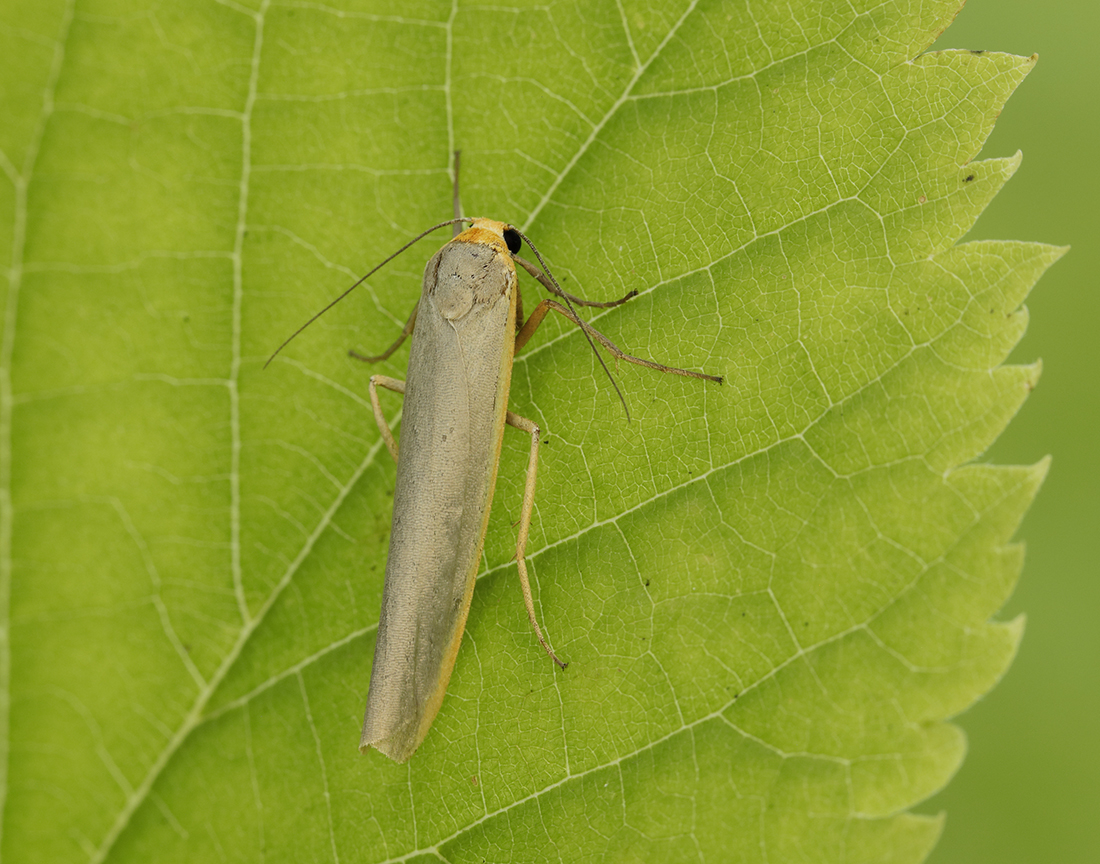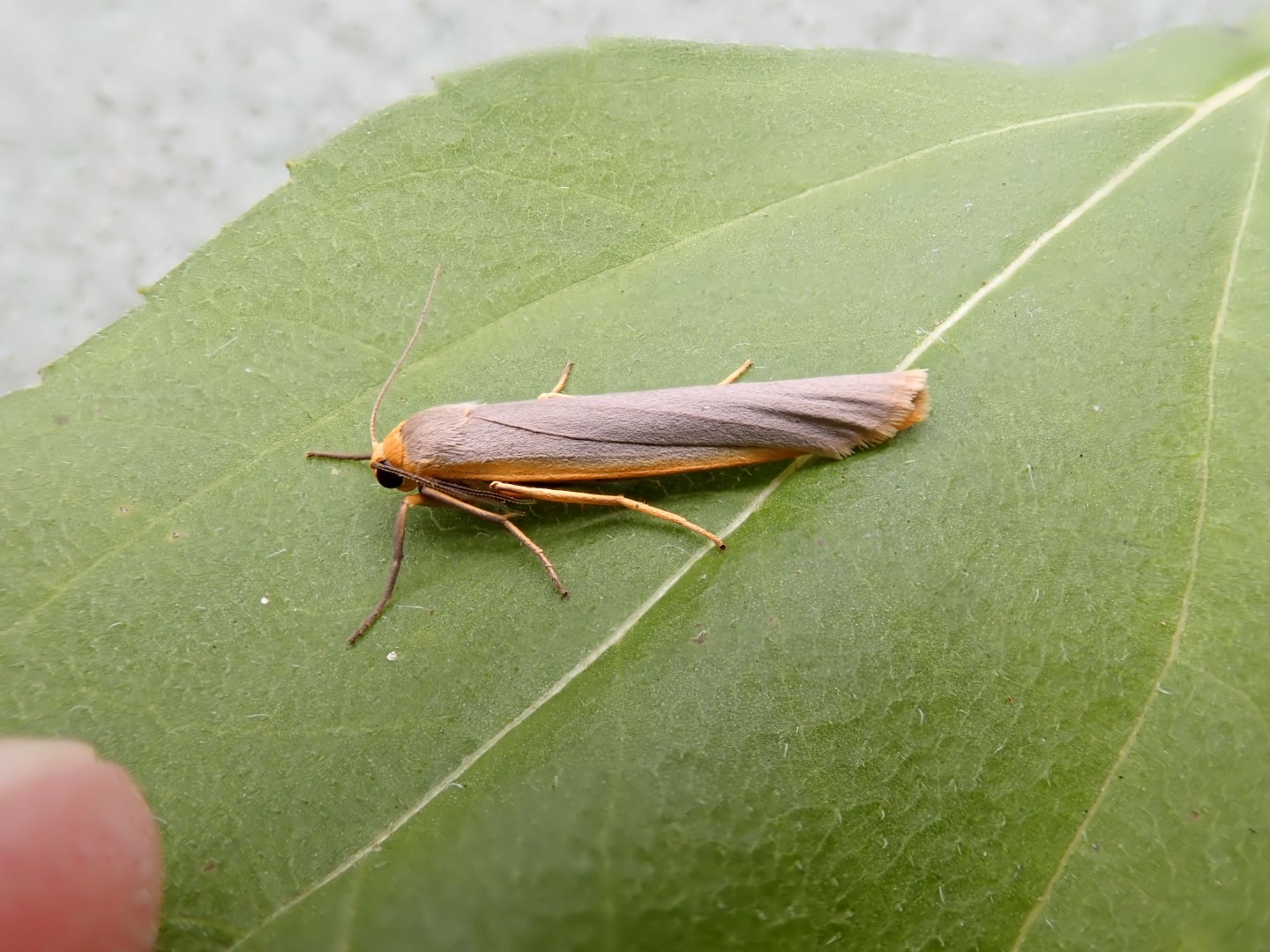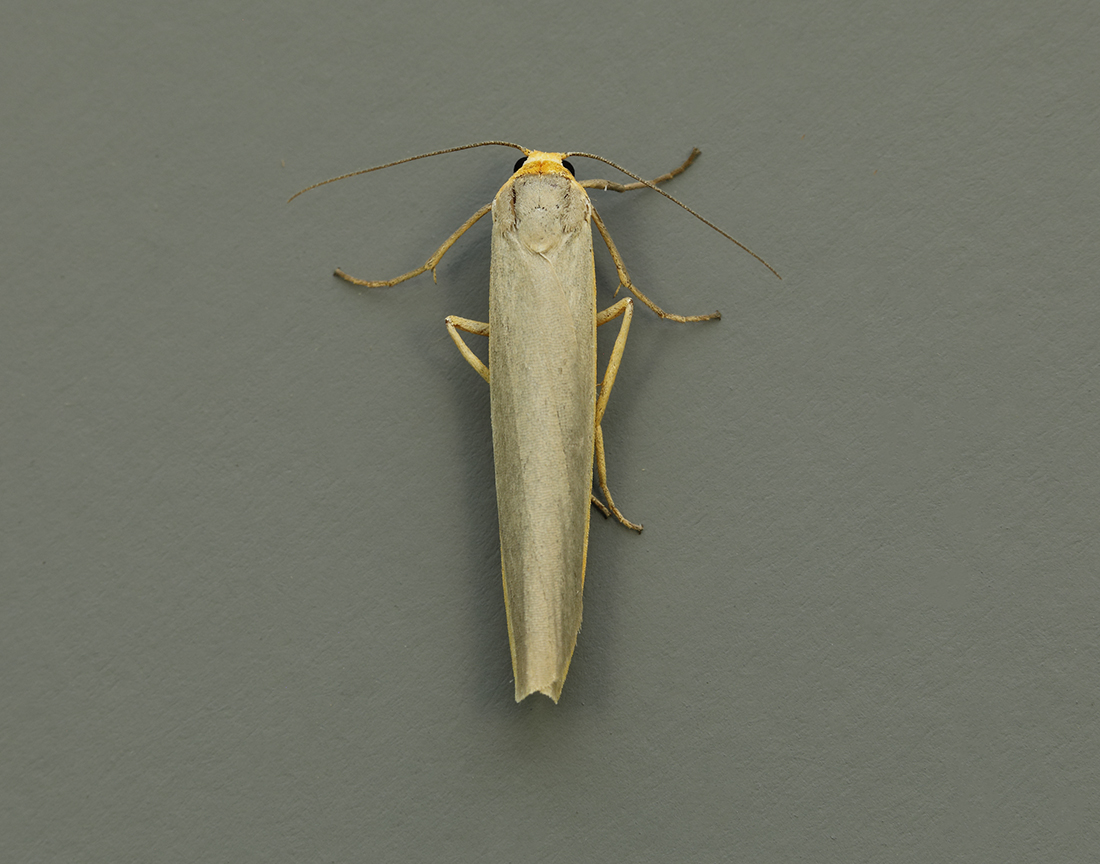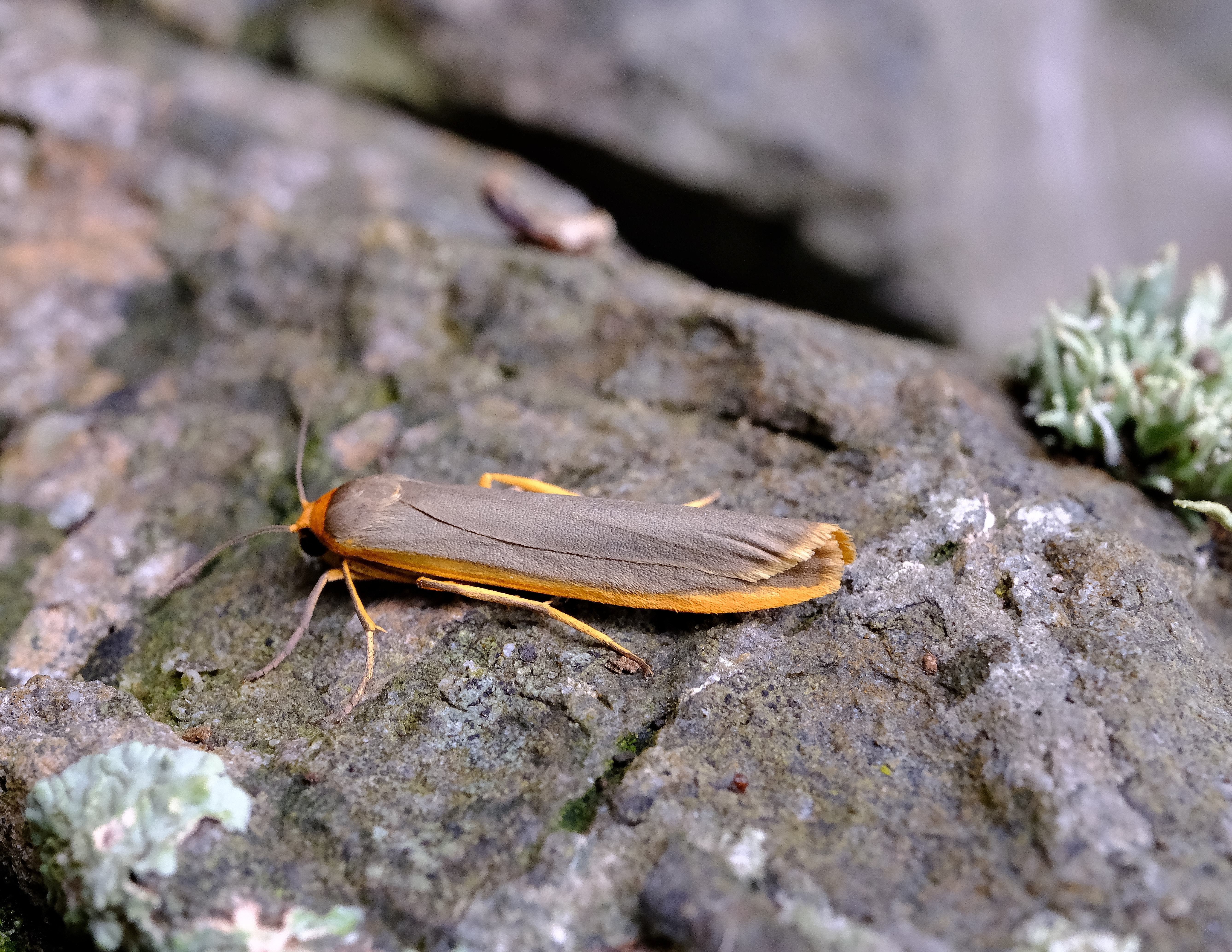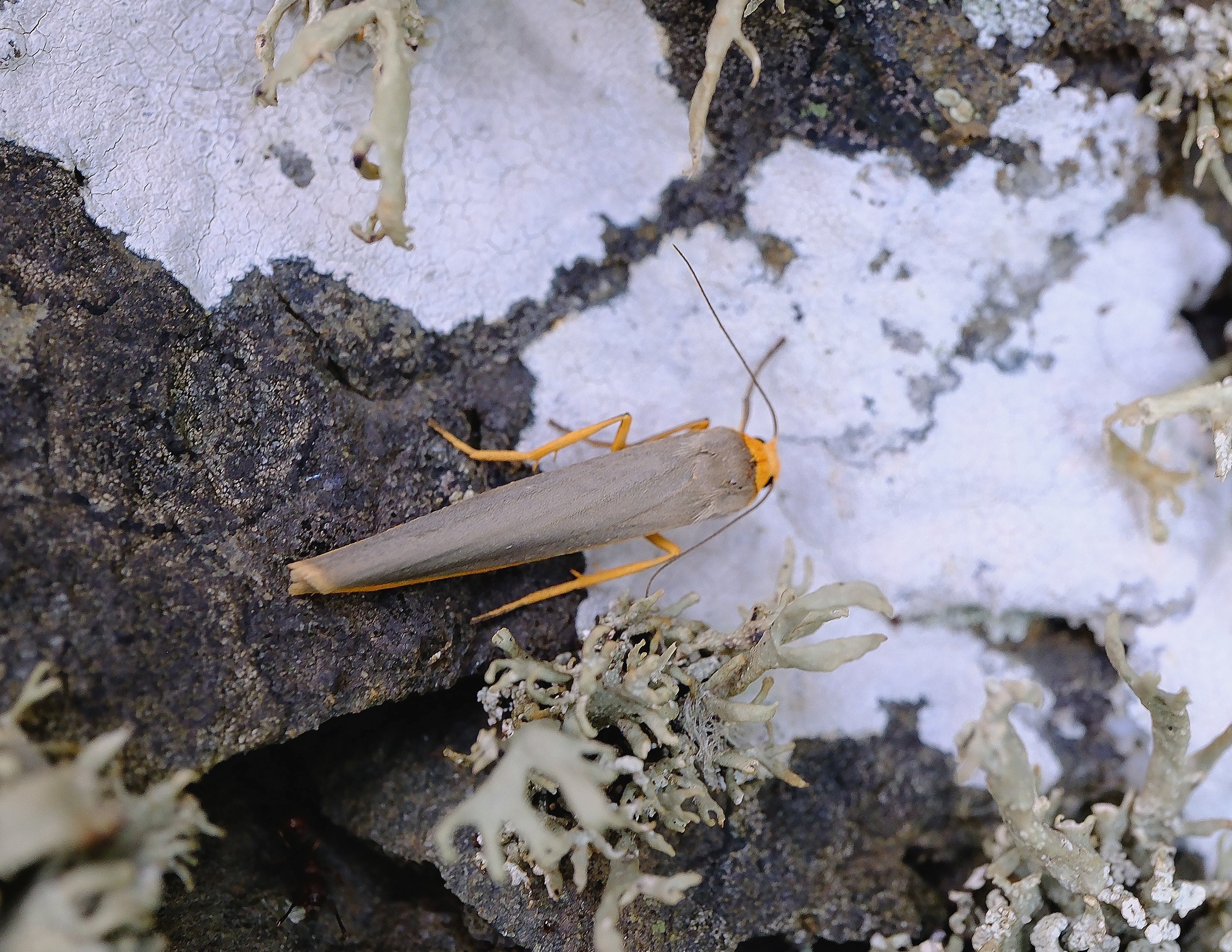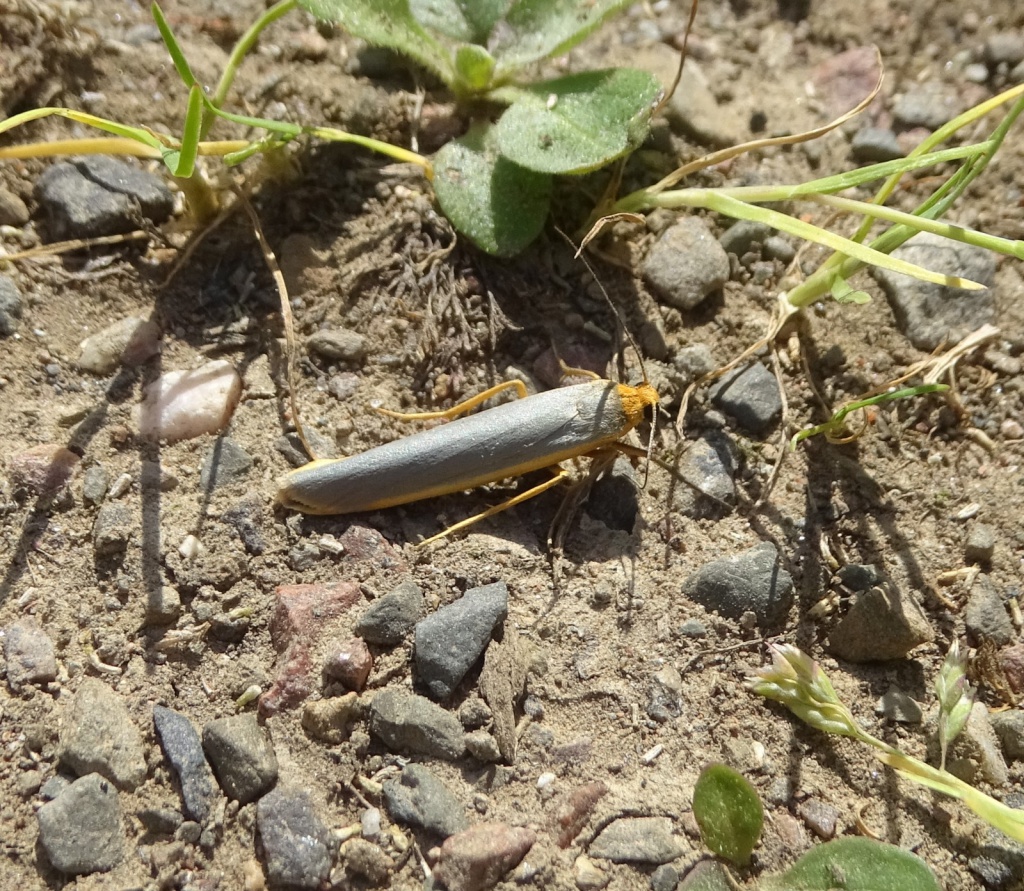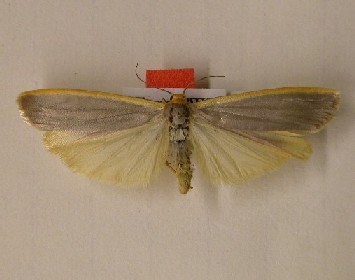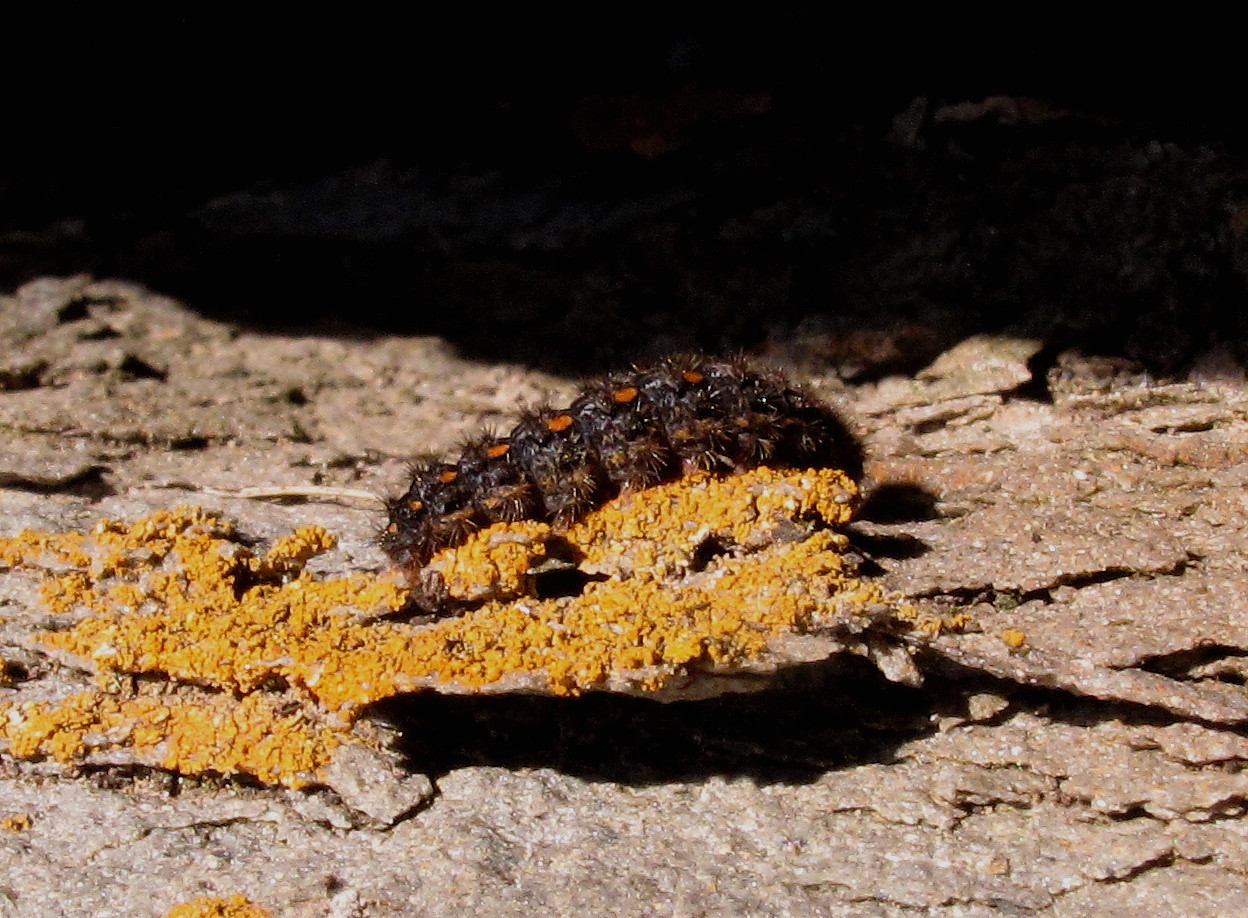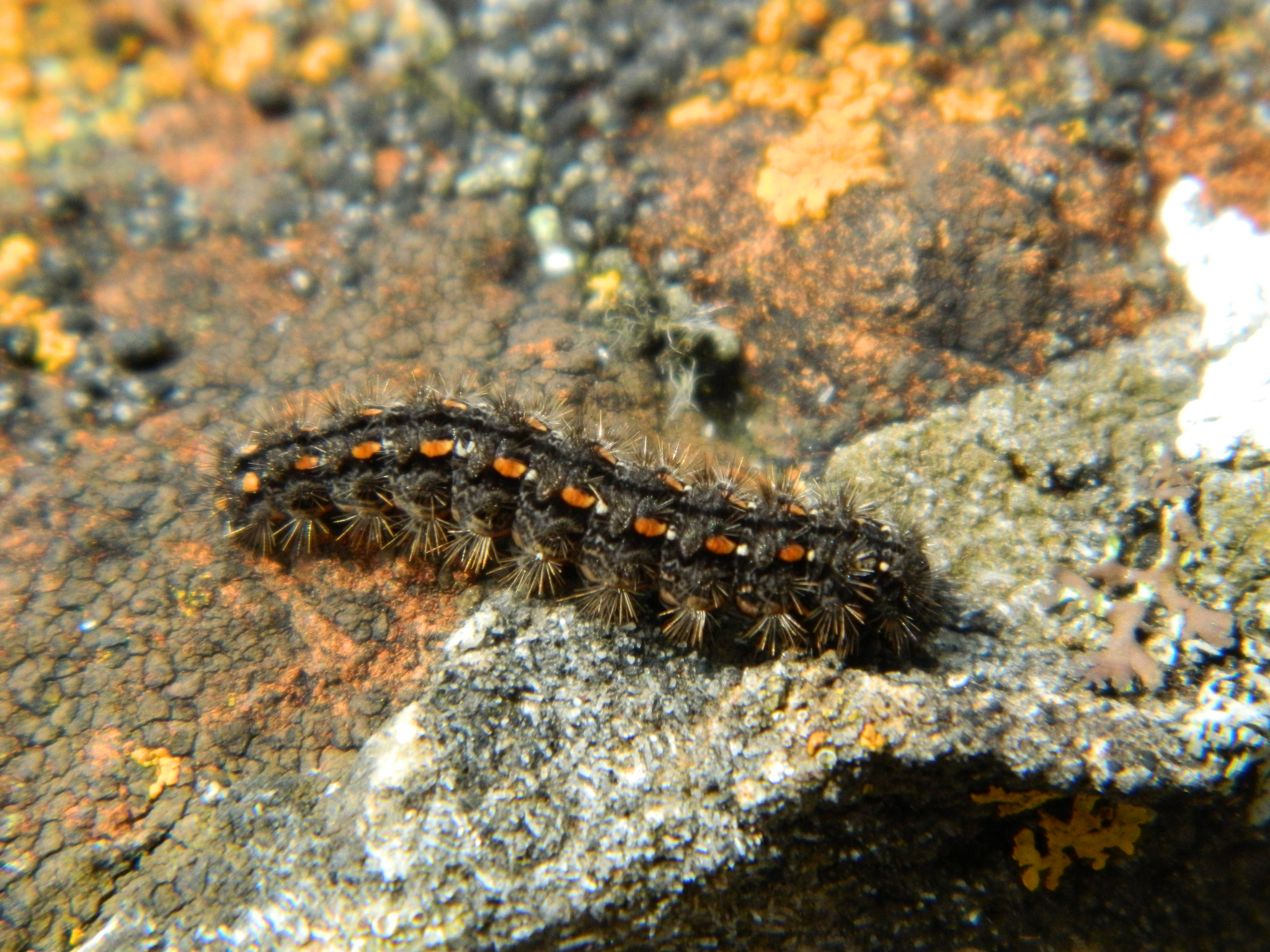

Red List: Least Concern (LC). GB Status: Common.
Identification
Usually distinctive.
Recording Method
Attracted to light.
Life cycle
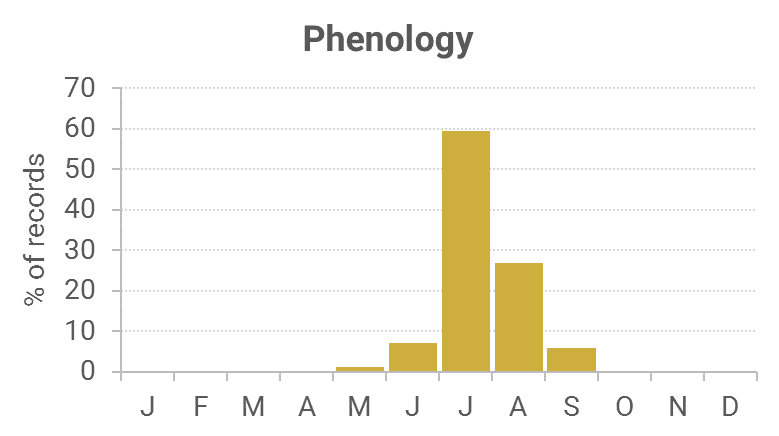
One generation. Overwinters as a small larva.LArvae August to June. Pupates in a cocoon in plant debris or a crevice.
Larval foodplants
Lichens and algae on rocks, posts, branches and walls.
Habitat
Mainly on heathland, moorland and coastal sites, but also woodland and gardens.
History
It was not recorded in MOGBI for our Region, the nearest records being the Isle of Man and coastal north Lancashire. However, Lennon (1863) had found it not common, but had a record from Marchmount (VC72). Gordon (1913) had only a single specimen to record – from Miss D. Jackson who received one from the Mull of Galloway lighthouse.
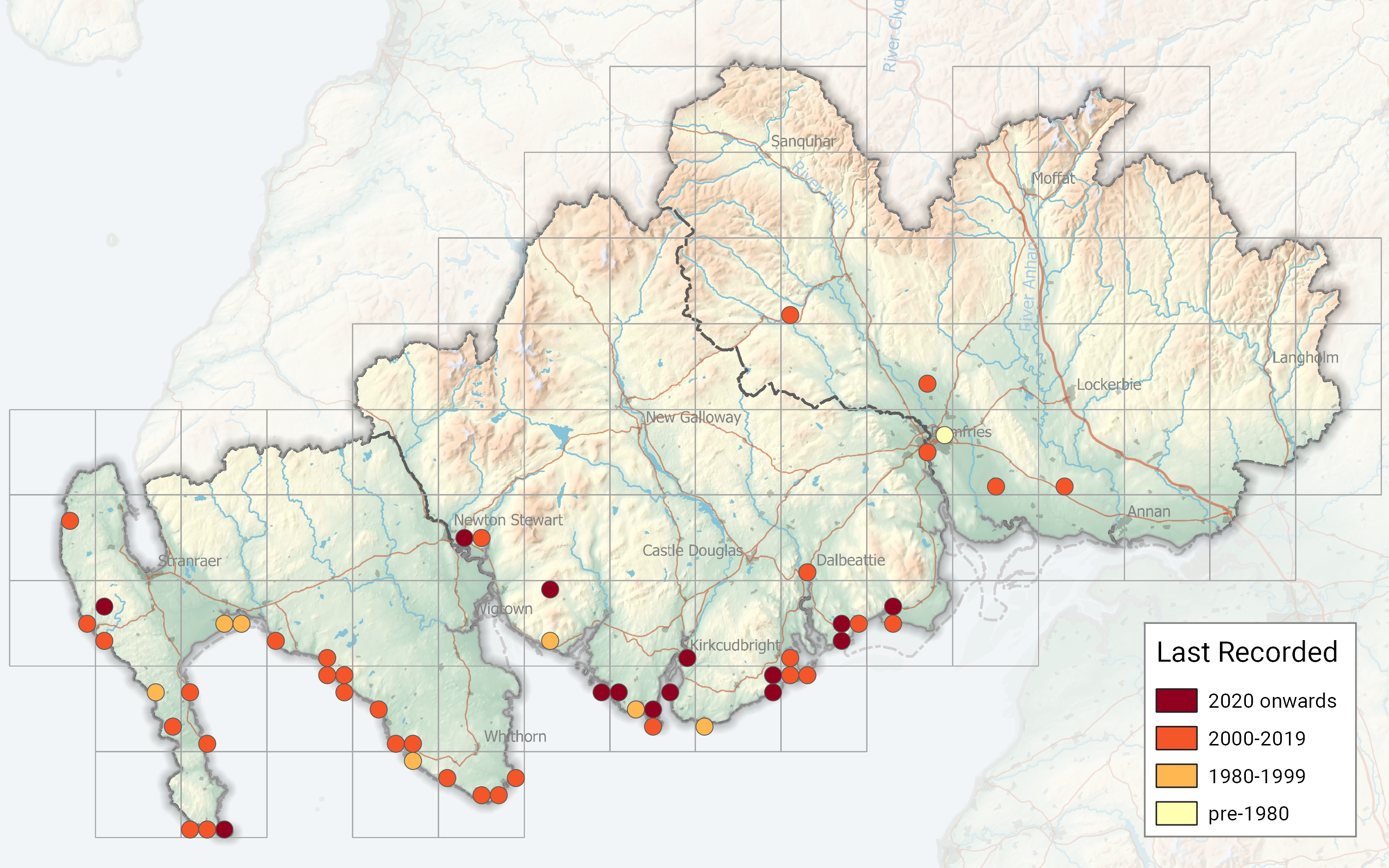
Sir Arthur Duncan had found it at Portling (VC73) in August 1976 and Torrs Warren in 1984. B. and I. D. Wallace of the Liverpool Museum in 1985 found larvae feeding on lichens on rocks at the coast, being found at Ravenshall Point, Borness near Borgue (VC73), Port Kale and Portpatrick (VC74). These were later determined by D. Carter of the BMNH as this species.
From 1992 to 2010 there were fifty records recorded from a number of widespread coastal sites in Kirkcudbrightshire and Wigtownshire, with one inland site at Kirkland, Dumfriesshire, recording it.
Ratcliffe (2007) p. 83, says: ‘…has proved to be widespread on rocky and pebbly shorelines and even saltmarsh.’
Northern Footman f. sericea (Gregson, 1860) was previously regarded as a separate species with seven records in D&G, covering all three VCs, of what appears to be this form. The early stages and genitalia are identical to Scarce Footman; Northern Footman is now amalgamated with Scarce Footman.