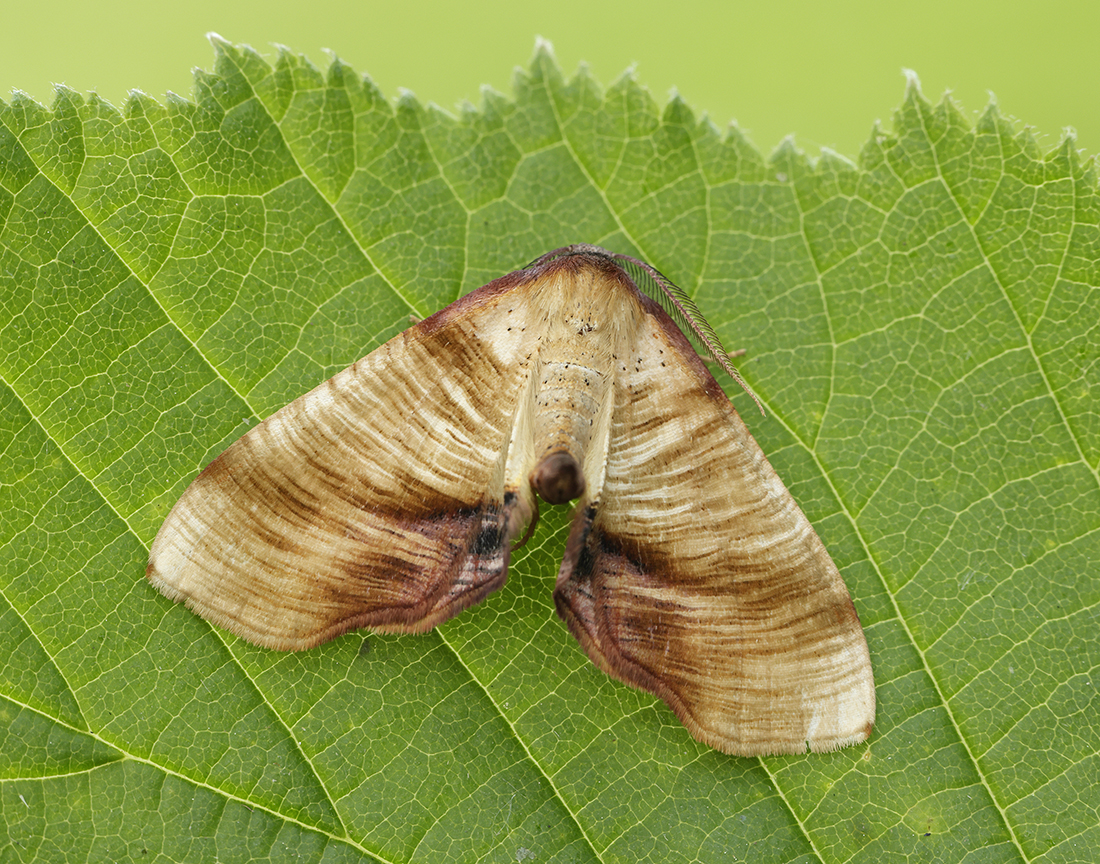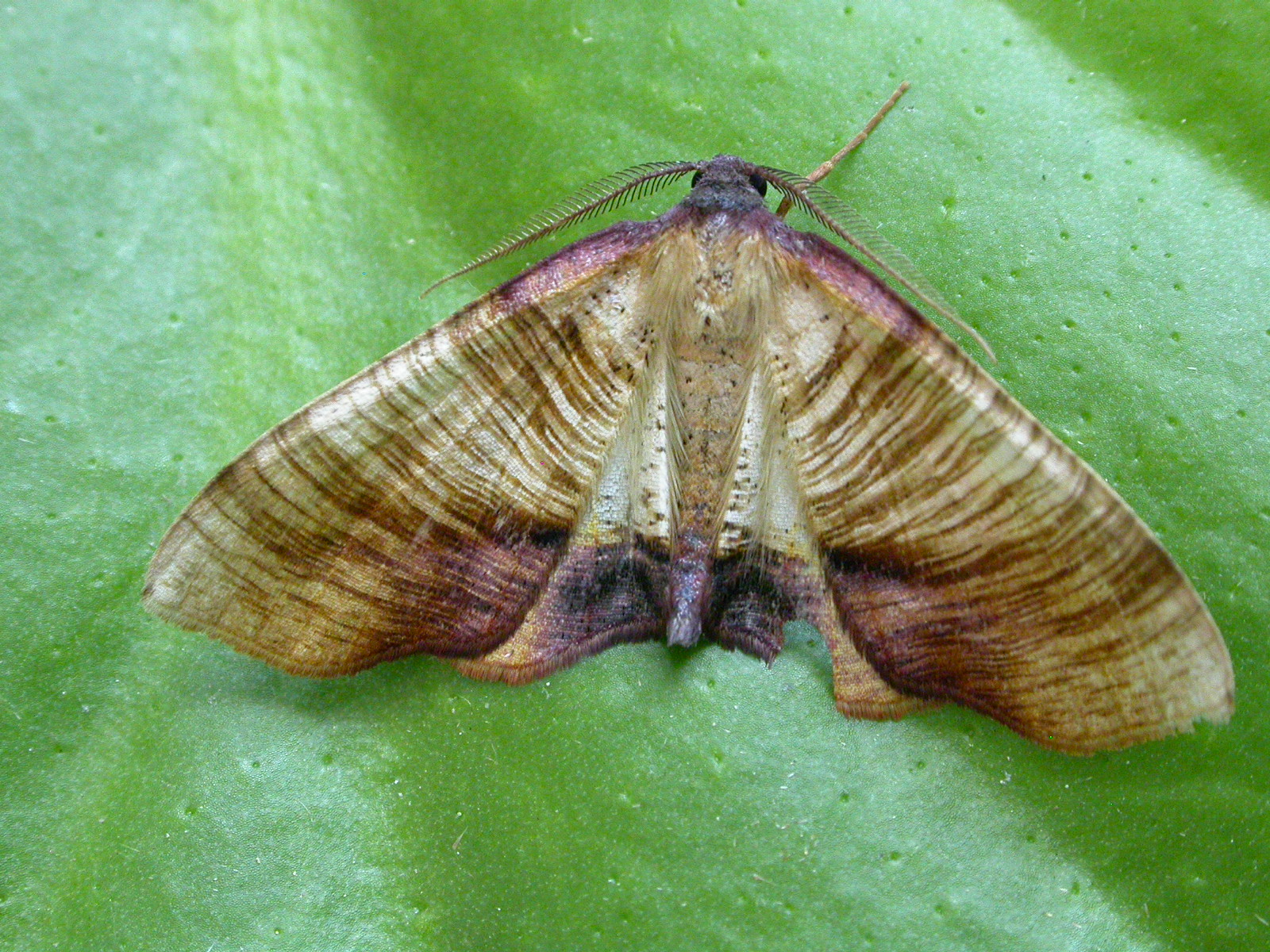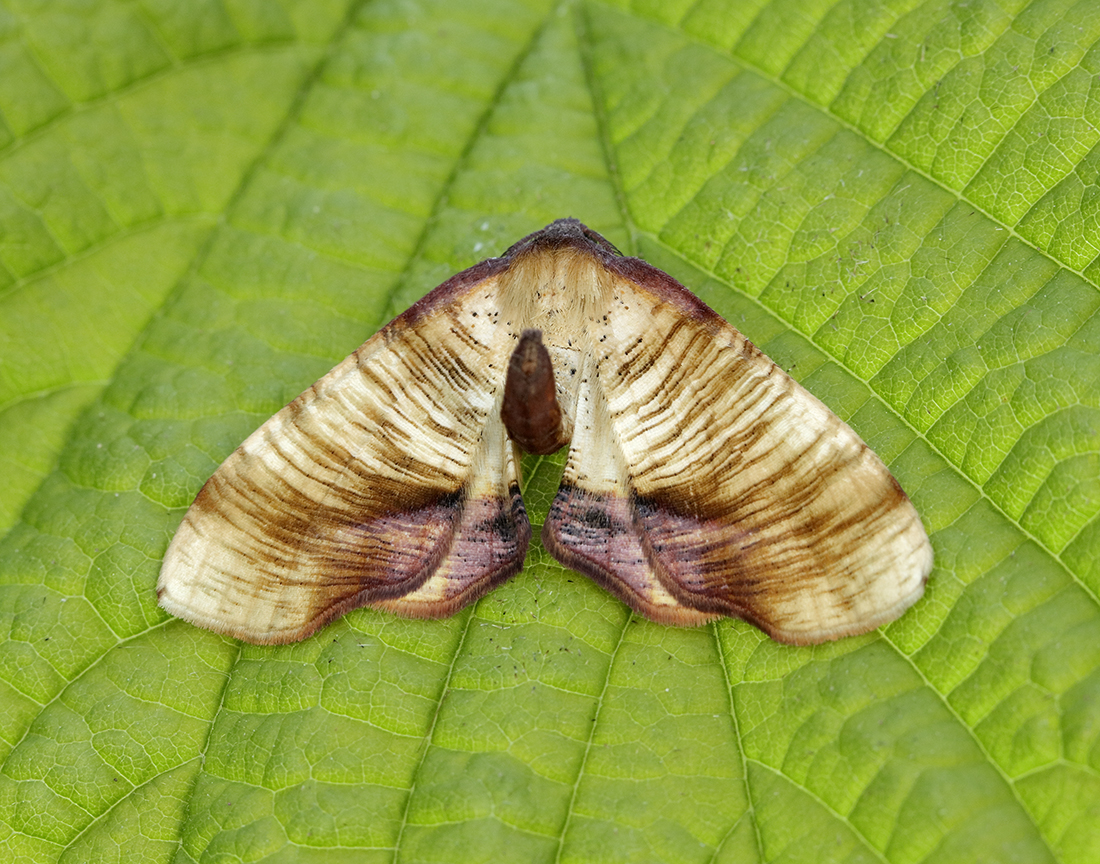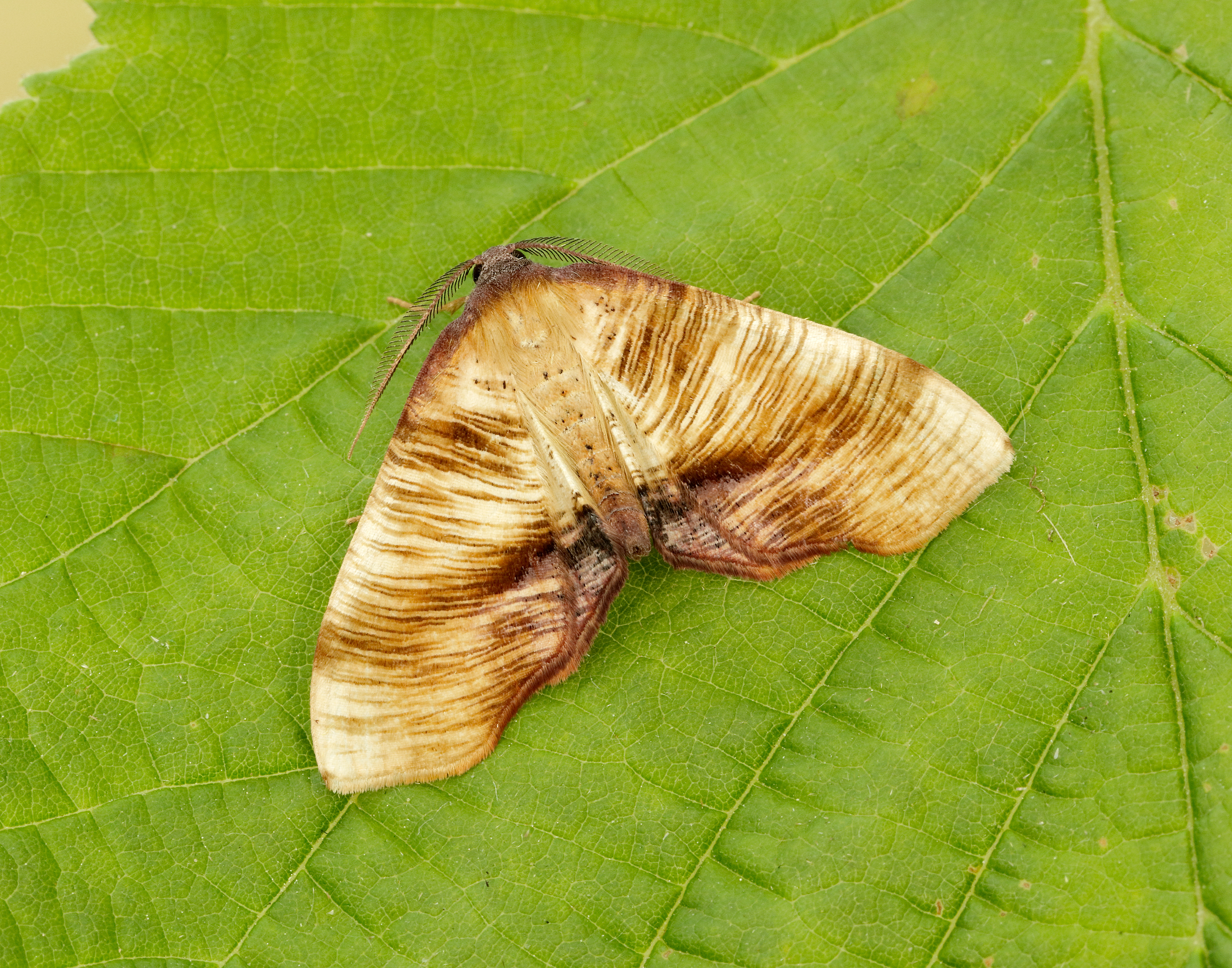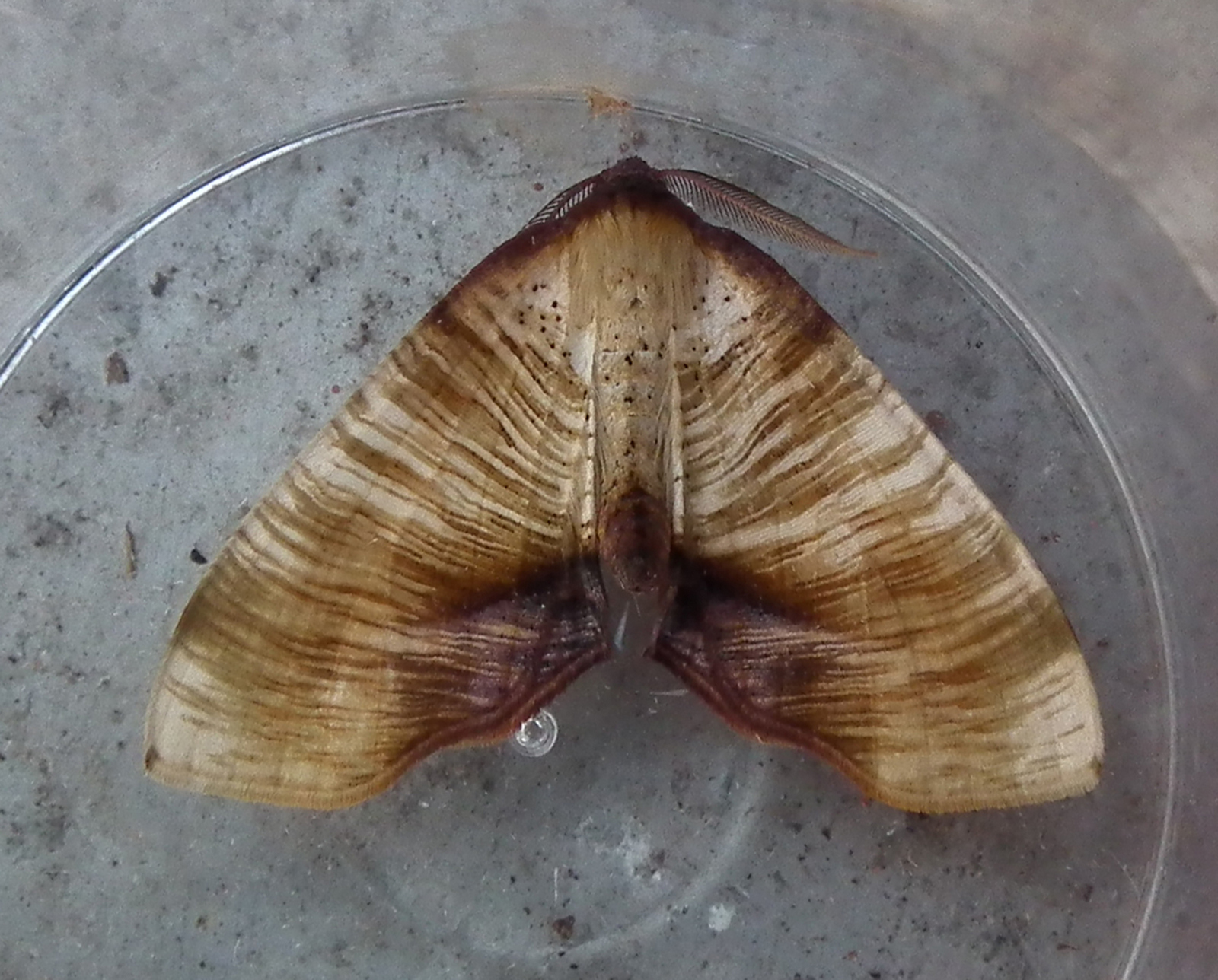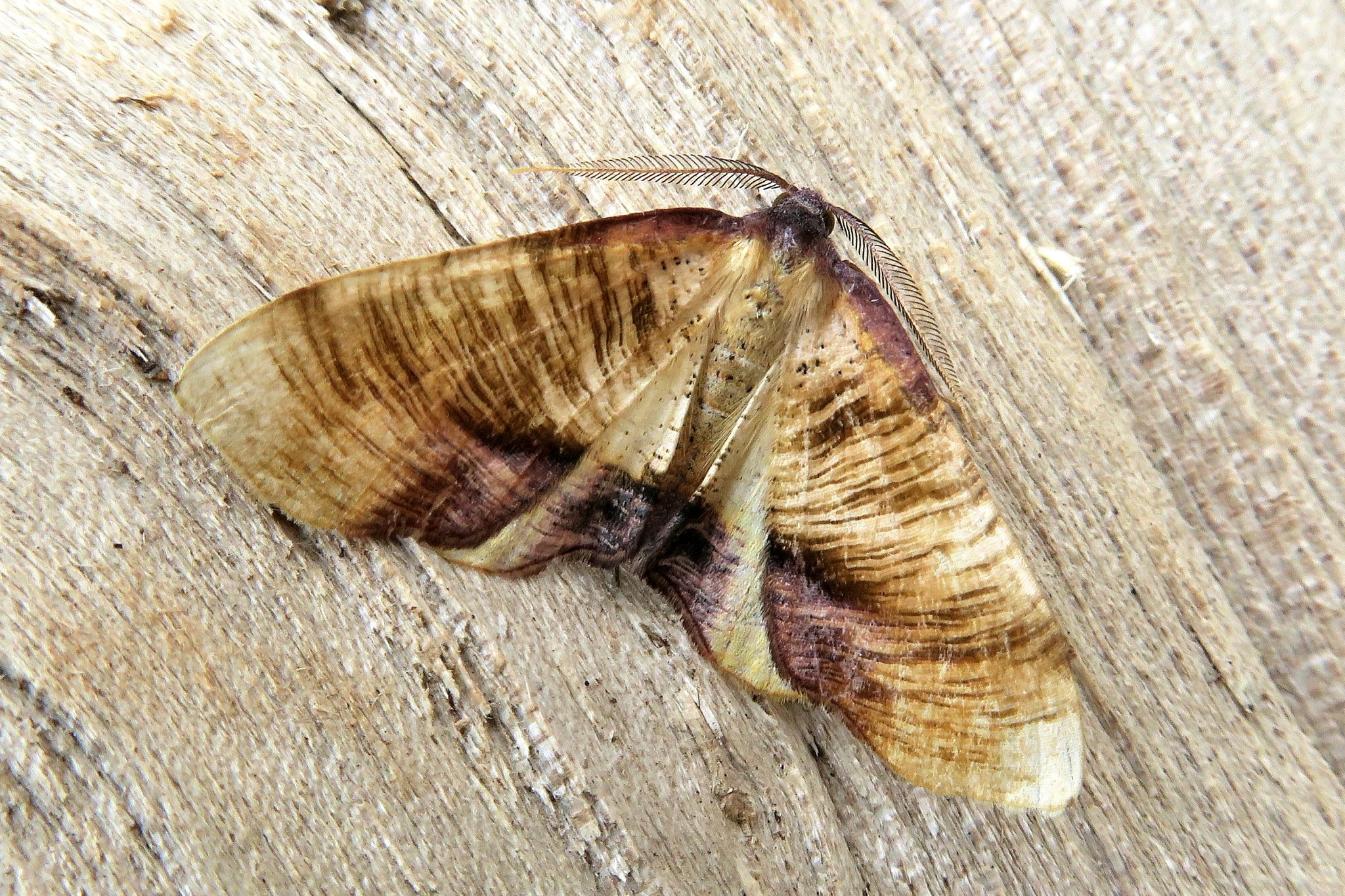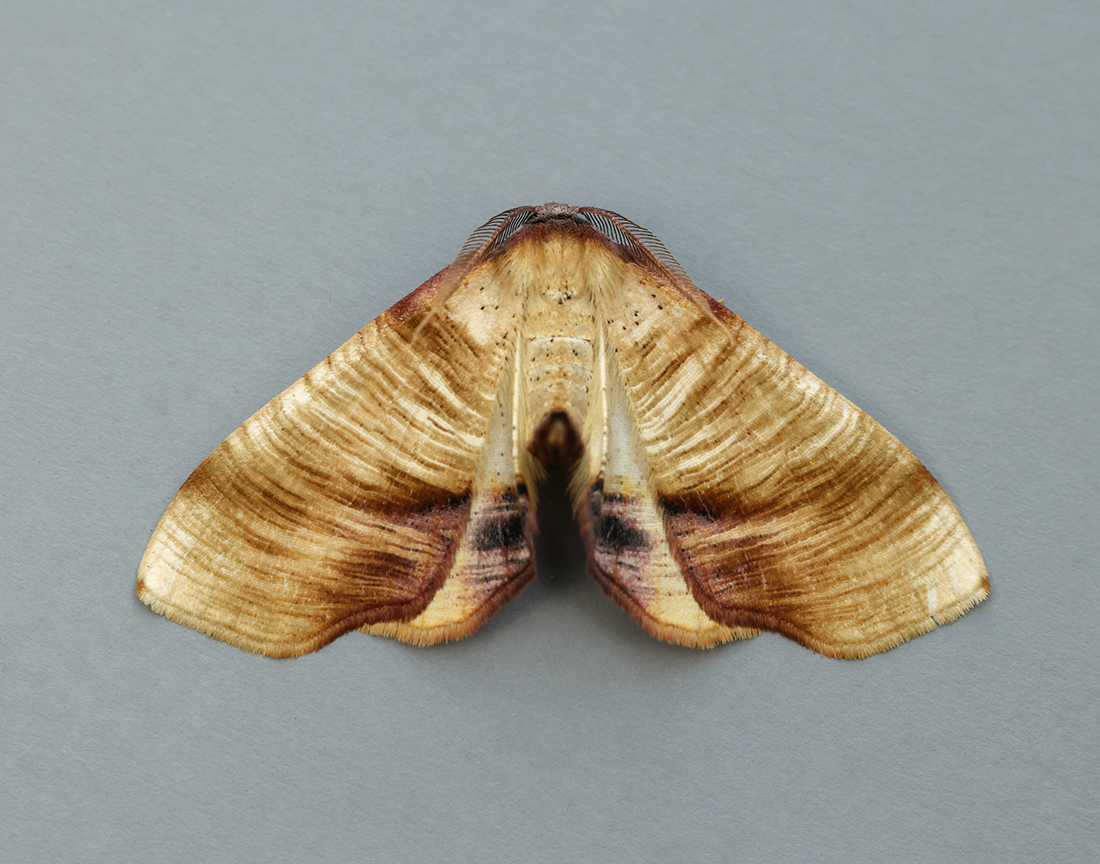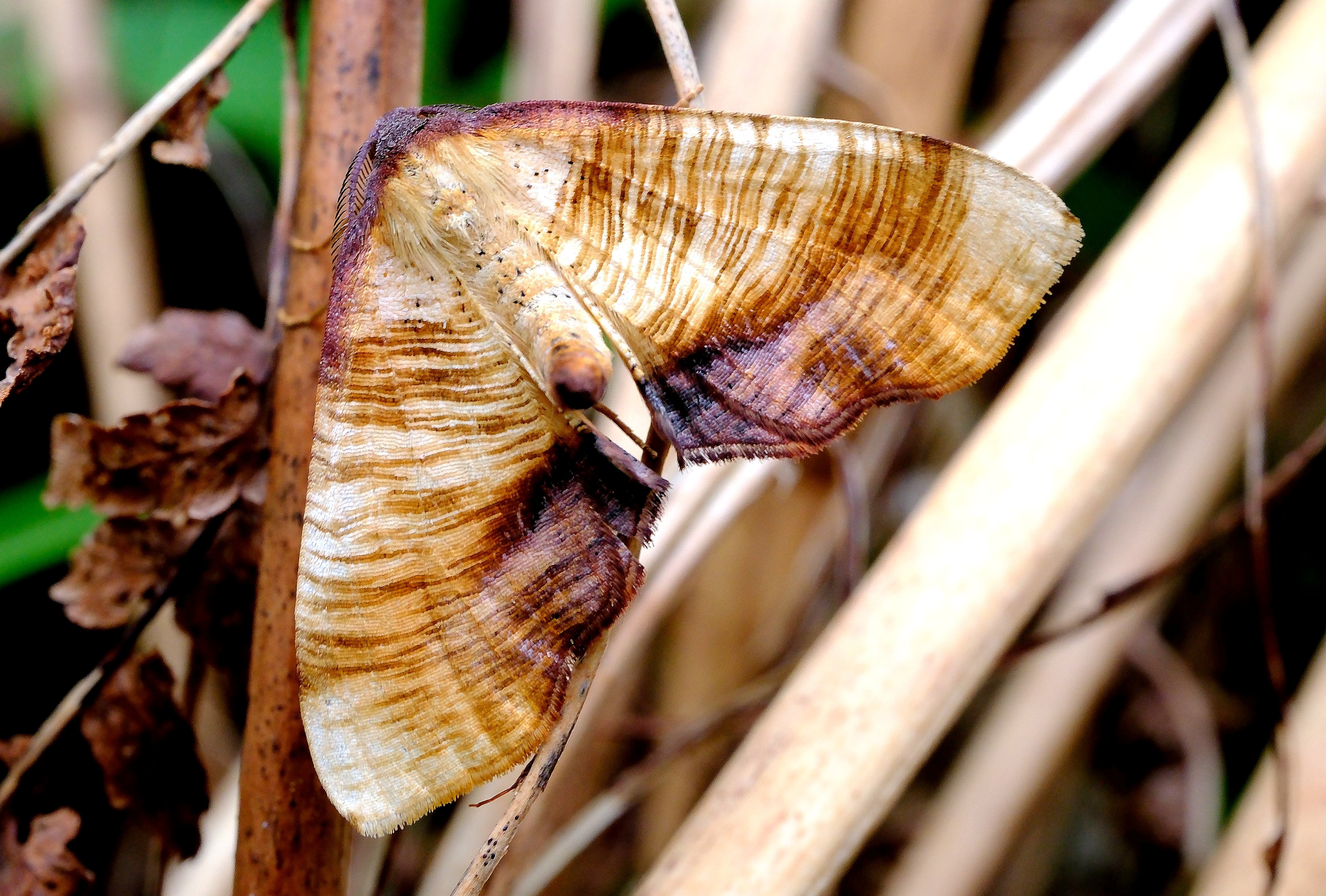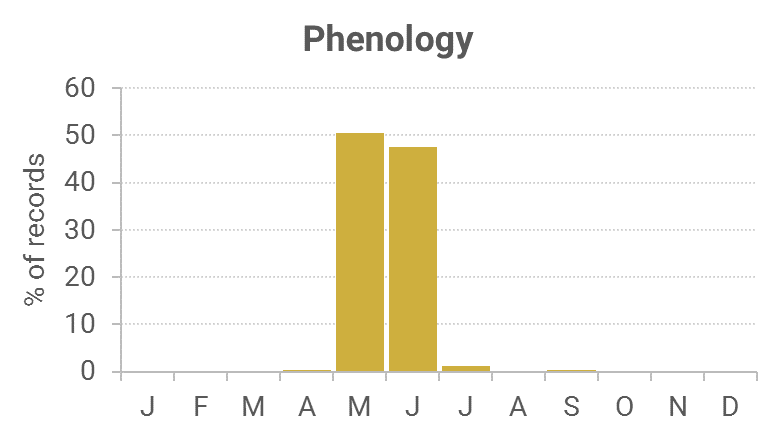

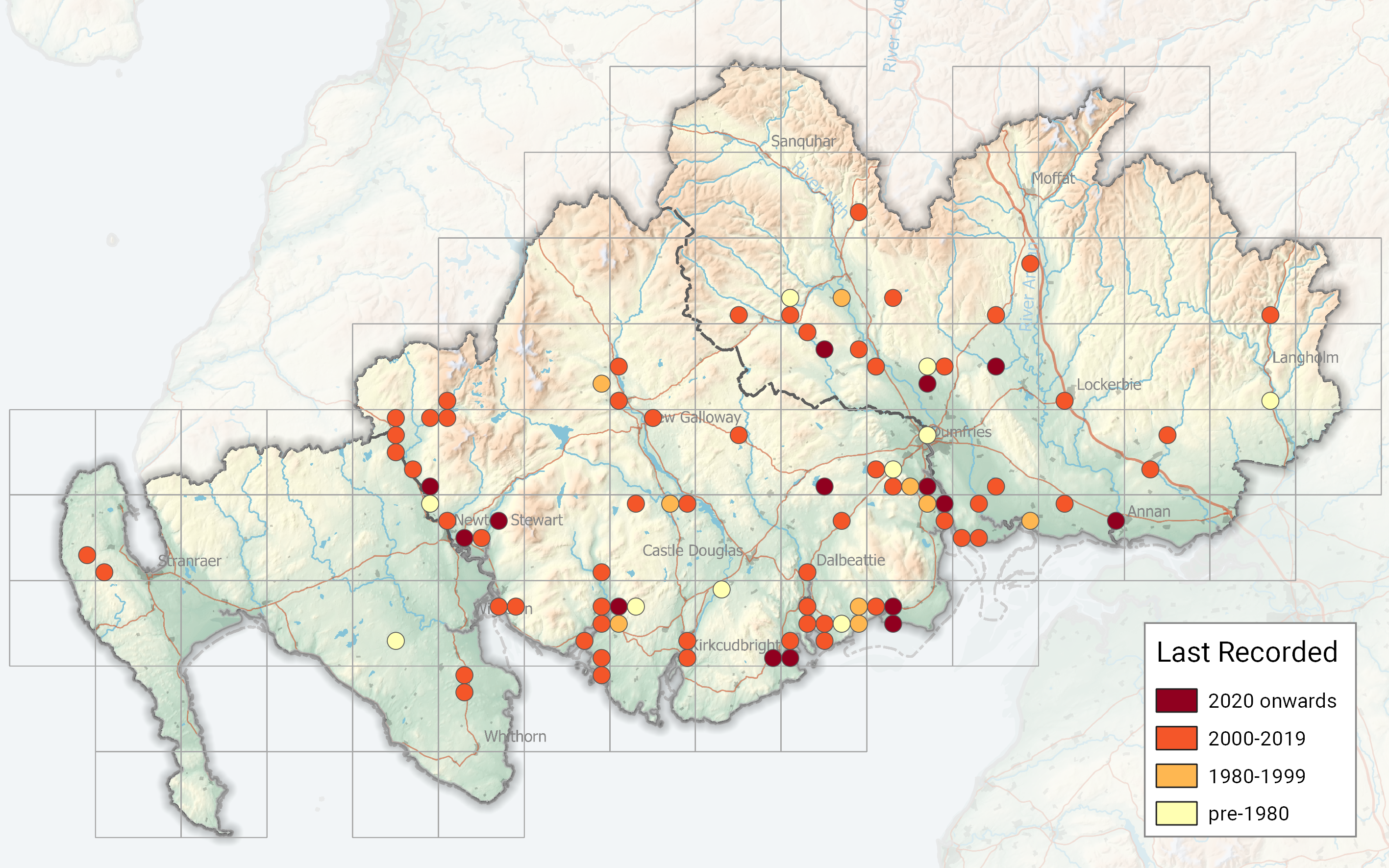
Red List: Least Concern (LC). GB Status: Common.
Identification
Usually distinctive..
Recording method
Males come to light but moth rarely seen during the day.
Life cycle
One generation. Overwinters as a pupa. Larvae July to mid-September. Pupates in a cocoon on the ground.
Larval foodplants
Mainly oaks and birches, but also sallows.
Habitat
Broadleaved woodland and scrub, parks and gardens.
History
First recorded for Dumfries and Galloway in 1860 for VC72 near Dumfries by Lennon, in 1862 for VC73 at Dalskairth also by Lennon where he regarded it as ‘very rare’, and in 1906 for VC74 at Corsemalzie by Gordon who had found it ‘not uncommon at light in woods’ and in the following year found ‘four full fed larvae were beaten from a young oak tree’.