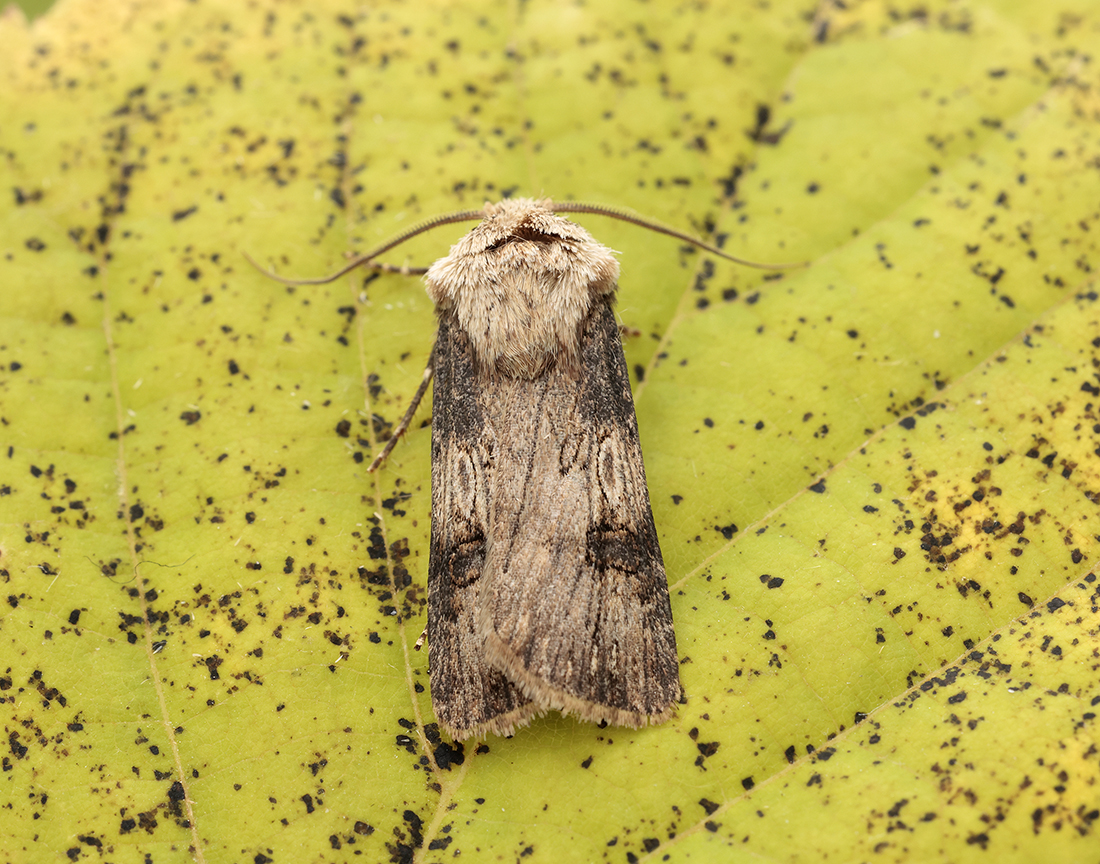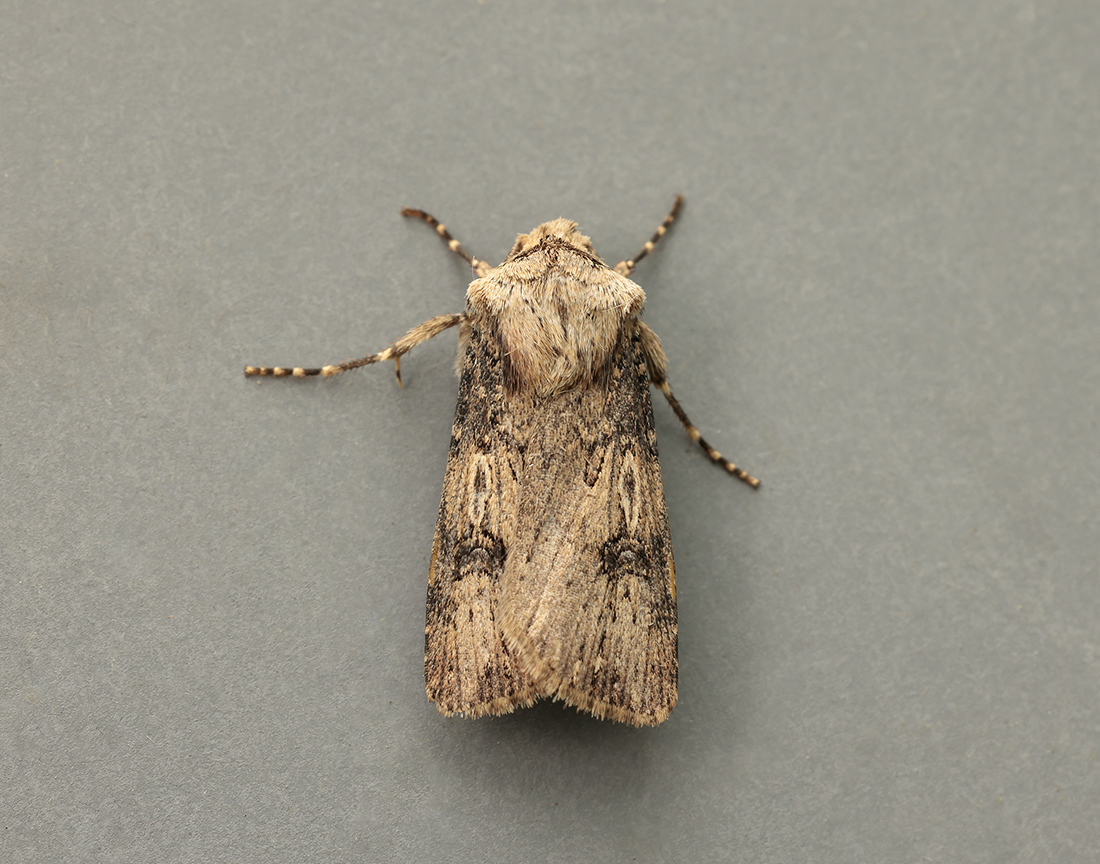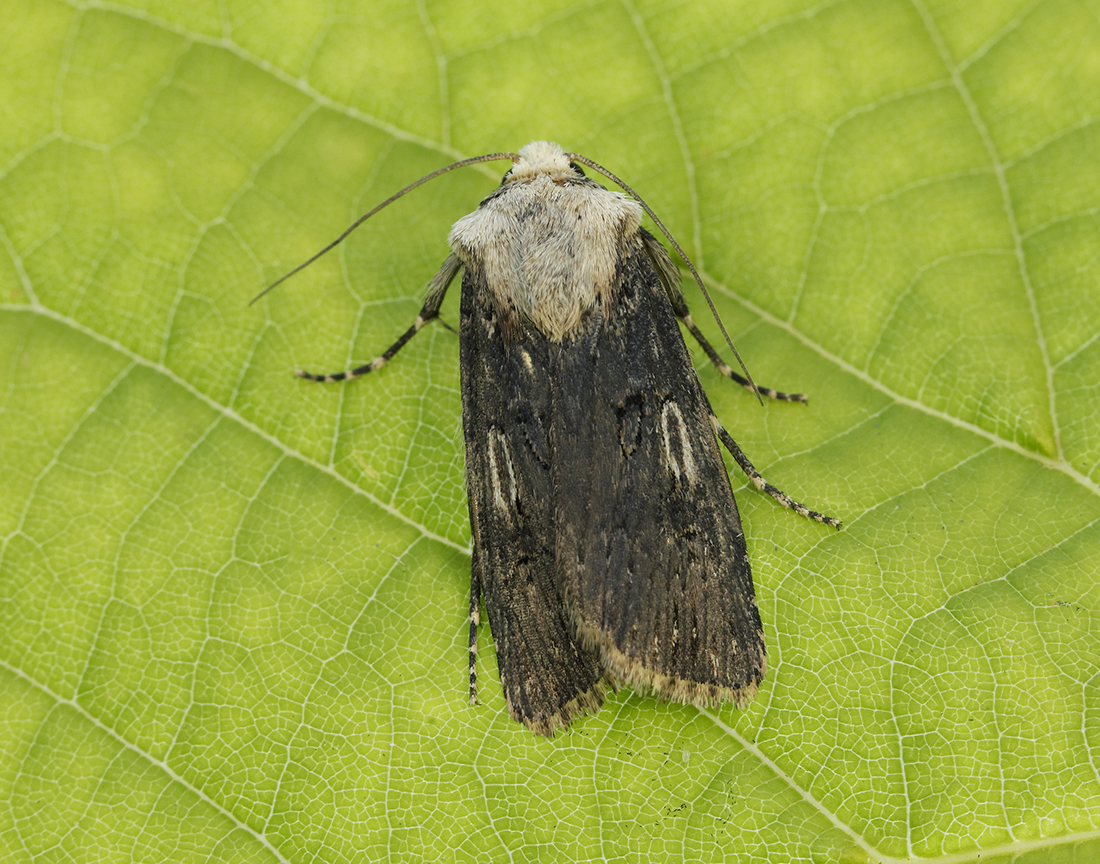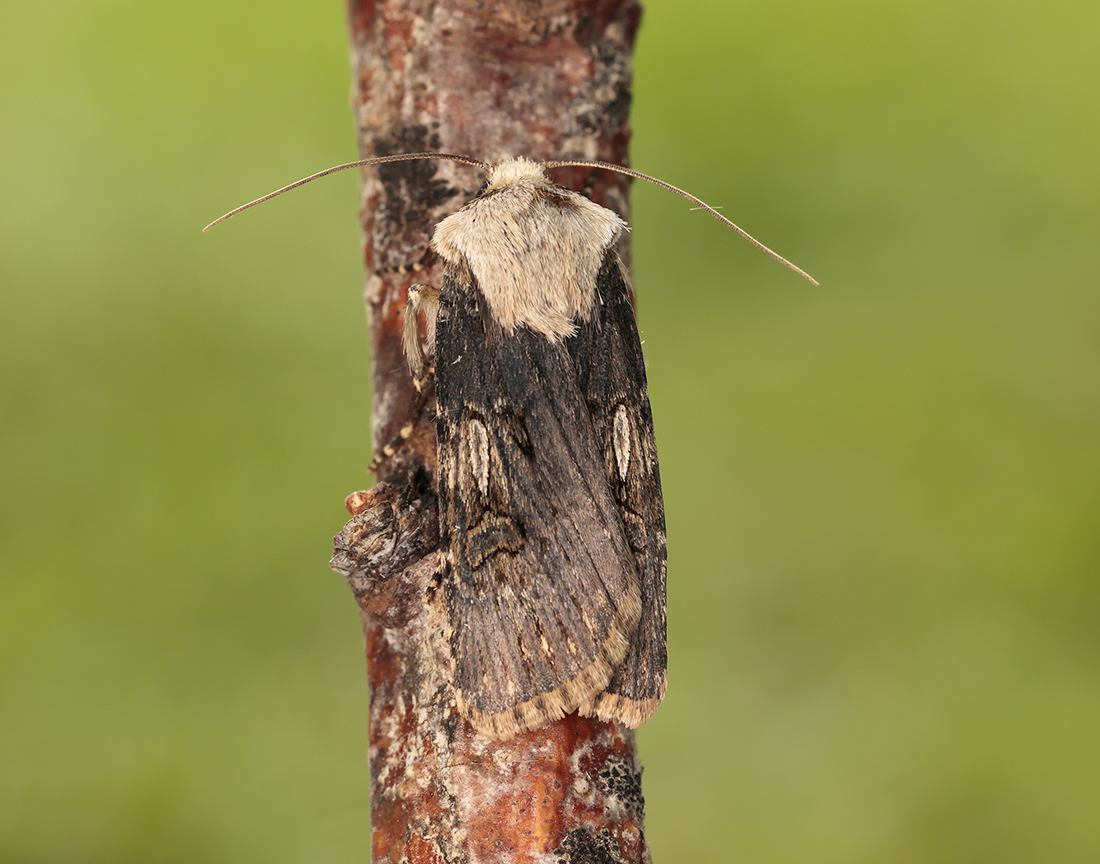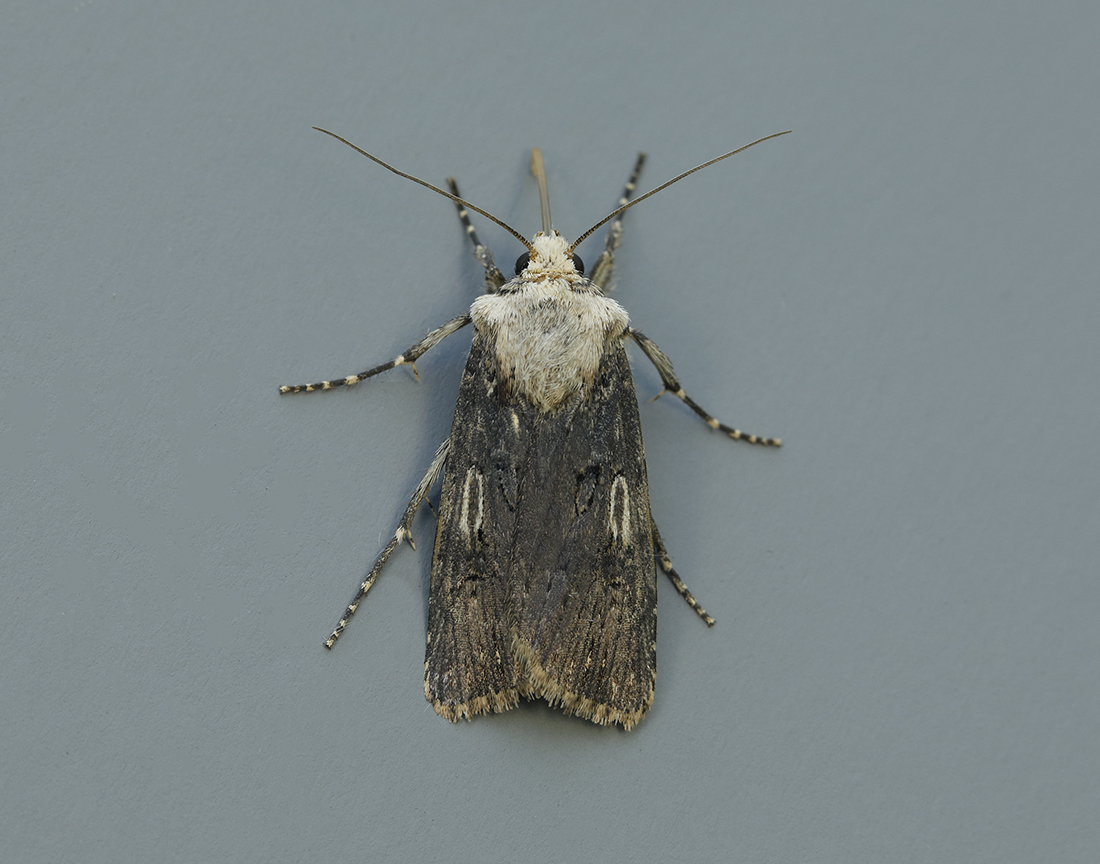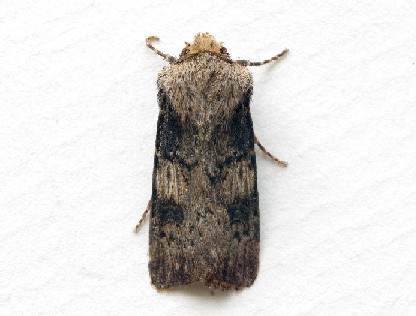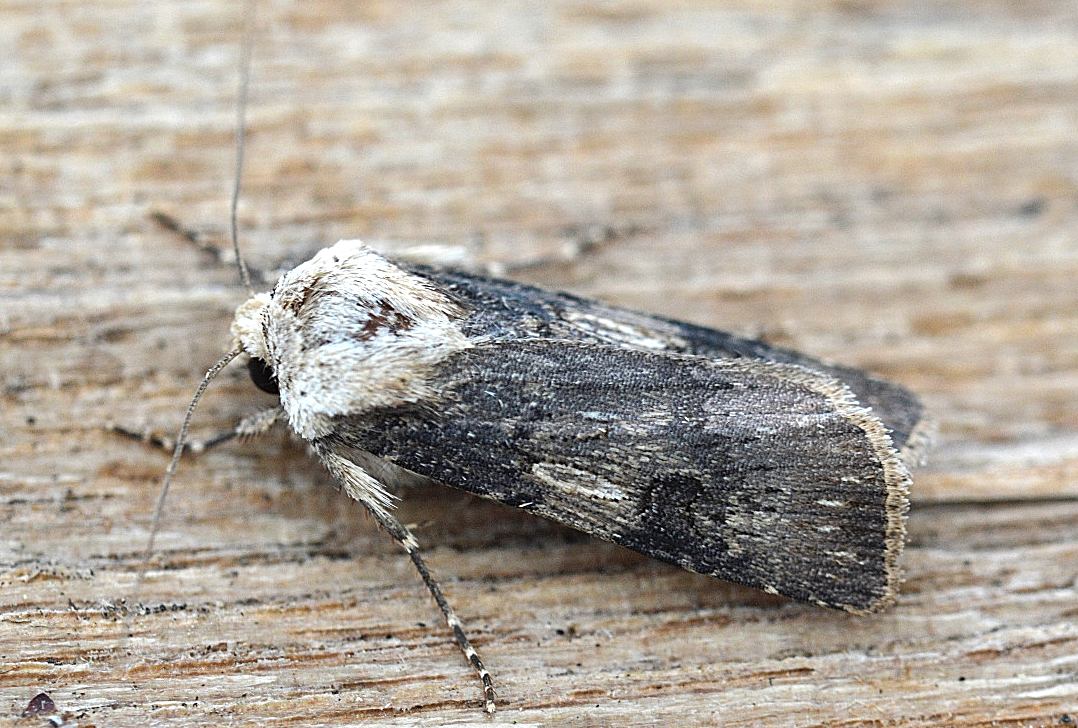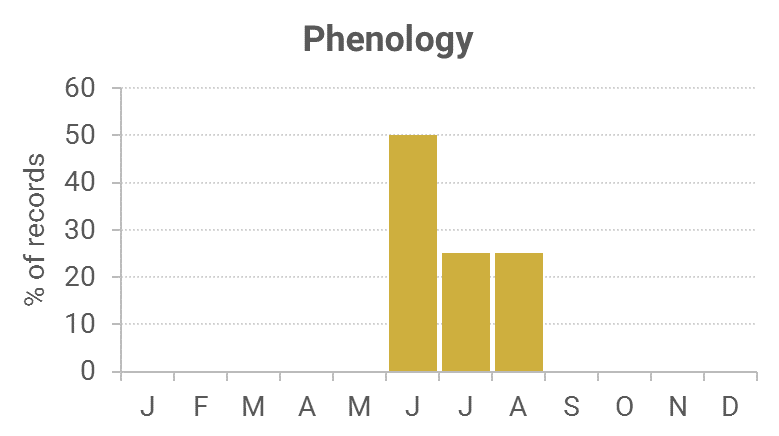

Red List: Least Concern (LC). GB Status: Common.
Identification
Usually distinctive.
Recording Method.
Attracted to light, also comes to sugar and flowers.
Life cycle
Two generations. Overwinters as a larva. Larvae August to April. Pupates in a cocoon in loose soil..
Larval foodplants
Docks, Dandelion, Knotgrass and other herbaceous plants.
Habitat
Open habitats including woodland, gardens, grassland, heathland and farmland.
History
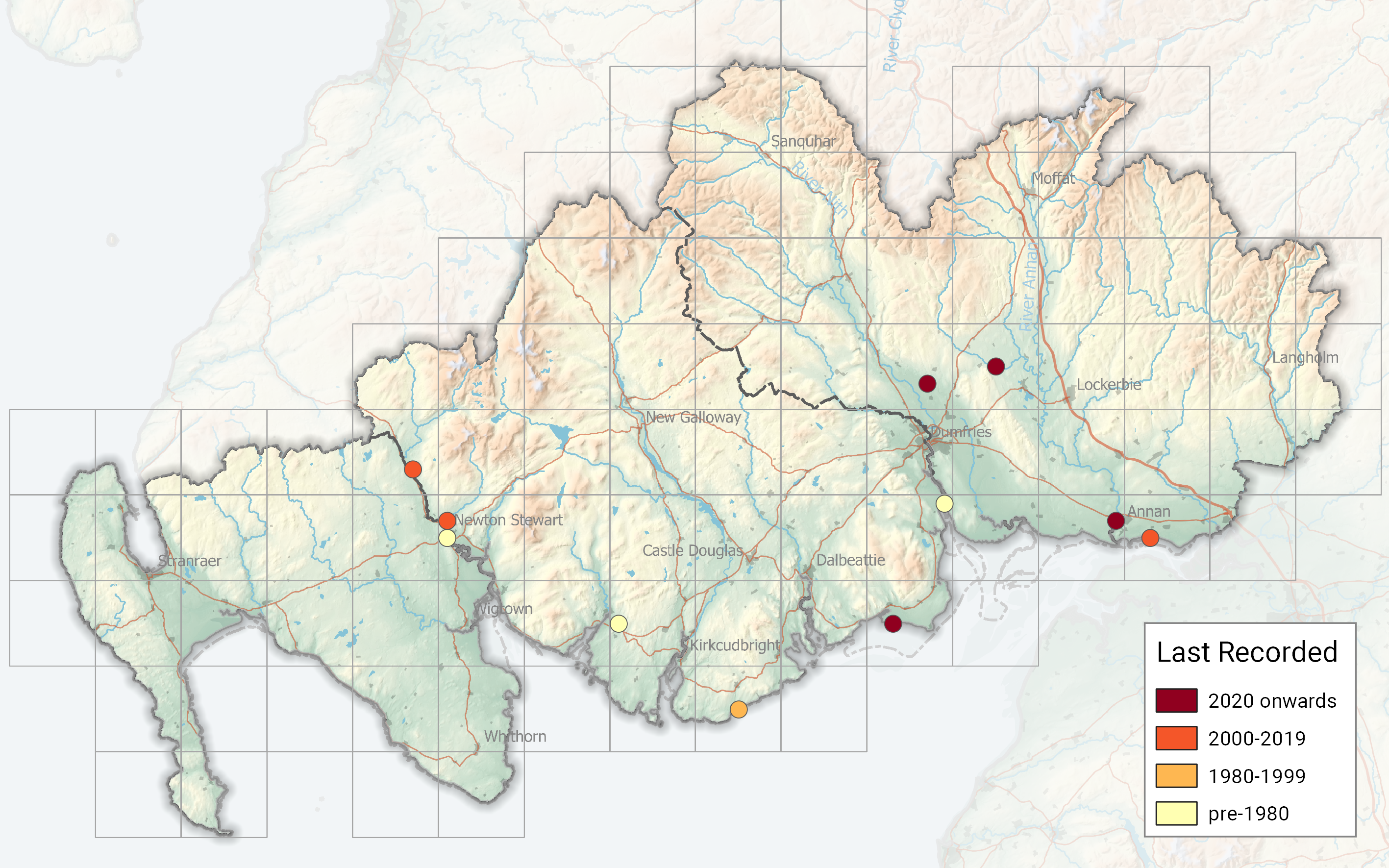
Lennon (1863) had recorded it as occurring at Kirkconnell Moss (VC73).
Of the Rothamsted records, one was caught at the Newton Stewart station mid-July 1977, while the other was caught the following year at the Gatehouse of Fleet station about 10th June.
Waring et al. (2003) mention a Kirkcudbrightshire (VC73) record in 1998 which refers to the Abbey Burn Foot record that was found by Colin Plant on 20th June.