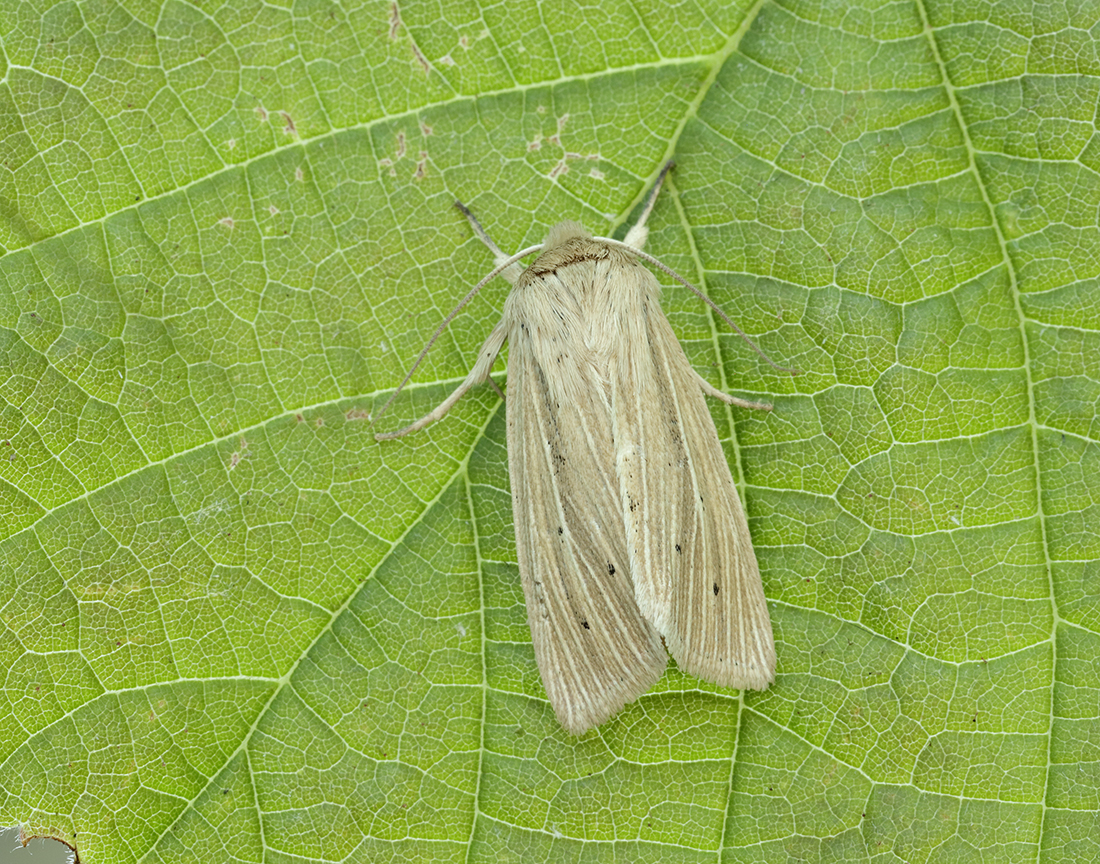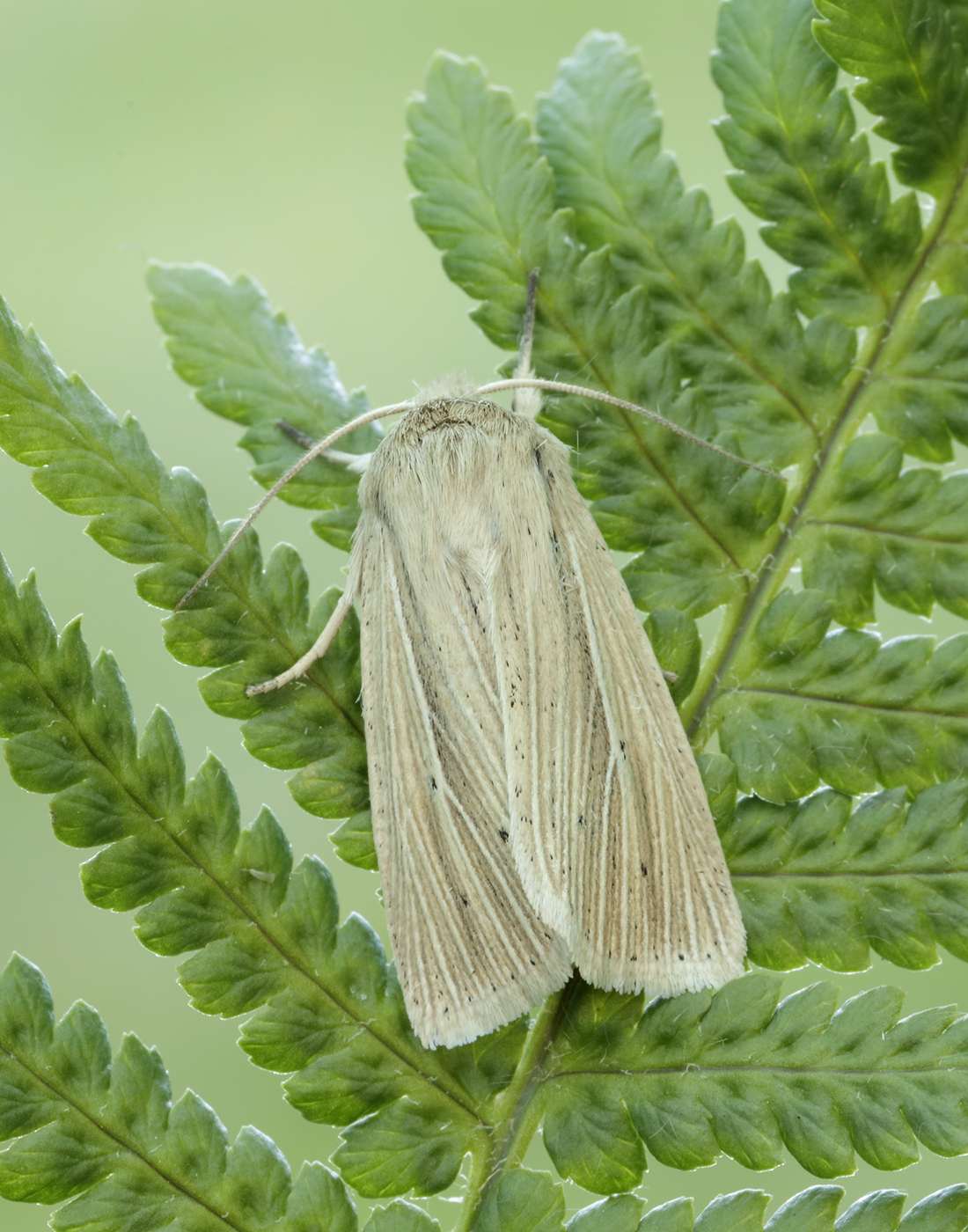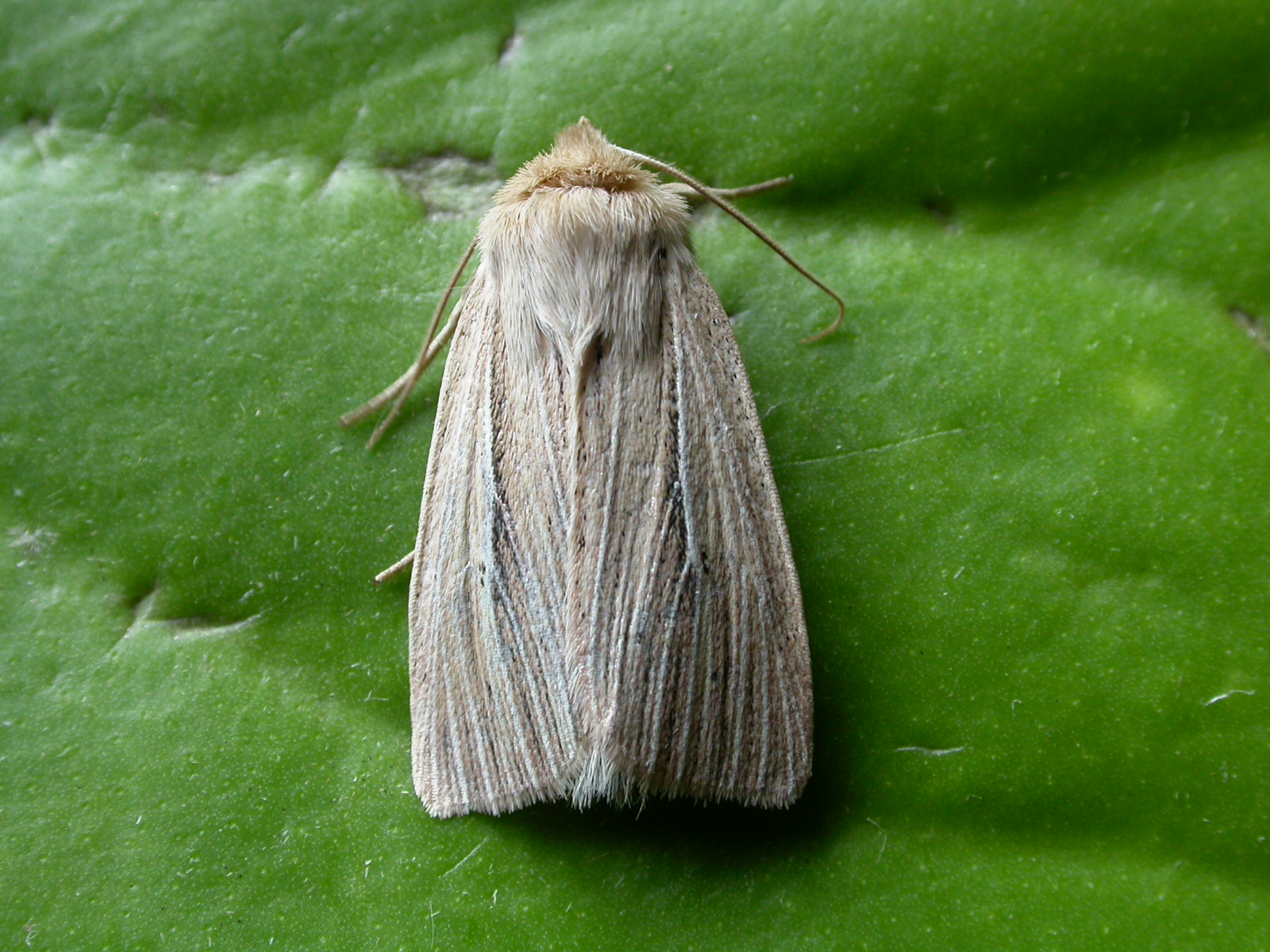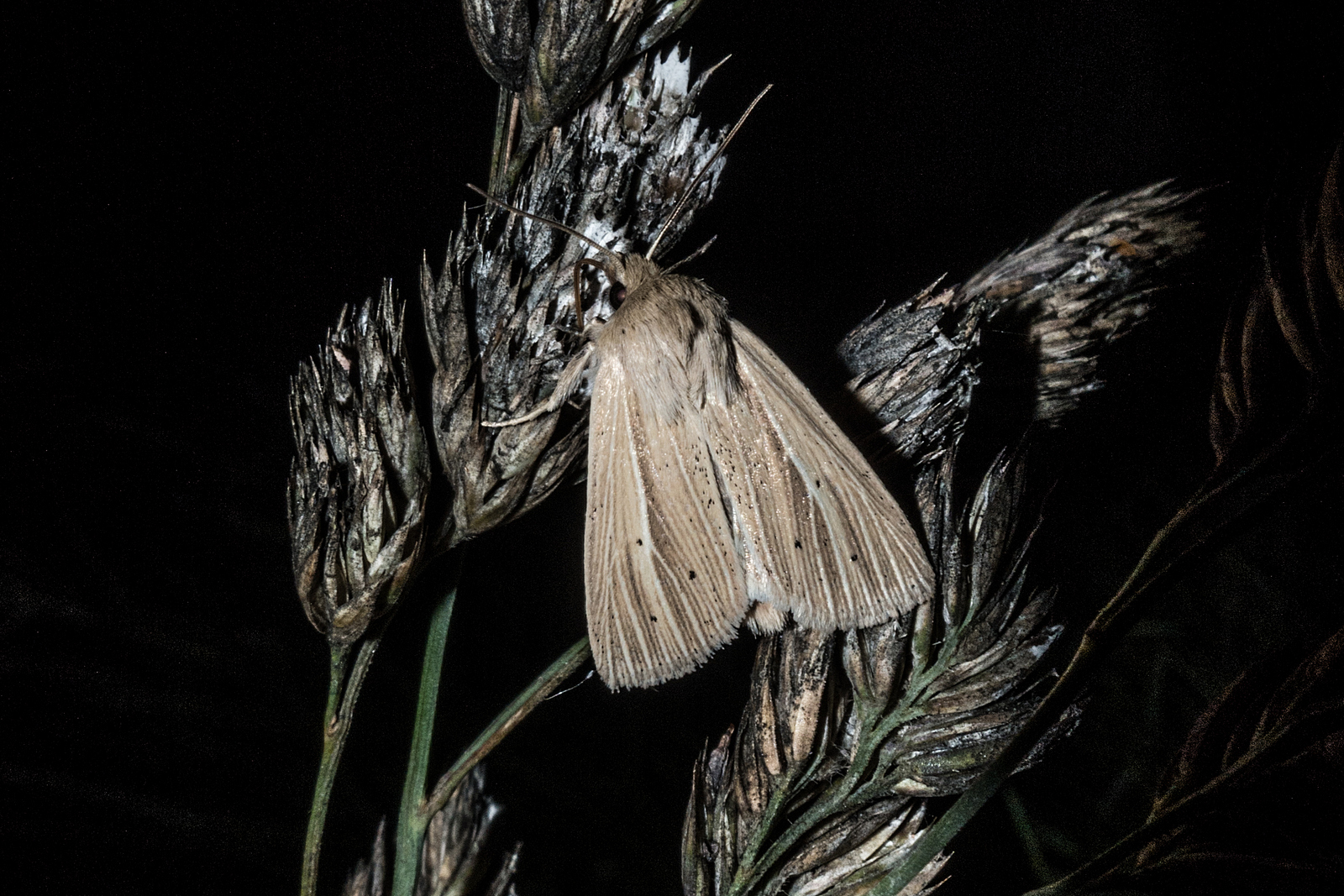

Red List: Least Concern (LC). GB Status: Common.
Identification
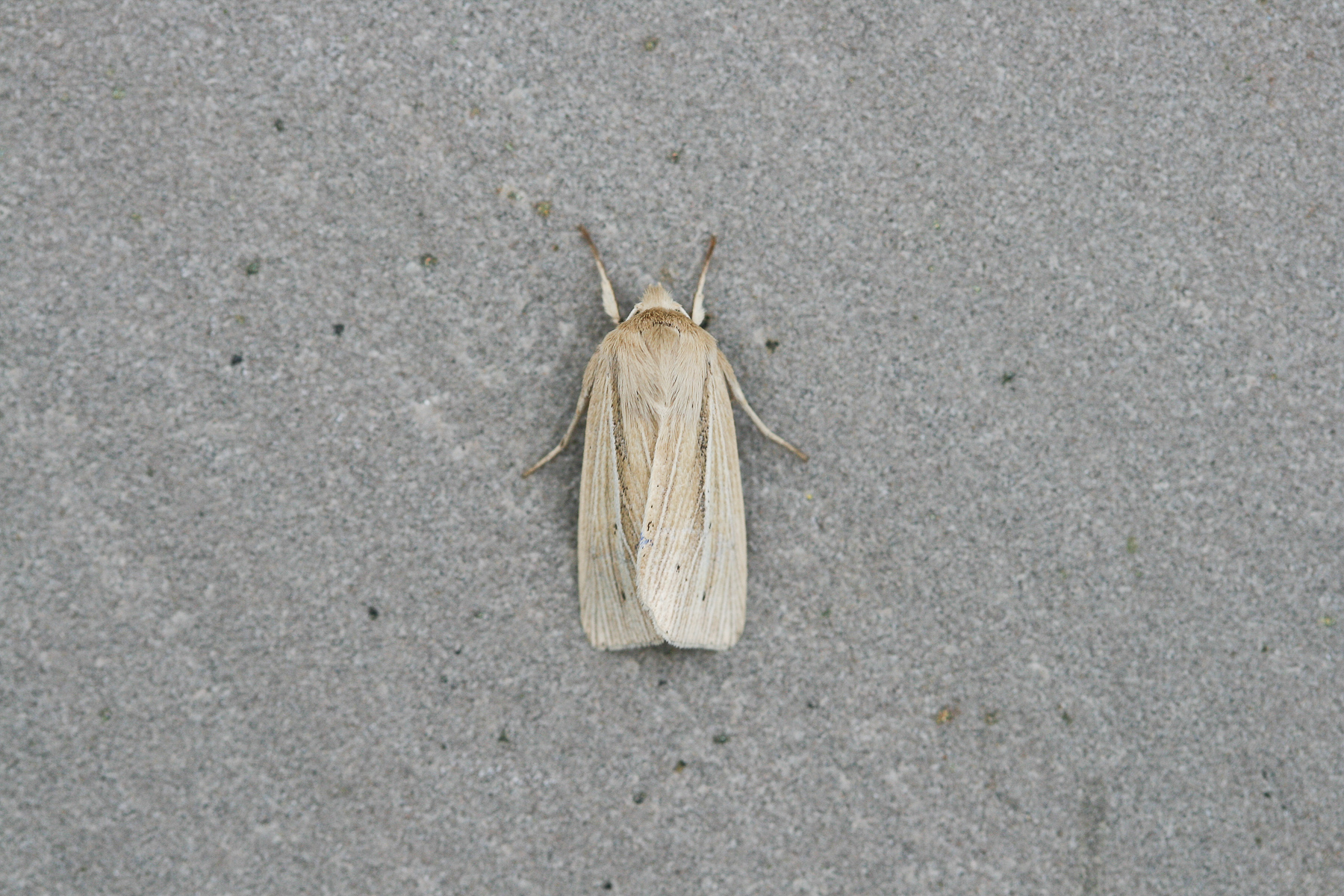
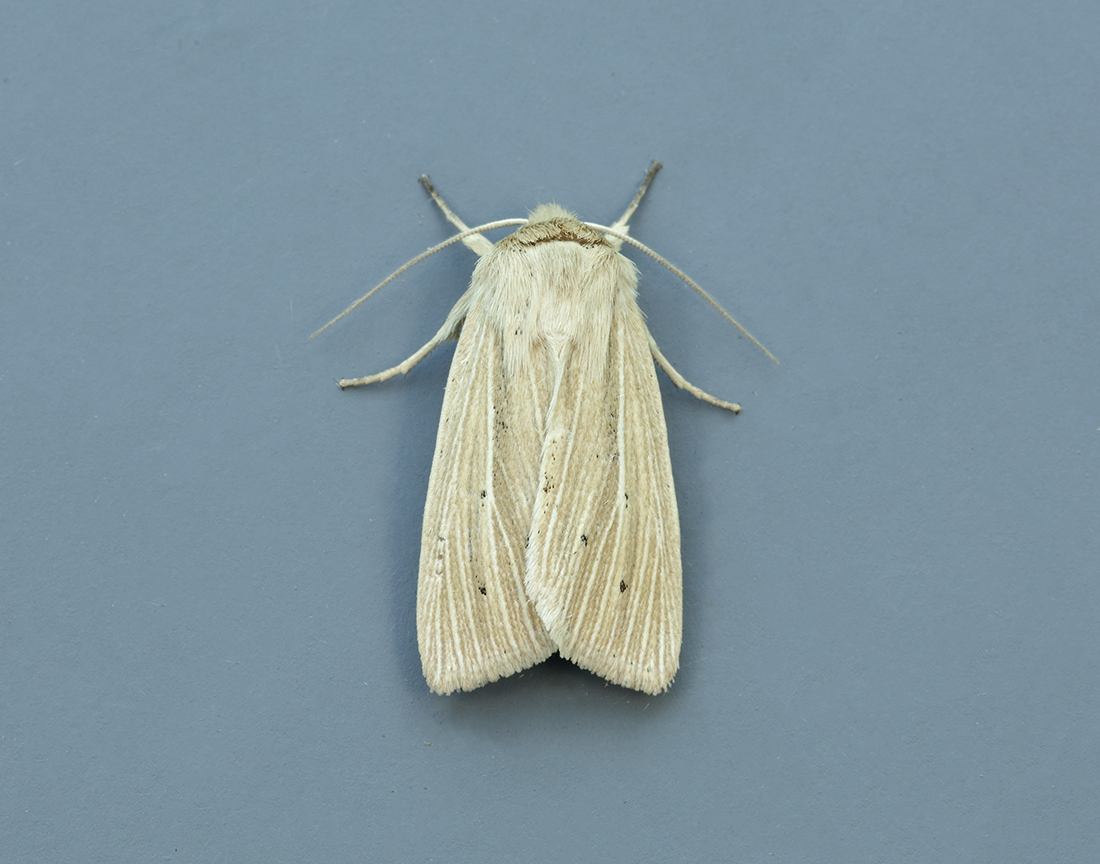
Usually distinctive. Care required, potential confusion with Comm on Wainscot.
Recording Method.
Attracted to light, also comes to sugar and flowers.
Life cycle
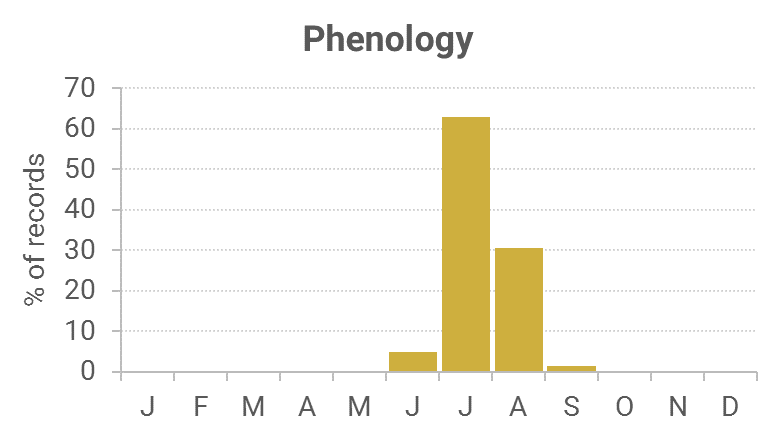
One generation. Overwinters as a small larva. Larvae August to May. Pupates in a cocoon underground.
Larval foodplants
A e=wide range of grasses including Cock’s-foot and Common Reed, also Hairy Wood-rush.
Habitat
A wide range of grasslands including woodland rides. Particularly abundant in lowland grasslands, gardens and sand-dunes.
History
Lennon (1863) had recorded it from Marchmount (VC72) in 1862. Douglas Robinson (1870-71) had found it common in July on Almorness (VC73). K. J. Morton of Edinburgh (1900) while on a visit in July 1899 to Wigtownshire had found this species in the Monreith area. Gordon (1913) had found it abundant everywhere, giving an early date of 15th June 1899 and a latest of 3rd August 1905.
Archibald Russell (1944) listed it as occurring near Gatehouse of Fleet (VC73) during the years 1942-43. Sir Arthur Duncan (1909-84) during his lifetime had found it at Closeburn and Castlehill, Dumfries (all VC72).
From the mid 1960s to 1973 there were just fourteen records.
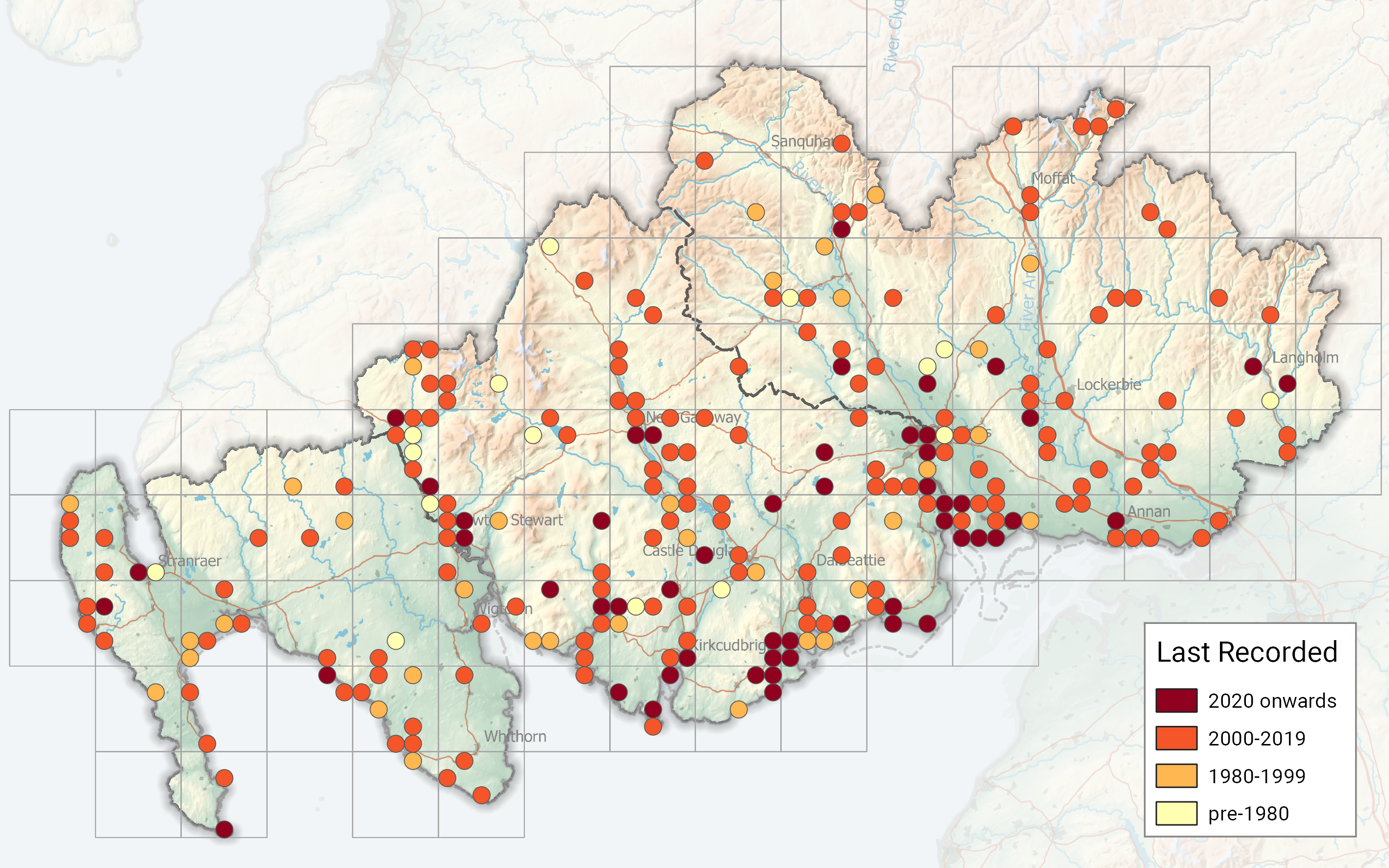
During 1974-92 there were three hundred and fifty records from all seven Rothamsted stations, proving it widespread.
On the Hensol Estate during the early 1980s a fine series was trapped. From 1987 to 2010 the regular trapped sites at Kirkton, Durisdeer, Cally Woods and Mersehead RSPB provided a good number of the seven hundred records trapped in that period, with the rest from widely scattered sites across the region.