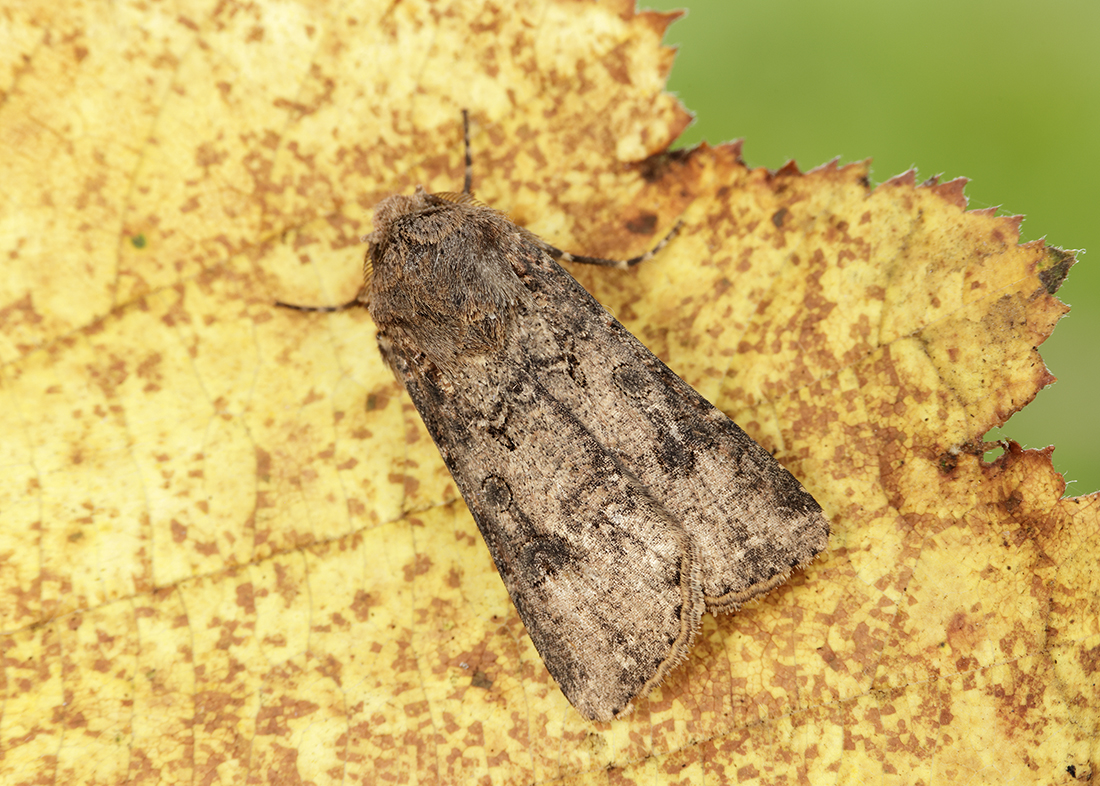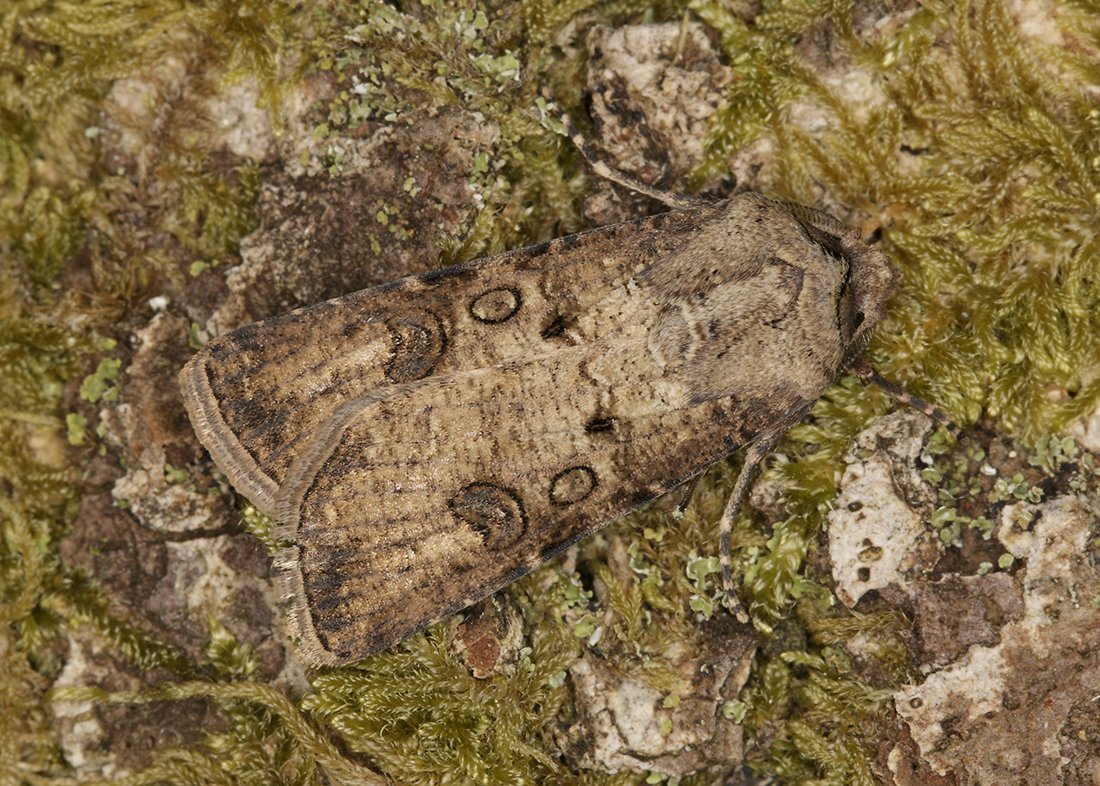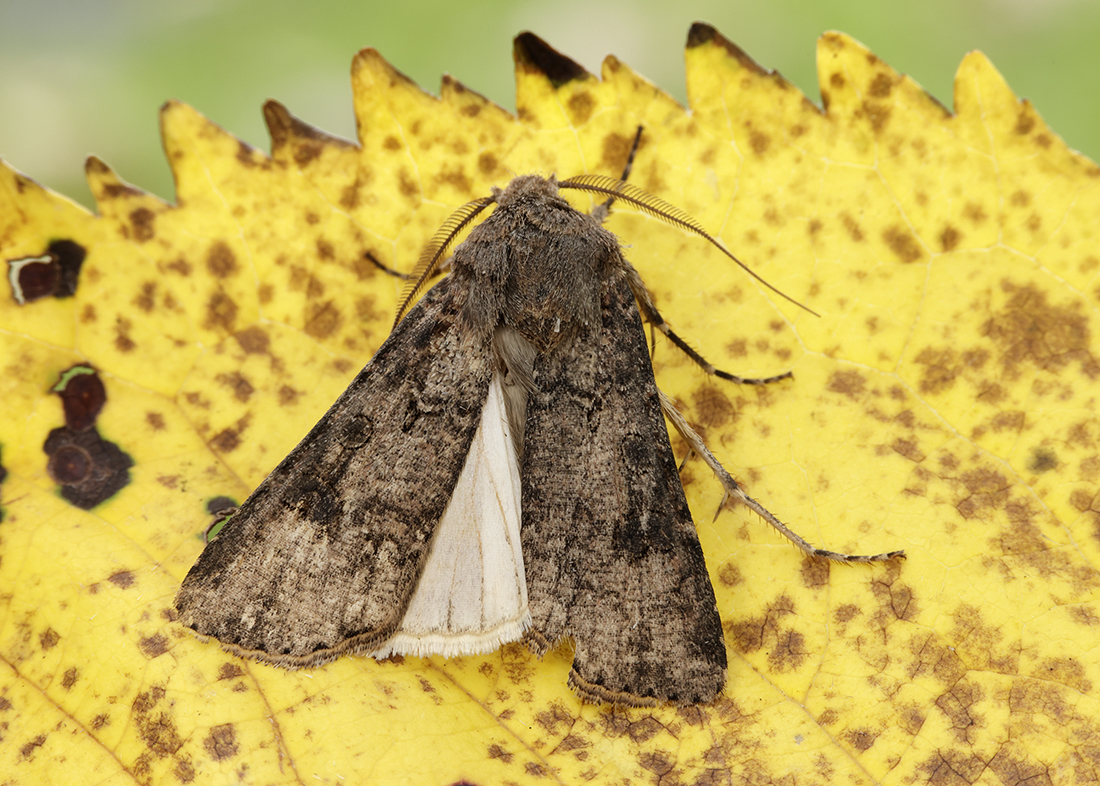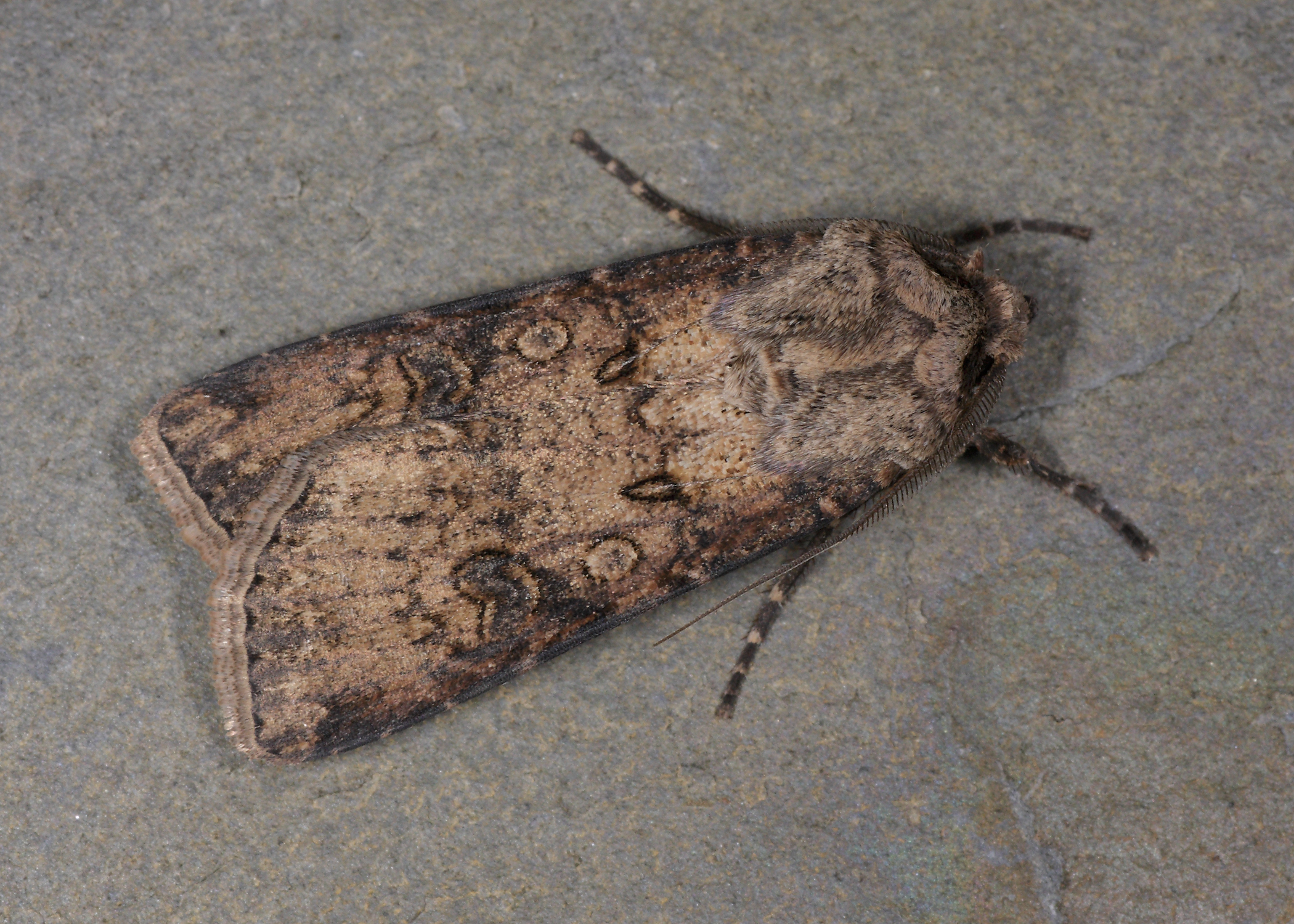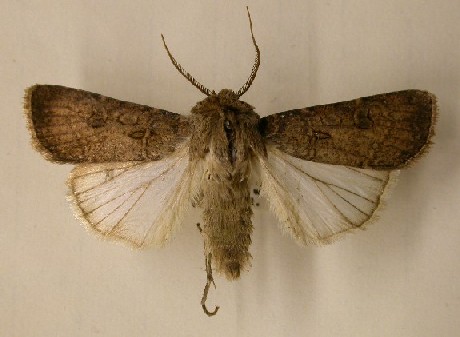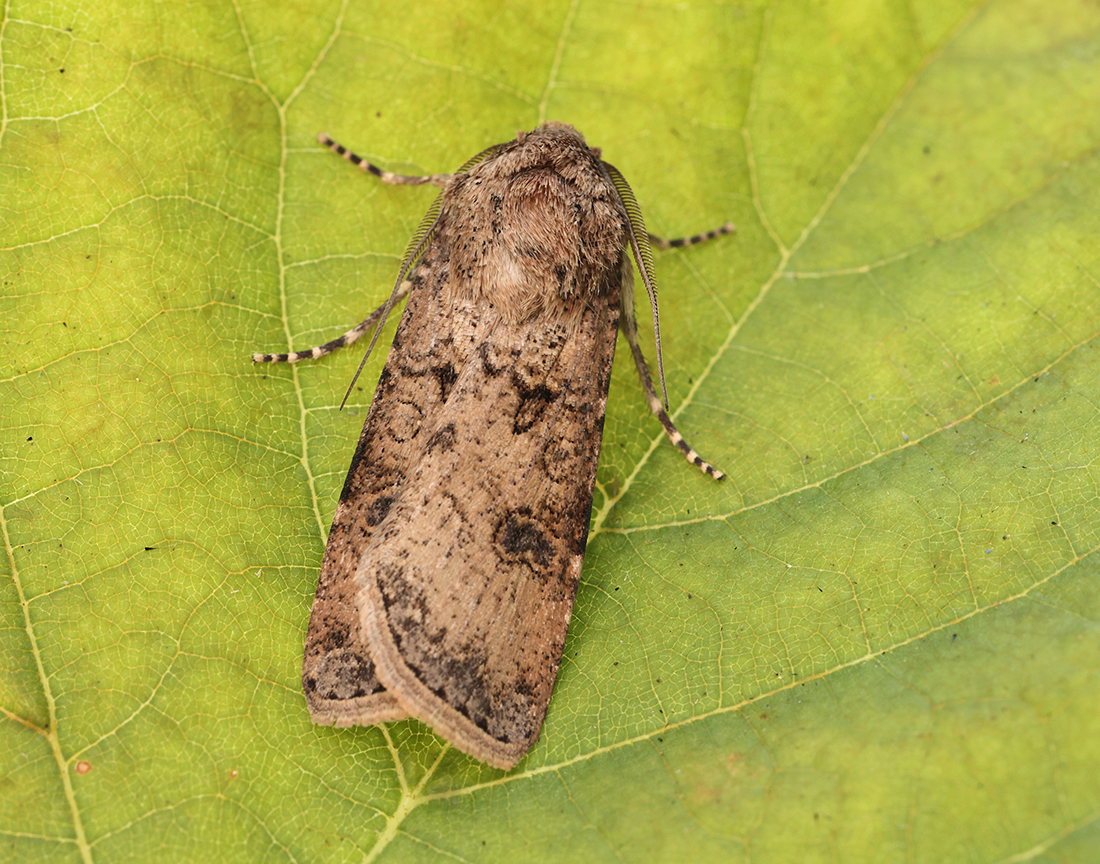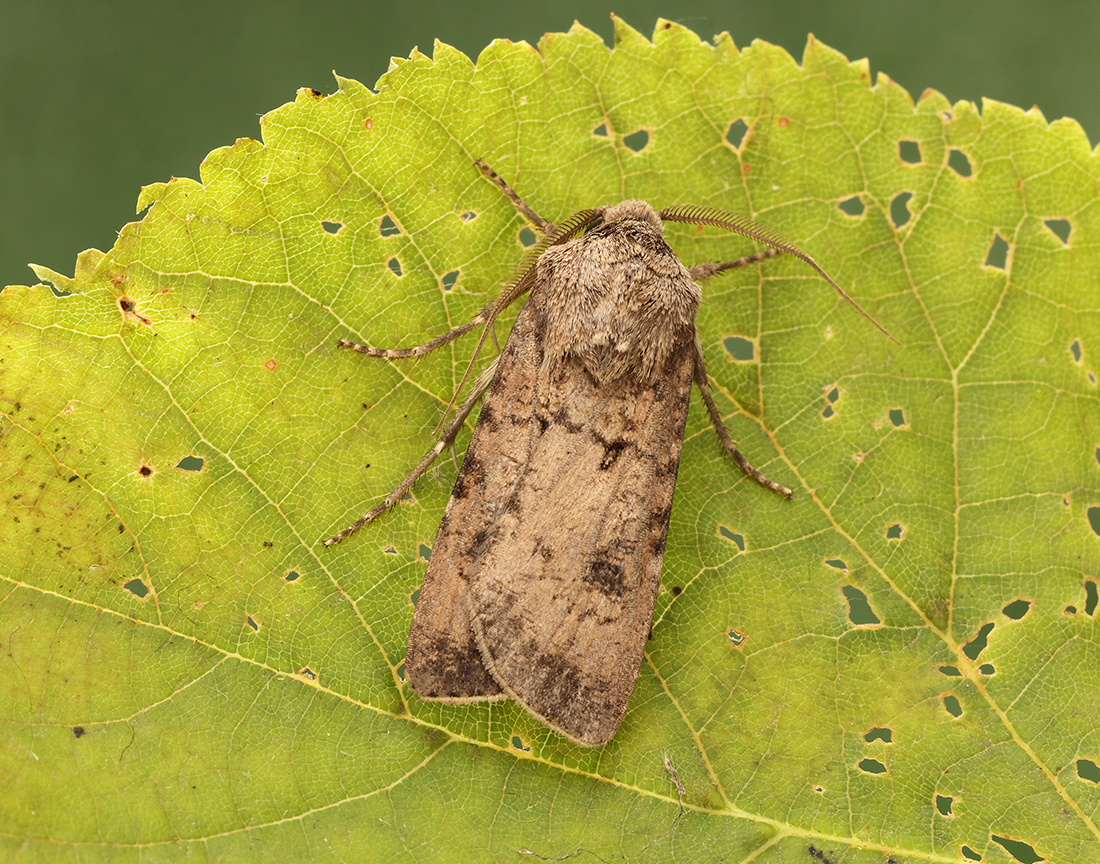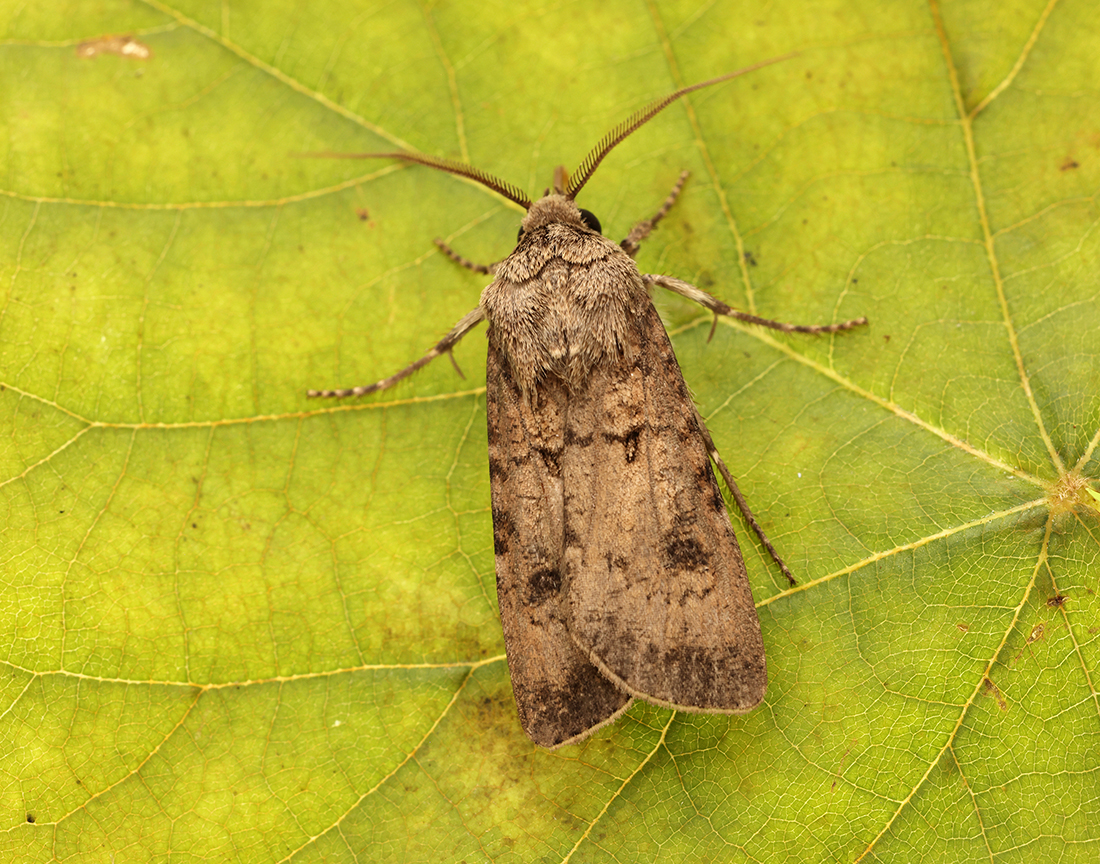

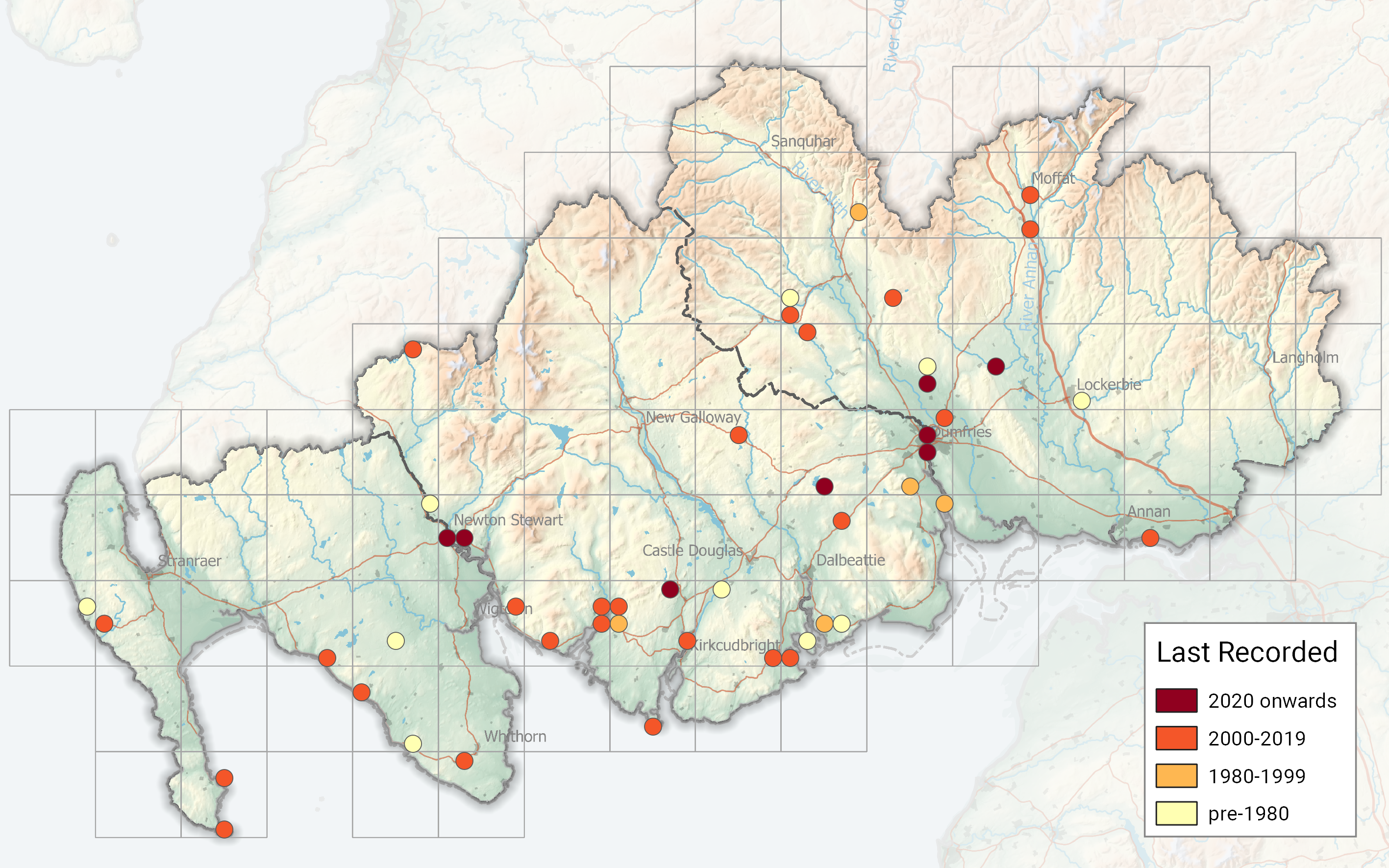
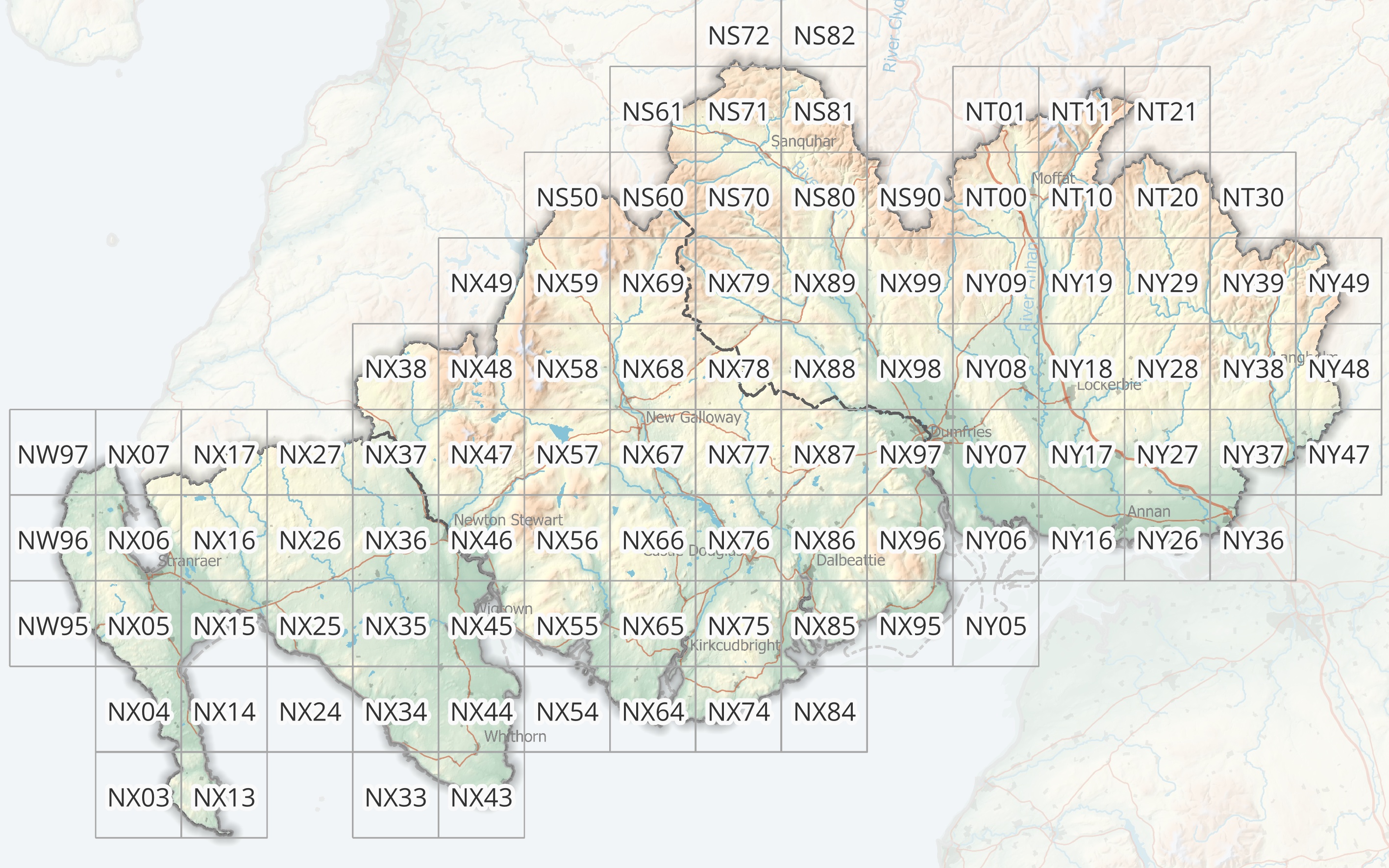
Red List: Least Concern (LC). GB Status: Common.
Identification
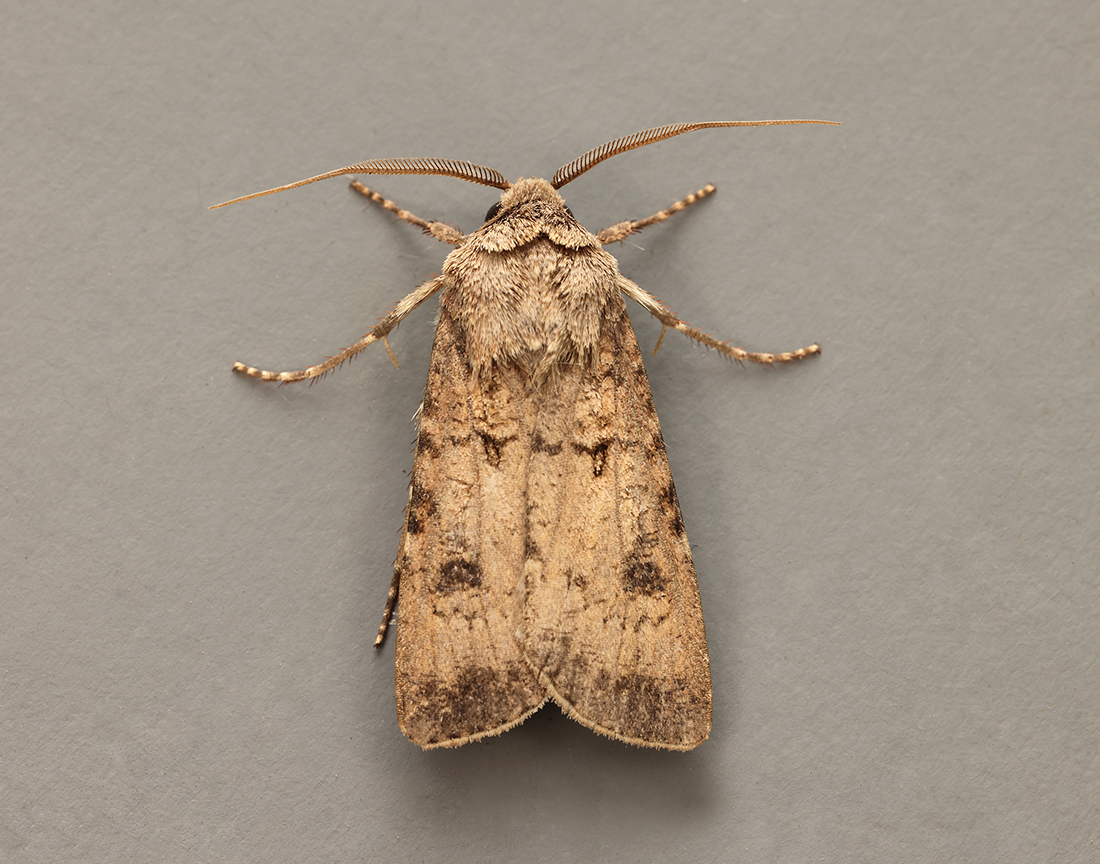
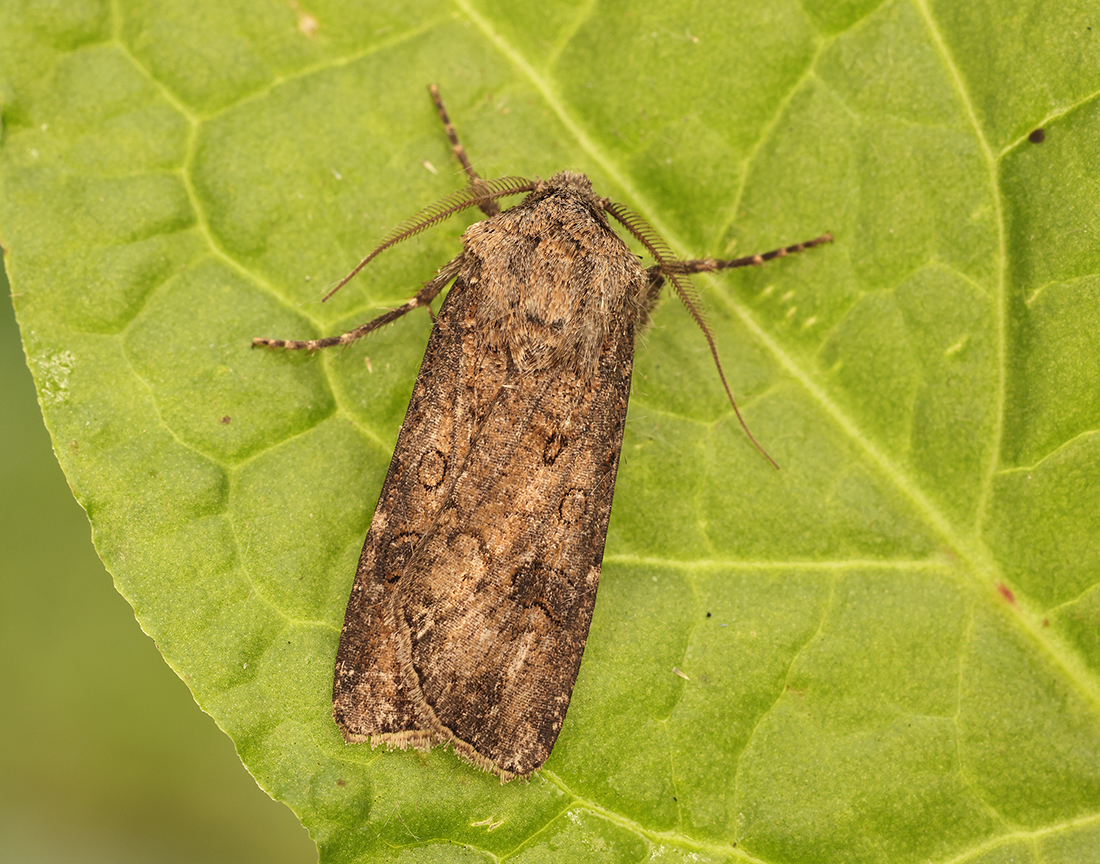
Usually distinctive.
Recording Method.
Attracted to light, also comes to sugar.
Life cycle
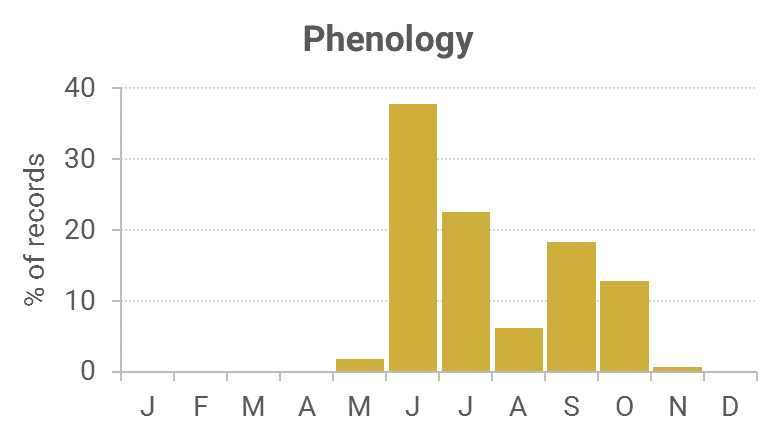
Two generations. Overwinters as a larva, during July to April, again, June to August.
Larval foodplants
A wide variety of wild and cultivated herbaceous plants, including Beet, Carrot, Cabbage, Swede and Turnip. Regarded as a pest of root crops.
Habitat
A wide variety of habitats including agricultural land and gardens.
History
Douglas Robinson (1870-71) had found it common at sugar during July on Almorness (VC73). K. J. Morton of Edinburgh (1900) while on a visit in July 1899 to Wigtownshire had found this species in the Monreith area. Gordon (1913) had stated it to be generally distributed in Wigtownshire, sometimes common. It came to sugar from late June to early November in 1897. Earliest date was 17th June 1899.
William Evans received specimens from Mowat, the Killantringan lighthouse keeper during 1913-14 to aid his insect migration studies.
Sir Arthur Duncan (1909-84) during his lifetime had found it at Tynron during 1951 and 1954 and also in Kirkmahoe parish in 1972.
During 1974-80 there were nineteen records from the four Galloway Rothamsted stations, with the twentieth from 1992 at Mabie Forest. Then from 1992 to 2010 two thirds of the 130 records came from the regular trapped site at Kirkton, three from Wigtownshire, with the rest from scattered sites across VCs 72 and 73.