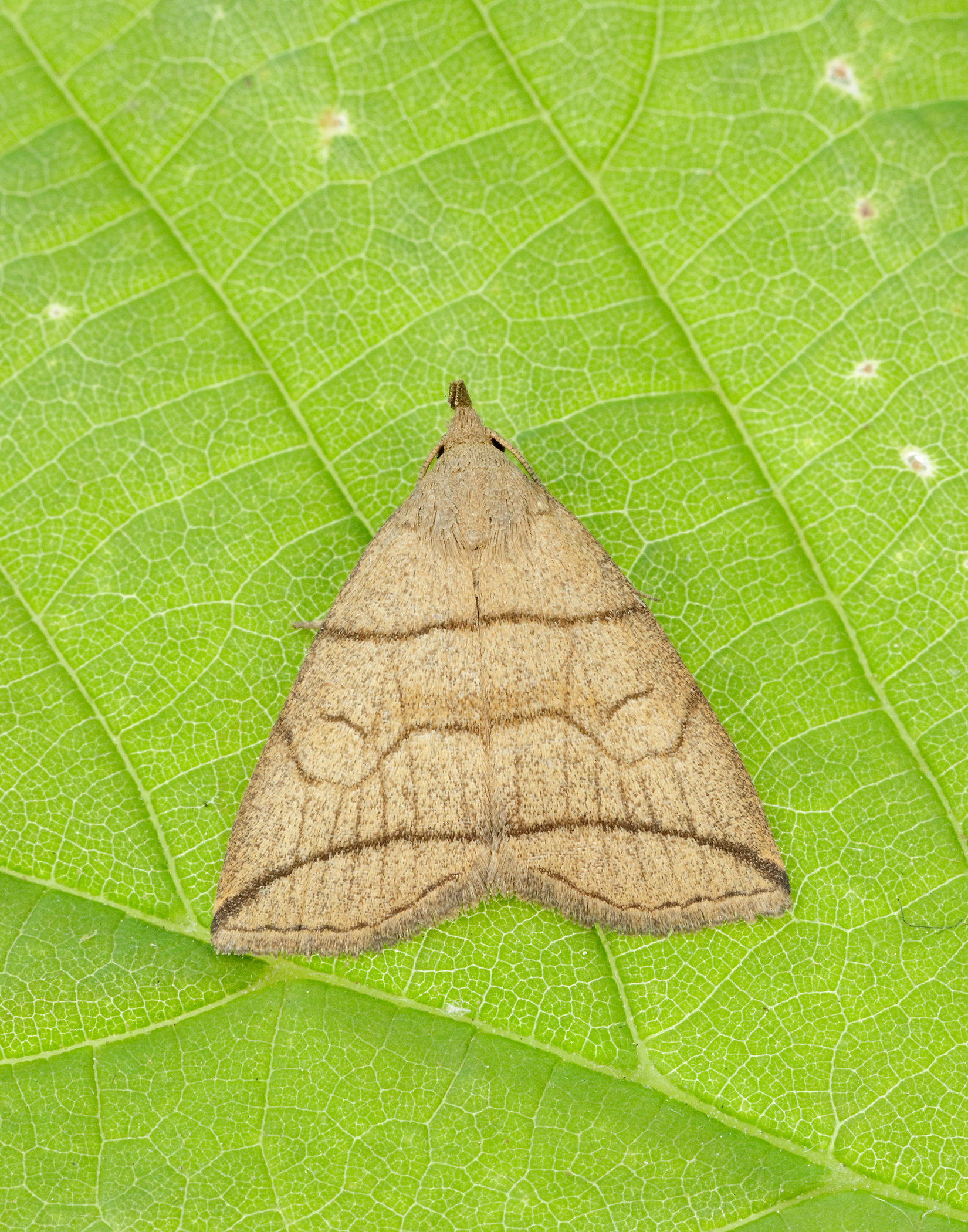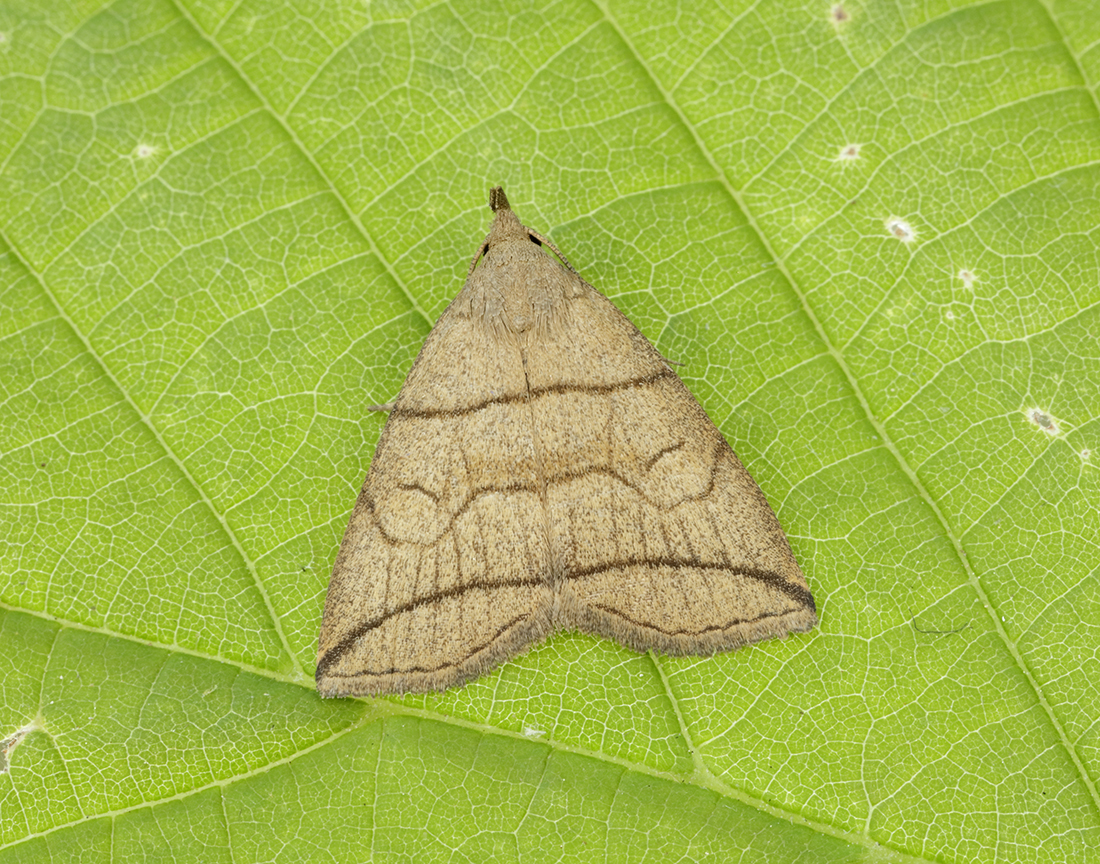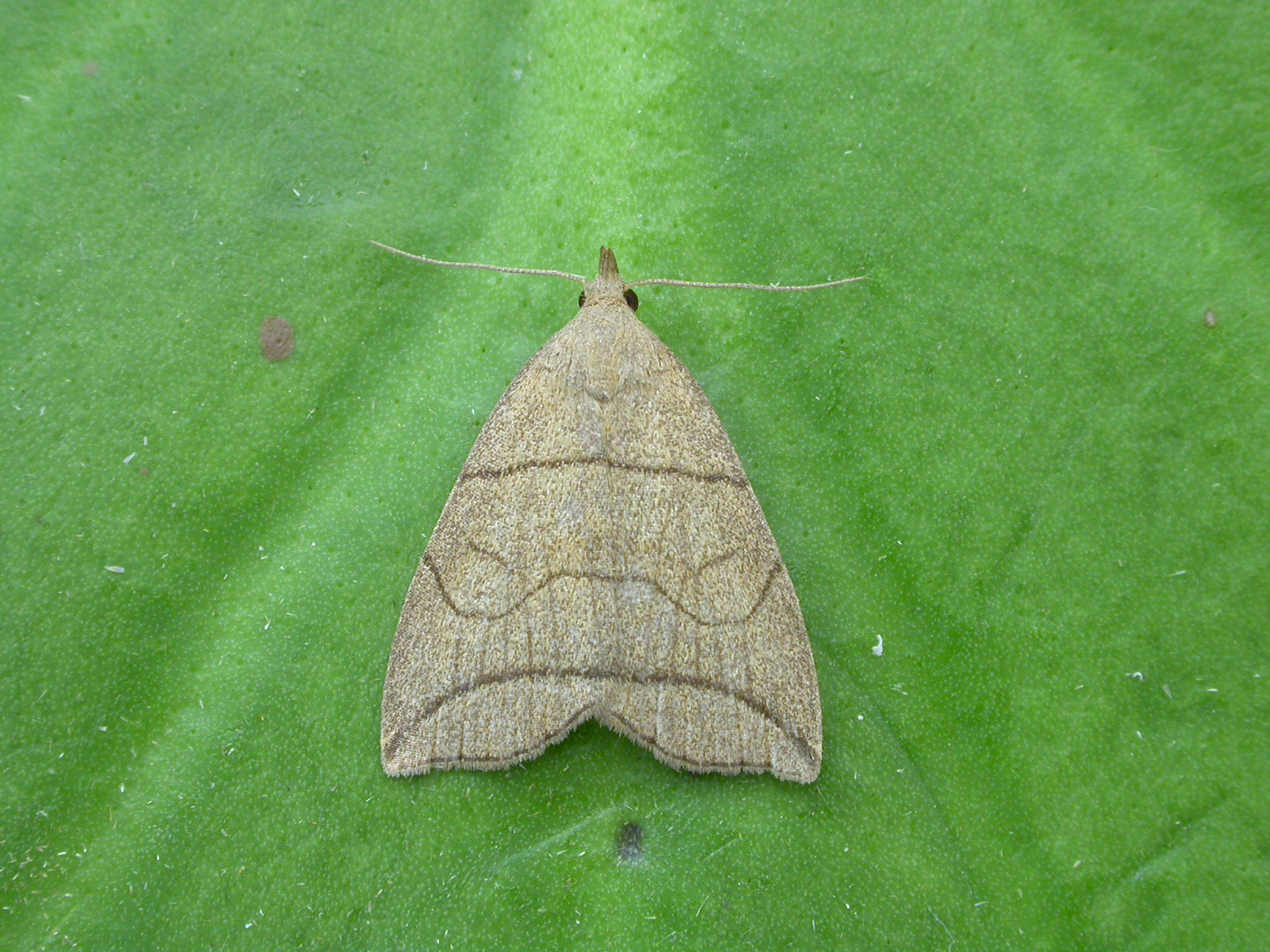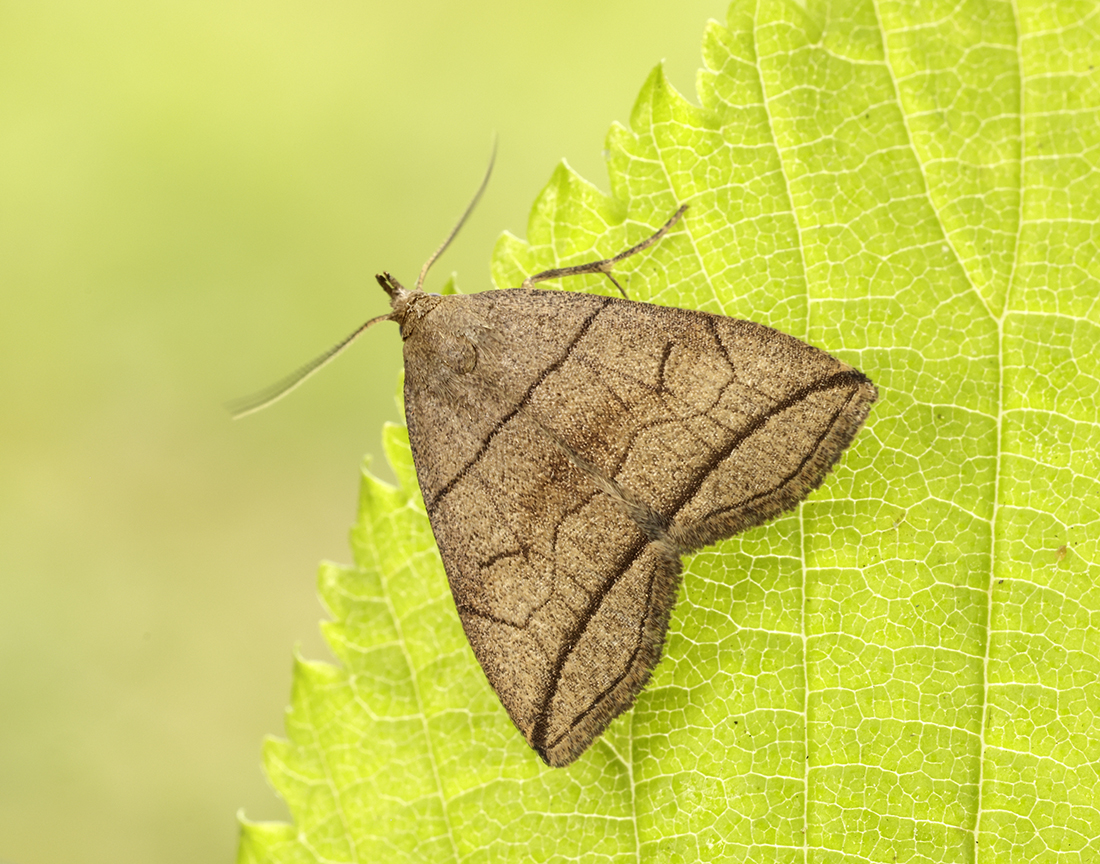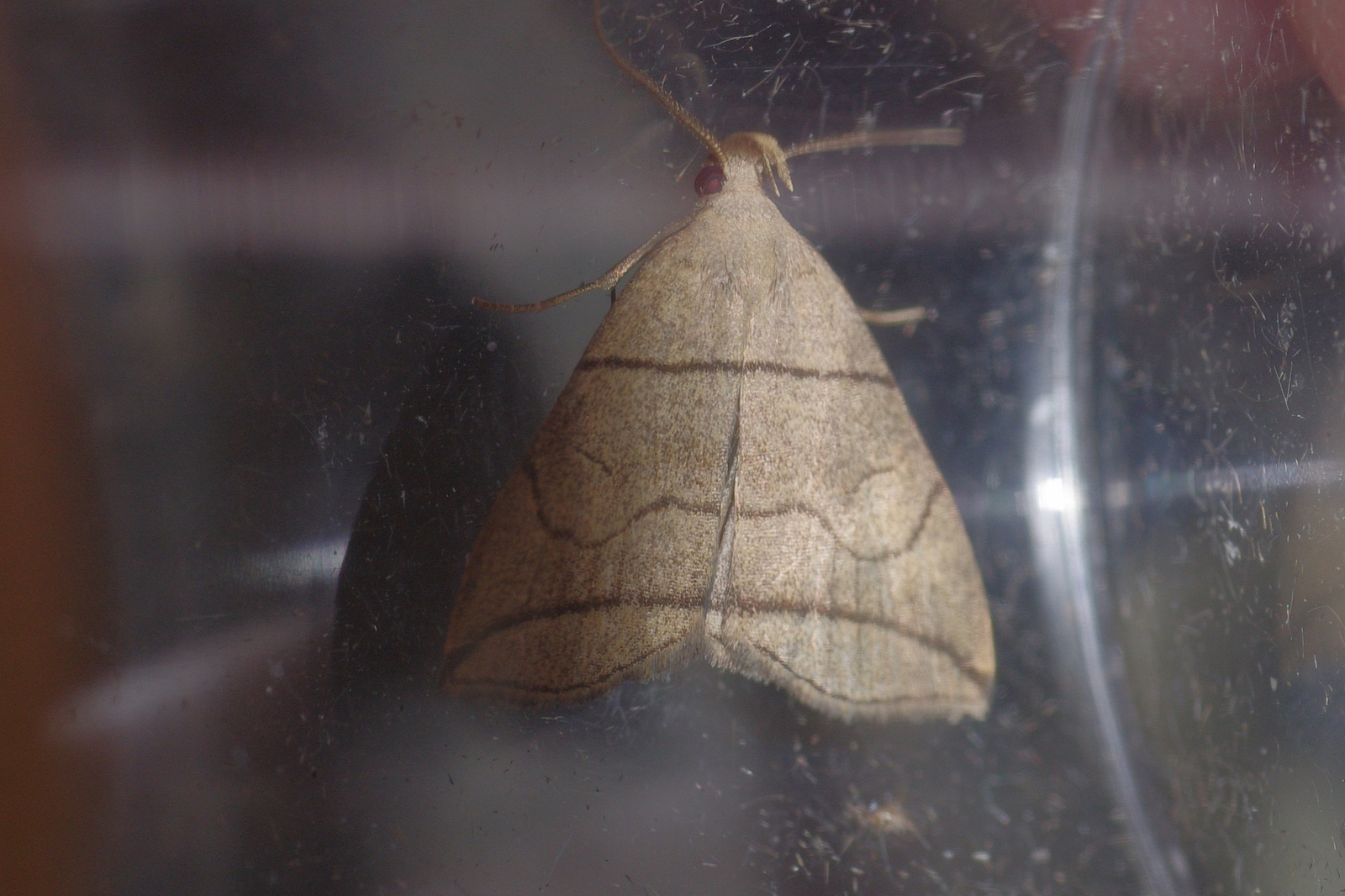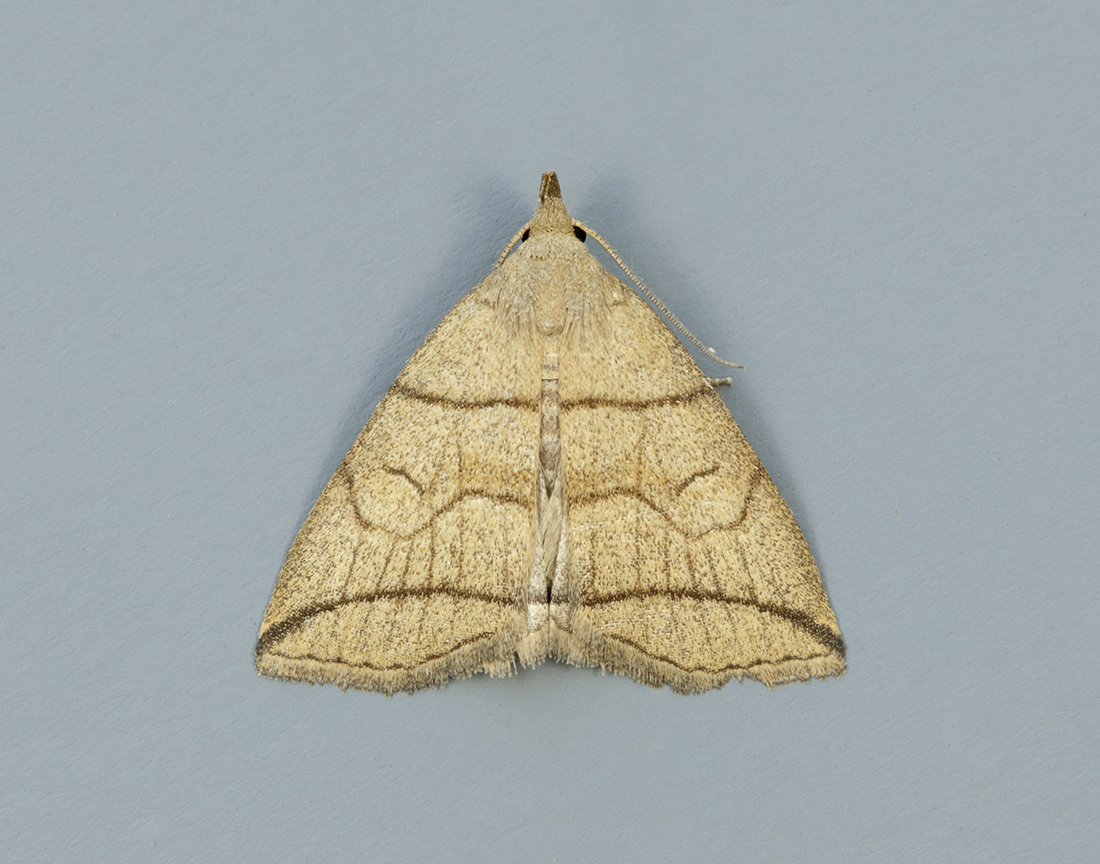

Red List: Least Concern (LC). GB Status: Common.
Identification
Usually distinctive. Care required, potential confusion with Fan-foot.
Recording Method
Flies from dusk. Attracted to light and sugar.
Life cycle
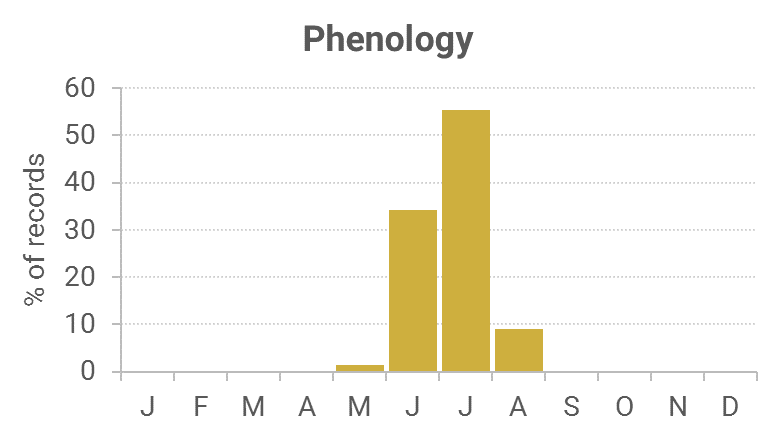
One generation. Overwinters as a pupa. Larvae July to October. Pupates in a cocoon in plant debris or in a bark crevice.
Larval foodplants
Healthy and withered leaves on the ground of a wide range of trees including Alder, Bird Cherry, Bramble, Downy Birch, Hawthorn, Hazel and Pendunculate Oak.
Habitat
Broadleaved woodland, hedgerows and gardens.
History
K. J. Morton of Edinburgh (1900) while on a visit in July 1899 to Wigtownshire had found this species in the Monreith area. Gordon (1919) had found it to be rather scarce, but widely distributed at Corsemalzie, Alticry and Portpatrick, Wigtownshire, at dusk in woods and on ivy. Earliest date was 14th June 1911.
Sir Arthur Duncan (1909-84) during his lifetime had found it at Tynron (VC72).
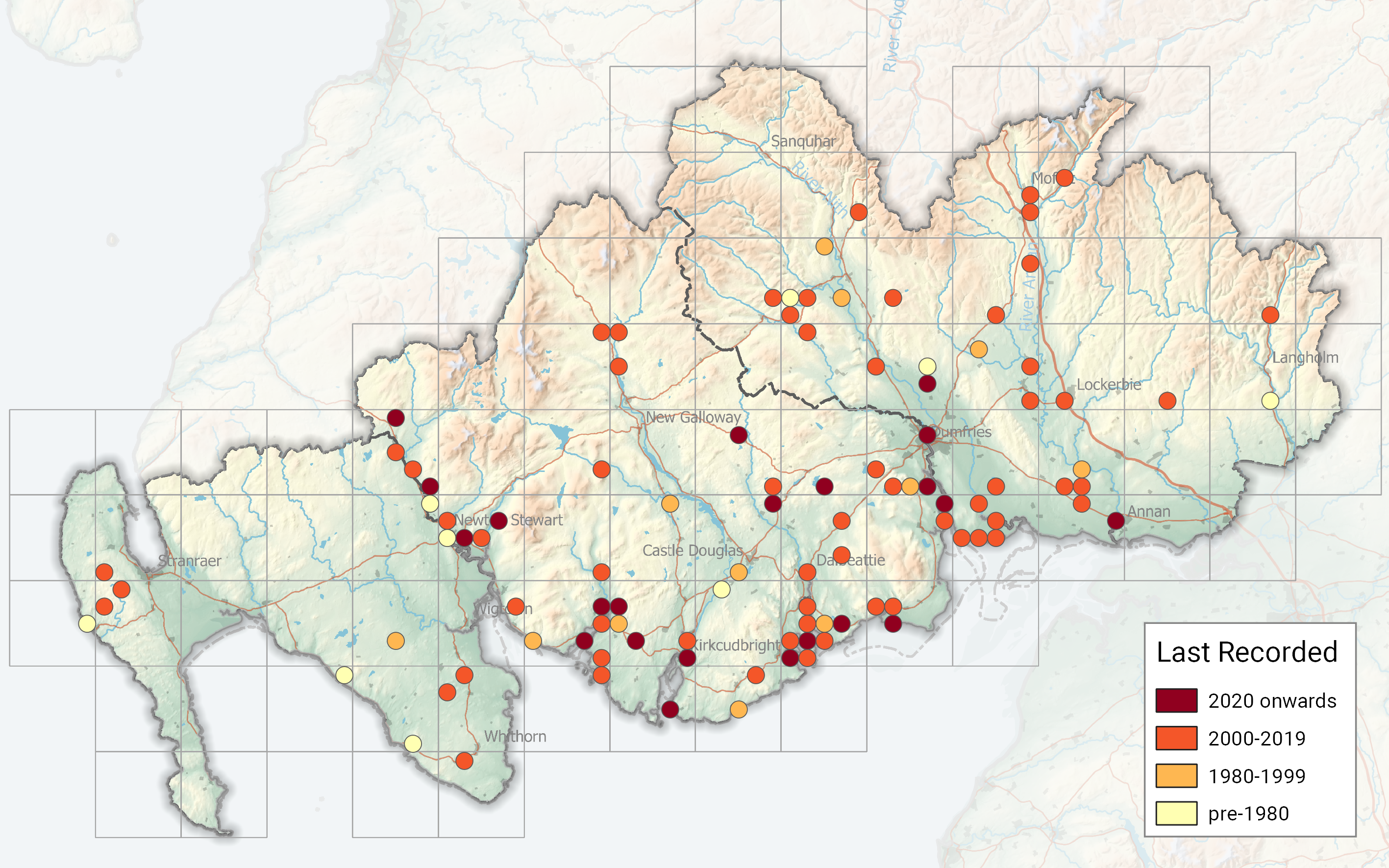
During 1974-93 there 230 records from all seven Rothamsted stations, proving it a widespread moth.
From 1993 to 2010 the regular trapped sites at Cally Woods (66 records) and Kirkton (20 records) provided half of the 170 records during the period, with the rest from widely scattered sites across the region.