

Red List: Least Concern (LC). GB Status: Common.
Identification
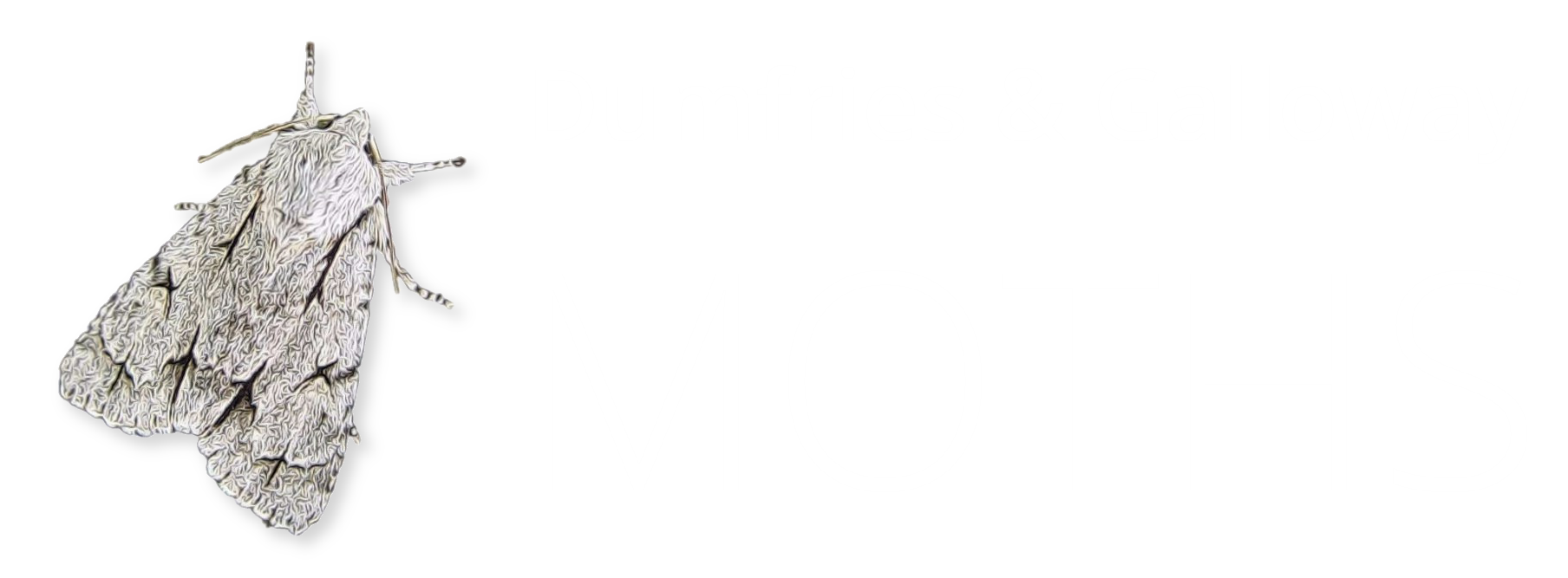
Usually distinctive.
Recording Method.
Attracted to light, also comes to sugar and flowers.
Life cycle
One generation. Overwinters as a partially grown larva. Larvae September to May. Pupates underground.
Larval foodplants
A wide variety of herbaceous plants, including nettles and docks. In spring also on sallows, hawthorn and Blackthorn.
Habitat
Ubiquitous, present in a wide range of habitats.
History
Lennon (1863) had stated it was common everywhere around the Dumfries area. Douglas Robinson (1870-71) had found it not rare at sugar in August on Almorness (VC73). K. J. Morton of Edinburgh (1900) whilst on a visit in July 1899 to Wigtownshire had found this species in the Monreith area. Gordon (1913) found it to be frequent and generally distributed during August in Wigtownshire.
Sir Arthur Duncan (1909-84) during his lifetime had found it at Closeburn, Tynron and Castlehill, Dumfries (all VC72). It was trapped at Irvine House Lodge, Auchenrivock (VC72), during 1973-74. Six of the Rothamsted stations managed 200 records between them during 1974-92, Caerlaverock not recording it.
From 1992 to 2010 the regular trapped sites of Kirkton, Durisdeer, Mersehead RSPB, Cally Woods, Kirkland, Forest Moor and the Threave Estate have produced many records, but it has also been recorded from numerous sites across the region and is one of our commonest noctuids.


