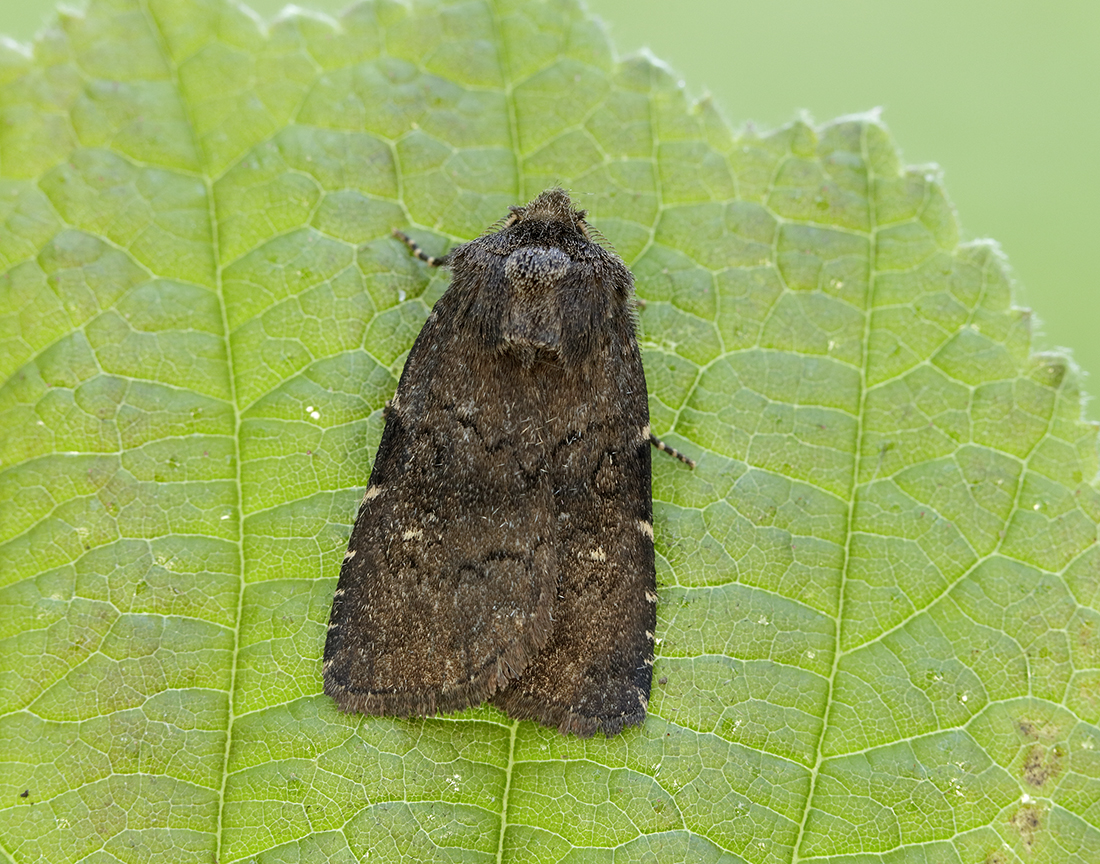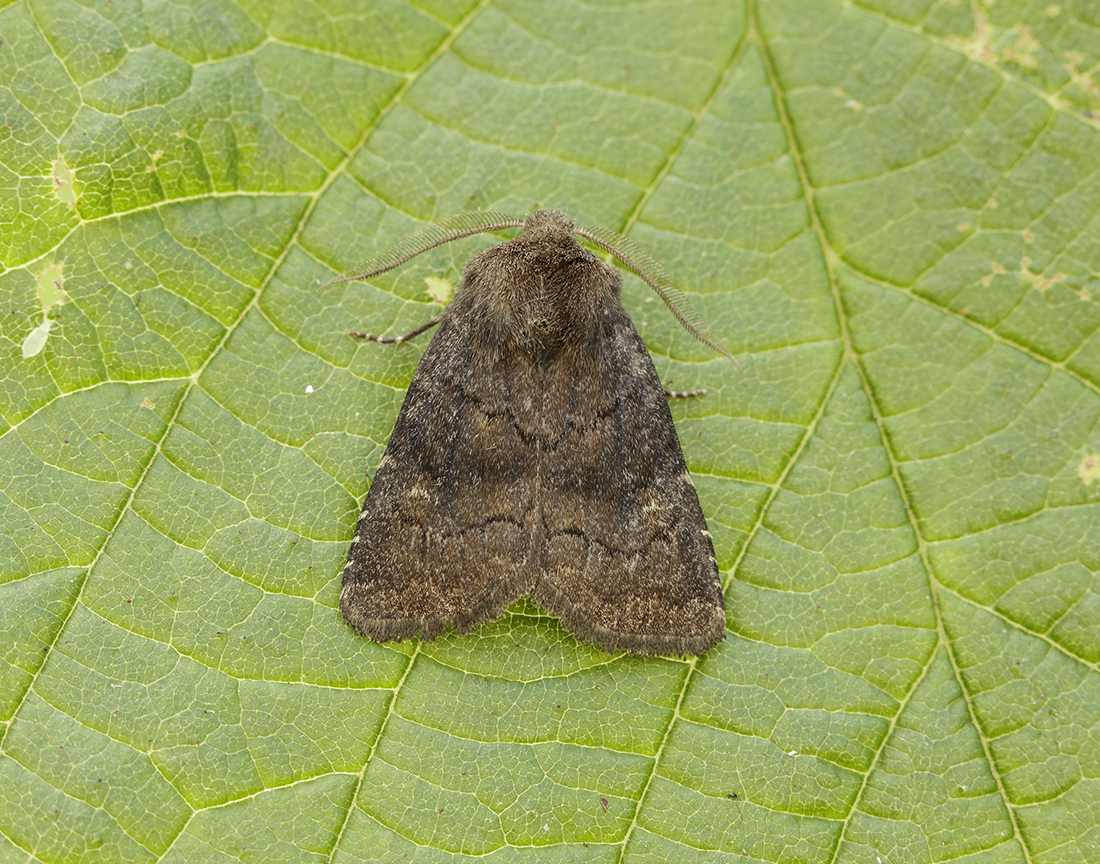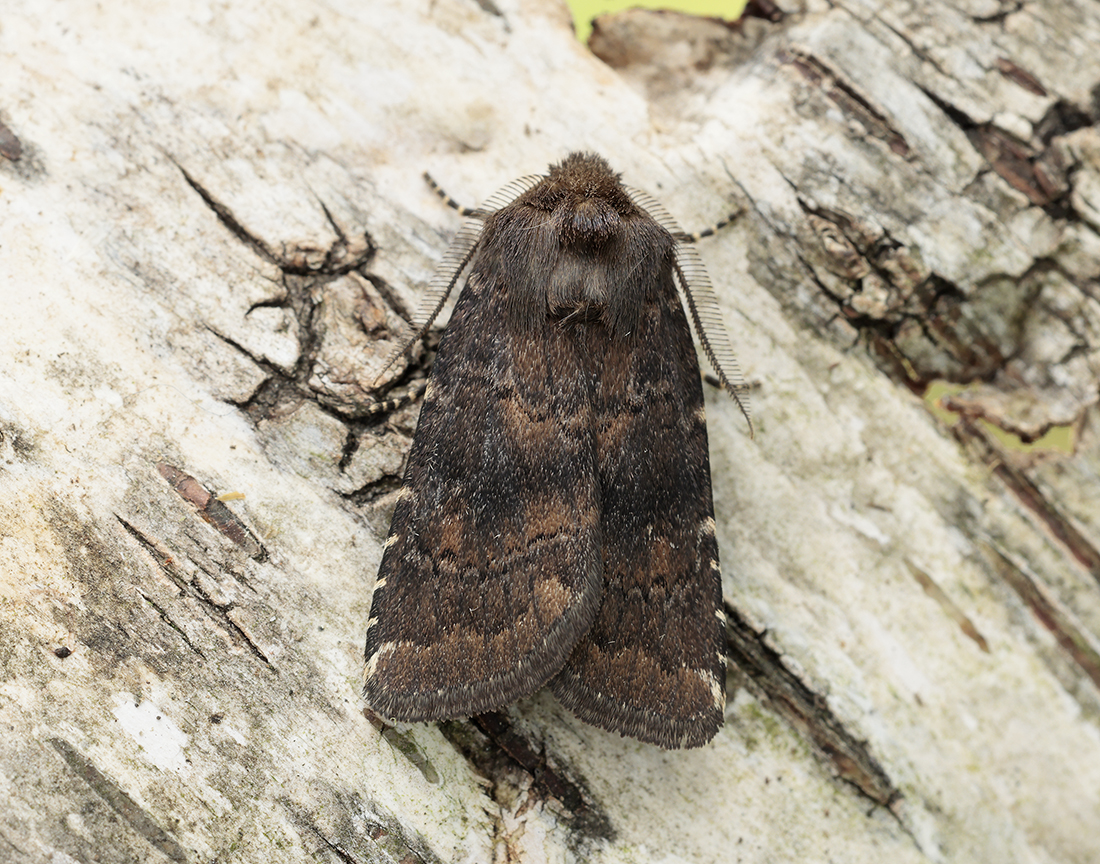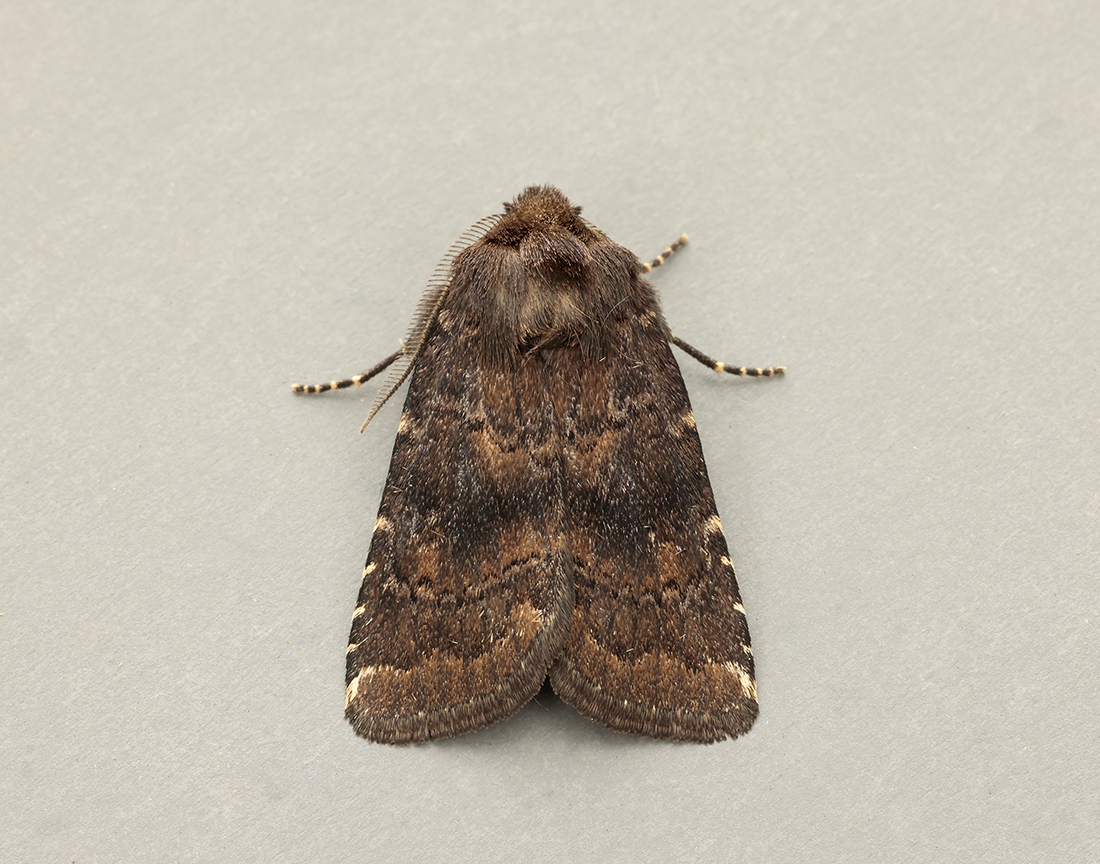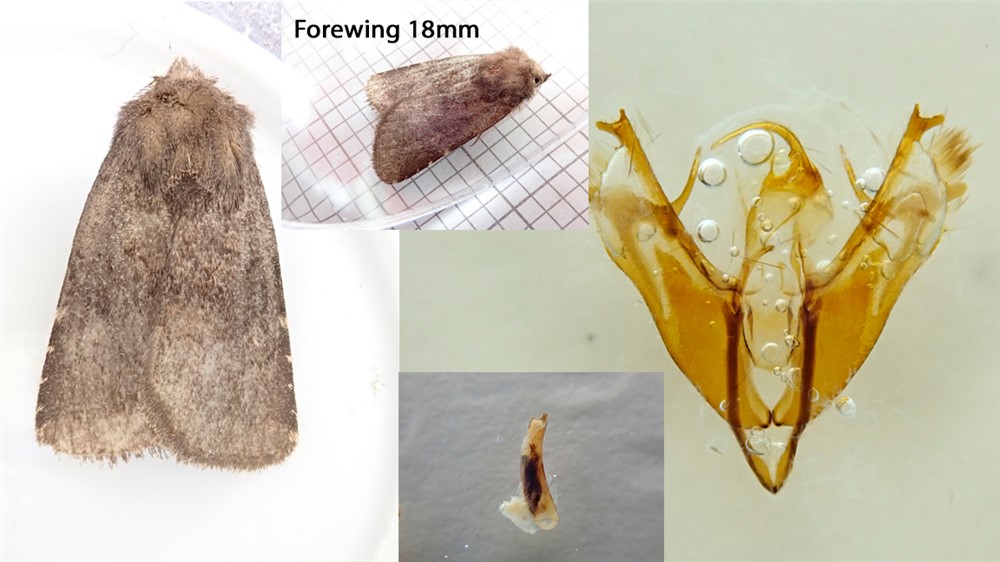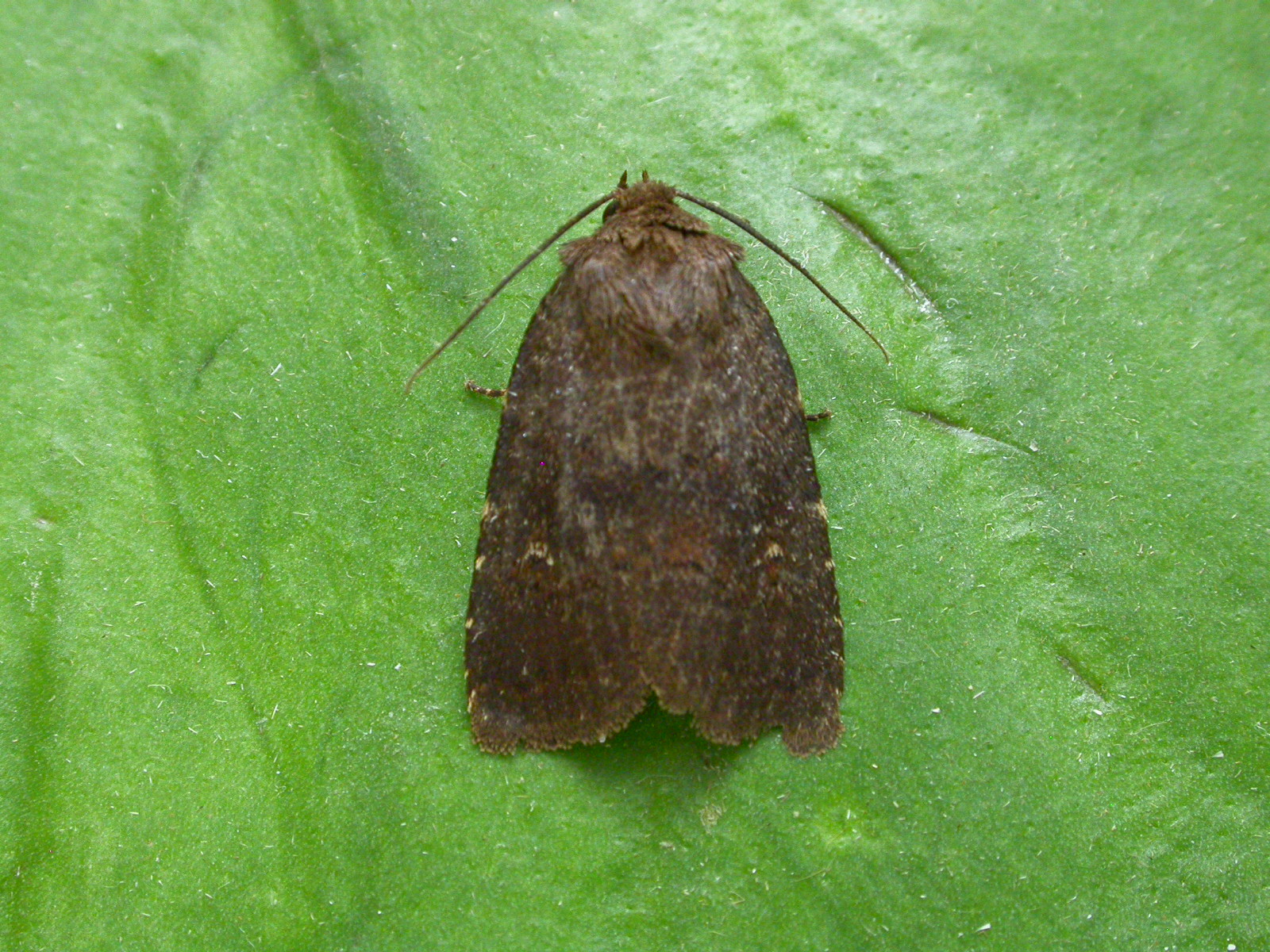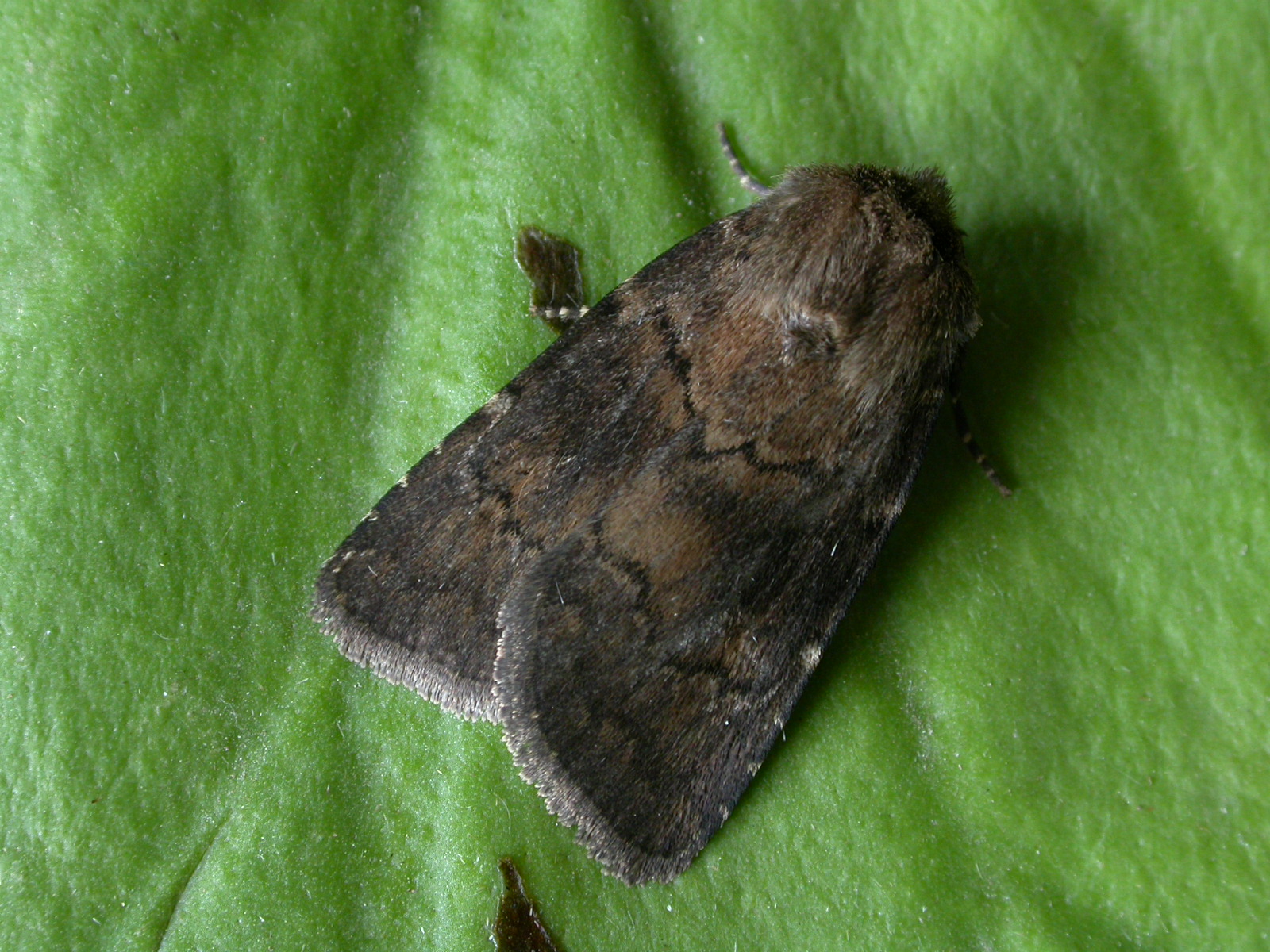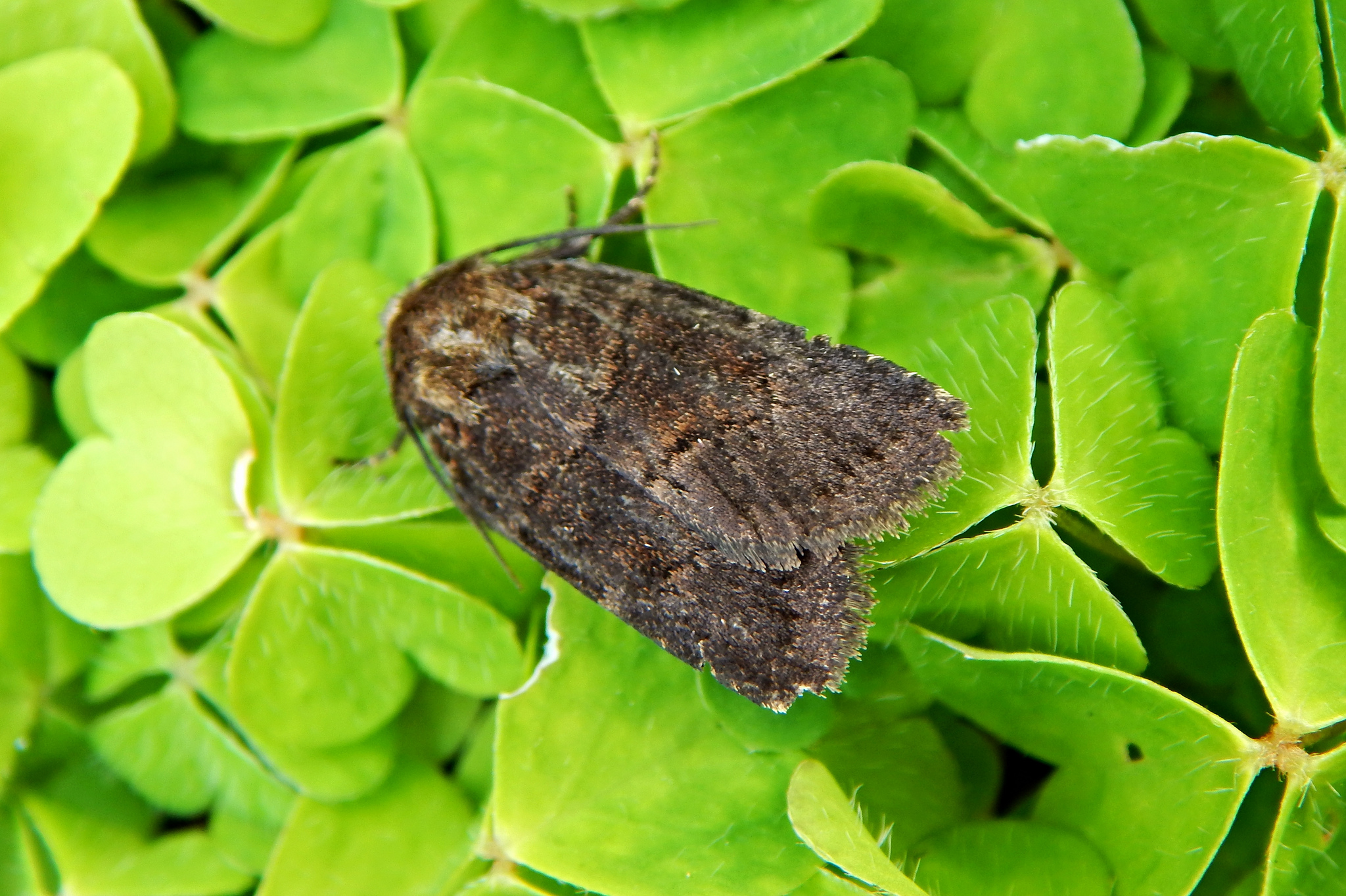

Red List: Least Concern (LC). GB Status: Common.
Identification
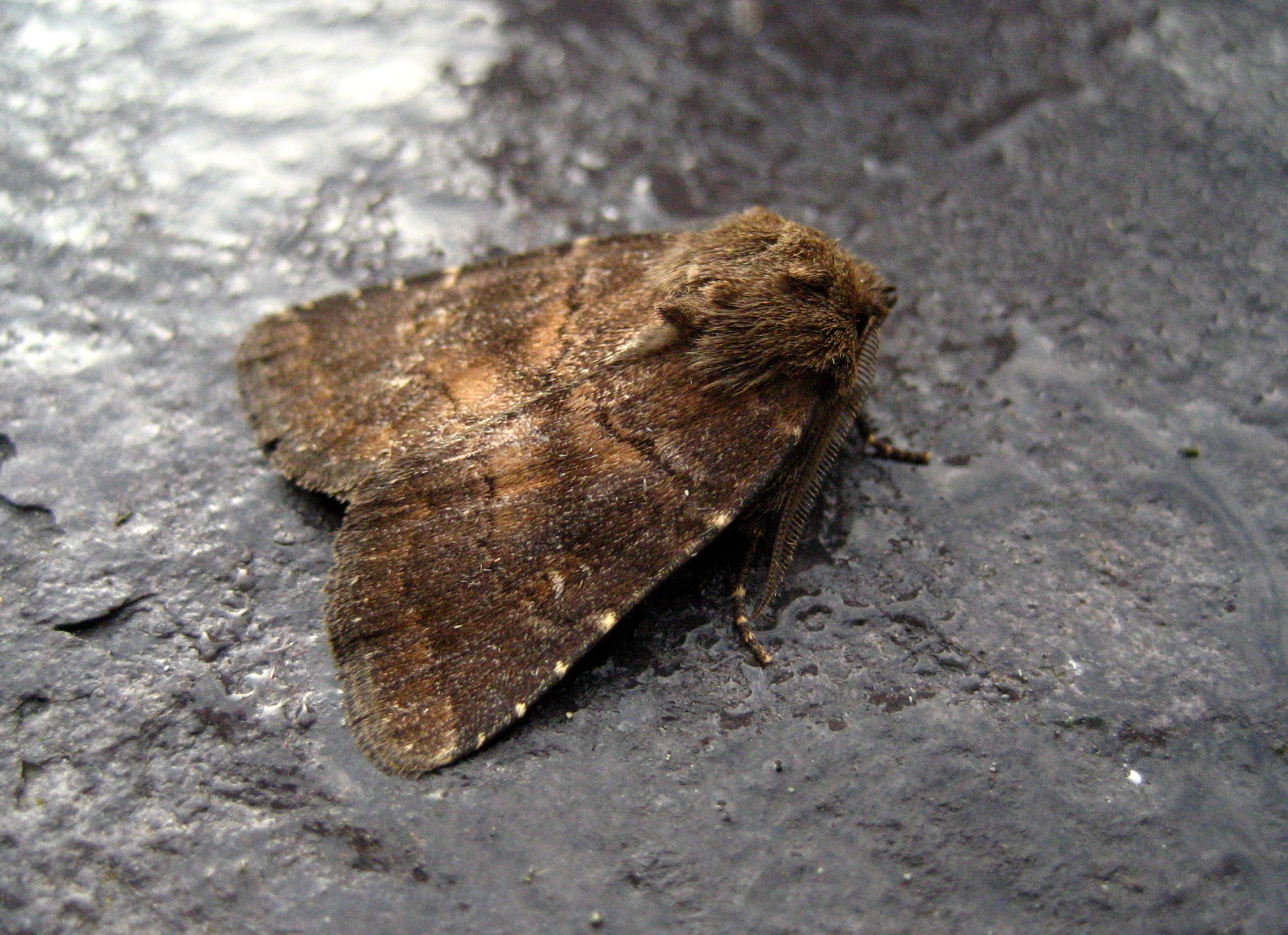
Usually distinctive.
Recording Method.
Attracted to light, also comes to sugar and flowers.
Life cycle
One generation. Overwinters as a almost fully grown larva. Larvae August to May. Pupates in an underground cocoon.
Larval foodplants
A wide range of herbaceous plants including vetches, plantains, docks and bistorts.
Habitat
Broadleaved woodland, scrub, hedgerows, gardens, heathland and moorland.
History
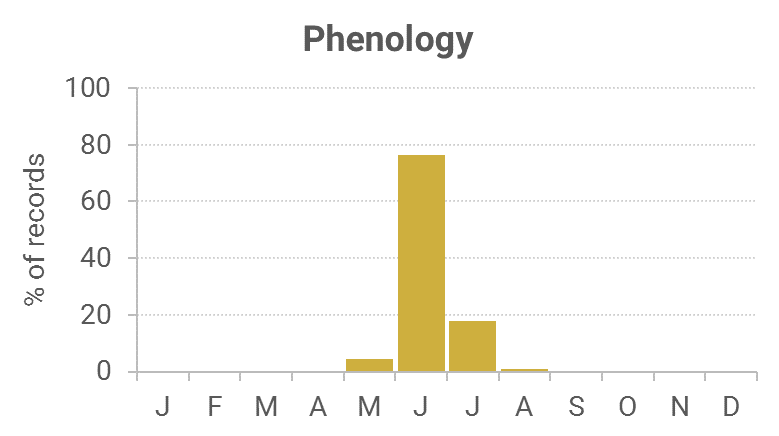
Lennon (1863) stated that it was not common, but that it had occurred at Dalskairth (VC73). Gordon (1913) found it generally distributed in Wigtownshire, coming to light and sugar during early June. Earliest date was 31st May 1911.
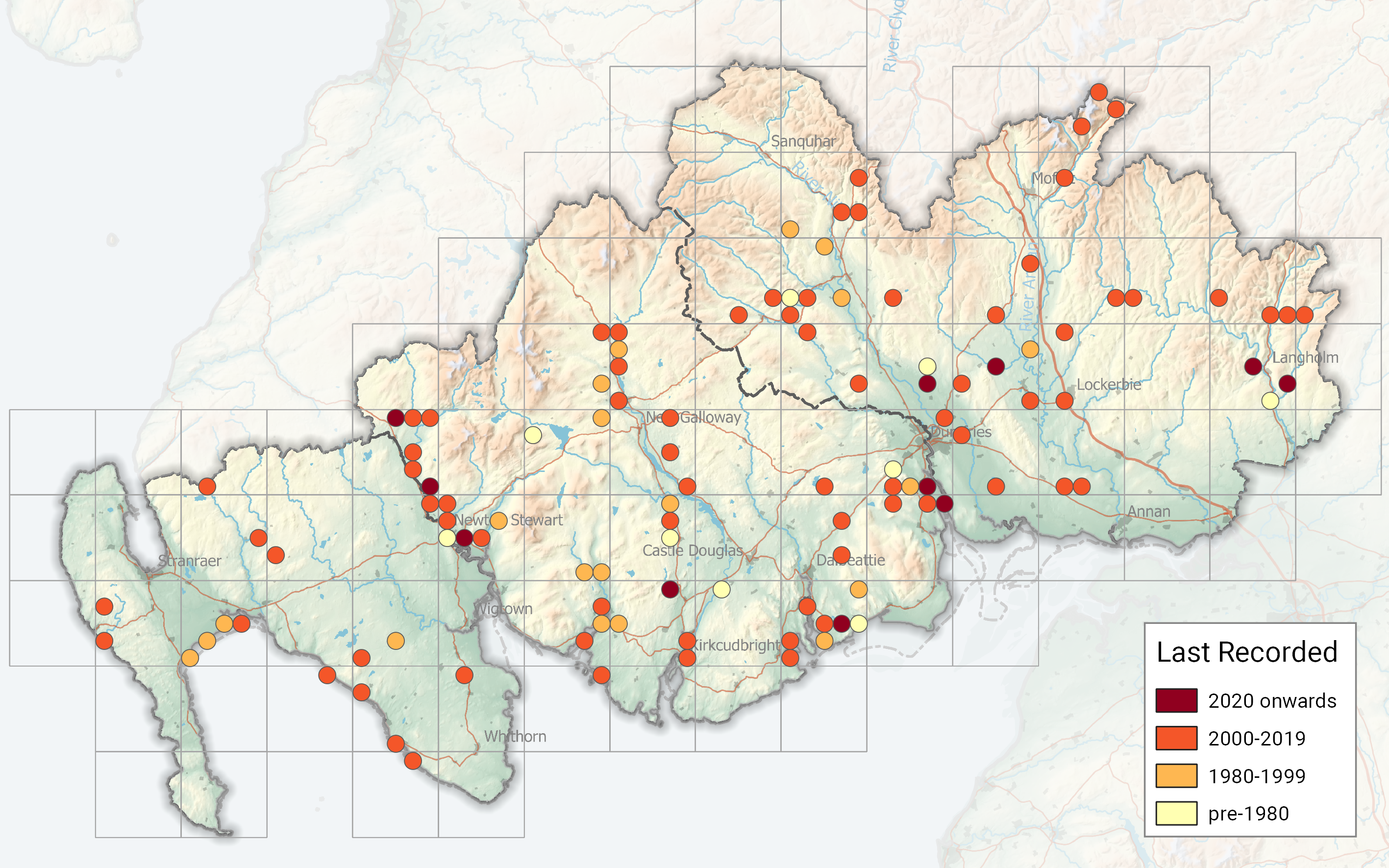
Sir Arthur Duncan (1909-84) during his lifetime had found it at Closeburn, Tynron and Castlehill, Dumfries (all VC72).
During 1974-92 six of the seven Rothamsted stations recorded it regularly, Caerlaverock not finding the species.
Durisdeer (VC72), Carsfad near Dalry and the Wood of Cree area (both VC73) were regular sites where it was trapped during 1992-2010, but only six records came from Wigtownshire in that period.