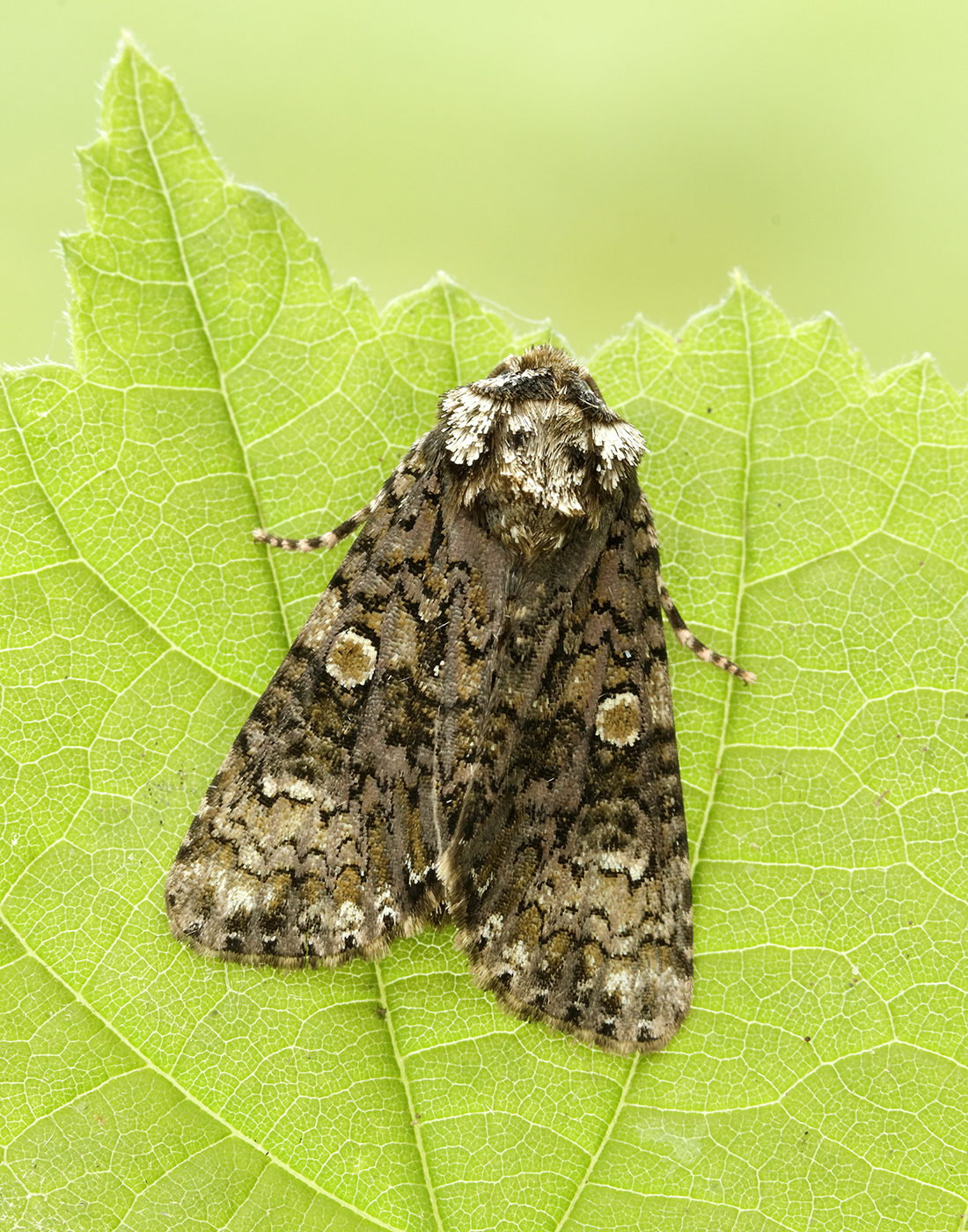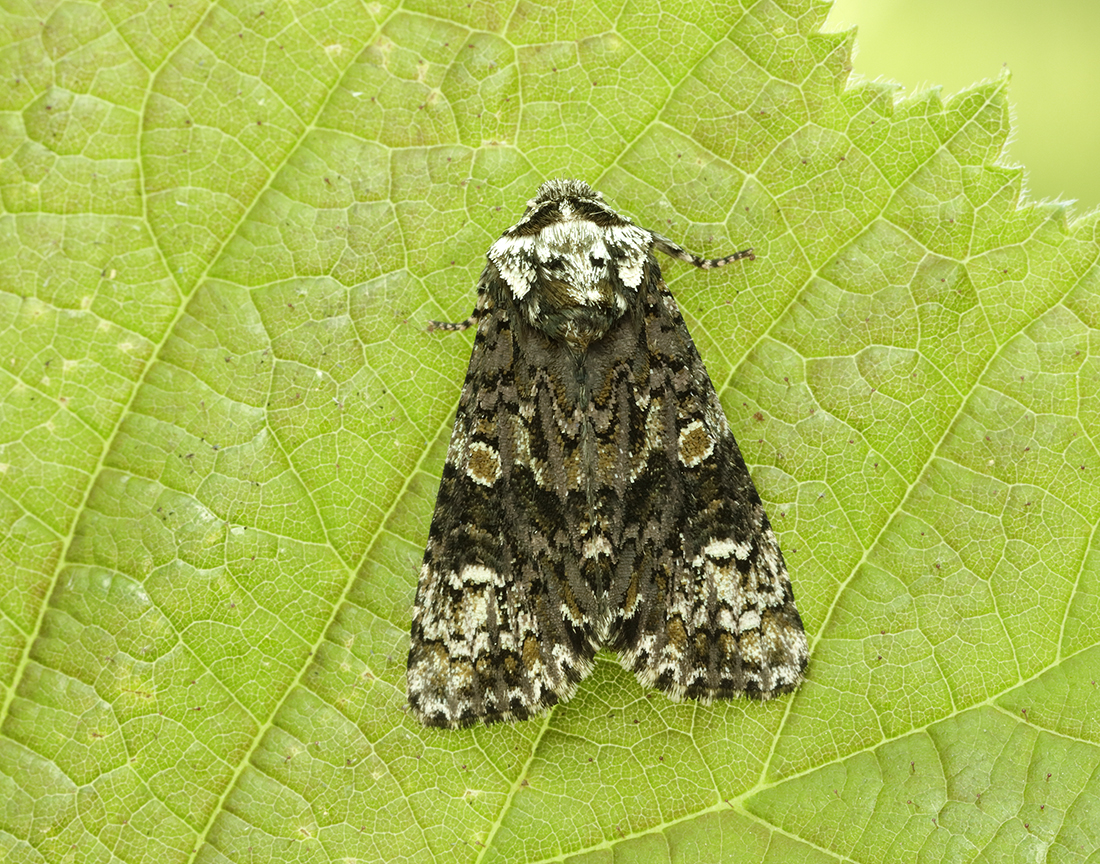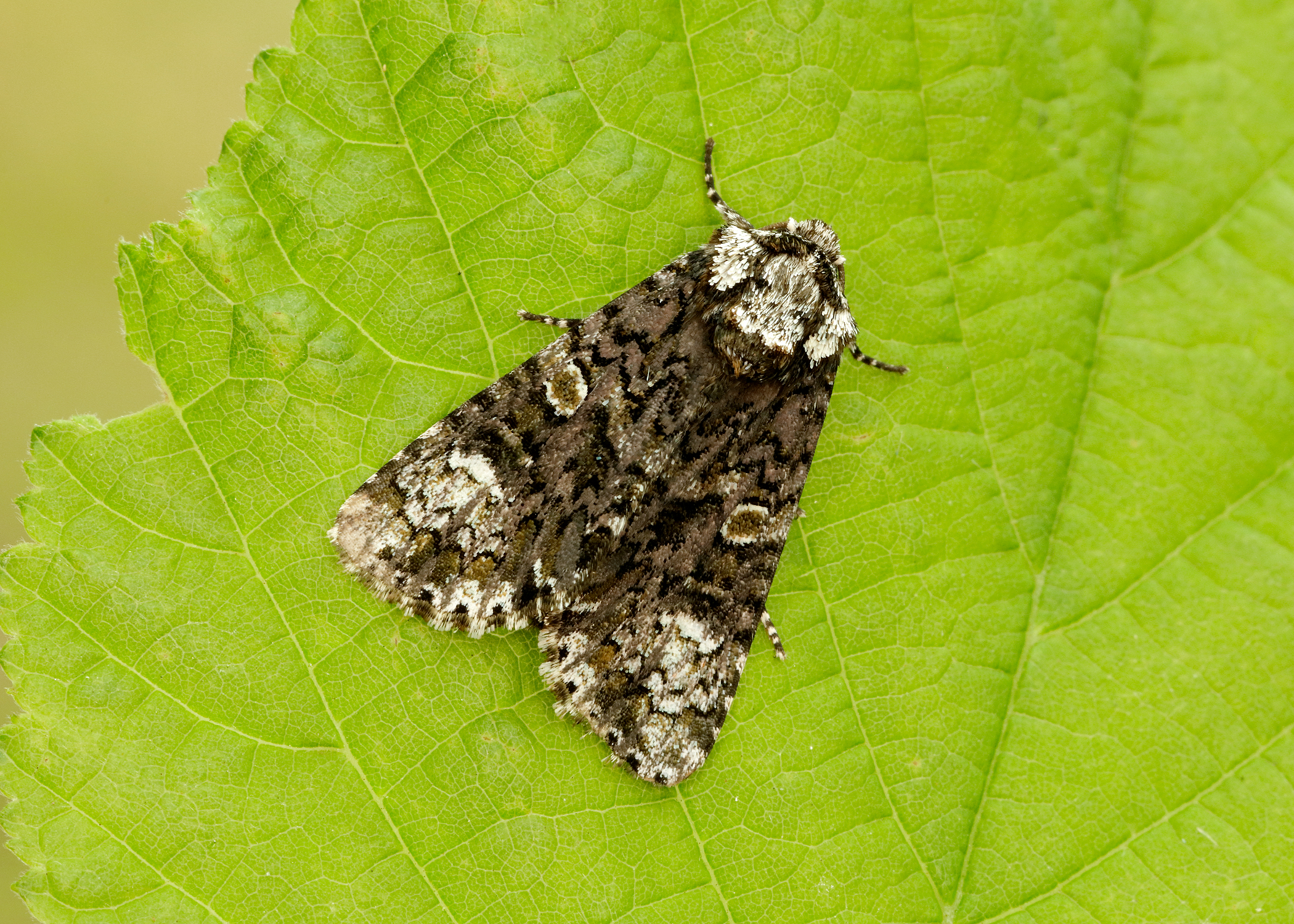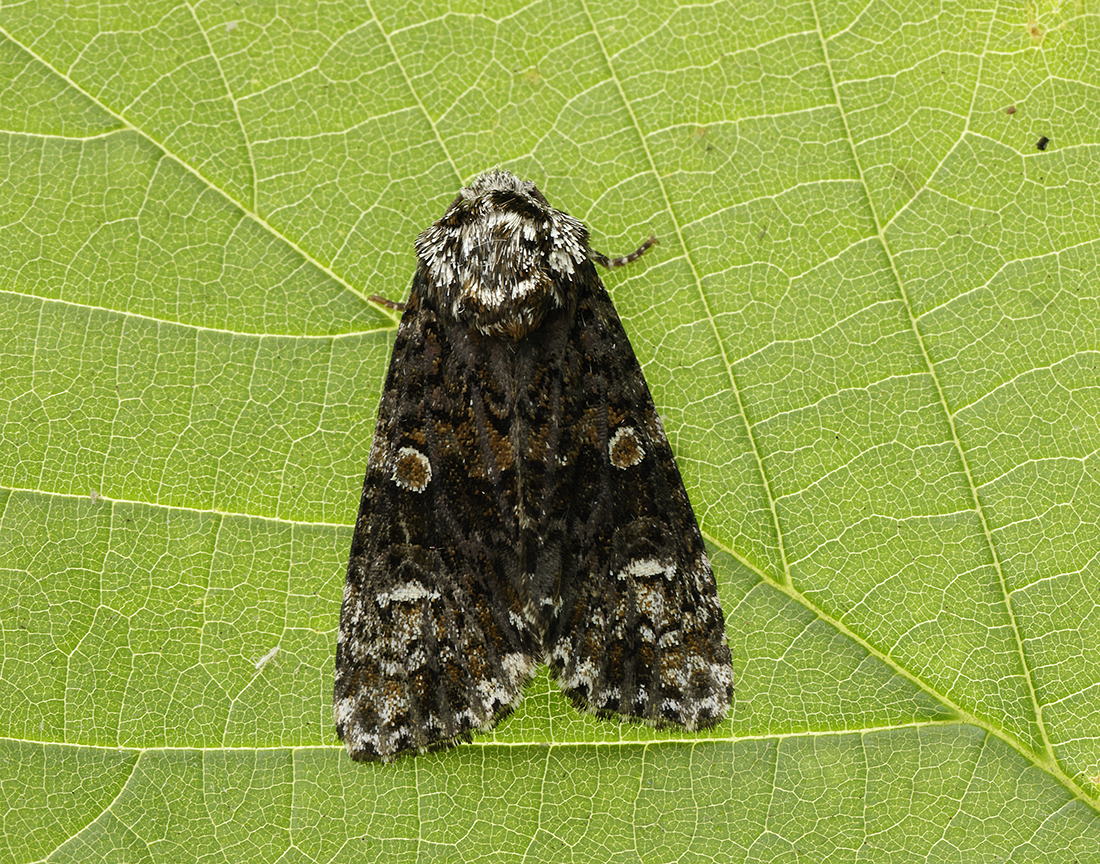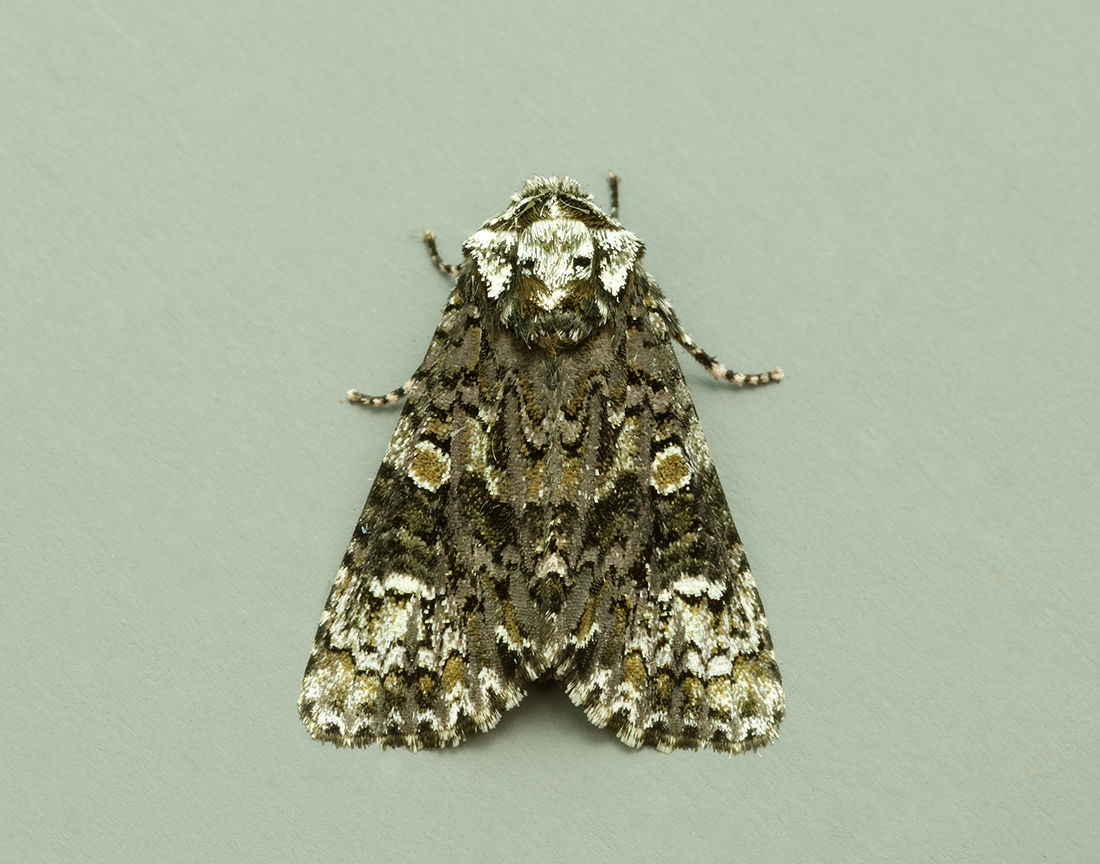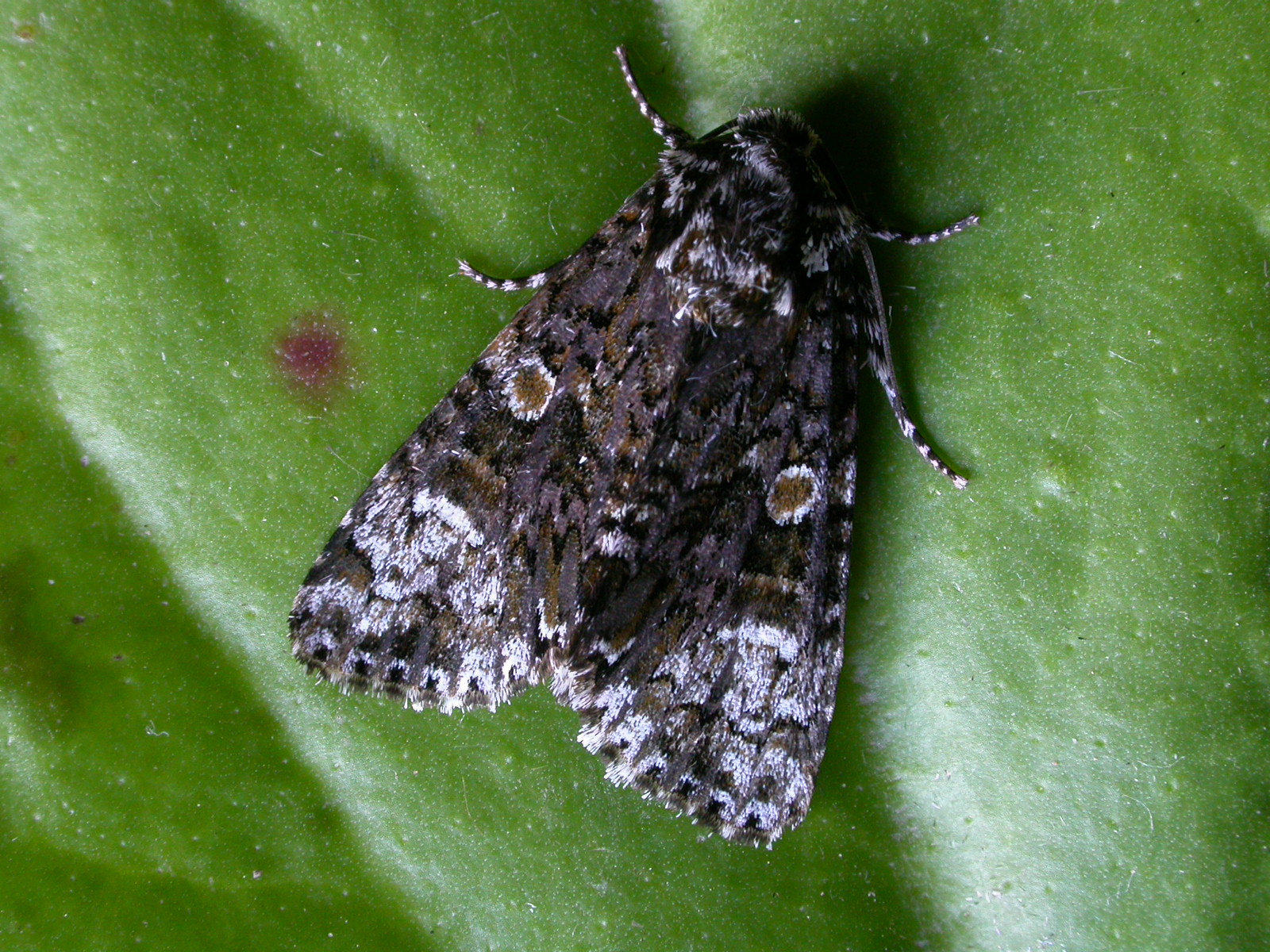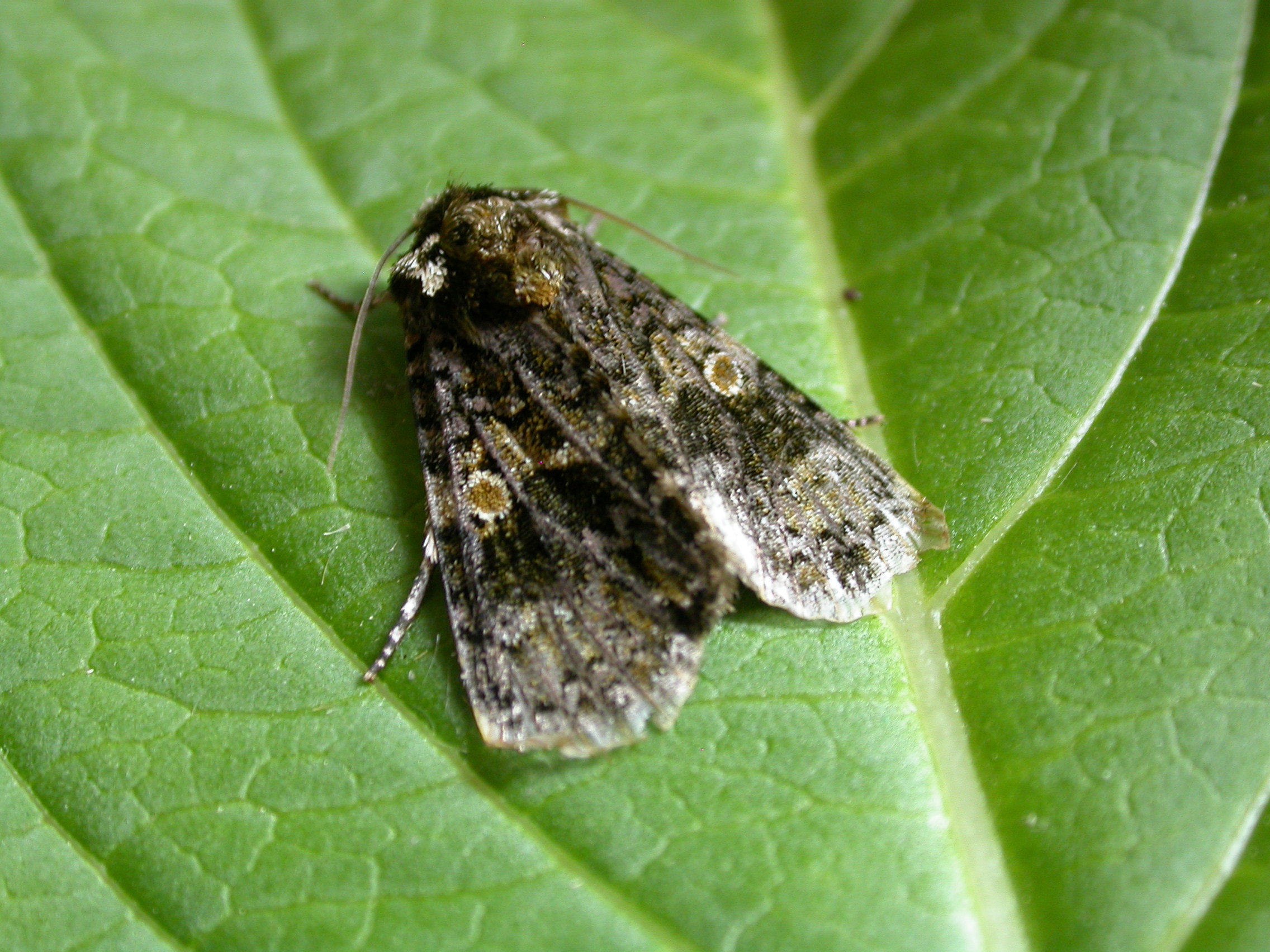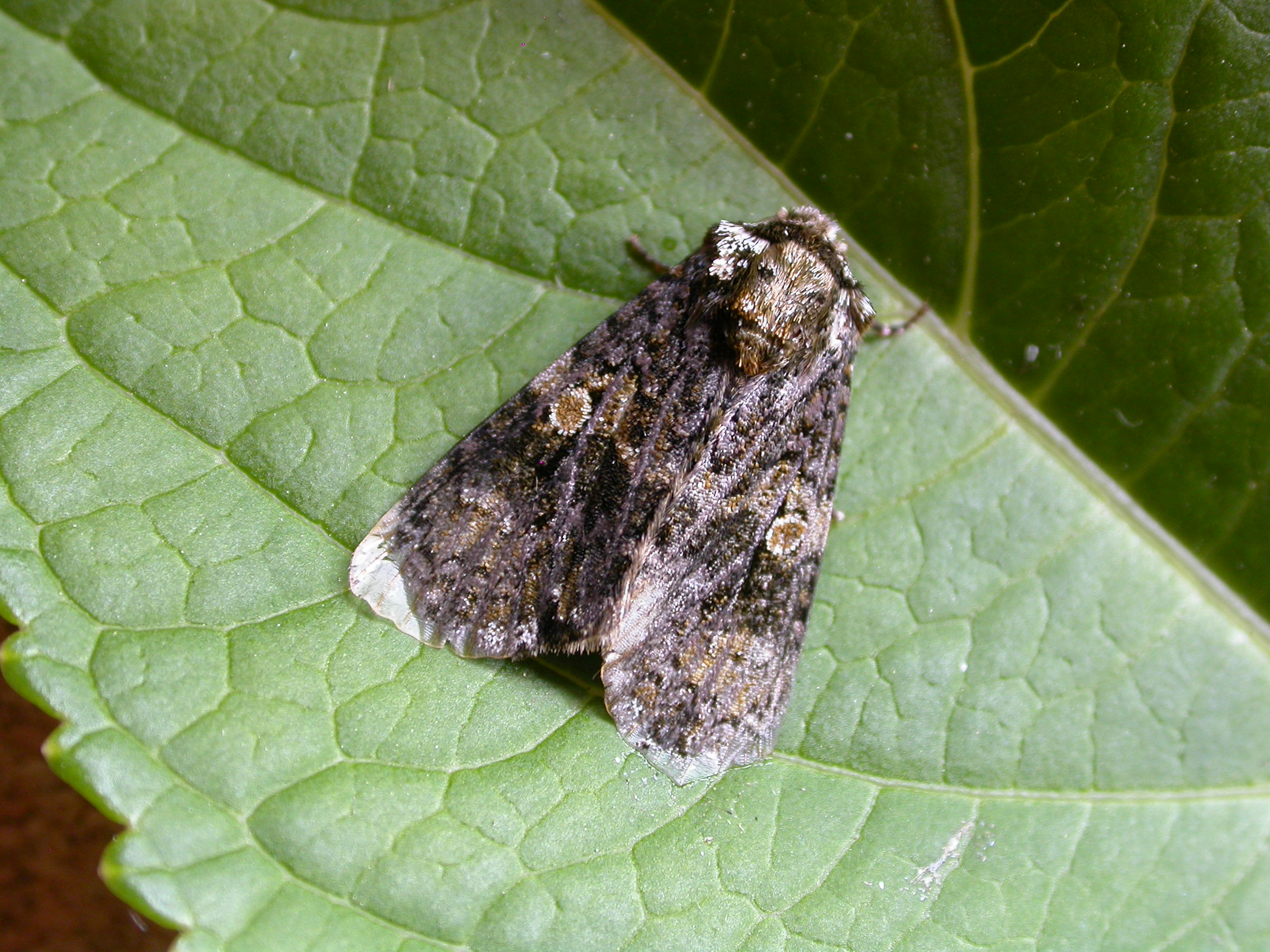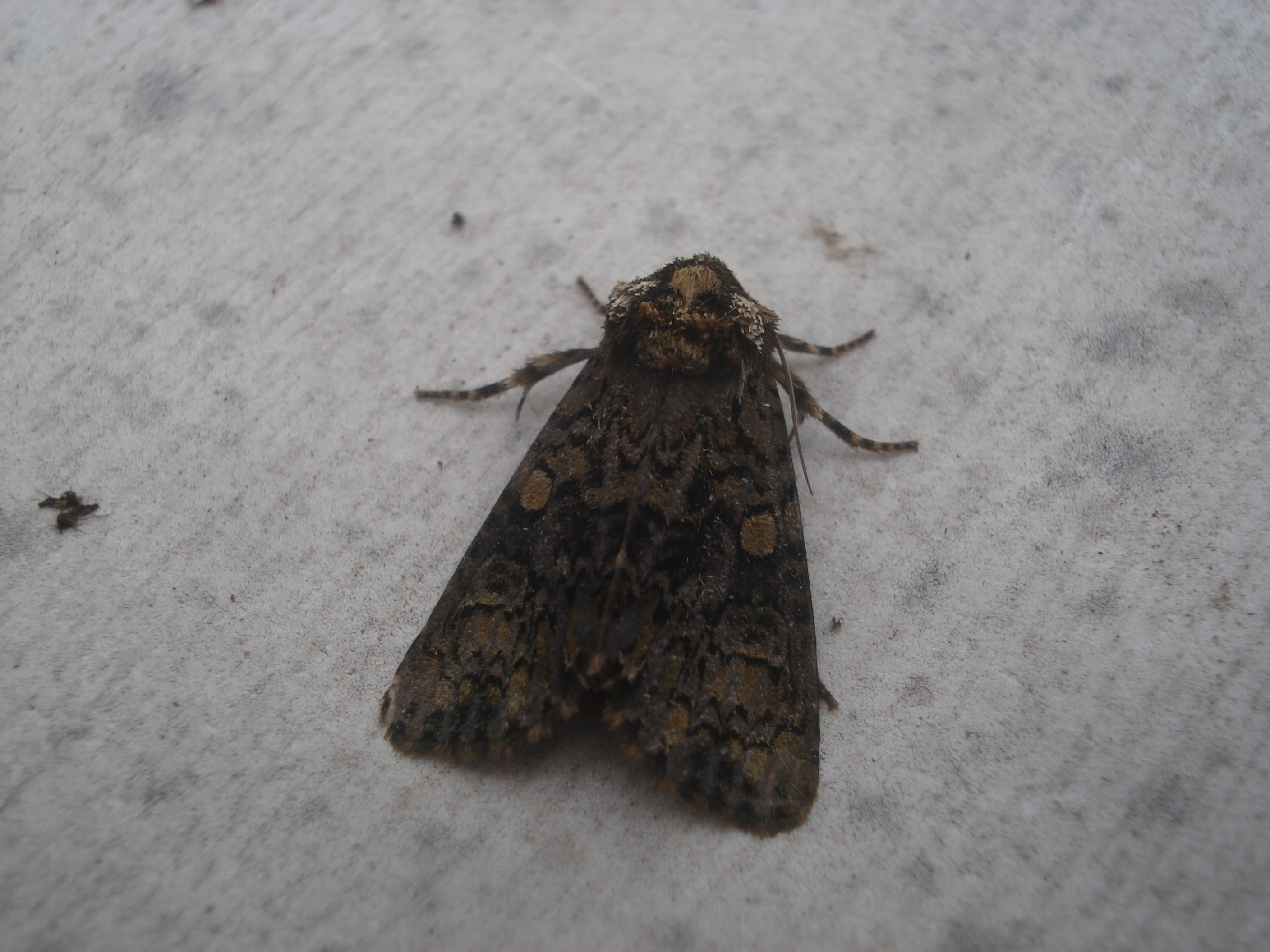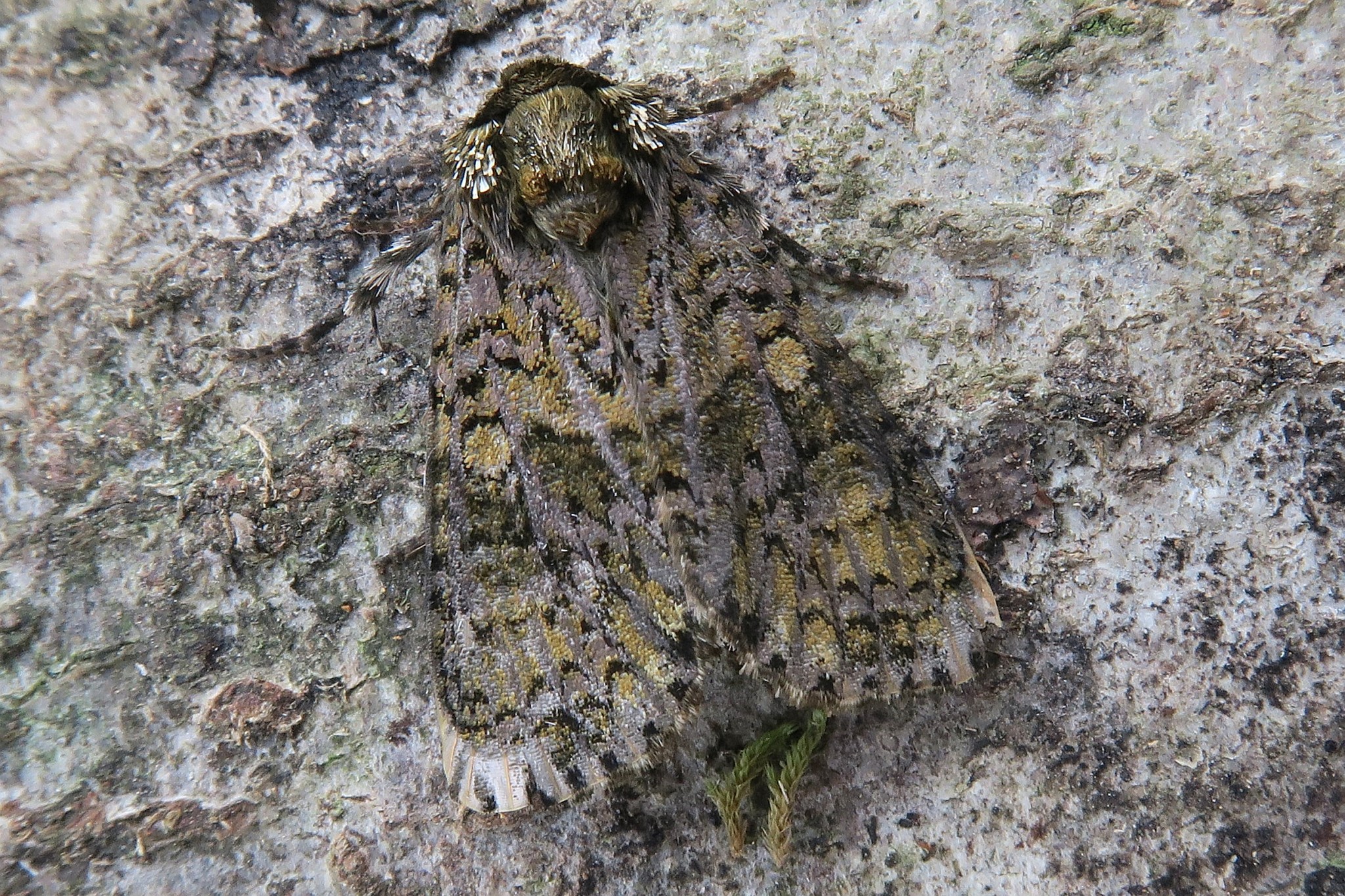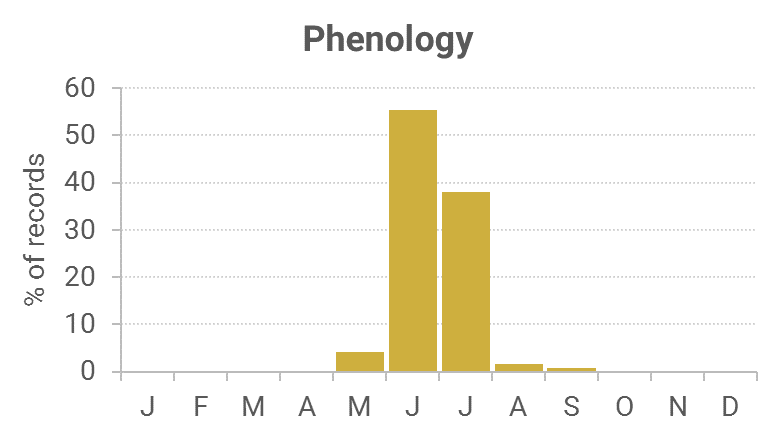

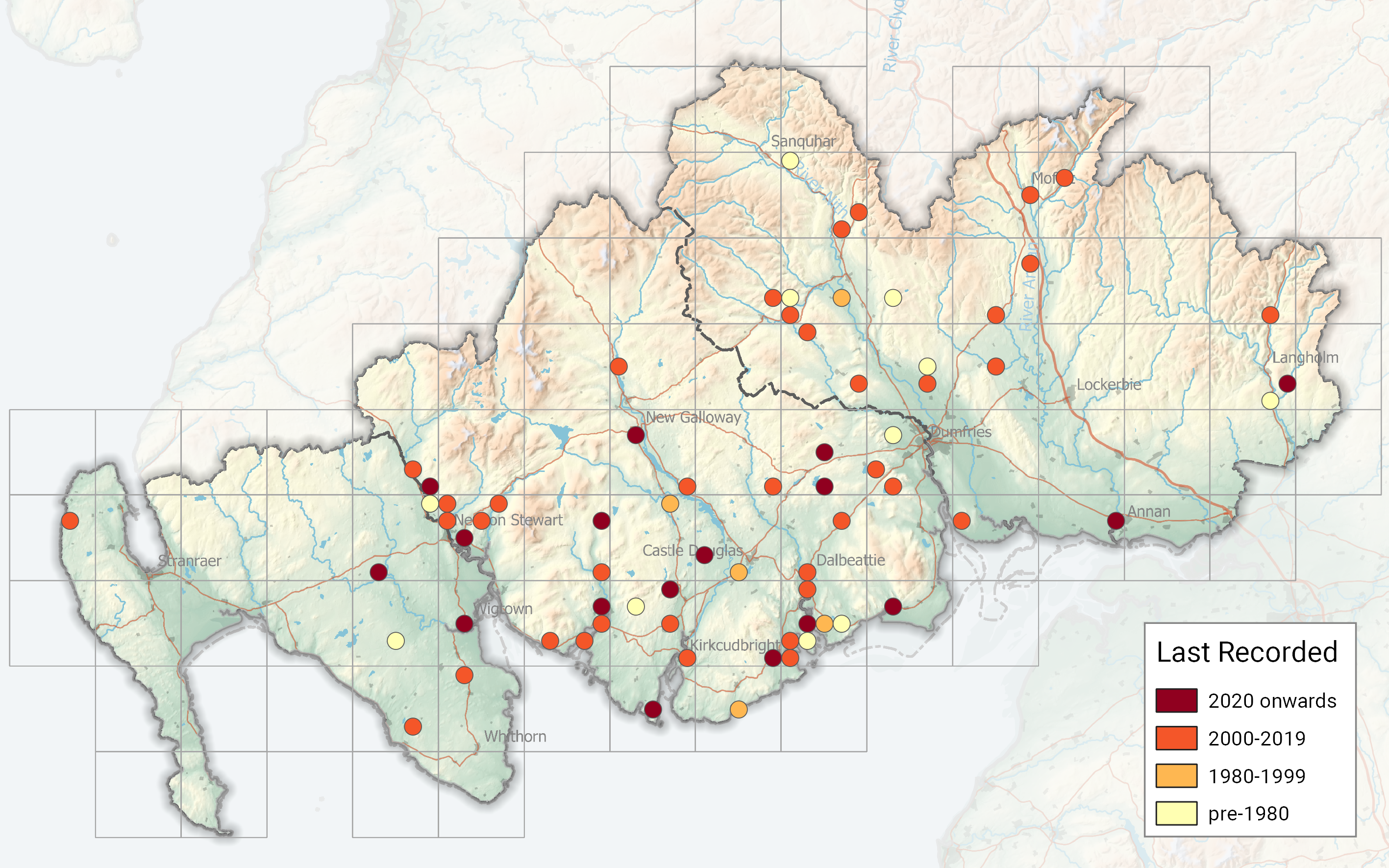
Red List: Least Concern (LC). GB Status: Common.
Identification
Usually distinctive.
Recording Method.
Attracted to light.
Life cycle
One generation. Overwinters as a pupa. Pupates in a cocoon under mosses on tree trunks. Larvae July to September.
Larval foodplants
Ash and Wild Privet, also Hazel and Alder.
Habitat
A wide range of open habitats.
History
Lennon (1863) stated that it was not common, but that it had occurred at Terregles (VC72). Douglas Robinson (1870-71) had found it common during July on Almorness (VC73). He also found the larvae in August and September. Gordon (1913) had found The Coronet to be fairly common some seasons at sugar at Corsemalzie, especially in 1896, 1898-1905, but he added that it had gone scarce since then. Earliest date was 6th June 1896.
Sir Arthur Duncan (1909-84) during his lifetime had found it at Closeburn, Tynron and Castlehill, Dumfries (all VC72). Archibald Russell (1944) listed it as occurring near Gatehouse of Fleet (VC73) during the years 1942-43.
One Rothamsted record each from Penninghame (VC74) in 1976 and Waterside Mains at Keir in 1980. Regular trapping on the Hensol Estate (VC73) 1981-84, Kirkton (VC72) 1994-2000, and Cally Woods (VC73) 1998-2000, amassed about thirty records, proving its scarcity. The only record between 1976 and 2010 in Wigtownshire was one trapped at Forest Moor in June, 2006.