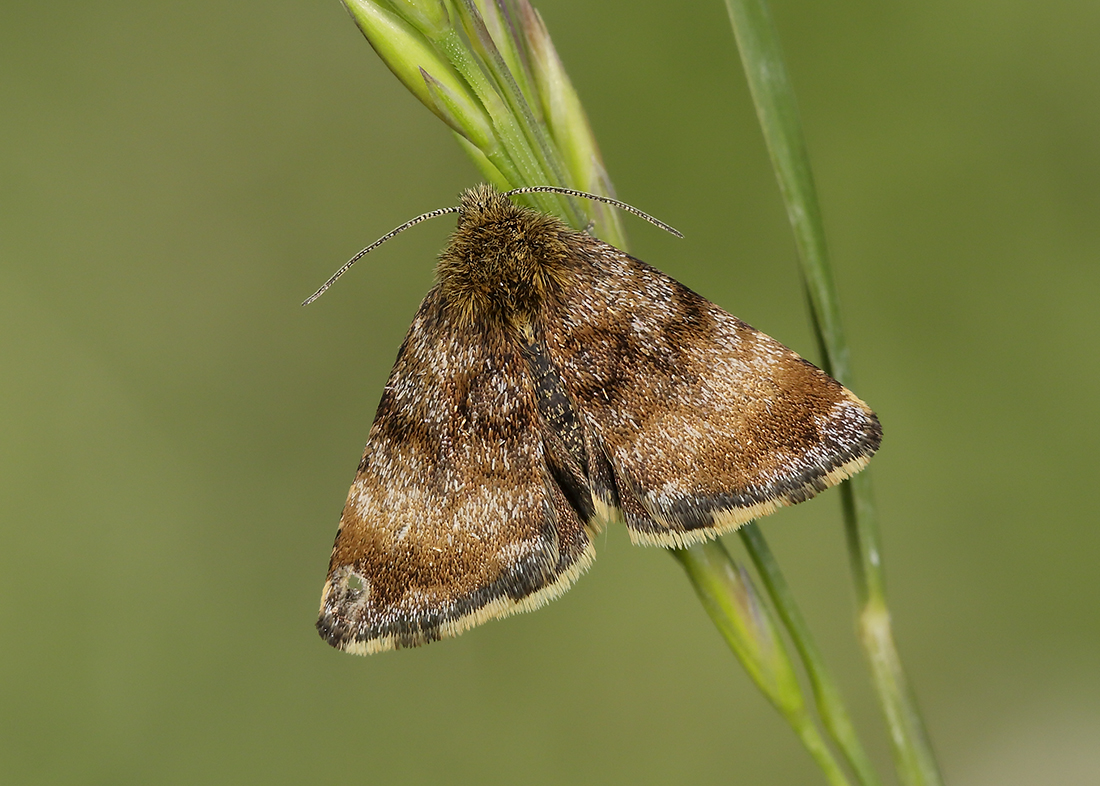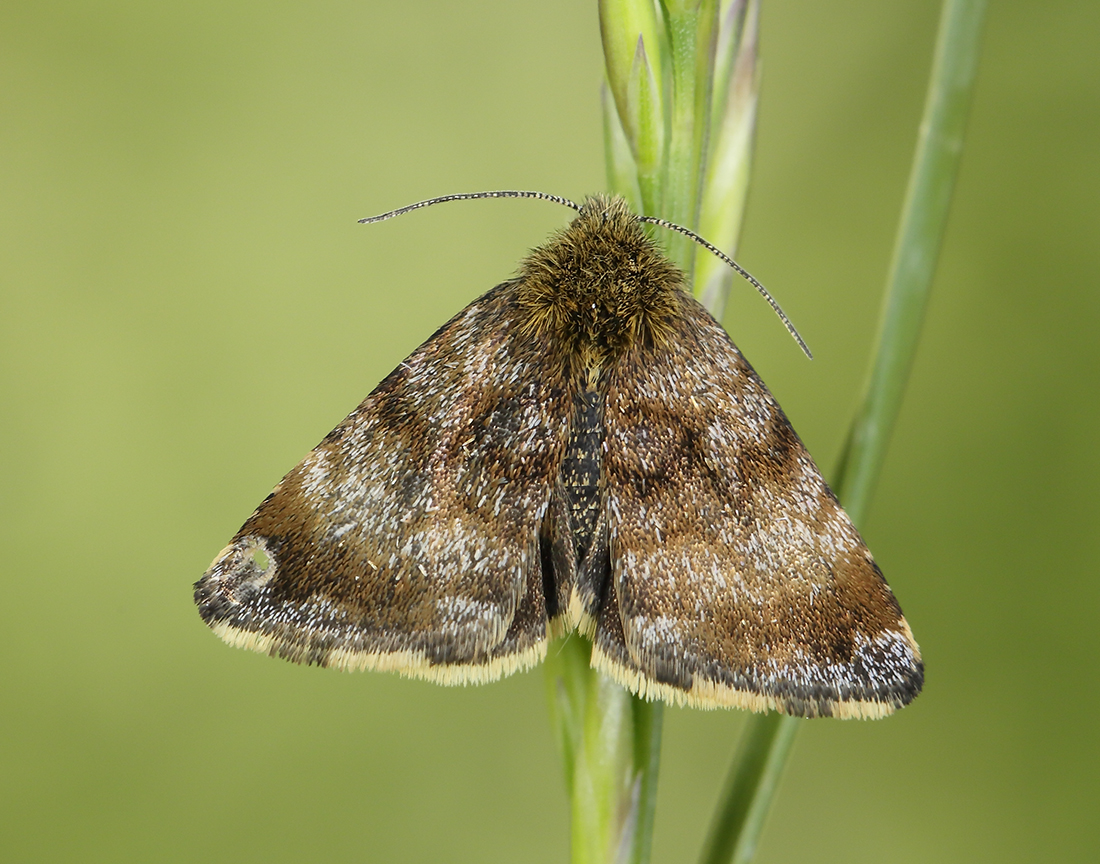

Red List: Least Concern (LC). GB Status: Common.
Identification
Usually distinctive.
Photo required for record acceptance due to rarity status.
Recording Method.
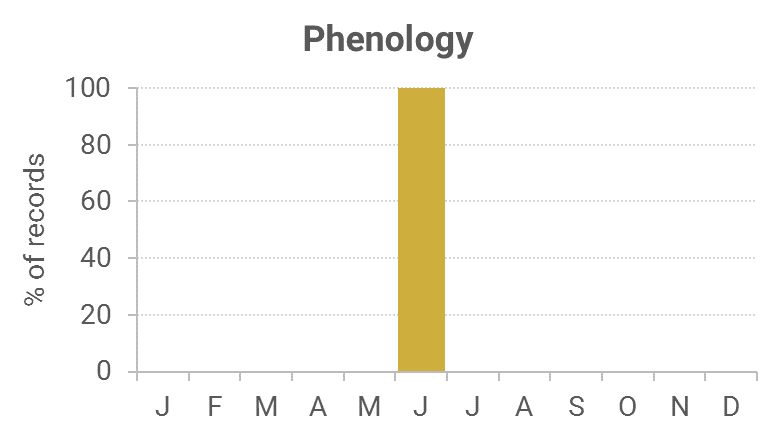
A day flying moth. Flies in sunshine and feeds at flowers.
Life cycle
One generation. Overwinters as a pupa. Pupates in a cocoon underground. Larvae June and July.
Larval foodplants
Larvae feed on Common Mouse-ear and Field Mouse-ear seed capsules.
Habitat
Flower-rich grassland, hay-meadows, roadside verges and sea-cliffs.
History
Gordon (1913) caught one flying on the moor near Kennel Wood, Corsemalzie, at about mid-day in 1895. Others were seen in late June and mid July. These records cannot be verified.
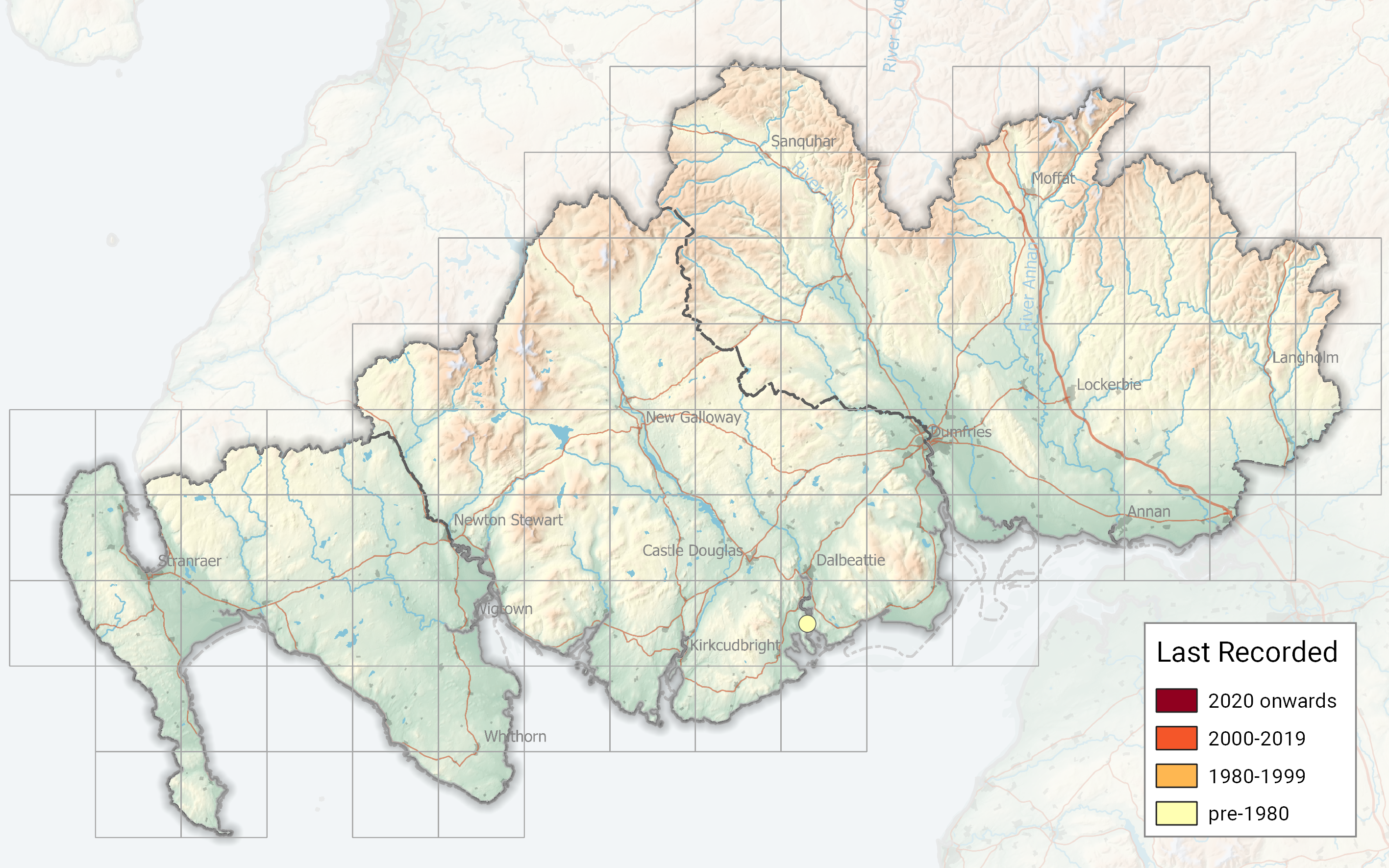
The only accepted record for D&G is F. H. Day’s, when he saw it on the hillsides at Kippford in early June 1941 (F. H. Day, Ent. Rec. Journ. Var. 53: 95-95).