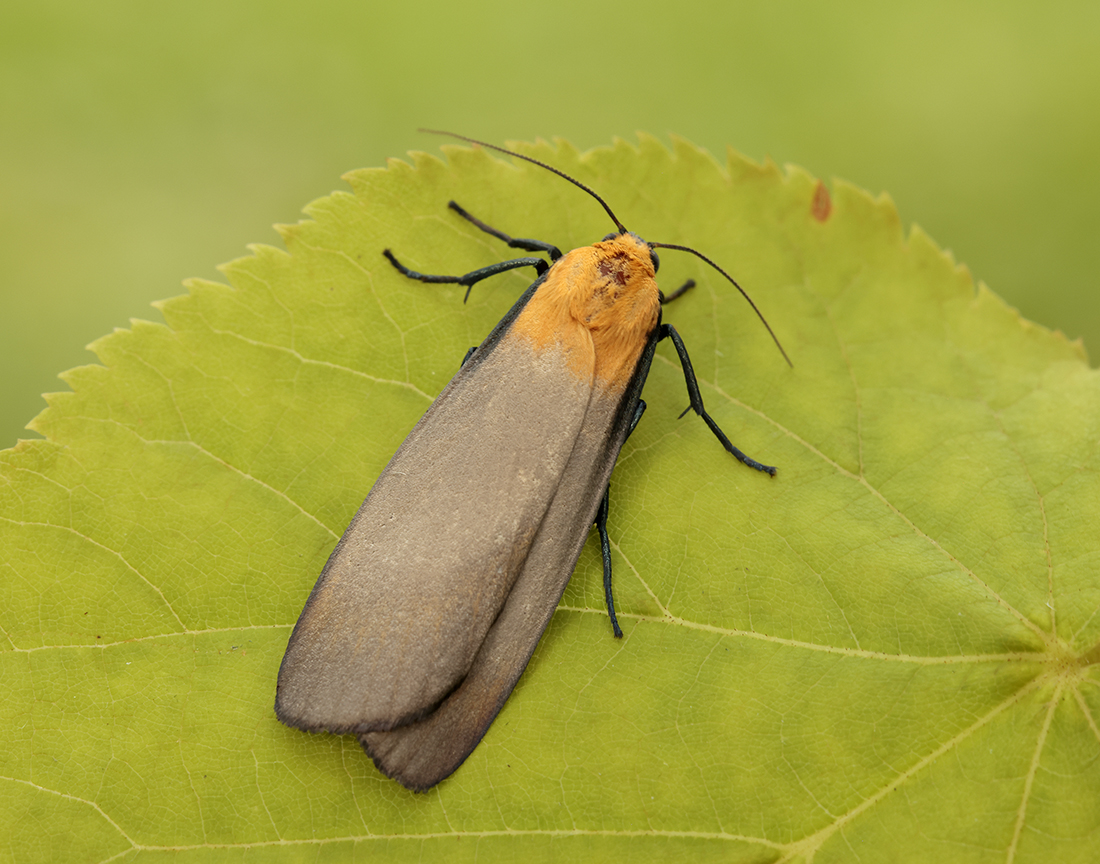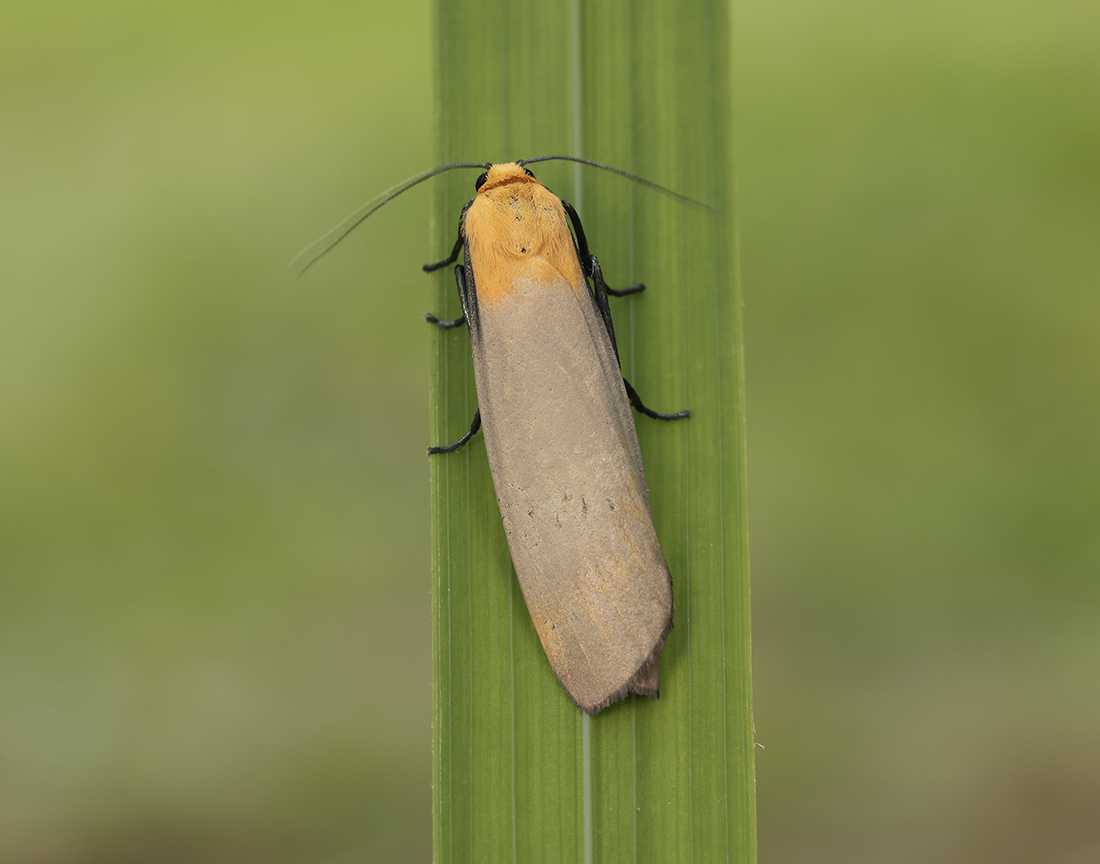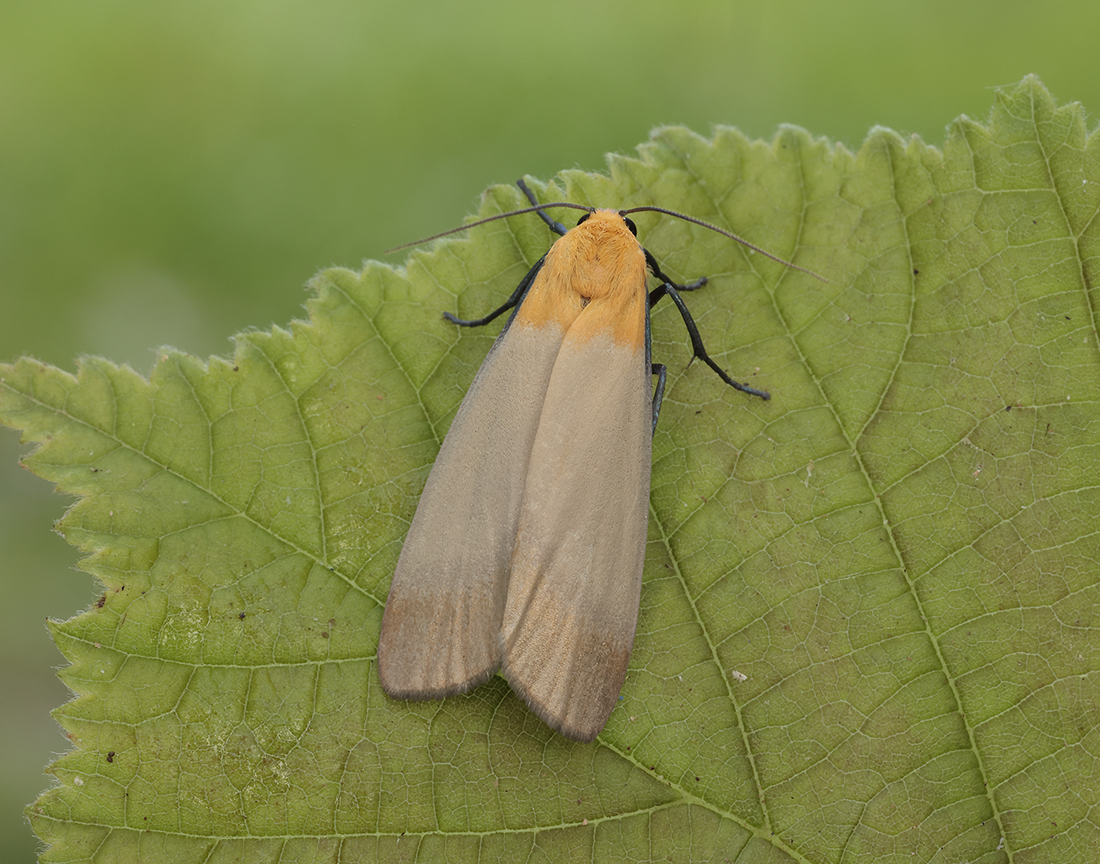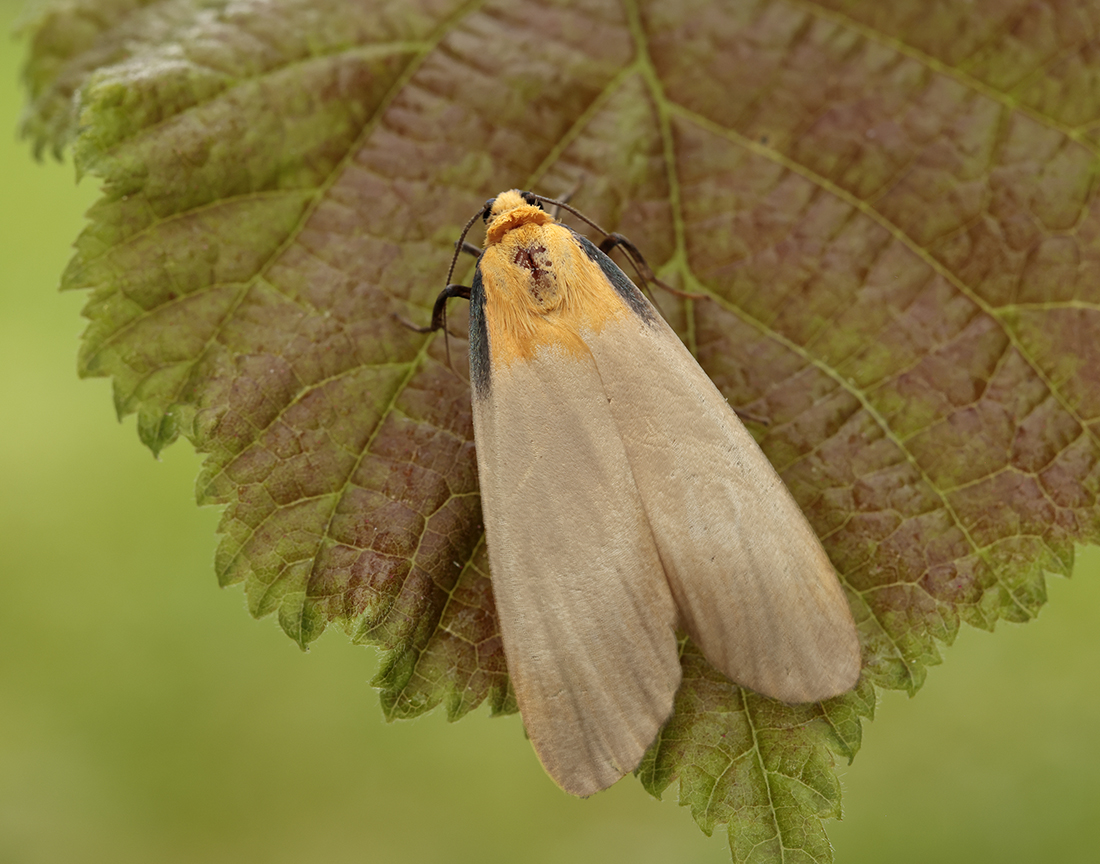

Red List: Least Concern (LC). GB Status: Common.
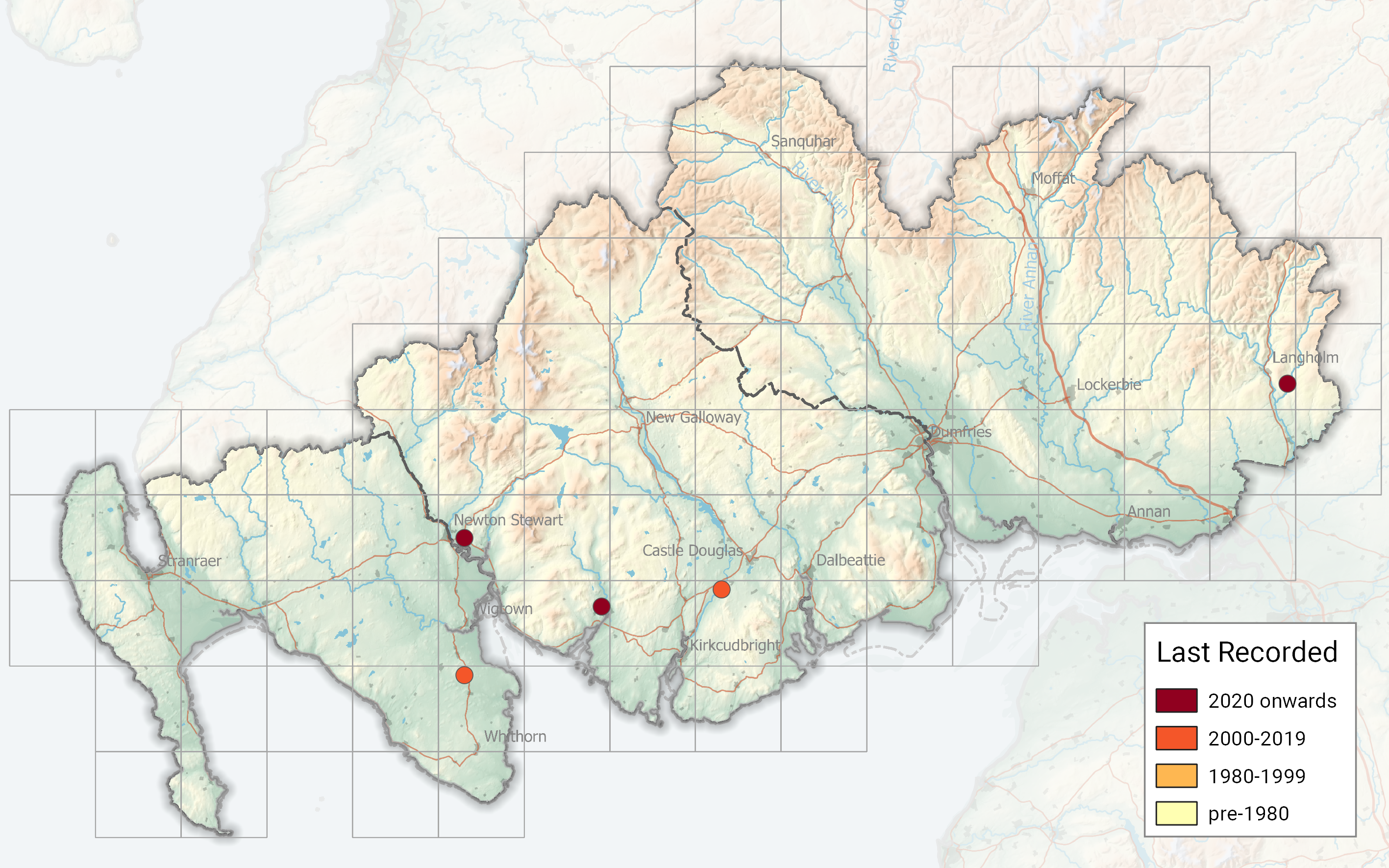
This species is generally considered a migrant which can establish breeding colonies, sometimes short lived. A series of records at Blackcraig (VC 73) from 2021 onwards suggest local breeding. Further records at Kilsture Forest (VC74) in 2025-2026 also indicate local breeding.
Identification
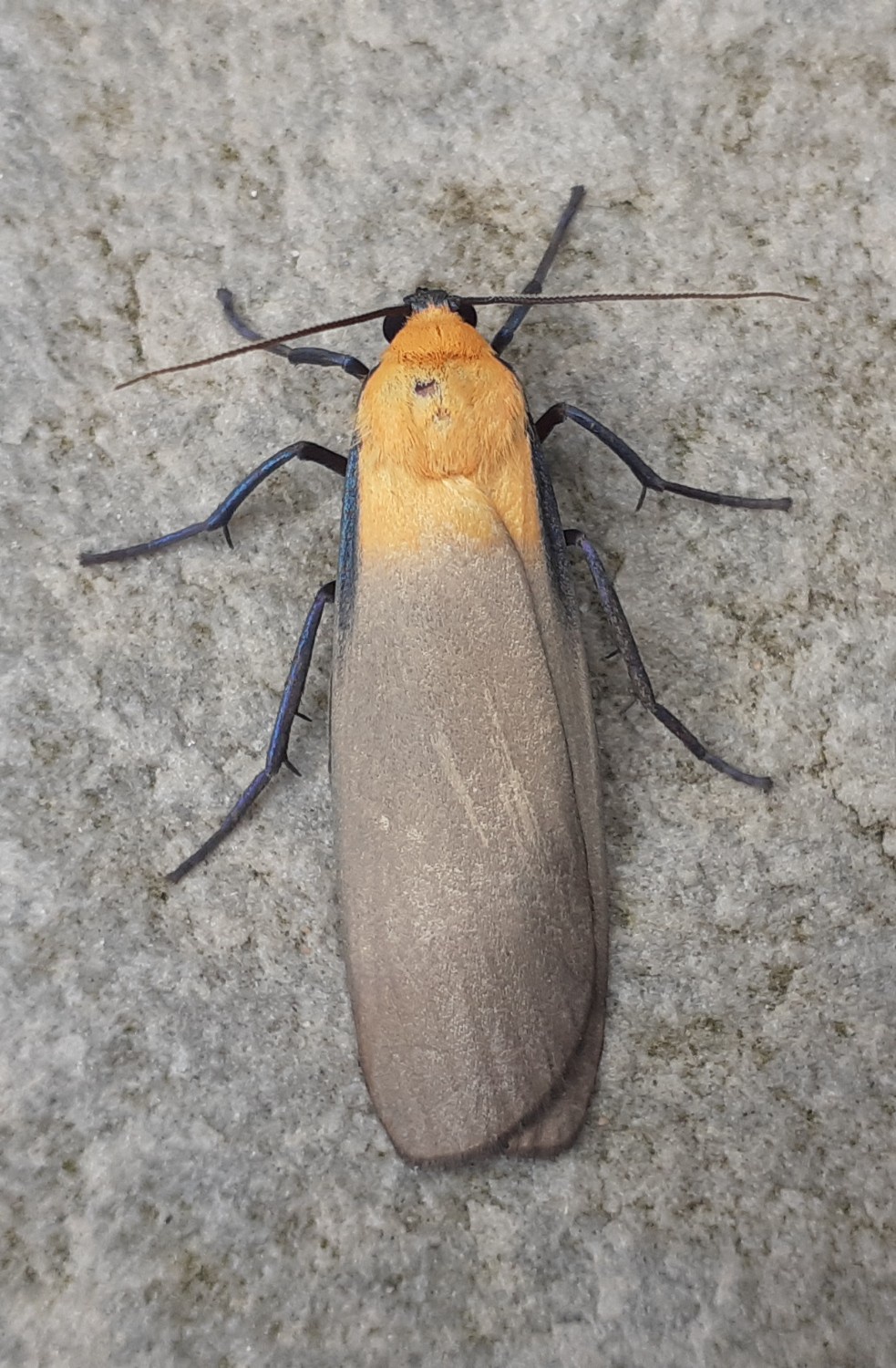
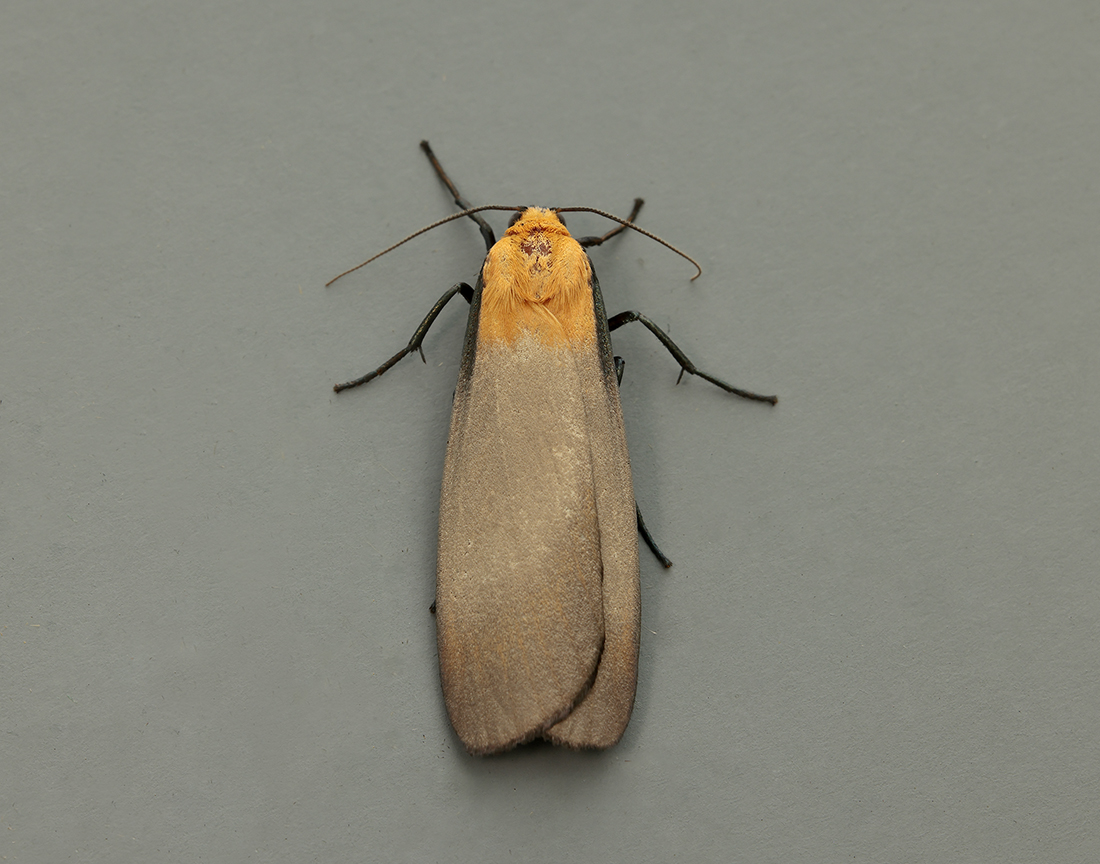
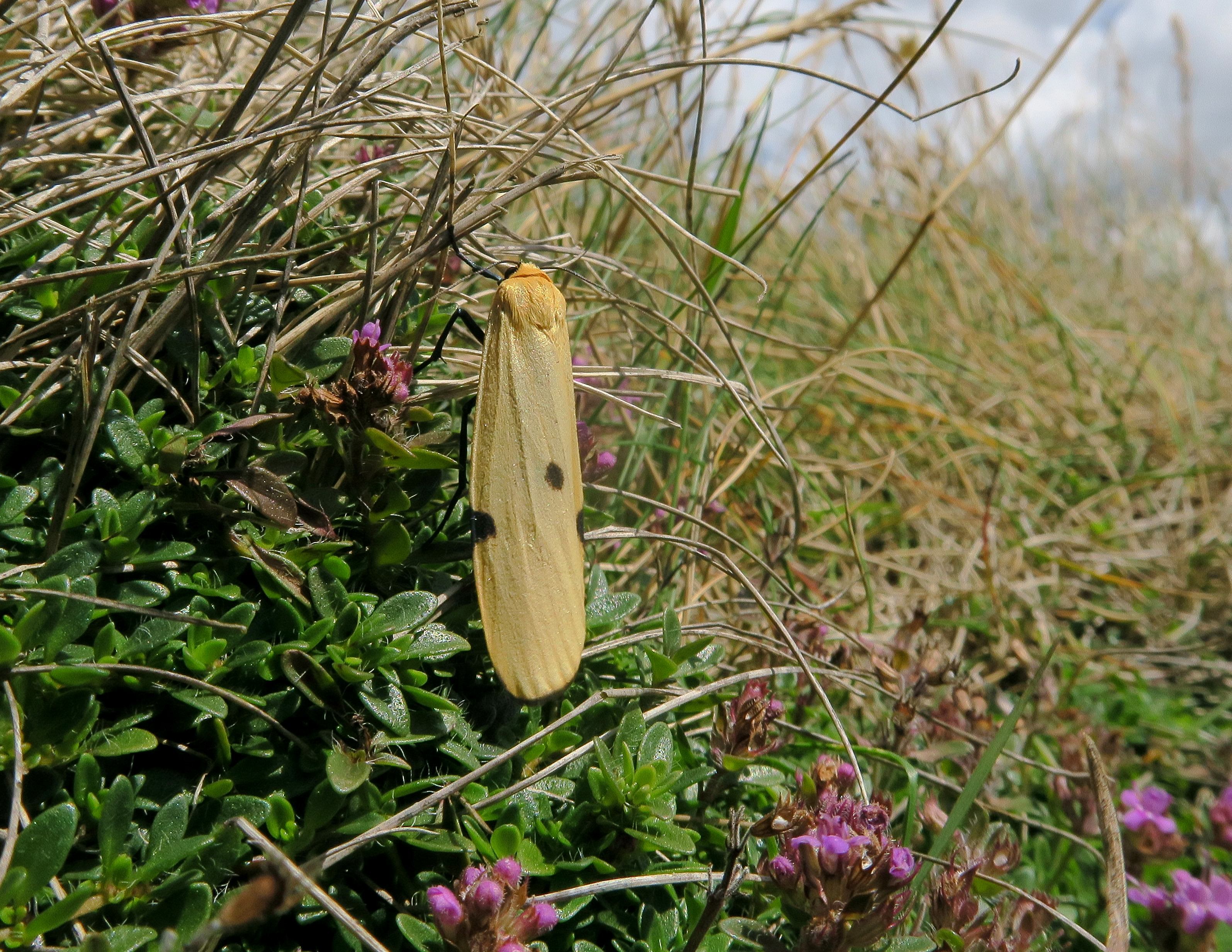
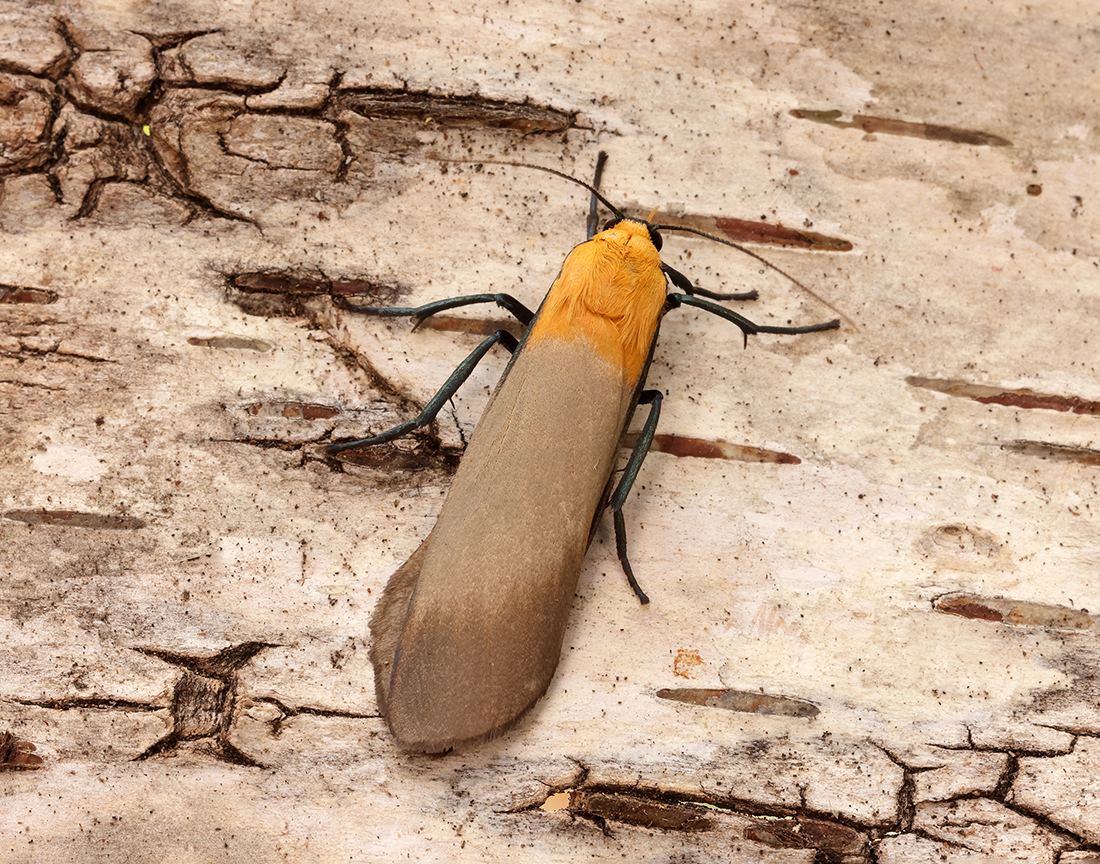
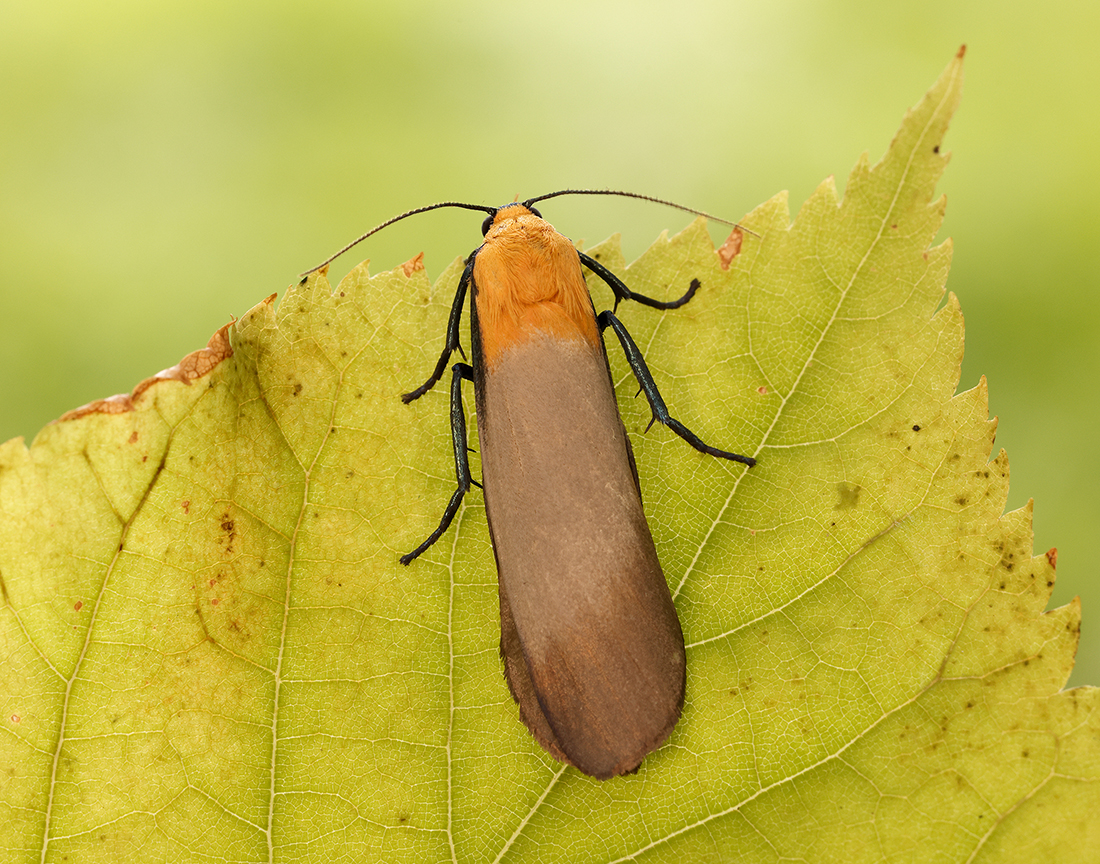
Usually distinctive. Sexually dimorphic.
Recording Method
Attracted to light. Males recorded more often than females.
Life cycle
One generation. Overwinters as a small larva. Larvae September to late June. Pupates in a flimsy cocoon in a crevice.
Larval foodplants
Dog lichen and other lichens and algae on oaks and other trees, and on rocks.
Habitat
Mature broadleaved woodland.
History
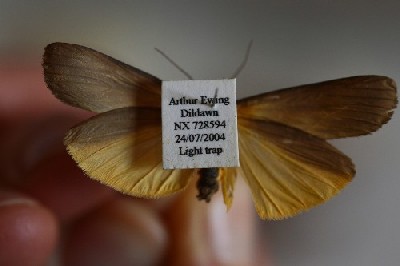
The first record for Scotland and Dumfries & Galloway was of one caught at light at Dildawn near Bridge of Dee on 24th July 2004.
The next record occurred on Forest Moor at MV light on 24th July 2006 when two were caught by the same observer.