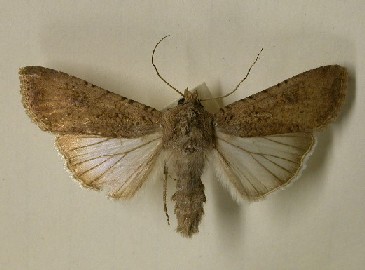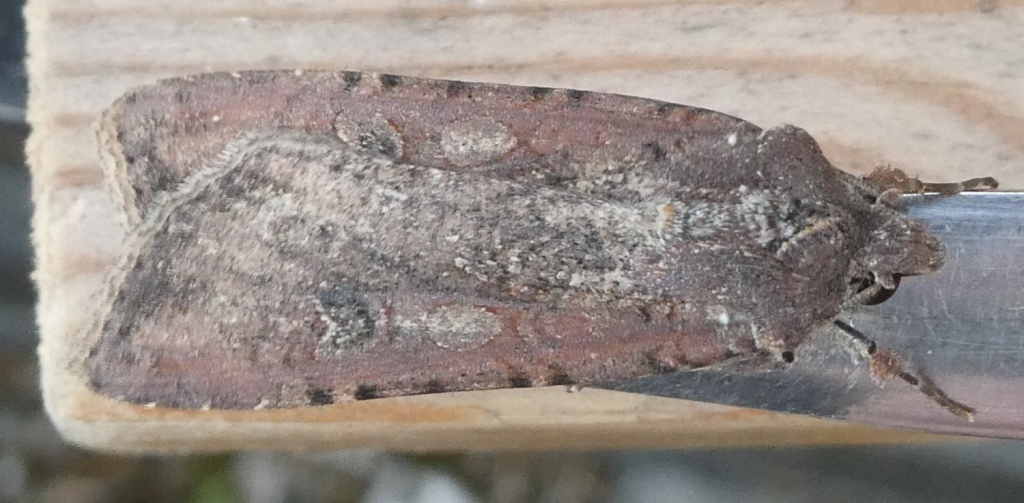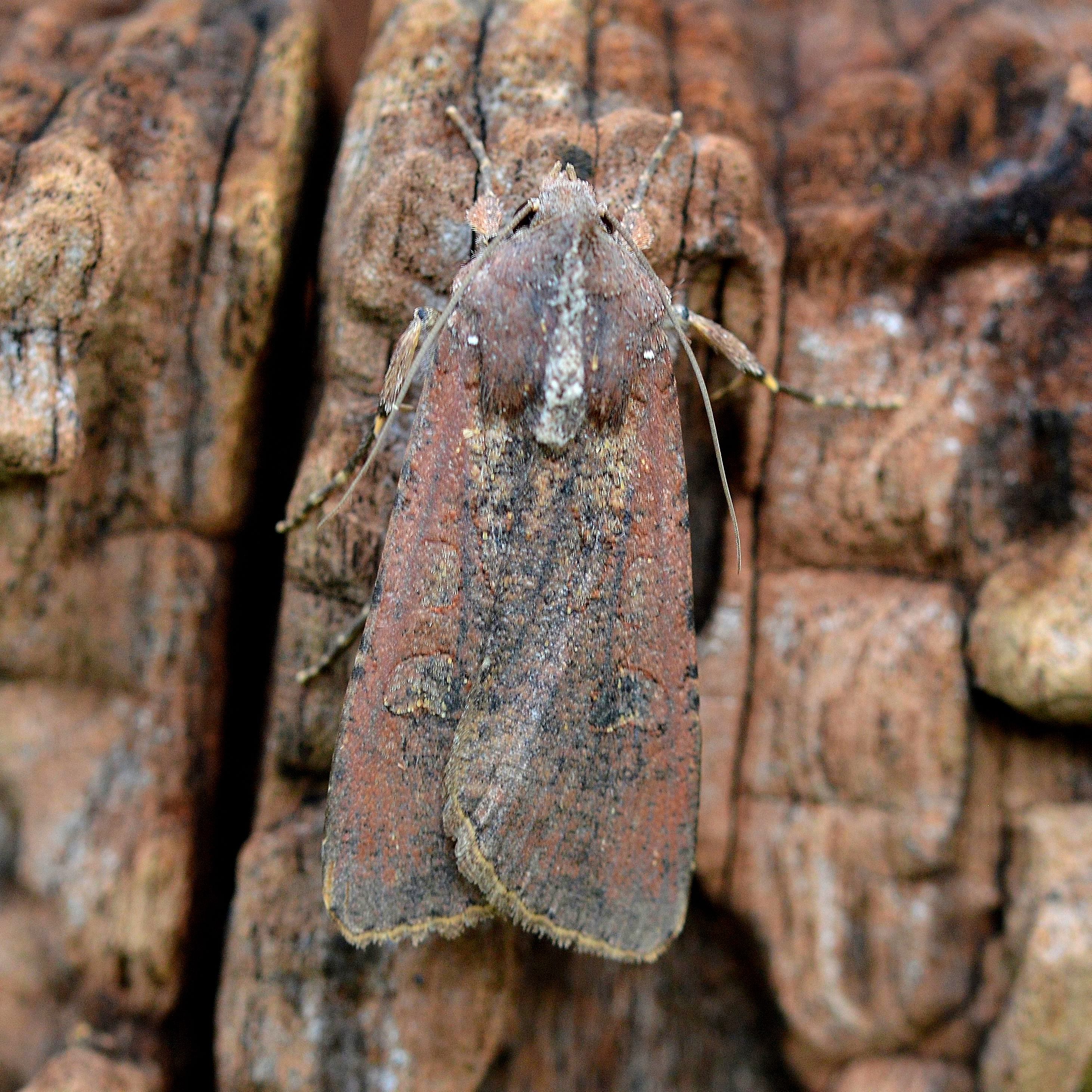

Identification
Usually distinctive.
Recording Method.
Attracted to light, also comes to sugar.
Life cycle
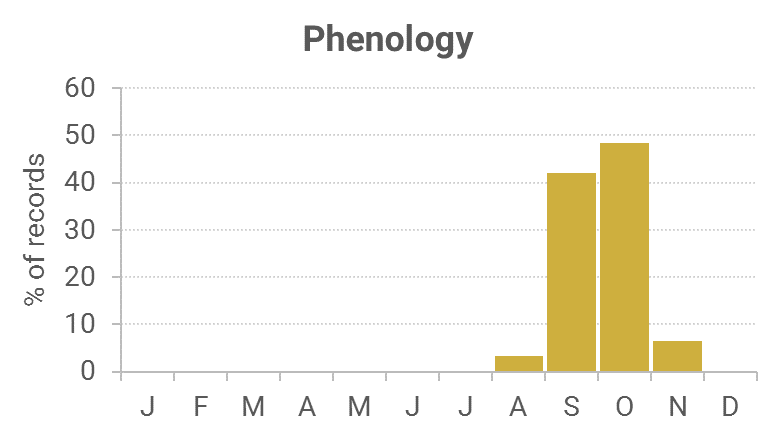
Usually a late autumn visitor in the region. Larvae rarely found in the UK but are thought to occur July to October. These may give rise to autumn adults.
Larval foodplants
Docks, Dandelion and Red Clover.
Habitat
As a migrant, could appear anywhere but perhaps more likely at coastal sites.
History
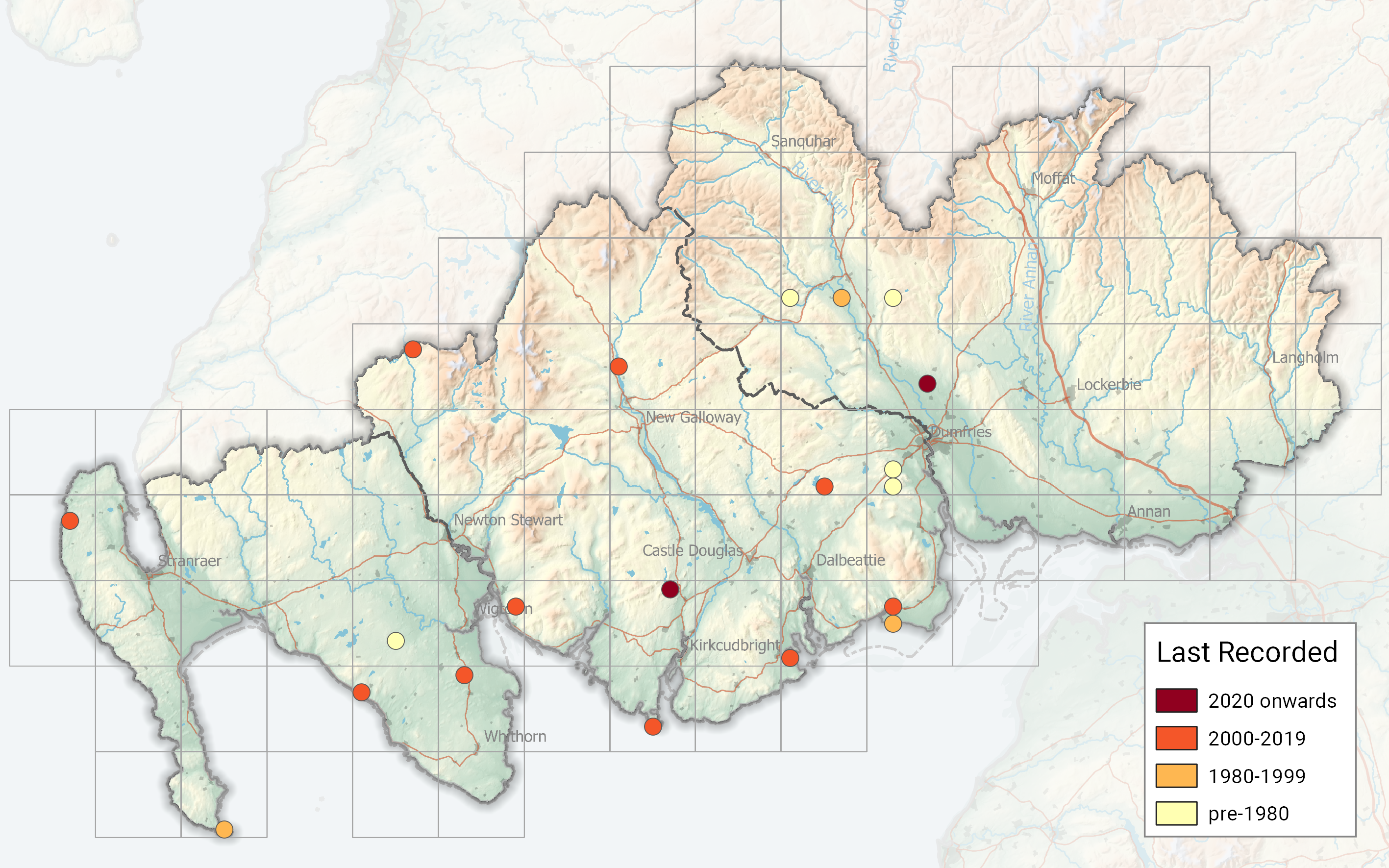
Lennon (1863) had stated that it was not common, but that it had occurred at Dalskairth (VC73). Gordon (1913) took one at sugar on 16th September 1897 at Corsemalzie, while Mr. Henderson, keeper at Mull of Galloway Lighthouse had caught two in 1909 (Miss D. Jackson).
Cunningham (1950) in the Transactions had a specimen that came to sugar in Mabie Forest (VC73) on 16th September 1949. Sir Arthur Duncan during his lifetime (1909-81) had caught it twice at Closeburn (VC72). Only one was caught at the Rothamsted stations and that was at Waterside Mains (VC72) on 11th September 1982.
Further records followed from Kirkton and Mersehead RSPB during the latter part of the 1990s, followed by the only modern record for Wigtownshire being trapped at Milton Point on 24th September 2000.
The first decade of the 21st century provided 17 records, mainly VC73. A major UK influx occurred in 2006 when 14 were recorded in the region.