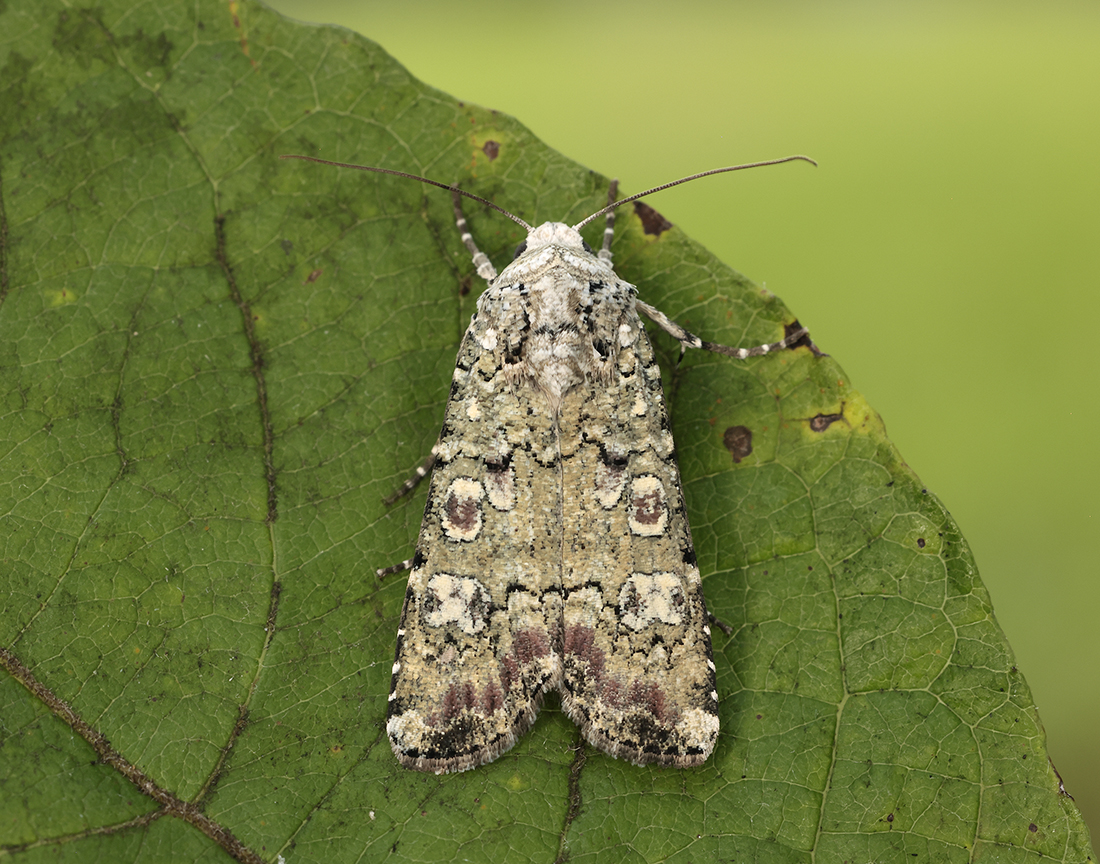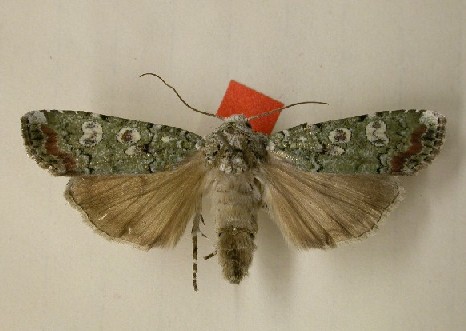

Red List: Least Concern (LC). GB Status: Nationally Scarce B (Nb).
See also Moth of the Week (01/08/2022)
Identification
Usually distinctive.
Photo required for record acceptance due to rarity status.
Recording Method.
Attracted to light, also comes to flowers.
Life cycle
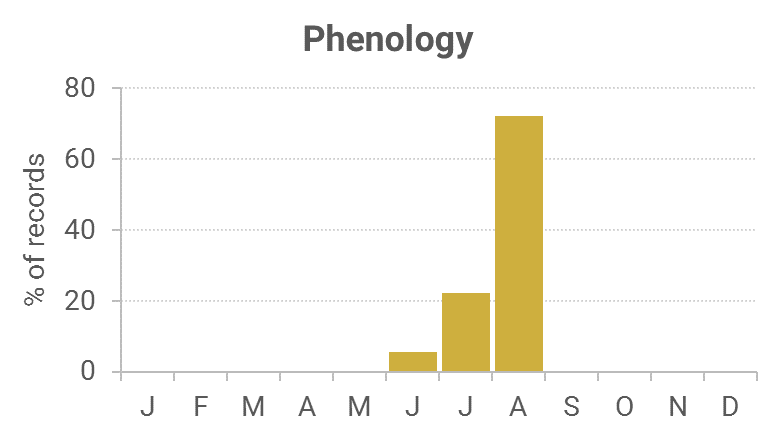
One generation. Overwinters as a larva. Post hibernation larvae hind in sand and feed at night. Pupates in sand.
Larval foodplants
Mainly Creeping Willow but also chickweeds, marine grasses, Common Birds-foot-trefoil, mouse-ears and plantains.
Habitat
Well vegetated sand-dunes.
History
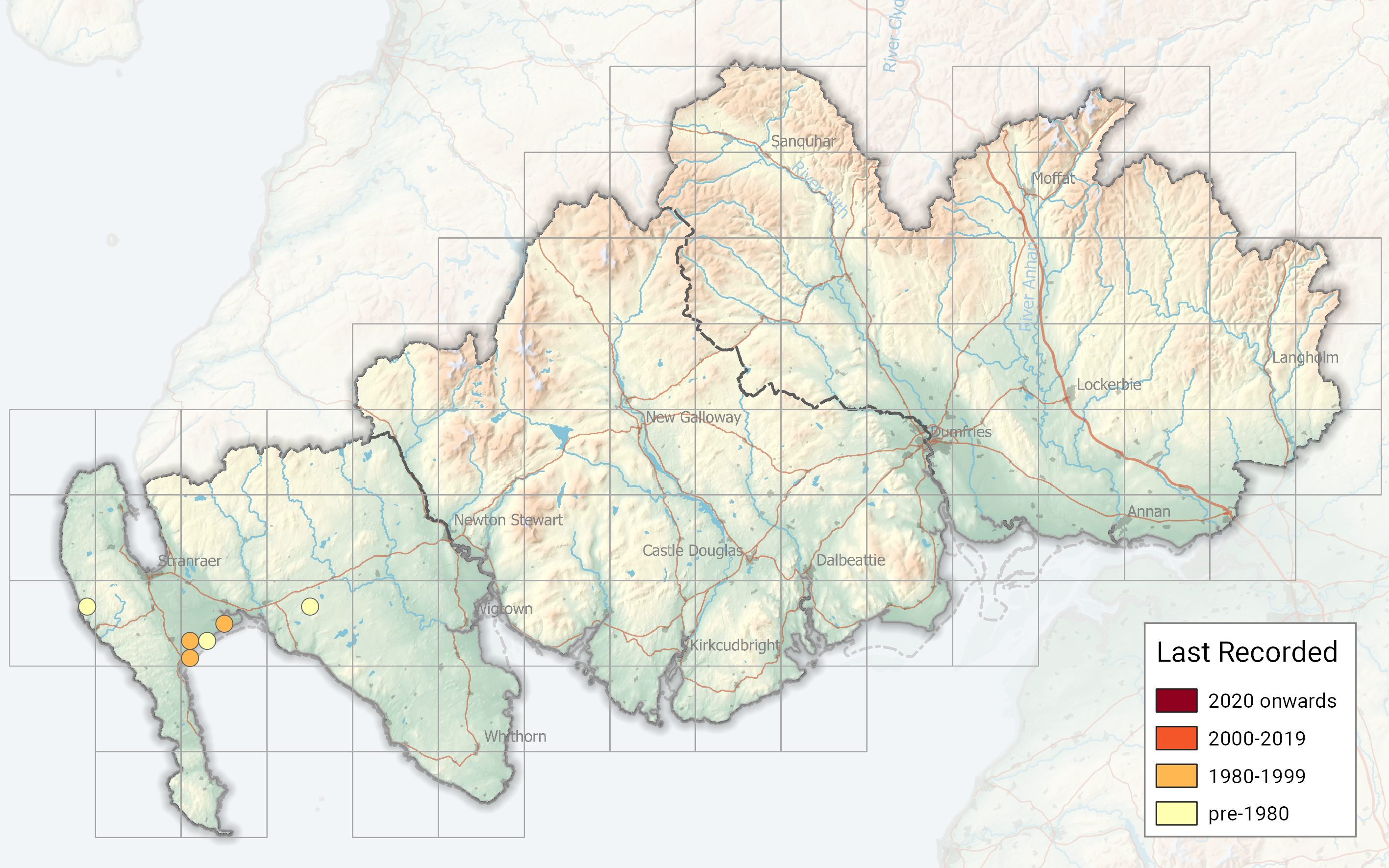
W. S. Brocklehurst informed Gordon (1913) that he had taken a few at light at Craigenveoch, in August 1909 and 1910. Evans (1914) in his research of moth migration at Scottish lighthouses received a male and female from D. A. Mowat, keeper at Killantringan Lighthouse, Wigtownshire, which he had caught late August, 1913. Evans also received a female from the same source the following year caught on 18th August.
At Sandhead (VC74) one was found on 23rd June 1972. During 1983-84, Sir Arthur Duncan caught fifteen specimens at Torrs Warren, all of which are at the National Museums Scotland. And in 1987 Bernard Skinner also found three at Sandhead in mid-August. There is further BRC data of it being found at Clayshant and Genoch Mains, which is close to Sandhead.