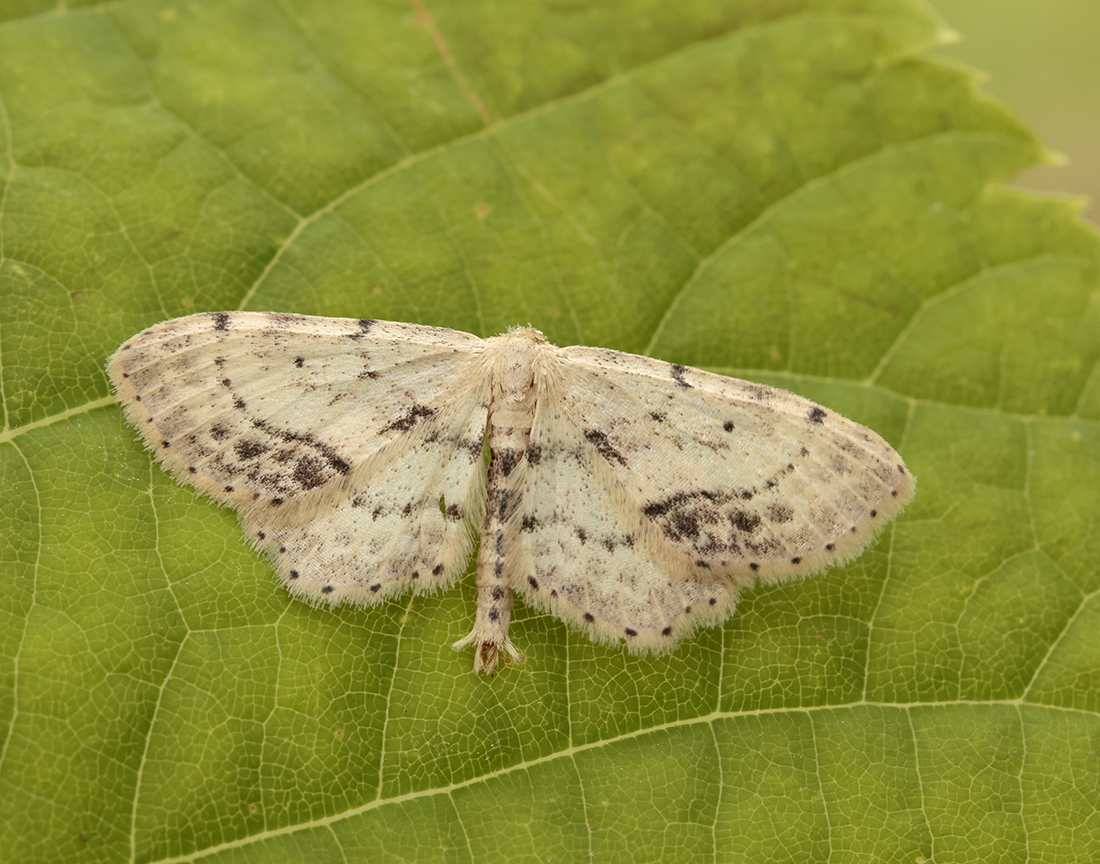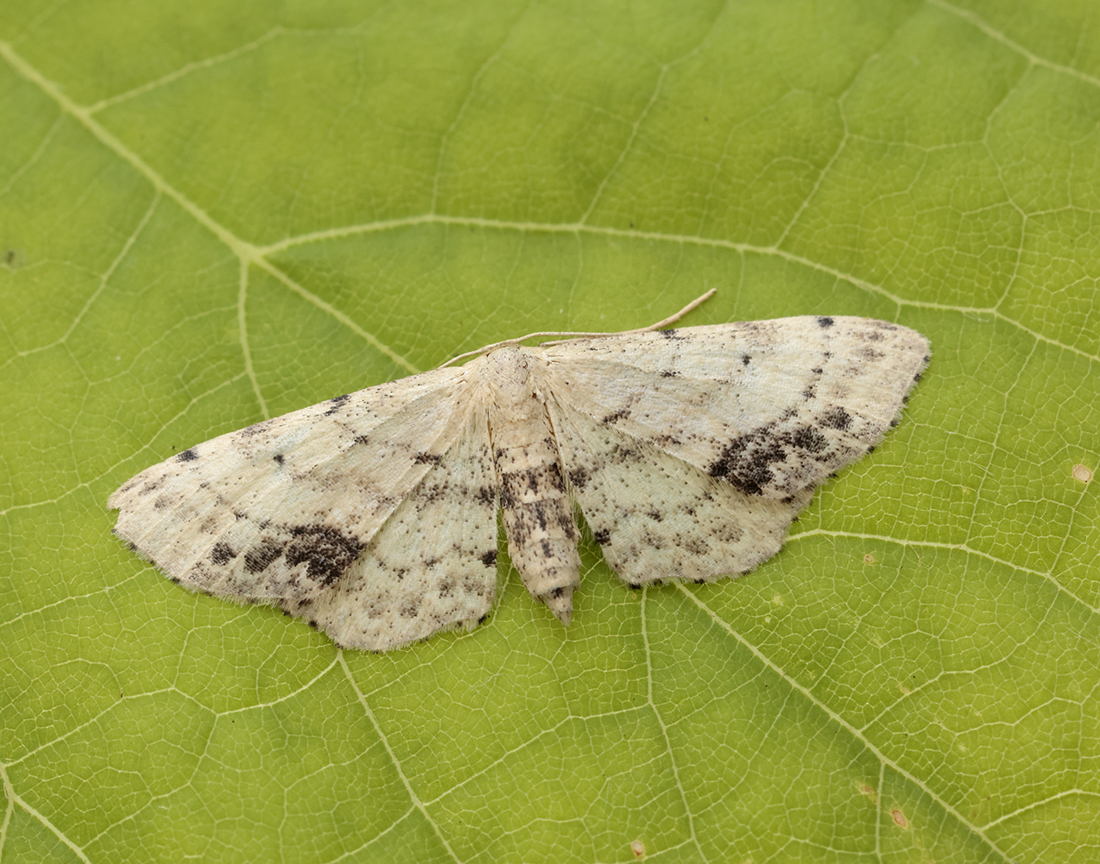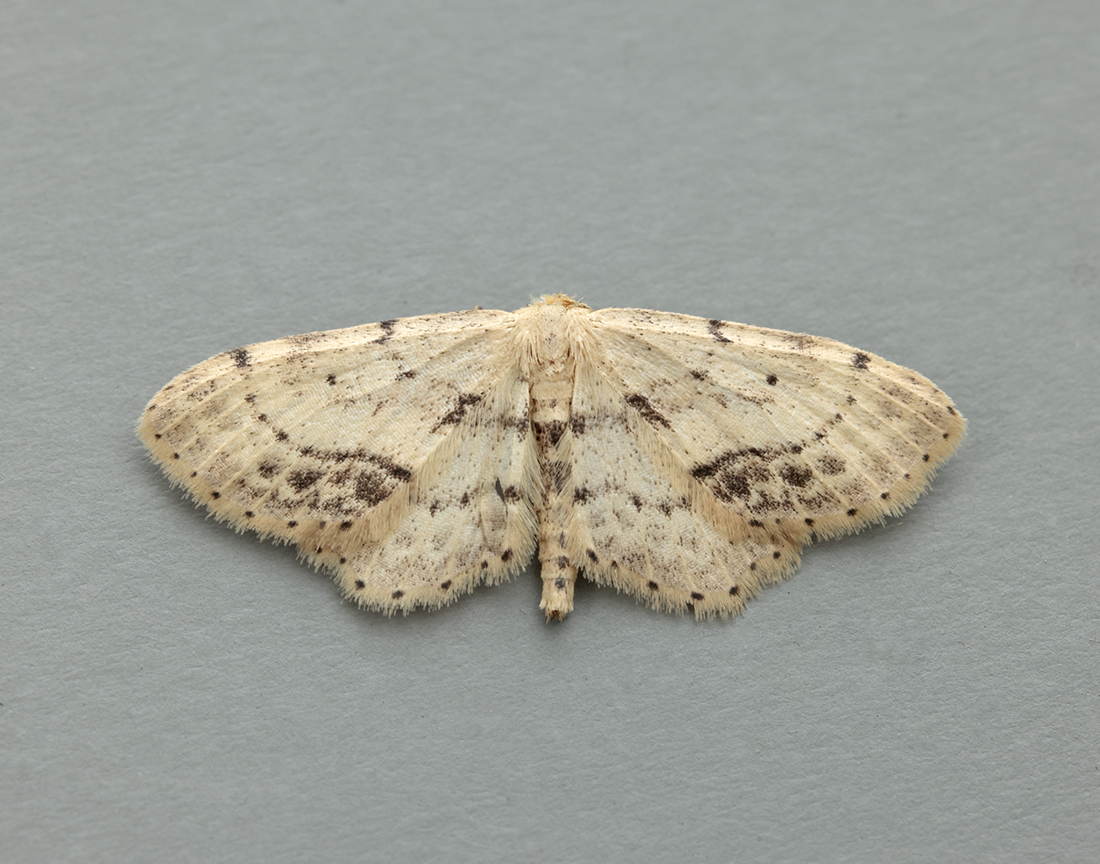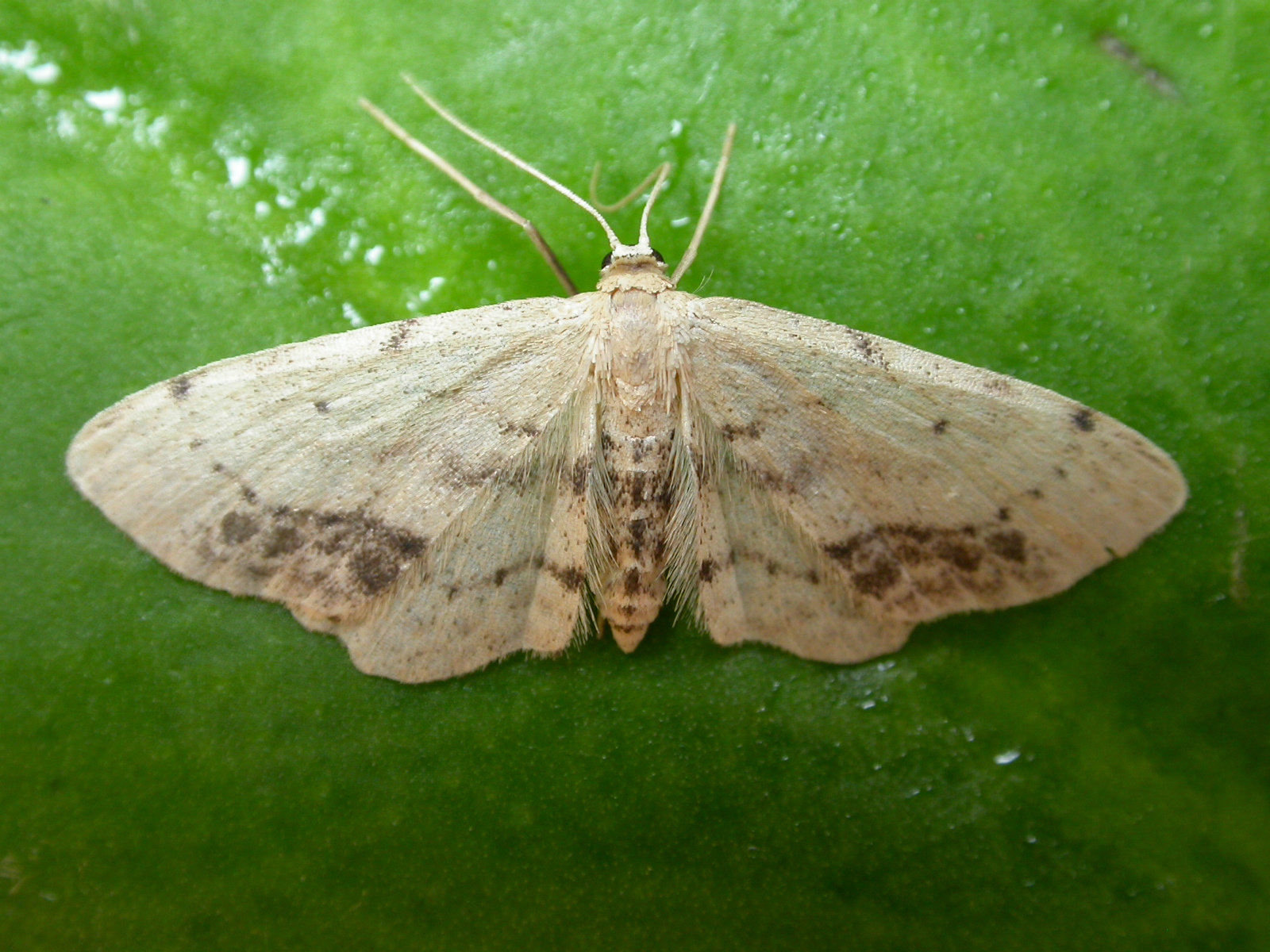

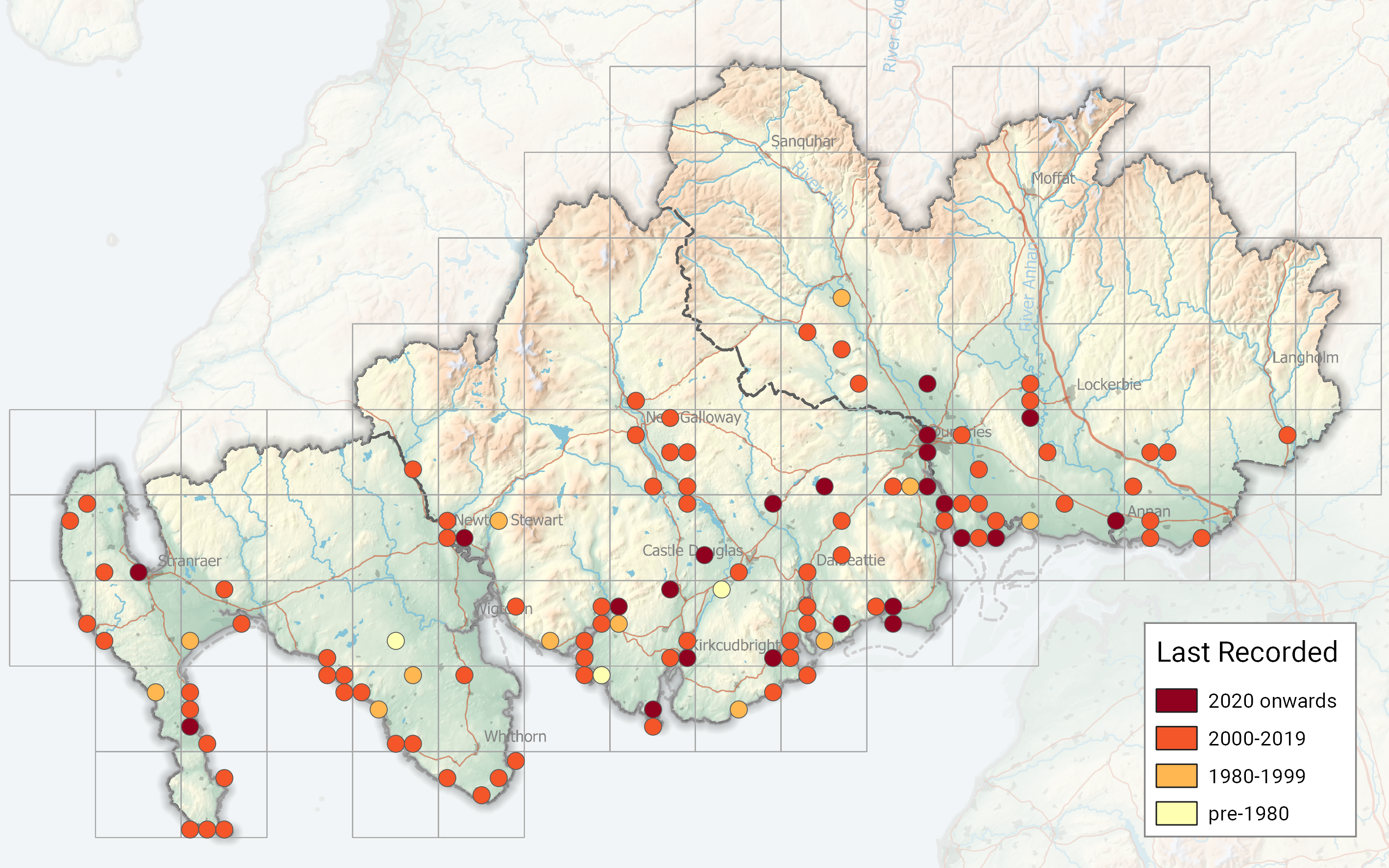
Red List: Least Concern (LC). GB Status: Common.
Identification
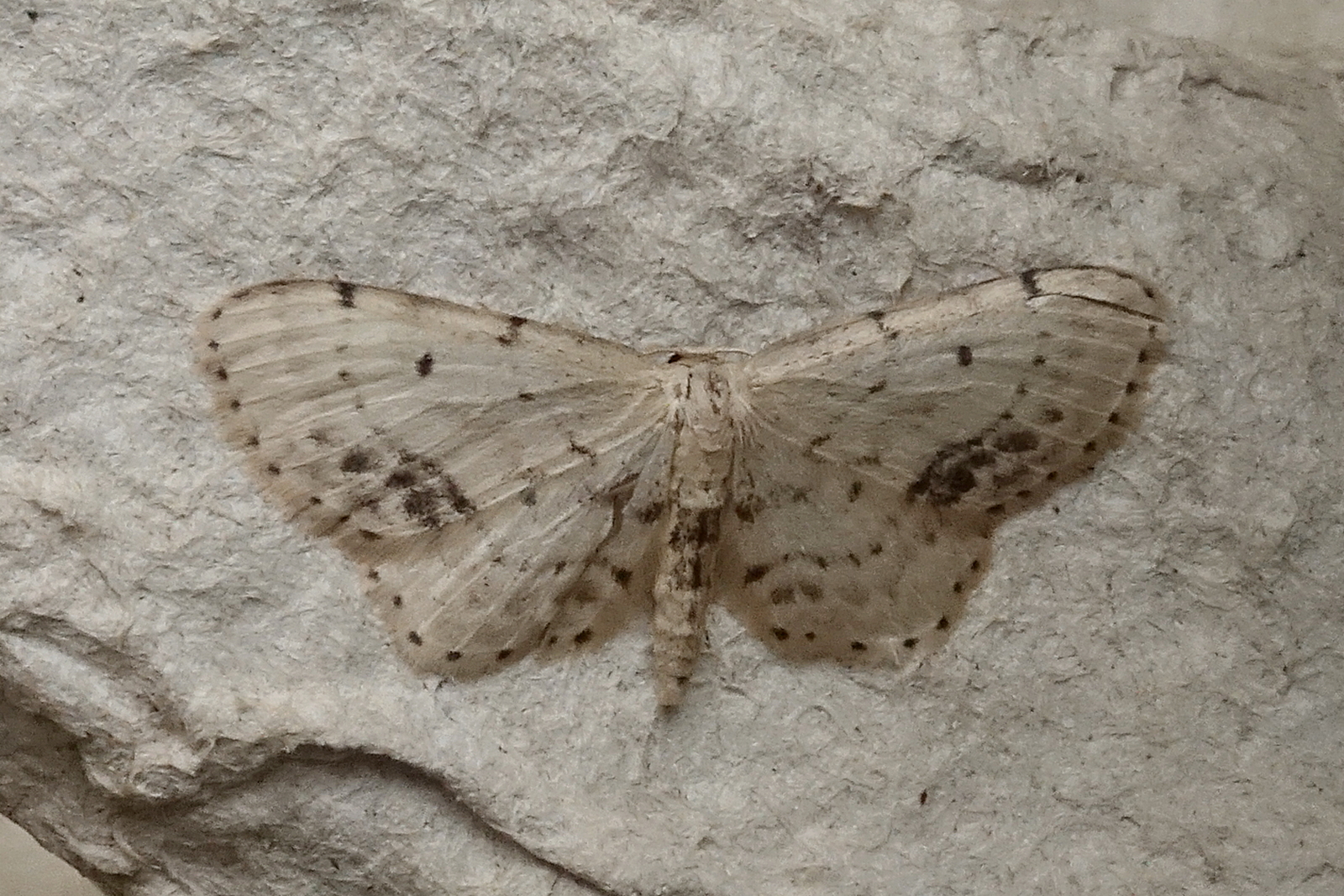
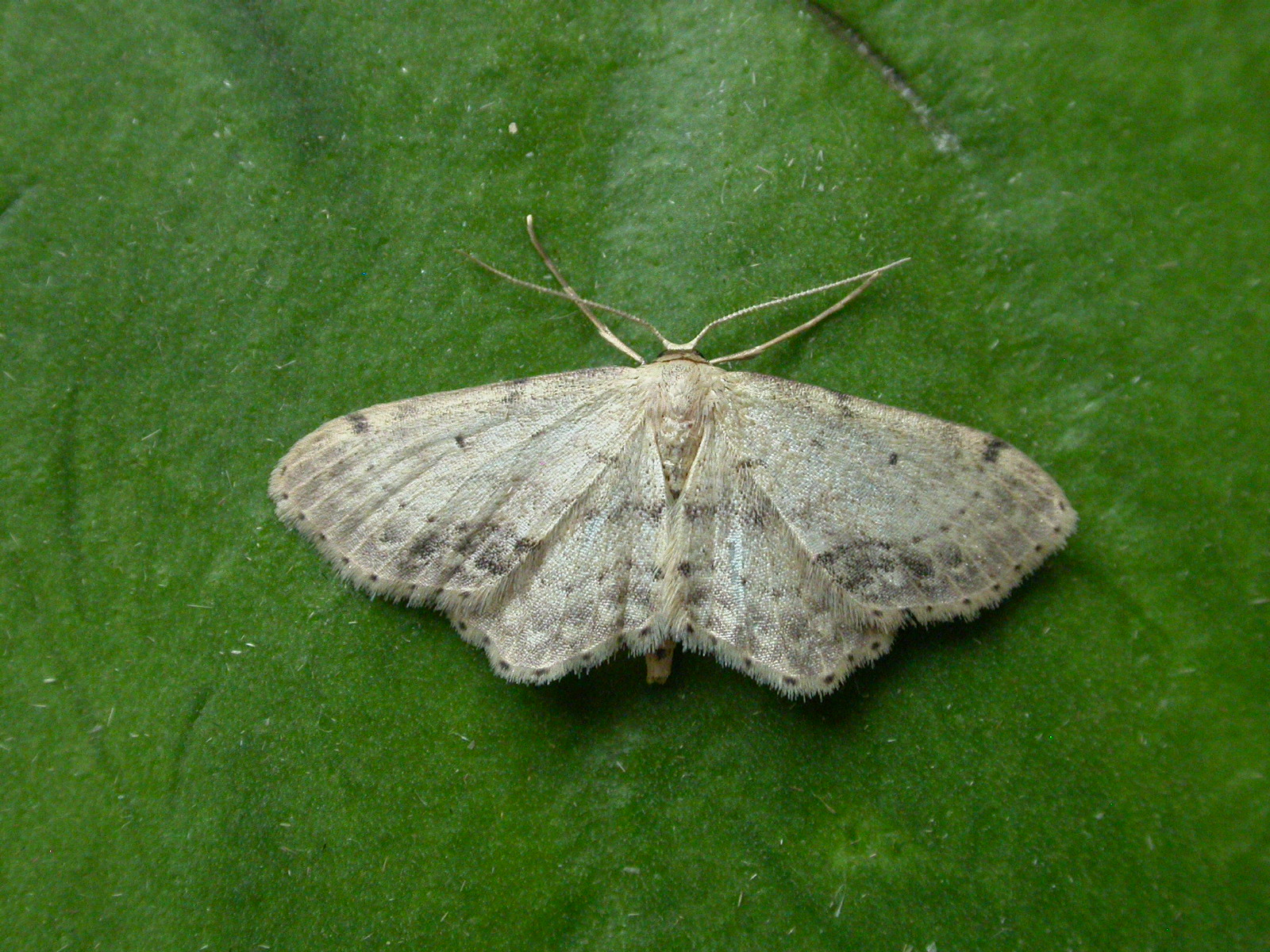
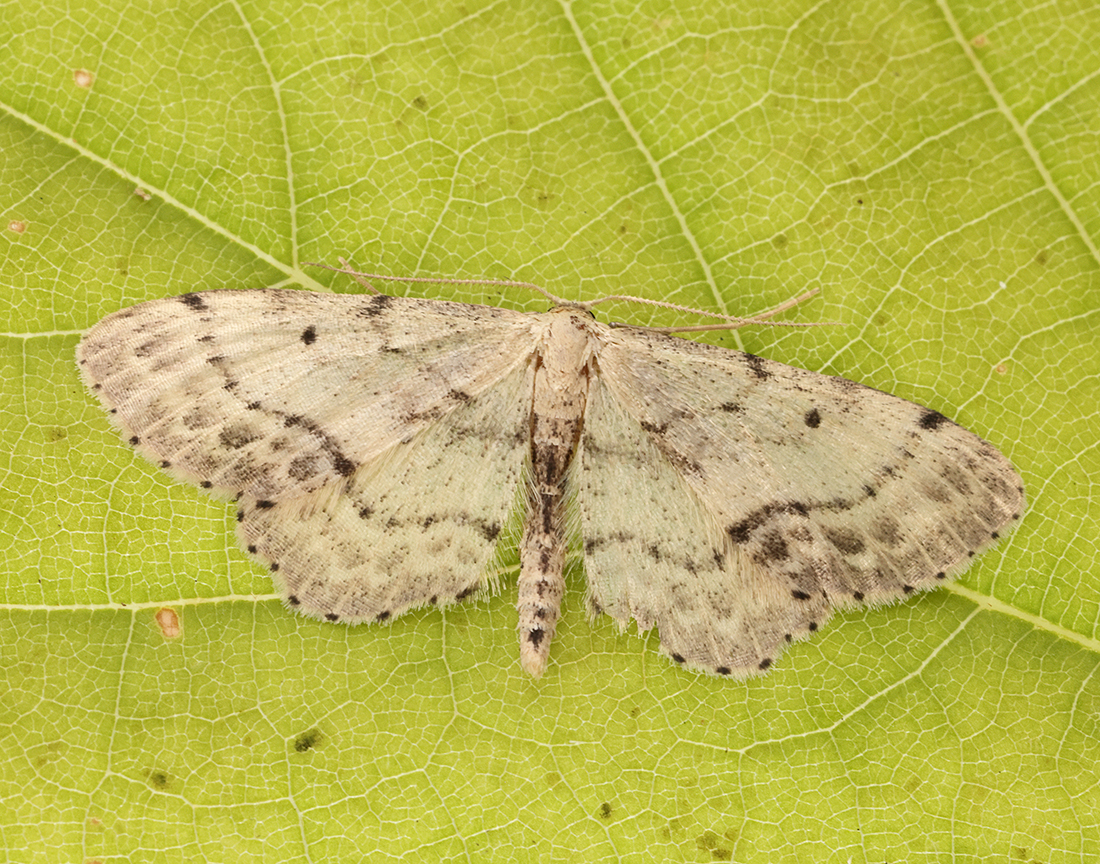
Usually distinctive.
Recording Method
Attracted to light.
Life cycle
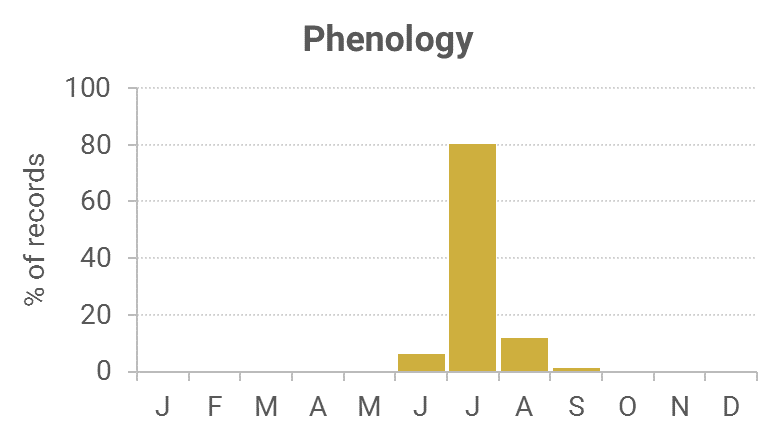
One generation. Overwinters as a larva. Larvae August to May. Pupates in a slight cocoon in plant debris.
Larval foodplants
Larvae feed on Cow Parsley, Burnet Saxifrage and Hedge Bedstraw.
Habitat
Woodland, hedgerows, gardens and marshes.
History
Buchanan White (1895) listed it as occurring in Colvend parish (VC73). K J. Morton of Edinburgh (1900) while on a visit in July 1899 to Wigtownshire had found this species in the Monreith area. Gordon (1919) had found it common along woodsides around Corsemalzie, Wigtownshire. Earliest date was 19th June 1911.
No further records until the advent of the Rothamsted stations during the mid 1970s until early 1980s, then another pause until it started to be recorded steadily during the 1990s with more observers. It was not until 1975 that it was first recorded for VC72 at Caerlaverock in a Rothamsted moth trap.
It continued to be regularly recorded during the first ten years of the 21st century.